How to Store Fresh Herbs for Maximum Flavor and Shelf Life
This post contains affiliate links. As an Amazon Associate, we earn from qualifying purchases.
Store fresh herbs by splitting them into two categories: hardy stems (rosemary, thyme, oregano) and tender leaves (basil, cilantro, parsley, mint). Hardy herbs last 2-3 weeks rolled in a lightly damp paper towel inside a sealed bag in the cold crisper. Tender herbs last 5-7 days stem-down in a jar with an inch of water, covered with a bag, in the fridge, except basil, which turns black below 12°C and belongs on the counter.
That split is the whole game. Get it wrong, and basil goes necrotic in a day at 0°C, while thyme dries to dust in three.
What follows: the exact temperature and humidity numbers from the postharvest labs, the fridge zones that match them, and the two physical methods that turn a 3-day wilt into a 14-day keeper.
Key Takeaways
–
- Basil dies in the cold. Store it stem-down in water on the counter. Below 12°C (54°F) causes injury; at 0°C, leaves blacken in 24 hours.
- Tender herbs (cilantro, parsley, dill) want humidity without wet leaves. Use the jar method: an inch of water, a plastic bag cover, in the fridge. Change water every two days.
- Hardy herbs (rosemary, thyme, oregano) want dryness with a hint of damp. Roll them in a lightly damp paper towel, seal in a bag, and place in the cold back of the crisper.
- Wash herbs only when you’re ready to use them. Pre-washing before storage adds surface moisture that accelerates bacterial decay and slime.
- Your fridge has zones. The crisper drawer is colder and more humid, perfect for hardy herbs. The door is warmer, the only safe fridge spot for basil if you must refrigerate it.
The Two-Tier System: Hardy vs Tender Herbs
Forget a single rule. Herb storage breaks cleanly into two physical categories based on stem structure and leaf thickness. Hardy herbs have woody stems and small, tough leaves. Tender herbs have soft, hollow stems and broad, delicate leaves.
The difference isn’t just texture. It’s water content and chilling sensitivity. A rosemary stem is built to resist drying; a basil leaf is built to transpire fast and hates the cold. The UC Davis Postharvest Center factsheet puts numbers to it: most hardy herbs store optimally at 0°C (32°F) for up to three weeks. Basil, a tender herb, suffers severe chilling injury below 10°C (50°F).
Common mistake: Treating all herbs the same. Rolling basil in a damp towel and shoving it in the cold crisper guarantees black, slimy leaves within 72 hours. Putting dry rosemary in a jar of water does nothing but rot the stems.
The fix is a simple sorting step the moment you get home. Feel the stem. Is it firm, woody, and snap-resistant? That’s hardy. Is it soft, green, and bendy? That’s tender. Your next move depends entirely on that snap test.
The 7-Day Jar Method vs the Paper-Towel Roll (and Which Herbs Need Which)
Now for the mechanics. Each category gets one storage method. Switching them fails.
For Tender Herbs: Cilantro, Parsley, Dill, Mint (and Basil on the Counter)
This is the jar method. It replicates how these herbs are often sold, upright, hydrated, protected.
- Trim the stems. Use a sharp knife or scissors to cut off about half an inch from the bottom, as you would with flowers. This opens fresh vascular tissue for water uptake.
- Place in a jar with 1–2 inches of water. Tall enough to keep leaves above the waterline. Tap water is fine.
- Cover the leaves with a plastic bag. Use the original produce bag or a reusable one. Secure it loosely around the jar with a rubber band. This creates a high-humidity microclimate without suffocation.
- Refrigerate, away from the coldest spot. The door shelf or the front of a shelf works. Avoid the back wall where temperatures can dip near freezing.
Why it works: The stems drink, the bag traps humidity at >90% Relative Humidity, and the cooler temperature slows respiration without inducing chill. The University of Maine Extension guide notes this method can keep cut herbs fresh for 5 to 7 days with daily water changes.
Where this goes sideways: Not changing the water. Stagnant water grows bacteria that climb the stems and cause slime from the bottom up within four days. Change it every two days, or if it looks cloudy.
Basil is the exception. It follows the jar method but stays on the counter. A peer-reviewed basil shelf life study found basil stored at 12-15°C (54-59°F), typical room temperature, lasts an average of 12.5 days. In the fridge at 5°C, that drops to 3.2 days. The cold destroys cell structure, leading to rapid blackening.
For Hardy Herbs: Rosemary, Thyme, Oregano, Sage
This is the paper-towel roll. It buffers against the fridge’s dehydrating air.
- Check for dampness. If the herbs are already moist from store misting, use a dry paper towel. If they feel dry, use a paper towel lightly dampened and wrung out.
- Lay herbs flat on the towel and roll. A single layer works best. Roll them up like a burrito.
- Place the roll inside a sealable plastic bag or reusable container. Press out all excess air before sealing.
- Refrigerate in the crisper drawer. This is the coldest, most humid part of your fridge, ideal for slowing decay without freezing.
Why it works: The paper towel acts as a moisture buffer. It prevents desiccation without creating a wet environment that promotes mold. The sealed bag locks in that balanced humidity. This method is perfect for herbs like thyme, which you might also use in drying herbs later.
| Herb Type | Best Method | Ideal Location | Expected Shelf Life | Failure Sign |
|---|---|---|---|---|
| Basil | Jar with water, uncovered | Countertop | 10–14 days | Blackened, translucent leaves |
| Cilantro, Parsley | Jar with water, bag-covered | Fridge door/front | 5–7 days | Slimy stems, yellow leaves |
| Rosemary, Thyme | Damp paper-towel roll, sealed bag | Crisper drawer | 2–3 weeks | Brittle, gray leaves |
| Mint | Jar with water, bag-covered or paper-towel roll | Fridge (check variety) | 7–10 days | Wilting, brown edges |
Why Washing Before Storage Is a Shortcut to Slime
The instinct is to wash everything right away. For herbs, it’s a mistake.
Water clinging to delicate leaf surfaces creates a perfect environment for bacterial growth. The Research Institute of Organic Agriculture PDF emphasizes quick processing to minimize moisture-related decay. Wet leaves packed together will start to deteriorate in days, not weeks.
The data from kitchen tests is clear: unwashed herbs stored properly outlast pre-washed ones. Surface microbes and debris accelerate rot when combined with storage moisture.
Do this instead: Store herbs unwashed using the correct jar or roll method. Wash them under cool running water just before you’re ready to chop and use them. Shake or spin them dry. This simple reversal can add three to four days of crispness to a bunch of cilantro.
It’s the same principle behind storing other delicate produce. The care you take with fresh greens storage applies directly here.
Where to Place Herbs in Your Fridge (It’s Not All the Same)
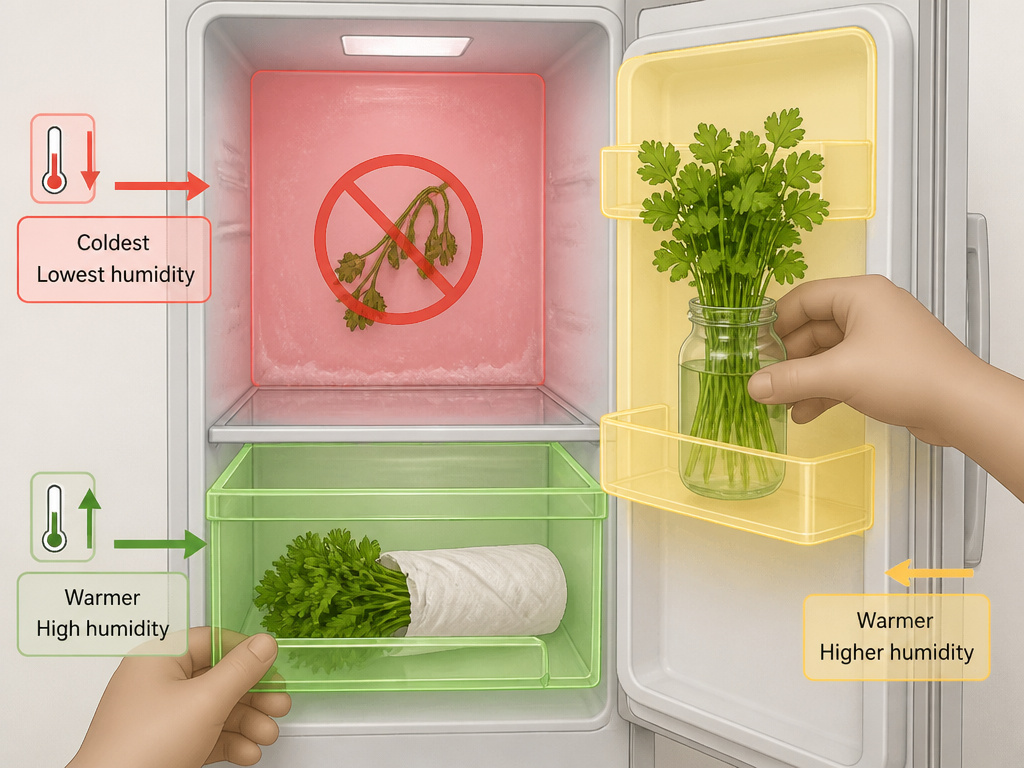 Your refrigerator isn’t a uniform cold box. It has a temperature gradient. Where you place the herb bundle matters as much as how you wrap it.
- The Crisper Drawer: This is the coldest, most humid zone. It’s designed for produce. Use it for hardy herbs in their paper-towel rolls. The high humidity (>95%) prevents them from drying out, and the low temperature (~0-3°C) drastically slows aging.
- The Back Wall/Shelves: The coldest air from the condenser hits here. Temperatures can approach freezing. Avoid this area for all fresh herbs. Even hardy herbs can suffer freeze damage, parsley freezes at -1.1°C, chives at -0.9°C.
- The Door Shelves: This is the warmest part of the fridge, often 5-7°C higher than the main compartment. It’s also subject to temperature swings. Use this for tender herbs in jars if you’re using the fridge method. It’s also the only safe fridge location for basil if you must refrigerate it (though the counter is better).
Worth knowing before you start: If your tender herbs in a jar begin to wilt, it’s often a temperature issue, not a hydration one. Move the jar from the back of the fridge to the door. The slight warmth can revive them within hours.
Think of fridge placement as the final tuning step. You’ve chosen the right method; now choose the right climate within the climate.
How to Tell When Your Herbs Have Turned
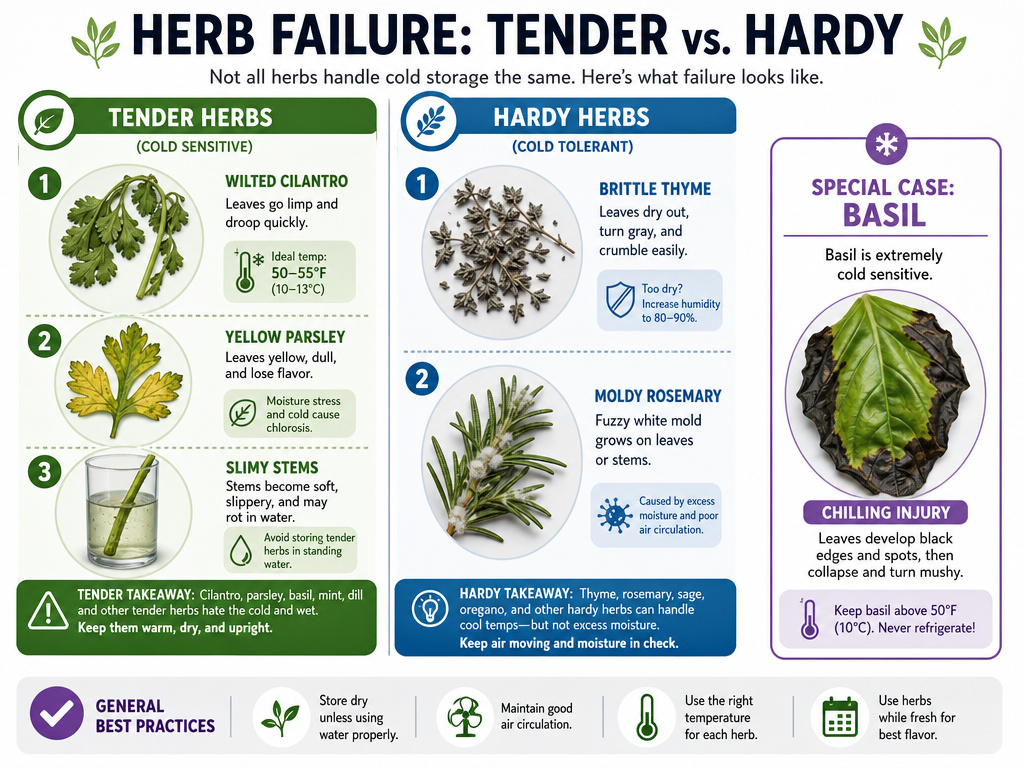 Storage extends life; it doesn’t grant immortality. Know the failure modes so you don’t use spoiled herbs.
Tender herbs (cilantro, parsley) fail in sequence:
- Wilting: Leaves lose turgor and droop. This is often reversible by trimming stems and refreshing water.
- Yellowing: Chlorophyll breaks down, leaves turn yellow. Flavor fades. Time to use them immediately.
- Sliming: A clear, slippery film on stems, especially at the waterline. This is bacterial decay. Discard the bunch.
Hardy herbs (rosemary, thyme) fail differently:
- Desiccation: Leaves turn from green to gray, become brittle, and crumble. They’re still safe but have lost their vibrant oil.
- Mold: Fuzzy white or green spots appear, usually in folds or where moisture was trapped. Discard.
Basil’s failure is dramatic and fast:
Chilling injury appears as dark, water-soaked patches or blackening, often starting at the leaf margins. This can happen in 24 hours at 0°C. Once black, the leaf is necrotic and should be discarded. This is why knowing how to store fresh basil separately is non-negotiable.
When in doubt, smell. Fresh herbs have a bright, characteristic aroma. Off herbs smell musty, fermented, or like hay.
Long-Term Storage: Freezing and Drying
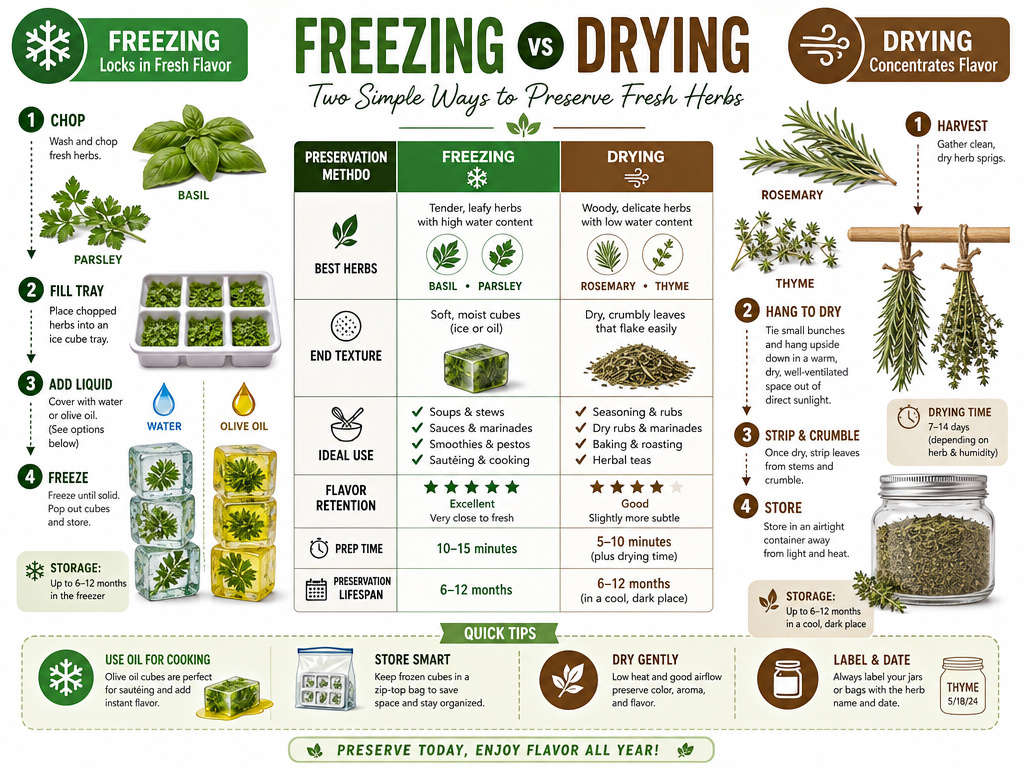 When you can’t use herbs within their fresh window, move to preservation. Each method suits different culinary uses.
Freezing is best for flavor retention in cooked dishes.
- For Tender Herbs (cilantro, parsley, basil): Chop clean, dry leaves. Pack into ice cube trays, cover with water or olive oil, and freeze. Pop out cubes and store in a bag. The frozen herb will be mushy when thawed but perfect for soups, sauces, and stews.
- For Hardy Herbs (rosemary, thyme): Strip leaves from stems and freeze them whole on a tray before bagging. They retain more structure.
Freezing preserves the volatile oils better than drying for many herbs. It’s a great next step for leftover fresh mint or cilantro.
Drying is best for hardy herbs used as dry seasonings.
Air-drying or using a dehydrator removes moisture, concentrating flavor but often changing its profile (earthy vs. Bright). Dried rosemary or oregano works in rubs and long-cooked dishes. Our guide on herb drying methods covers this in detail.
| Preservation Method | Best For These Herbs | End Texture | Ideal Use |
|---|---|---|---|
| Freezing (in oil/water) | Basil, Cilantro, Parsley, Dill | Soft, mushy | Cooked dishes, sauces, marinades |
| Air Drying | Rosemary, Thyme, Oregano, Sage | Brittle, dry | Spice blends, rubs, teas, stuffing |
| Refrigeration (fresh) | All herbs, using methods above | Crisp, fresh | Garnish, salads, fresh sauces |
Frequently Asked Questions
Can you store basil in the refrigerator?
You can, but you shouldn’t unless it’s your only option. Basil is highly chilling-sensitive. Injury occurs below 12°C (54°F), and leaves can blacken in one day at 0°C. If you must refrigerate basil, use the jar method and place it in the warmest part of the fridge, the door. Even there, shelf life is shorter than on the counter.
How do you keep cilantro from wilting so fast?
Cilantro wilts from water loss and bacterial growth on wet leaves. Use the jar method: trim stems, place in an inch of water, cover leaves with a plastic bag, and refrigerate. Keep it away from the coldest back wall. Most importantly, do not wash it until ready to use. Changing the water every two days prevents stem slime.
What is the best way to store parsley?
Parsley is a tender herb. Treat it like cilantro. Use the jar method with a plastic bag cover. It prefers cooler temps than basil, so the fridge is fine, just not the freezing-cold back shelf. For long-term storage, you can chop and freeze it in oil, or follow specific tips for keeping fresh parsley longer.
Is it better to store herbs in water or in a plastic bag?
It depends on the herb. Tender herbs (cilantro, parsley, dill) perform better in water with a bag cover. Hardy herbs (rosemary, thyme, oregano) perform better rolled in a (dry or lightly damp) paper towel inside a sealed bag. The bag-alone method, without water or a towel buffer, leads to quick dehydration or condensation rot.
How long do fresh herbs last in the refrigerator?
With the correct method: Hardy herbs last 2-3 weeks. Tender herbs (excluding basil) last 5-7 days. Basil lasts 10-14 days on the counter; in the fridge, its life is cut to 3-7 days with high risk of blackening. These timelines assume optimal fridge temperatures and proper initial handling.
The Bottom Line
Stop looking for one rule. Start with the snap test: woody stem or soft stem?
Hardy stems get a damp towel and a cold crisper. Soft stems get a water jar and a warm fridge spot, except basil, which lives on the counter like cut flowers. Wash herbs at the finish line, not the start.
The goal isn’t indefinite storage. It’s buying a bunch on Sunday and still having bright, crisp leaves for Friday’s dinner. That’s the difference between a method that works on paper and a system that works in your kitchen, every time. These principles apply across your kitchen, from storing garlic to the broader principles of proper food storage. Get the category right first, and the rest is just following the physics of the plant.
