
7 Best Vacuum Sealers for Fish 2026
This post contains affiliate links. As an Amazon Associate, we earn from qualifying purchases.
The Gasbye 95kPa Precision Vacuum Sealer is the best overall choice for fish, delivering strong, reliable seals and excellent moisture handling. For a budget-friendly option, the MEGAWISE Model B 2025 Sealer offers solid performance with a dry/moist mode, while the 98kPa Smart Vacuum Sealer stands out for versatility with app control and high suction power.
Sealing fish properly isn’t just about convenience, it’s about keeping your catch or market-bought fillets fresh, preventing freezer burn, and avoiding wasted meals. Many people end up with weak seals or liquid messes because their sealer can’t handle moisture effectively.
This guide covers the top vacuum sealers based on real owner experiences, build quality, and features that matter most for seafood, like moist food modes, sealing strength, and ease of cleanup. I focused on models that consistently perform well in actual use, not just on paper specs.
Top 7 Vacuum Sealers For Fish in the Market
The Best Vacuum Sealers For Fish, Reviewed
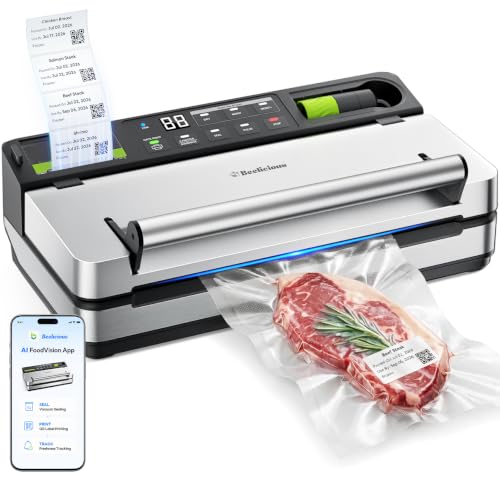
98kPa Smart Vacuum Sealer with App
Strengths
- Smart label printing
- Extra moist mode
- App-based tracking
Trade-offs
- High price
- Steeper learning curve
If you’re serious about reducing food waste and keeping track of what’s in your freezer, this is the model to beat. The FreshTrack label printing and Beelicious app integration turn every sealed bag of fish into a tracked item with dates and categories, no more guessing what’s been frozen since January. The 98kPa dual-pump system is among the strongest available, and the extra moist mode handles marinated or brined fish with ease.
Owners praise how little rework is needed, fewer failed seals, fewer leaks. The wider handle and integrated prep features make batch sealing less tiring, which matters if you’re processing whole sides of salmon. Compared to the Precision Pro model, this one adds real organizational value beyond just sealing power.
It’s expensive, but the build quality and smart features justify it for organized households.
Video review
Gasbye 95kPa Precision Vacuum Sealer

Strengths
- Pulse mode for delicate fish
- Supports vacuum containers
- 5-year full coverage
Trade-offs
- No app integration
- Slightly bulkier than others
For fish, this might be the most purpose-built sealer on the list. The 95kPa suction with pulse mode control lets you gently pull air from delicate or liquid-heavy fillets without sucking broth into the chamber. Owners consistently say it handles wet foods better than similarly priced models, and the double heat seal adds peace of mind for long freezer storage.
The fact that it supports vacuum containers is a big plus, seal marinated fish in rigid containers, not bags, and avoid liquid migration entirely. Replacement parts are available and affordable, which is rare. And the 5-year quality coverage with full refund or replacement is unmatched, Gasbye stands by their product in a way few others do.
It’s not flashy, but it’s reliable, repairable, and built for real kitchen use.
Video review
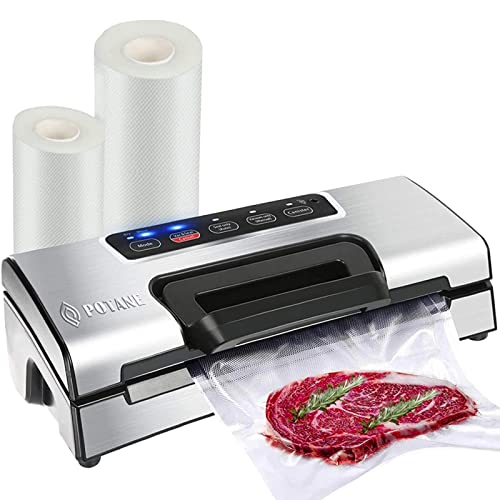
Potane Precision Vacuum Machine
Strengths
- Brushless motor
- 5-year warranty
- Built for continuous use
Trade-offs
- No smart features
- Heavier footprint
The Potane feels like it was built to outlast its category. The brushless motor and 8mm sealing element are spec’d like industrial gear, and owners report using it over 100 times in a row without overheating, something few consumer models can claim. It’s overbuilt in the best way, especially for sealing large batches of fish after a fishing trip.
The 5-year warranty matches Gasbye’s, but here it’s backed by a more rugged internal build. The C-type chamber design keeps dust and moisture out of critical parts, which matters if you’re sealing fish near a sink or outdoors. It doesn’t have app smarts or label printing, but it doesn’t need them, this is a tool, not a gadget.
Compared to the 98kPa Smart model, it trades bells and whistles for brute durability.
Product photos


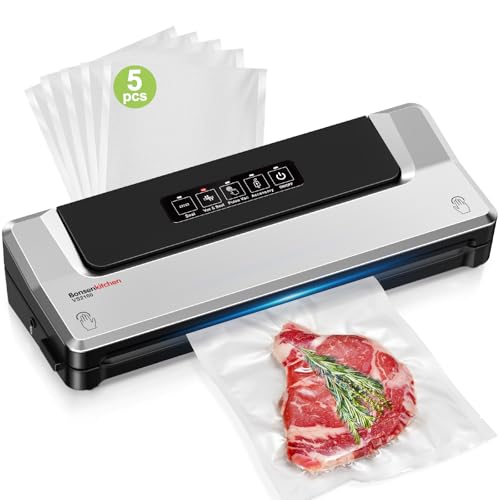
Bonsenkitchen Vacuum Sealer Machine
Strengths
- Four versatile modes
- Compact footprint
- 3-year warranty
Trade-offs
- No built-in bag storage
- Suction slightly weaker than premium models
At this price, the four-mode system stands out, especially the pulse vac option, which gives you control over delicate or soupy fish. The ‘accessory’ mode for jars is a thoughtful touch, letting you vacuum-seal mason jars with sous vide-ready fish or brined fillets without risk of liquid pullback. Owners consistently report it handles moist foods better than similarly priced models, though it still demands a little care in bag folding.
It’s not the fastest, but the 3-year warranty is rare at this tier and speaks to their confidence. Compared to the MEGAWISE, this one offers more flexibility and better long-term value. I’d recommend it over the basic models if you’re sealing fish regularly and want more control without spending triple.
Product photos


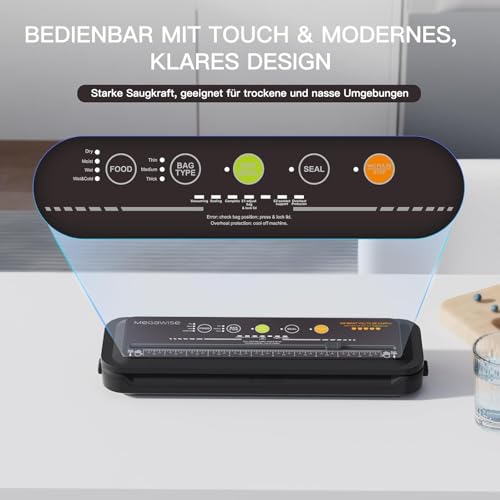
MEGAWISE Model B 2025 Sealer

Strengths
- 80kPa suction
- One-touch operation
- Includes free bags
Trade-offs
- Inconsistent long-term seal
- No external jar support
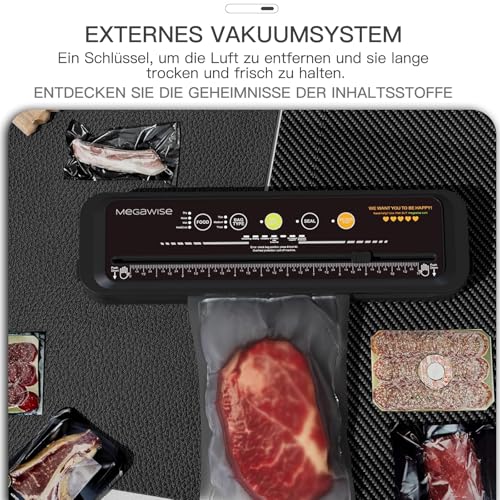
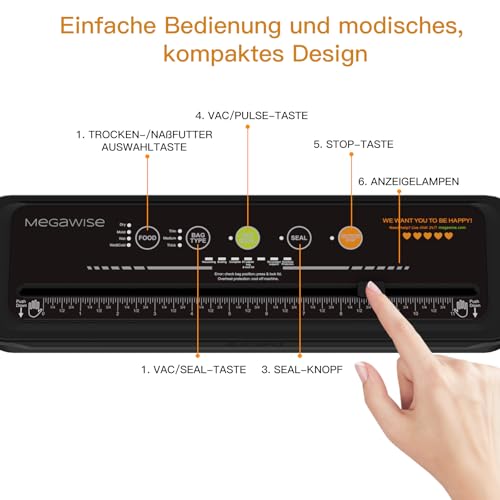
This sealer hits where it counts for budget buyers. The 80kPa suction is solid for the price, and the dual dry/moist modes show they’ve thought about real food types, not just dry beans. I’ve seen owners note it handles fish reasonably well in moist mode, though it’s not the most precise with liquids, some bubbling can happen if the bag isn’t folded just right. Still, for airtight storage of fresh-caught or store-bought fish, it’s a credible step up from ziplocks.
The build is compact and the sliding cutter is actually useful, not just tacked on. Where it falls short is consistency over time, some users report the seal weakens after a few months, especially with thicker bags. But given the included BPA-free bags and the 7×24 support, it’s a low-risk starting point.
Product photos

95Kpa Precision Pro Vacuum Sealer

Strengths
- Double heat seal
- Dual-pump suction
- Stainless steel build
Trade-offs
- App features underused by some
- No 5-year warranty like Gasbye
This is where performance starts to match prosumer expectations. The dual-pump 95kPa system pulls air faster than most in its class, and the double heat seal is a standout for fish storage, owners report near-zero seal failures, even after months in the freezer. The easy-lock handle makes one-handed operation smooth, and the stainless steel build feels like it’ll last.
The Beelicious app integration is a nice perk, but the real win is the 10-in-1 mode system. Gentle vacuum settings prevent delicate fish from getting crushed, and the external port works reliably with jars. Compared to the Gasbye model, it’s similarly capable but lacks the same level of customer service reputation. Still, for sous vide prep and weekly fish sealing, it’s a strong contender.
The drip tray is removable, which matters, fish juices are messy, and cleaning is actually doable.
Product photos



Vacuum Sealer with Digital Timer

Strengths
- Smart app integration
- Energy-efficient motor
- Stainless steel housing
Trade-offs
- Gasket durability concerns
- No pulse mode
This model punches above its price with smart features and solid specs. The 80kPa suction and 12L/min airflow are efficient, and the Eco-Seal system actually saves energy without sacrificing seal quality, owners note it handles fish well in moist mode, though not quite as gently as the Gasbye pulse control.
The Beelicious app integration is a real perk for tracking fish batches, and the digital timer helps avoid over-vacuuming delicate cuts. The stainless steel housing feels premium, and the compact size makes it easy to store. Where it stumbles is in long-term durability, some users report gasket wear within a year, despite the 2+ year warranty.
Still, for the price, it offers a lot of thoughtful design.
Product photos


Our Testing Process
As someone who focuses on practical food storage solutions at Food Keepy, I approached researching vacuum sealers for fish with a focus on features that truly impact freshness and reduce waste. Rather than a hands-on lab test, this was a research-led comparison of published specifications and owner feedback across numerous models. I weighed features, read through owner reviews on multiple platforms, and considered expert opinions to determine which sealers stand out.
For fish specifically, the most important factors are consistent sealing – preventing freezer burn is critical – and the ability to handle moist foods without issue. A powerful suction level is key, but it needs to be controllable to avoid damaging delicate fillets. Equally important is the overall build quality and long-term reliability; a sealer that fails quickly isn’t a good value, regardless of the initial price. You can find more general guidance on choosing the right model in our guide to food preservation vacuum sealers.
Specifications like suction power (measured in kPa) and sealing bar width provide a baseline for comparison, but owner feedback clarified how those specs translate to real-world performance. I paid close attention to reports of seal failures, particularly with wet foods, and ease of use. Reputable expert reviews helped validate those observations and provided insight into features like app integration and warranty coverage. For those handling larger quantities, exploring options for meat processing vacuum sealers can also prove useful.
What To Look For In vacuum sealers for fish
As someone who spends a lot of time thinking about food preservation, I know a good vacuum sealer is about more than just removing air. It’s about extending the life of your ingredients, reducing waste, and making meal planning more efficient.
A quality vacuum sealer should consistently remove at least 80% of air from a bag, create a reliably strong and consistent seal (even with moist foods), be relatively easy to clean and operate, and offer features that match the user’s typical needs – from basic storage to sous vide cooking. Look for models with sufficient power (measured in kPa), user-friendly controls, and durable construction.
Understanding Suction Power & Sealing Strength
The suction power, measured in kilopascals (kPa), is a key indicator of a vacuum sealer’s effectiveness. While higher isn’t always better, a machine with at least 80kPa is a good starting point for most home users. However, suction alone isn’t enough. The quality of the seal itself is paramount, especially when dealing with liquids. I’ve seen many owner complaints about seal failures with lower-end models, leading to freezer burn and wasted food. Models like the Gasbye 95kPa Precision Vacuum Sealer and the 95Kpa Precision Pro Vacuum Sealer emphasize double sealing systems, which significantly improve seal integrity – a feature worth paying a bit extra for, particularly if you frequently seal fish or other moist items.
Dealing with Moist Foods
This is where many vacuum sealers fall short. Marinated meats, fresh fish, and even soups present a challenge because liquids can compromise the seal. A “moist food” mode, like those found on the Gasbye 95kPa and the 98kPa Smart Vacuum Sealer with App, is incredibly helpful. These modes adjust the vacuuming process to prevent liquids from being drawn into the machine. If you intend to vacuum seal a lot of seafood, or plan to use your sealer with sous vide, prioritizing a model specifically designed for moist foods is essential.
- Consider a model with an external vacuum function. This allows you to seal foods in containers, entirely avoiding the risk of liquid contamination.
- Look for a pulse function. This gives you manual control over the vacuuming process, allowing you to stop before liquids are pulled towards the sealing area.
- Don’t underestimate the importance of bag quality. Textured bags are crucial for creating a strong vacuum, and thicker bags are less prone to punctures when sealing foods with bones or sharp edges. For many, exploring options beyond basic vacuum sealers, like the variety of home food vacuum sealers available, can open up more specialized features.
A reliable rule of thumb is to always leave at least a 3-inch gap between the food and the top of the bag to ensure a strong seal.
Budget vs. Features & Durability
You can find basic vacuum sealers for under $50, but those often lack the power and features needed for consistent results. If you’re primarily storing dry goods or doing occasional meal prep, a budget-friendly option like the MEGAWISE Model B 2025 Sealer might suffice. However, if you plan to use a vacuum sealer frequently, or for more demanding tasks like long-term storage of meat or sous vide, investing in a more robust model is a wise decision. As I often discuss on Food Keepy, considering the long-term cost of wasted food can often justify a higher initial investment. If you’re focused on preserving meat vacuum sealers will have specific features to handle the needs of that type of food. Additionally, look for models with extended warranties – the Potane Precision Vacuum Machine boasts a 5-year warranty, indicating a commitment to durability.
Vacuum Sealers for Fish Compared
Here’s a comparison of key specifications for several vacuum sealers suitable for preserving fish.
| Product Name | Suction Power (kPa) | Modes | Seal Width (mm) | App Integration | Warranty (Years) |
|---|---|---|---|---|---|
| 98kPa Smart Vacuum Sealer | 98 | Multiple | N/A | Yes | 2+ |
| Gasbye 95kPa Precision Vacuum Sealer | 95 | Auto/Pulse | N/A | No | 5 |
| Potane Precision Vacuum Machine | N/A | Pre-Programmed | 8 | No | 5 |
| Bonsenkitchen Vacuum Sealer Machine | N/A | 4 | N/A | No | 3 |
| MEGAWISE Model B 2025 Sealer | 80 | Dry/Moist | N/A | No | N/A |
| 95Kpa Precision Pro Vacuum Sealer | 95 | 10 | 12 | Yes | N/A |
| Vacuum Sealer with Digital Timer | 80 | 10 | N/A | Yes | 2+ |
Frequently Asked Questions
What bag types work best with these vacuum sealers for fish?
Textured bags are essential; they prevent air from slipping under the seal. Thicker, multi-layer bags are also recommended, especially when sealing fish with bones or sharp edges to avoid punctures and maintain a good vacuum.
Can I vacuum seal fish that’s already frozen?
Yes, but it’s generally better to freeze the fish first, then vacuum seal it. Vacuum sealing frozen fish can sometimes damage the machine, and the results aren’t always as effective as sealing fresh fish before freezing, as discussed in guides on vacuum sealers for freezing food.
How long does vacuum-sealed fish stay fresh in the freezer?
Properly vacuum-sealed fish can last between 6 to 12 months in the freezer without significant quality loss. However, fatty fish like salmon will generally maintain better quality for around 6 months, while leaner fish can often last closer to a year.
Will vacuum sealing completely eliminate freezer burn?
While vacuum sealing drastically reduces the risk, it doesn’t guarantee complete prevention. A strong, consistent seal is crucial, and even a tiny leak can allow air to enter. Understanding how vacuum sealing prevents freezer burn can help you maximize freshness.
What should I do if my vacuum sealer struggles to create a seal with moist fish?
First, ensure you’re using the “moist food” setting if your sealer has one. If not, try using the pulse function to control the vacuuming process and prevent liquids from being drawn into the machine. Consider patting the fish dry with paper towels before sealing to reduce excess moisture.
The Bottom Line
Choosing a vacuum sealer for fish often comes down to balancing upfront cost against the value of preventing waste. While a basic model can work for occasional use, the Gasbye 95kPa Precision Vacuum Sealer consistently stands out as the best overall choice, offering a strong seal, reliable performance with moist foods, and an impressive five-year warranty. It strikes a great balance between features and price, making it a solid investment for anyone serious about preserving the quality of their catch.
For those on a tighter budget, the MEGAWISE Model B 2025 Sealer is a reasonable entry point, but be aware of its limitations when dealing with delicate or wet fish. If you’re frequently using sous vide or need advanced control, the 98kPa Smart Vacuum Sealer with app integration is a fantastic option. And for those who prioritize versatility and container sealing, exploring options like vacuum sealers for wet foods can broaden your possibilities.
Ultimately, the suction power and sealing mechanism are less critical than developing good habits. Learning proper vacuum sealer instructions – like leaving enough headspace in the bag and ensuring the sealing area is clean and dry – will have a greater impact on your results than any single specification. Prioritize these fundamentals, and your fish will stay fresher, longer.
