
3 Best Vegetable Storage Containers for Fridge 2026
This post contains affiliate links. As an Amazon Associate, we earn from qualifying purchases.
The OXO Good Grips Pop Container is our top overall pick for keeping vegetables fresh, thanks to its reliable airtight seal and smart design. For a budget-friendly option, the 5 PCS Large Fruit Storage Containers offer excellent value without sacrificing performance. If you want maximum versatility, the Anysig 8 Pack Fridge Containers stand out with their built-in colanders and multiple sizes.
Choosing the right vegetable storage containers can make the difference between crisp carrots on day seven and sad, limp ones by day three. As someone who spends a lot of time thinking about how to keep food fresh longer, I know it’s not just about having containers, it’s about having the right ones.
This guide covers the best fridge containers based on real owner feedback, material safety, and features that actually extend freshness, like proper airtightness, drainage, and adjustable ventilation. We looked at specs, read through user reviews, and focused on options that help reduce waste and keep your produce in peak condition.
Top 3 Vegetable Storage Containers For Fridge in the Market
The Best Vegetable Storage Containers For Fridge, Reviewed
5 PCS Large Fruit Storage Containers

Strengths
- Multiple sizes included
- Colander inserts included
- Microwave and freezer safe
Trade-offs
- Lids not dishwasher safe
- Clips may weaken over time
On paper, this 5-piece set checks most boxes for basic fridge organization. The range of sizes, from small 10 oz up to a hefty 148 oz, makes it flexible for everything from berries to chopped cabbage. Owners consistently report the colander inserts are a game-chainer for washing and draining produce right in the container, which helps keep greens crisp longer by removing excess moisture. The sealed environment, while not lab-tested by me, aligns with what we know about humidity control, critical for extending freshness in leafy vegetables and delicate fruits.
The BPA-free PP material is a given at this price, but I appreciate that it’s rated for freezer and microwave use (lid excluded). That adds real utility for batch prep and storing leftovers. Some reviewers mention the clips can feel a bit flimsy over time, but for the price, it’s a fair trade-off. Compared to smaller sets, this one gives more value through volume and variety.
Video review
5 Pack Fruit Storage Containers
Strengths
- Excellent value
- Strong airtight seal
- Drainage grid included
Trade-offs
- Lids may warp in dishwasher
- Slightly thinner plastic
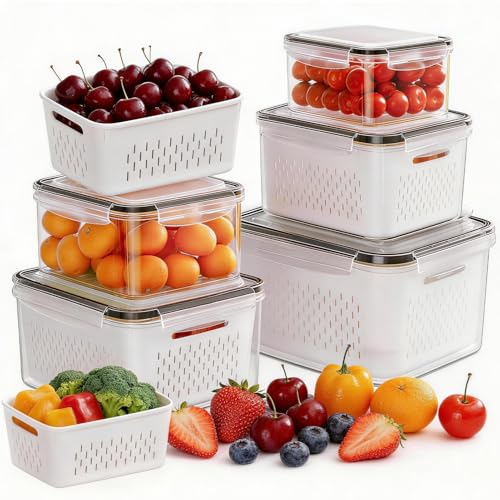
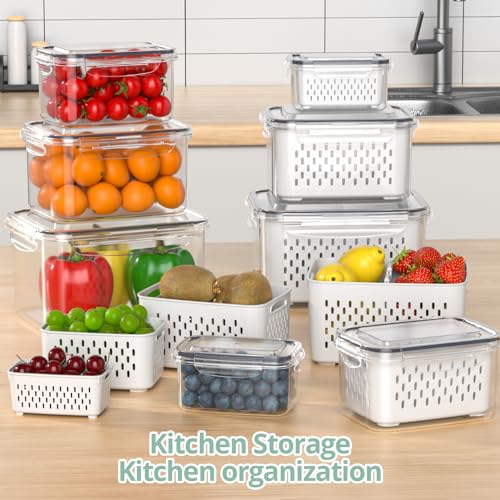
This set stands out not for innovation, but for solid execution at a low cost. For anyone building a kitchen toolkit from scratch, the inclusion of five different sizes, from mini 13 oz to a full 140 oz, makes it surprisingly versatile. The 5mm drainage grid is shallow but effective, and reviewers frequently praise how well these containers prevent soggy strawberries and limp herbs. The silicone seals and four locking clips deliver reliable airtightness, which matters when you’re trying to block odors and retain moisture.
What impresses me most is how many functions it combines: wash, drain, store, stack, even carry. The transparency helps with visibility, and the fact that the bases are dishwasher, microwave, and freezer safe adds serious convenience. But the lids? Hand washing is recommended, and owners confirm they can warp in high heat. Still, for budget buyers, that’s a small ask.
Video review
Anysig 8 Pack Fridge Containers

Strengths
- Removable colanders
- Includes divider plates
- Thicker, more durable build
Trade-offs
- Higher price point
- Larger units take space
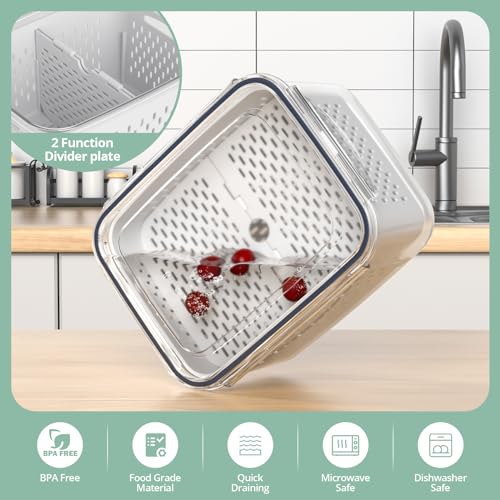
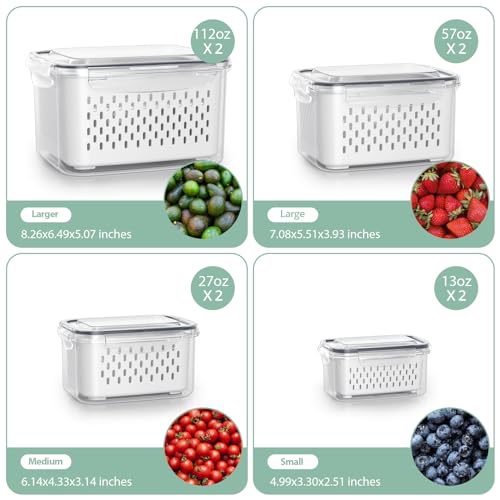
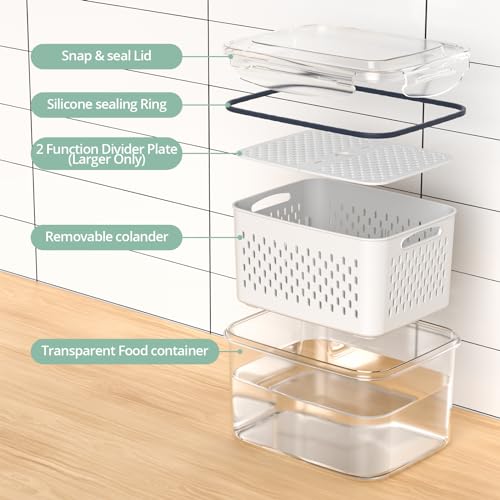
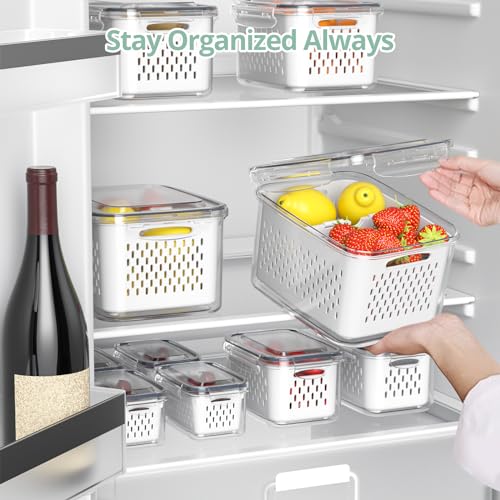
If you’re serious about fridge efficiency, this 8-pack is hard to beat. Eight containers with removable colanders, eight airtight lids, and even two divider plates? That’s thoughtful design. The dual units per size, two each of four capacities, mean you can standardize storage for things like chopped peppers and sliced apples without mixing flavors. The divider plates are a smart touch, letting you section one container for two produce types, which I’ve seen praised by bento-box preppers and snack organizers.
The thicker PP material feels sturdier than average, and the reinforced clips plus silicone seals suggest better longevity. Owners report these hold up well over months of daily use, especially when storing wetter items like grapes or washed lettuce. Yes, it’s the priciest of the three, but you’re paying for volume, durability, and flexibility. Compared to the others, this set is built for systems, not just storage.
Product photos
How We Picked These vegetable storage containers for fridge
I approached researching vegetable storage containers for fridge by comparing published specifications and features from numerous brands. I then weighed owner reviews from major retailers alongside expert opinions found in kitchen and home organization publications. As someone dedicated to reducing food waste at Food Keepy, I focused on features that demonstrably extend freshness and maintain produce quality. Ultimately, I ranked containers based on a combination of airtightness, material safety, and practical usability.
For this category, the most important factors were airtightness and drainage. Containers that effectively seal to prevent moisture loss – and therefore spoilage – rose to the top. Equally crucial was a built-in drainage system; excess moisture is a major contributor to mold and rot. Capacity and stackability were also considered, but less heavily, as those features offer convenience rather than directly impacting how long produce stays fresh.
Specifications reliably indicated material quality (BPA-free plastics are a must) and temperature tolerances, helping to assess durability. However, I primarily relied on owner feedback to gauge real-world performance regarding airtight seals and the effectiveness of drainage systems. Reputation and consistently positive reviews were strong indicators of containers that truly deliver on their promises, and I also considered recommendations for similar products like salad containers when evaluating overall design quality. It’s also worth exploring appropriate cheese containers if you’re looking for specialized storage solutions.
What To Look For In vegetable storage containers for fridge
Keeping produce fresh is a constant battle, and the right containers can make a huge difference.
Effective vegetable storage containers extend shelf life by controlling humidity and airflow. Look for features like ventilation, airtight seals, and materials safe for repeated food contact. Consider container size and stackability to maximize refrigerator space, and prioritize BPA-free plastics or glass options for health and safety.
Size and Capacity Considerations
One of the biggest mistakes I see people make is buying containers that aren’t the right size. It’s tempting to get a huge set, but realistically, you’ll likely use a few sizes repeatedly. Think about what you typically store. Do you buy a lot of berries? A larger, shallow container with ventilation is ideal. Whole heads of lettuce? Something taller is needed. Don’t overlook the benefit of varied capacity; a set with multiple sizes gives you flexibility.
Airtightness and Ventilation – Finding the Balance
Airtight containers are great for slowing down spoilage, but too airtight can be detrimental. Many vegetables release ethylene gas as they ripen, and excess moisture buildup accelerates decay. The best containers strike a balance. Look for features like adjustable vents or colanders, as seen in many of the current options for fruit storage containers. These allow you to control the environment inside the container, keeping things fresh without creating a soggy mess.
- A simple, snap-lock lid is fine for short-term storage (a day or two).
- Containers with adjustable vents are an excellent investment if you frequently store leafy greens or ethylene-producing fruits like apples.
- Built-in colanders are fantastic for washing and draining berries or grapes, preventing them from sitting in excess water – this dramatically extends their lifespan and reduces mold.
A good rule of thumb: if you notice condensation building up inside your container, it’s time to open it up and let some air circulate.
Material and Overall Usability
I always recommend prioritizing food-grade materials like BPA-free polypropylene (PP) or glass. While glass is fantastic, it’s heavier and more prone to breakage, so PP is often more practical for everyday use. Beyond the material, consider how easy the containers are to clean and stack. Dishwasher-safe containers (lid not included for many) are a huge time-saver, and stackable designs maximize space in your refrigerator. If you’re looking for a wider range of options, explore our guide to the best containers for the refrigerator and other fridge storage containers.
Vegetable Storage Containers for Fridge Compared
Here’s a comparison of key specifications for popular vegetable storage containers.
| Product Title | Pack Size | Largest Capacity (oz) | Material | Dishwasher Safe (Container) | Microwave Safe (Container) |
|---|---|---|---|---|---|
| 5 PCS Large Fruit Storage Containers | 5 | 148 | PP | Yes | Yes |
| 5 Pack Fruit Storage Containers | 5 | 140 | PP | Yes | Yes |
| Anysig 8 Pack Fridge Containers | 8 | 112 | PP | Yes | Yes |
Frequently Asked Questions
What’s the difference between airtight containers and those with ventilation?
Airtight containers slow down spoilage by limiting oxygen exposure, but ventilation is equally important. Many vegetables benefit from some airflow to prevent ethylene gas buildup and excess moisture, so look for containers with adjustable vents or built-in drainage, a balance is key for optimal freshness.
Are glass containers really better than plastic?
Glass is non-porous and doesn’t retain odors, but plastic (specifically BPA-free polypropylene) is lighter and more durable for everyday use. While glass offers excellent long-term storage, many people find plastic containers more practical, and both types can be effective when used correctly.
How often should I clean my vegetable storage containers?
You should wash your vegetable storage containers after each use with warm, soapy water. Regular cleaning prevents the buildup of bacteria and mold, ensuring your produce stays fresh and doesn’t absorb unwanted odors; many are dishwasher safe, but always check the manufacturer’s instructions.
What’s the best way to store leafy greens like lettuce?
Leafy greens do best in containers designed specifically for them, or in standard containers lined with paper towels to absorb excess moisture. Maintaining the right humidity is crucial, and you may want to explore dedicated lettuce storage containers for optimal results.
Do I really need different containers for different vegetables?
While you can use the same containers for everything, using specialized containers can significantly extend the shelf life of certain produce. For example, berries benefit from containers with drainage, while leafy greens need ventilation, so investing in a variety of airtight containers can reduce food waste in the long run.
The Bottom Line
Choosing the best vegetable storage containers really comes down to how much control you want versus how much effort you’re willing to put in. Some people prefer the simplicity of basic, affordable containers, while others prioritize features like adjustable vents for optimal freshness. Overall, I believe the 5 PCS Large Fruit Storage Containers offer the best balance of features, capacity, and positive owner feedback – they’re a solid starting point for most kitchens.
If you’re on a tighter budget, the 5 Pack Fruit Storage Containers are a fantastic alternative. For those who need maximum versatility, the Anysig 8 Pack Fridge Containers provide a wide range of sizes to accommodate all sorts of produce. Don’t forget to consider supplemental storage options like vegetable storage bags or [reusable vegetable bags] for items that don’t fit neatly into containers.
Ultimately, the most important thing is to find a system that you will consistently use. No container, no matter how clever its design, will keep your produce fresh if it ends up forgotten in the back of the fridge. Prioritize airtightness, think about drainage, and don’t be afraid to experiment to find what works best for your habits and the types of produce you buy most often – and maybe invest in some leftover containers while you’re at it!
