
7 Best Water Containers of 2026
This post contains affiliate links. As an Amazon Associate, we earn from qualifying purchases.
The 5-Gallon Stackable Water Containers are our top pick for reliable, space-saving home storage, thanks to their sturdy build and convenient spigots. For a more portable option that collapses when empty, the ust 5 Gal Water Carrier Cube stands out as a smart budget-friendly choice.
If you’re like me, you’ve probably dealt with flimsy jugs that leak in the garage or take up too much space once they’re empty. Finding a container that actually works, without wasting water or cluttering your kitchen, is harder than it should be.
This guide cuts through the noise by focusing on what really matters: safety, durability, and practical design. I compared specs and owner feedback across dozens of models, zeroing in on BPA-free materials, real-world leak resistance, and features that make daily use or emergency prep easier. These picks balance performance and value based on how people actually use them.
Top 5 Water Containers in the Market
The Best Water Containers, Reviewed
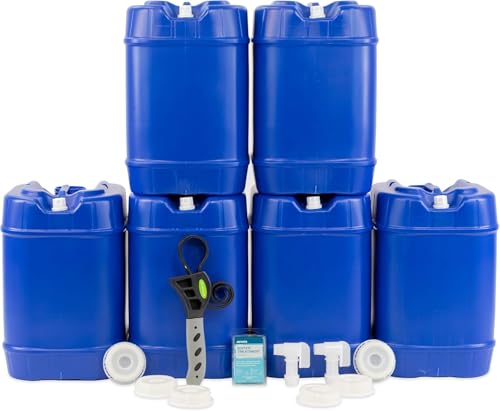
5-Gallon Stackable Water Containers 6-Pack
Strengths
- BPA-free food-grade plastic
- Includes water treatment drops
- Stackable for compact storage
- Light-blocking design
- Comes with spigots and caps
Trade-offs
- Heavy when full (40 lbs per unit)
- Takes significant floor space
- Higher upfront cost
I’ll be honest, most bulk water storage setups feel like a compromise between space, durability, and ease of use. But this 6-pack stands out because it’s built for real long-term prep without demanding constant maintenance. The inclusion of water treatment drops is a smart touch, letting owners keep 30 gallons fresh for up to five years without rotation. That’s a big deal for anyone serious about emergency readiness but short on time.
The stackable ribs and light-blocking blue plastic show thoughtful design, this isn’t just repurposed jugs slapped together. Owners consistently report these stay leak-free when tightened with the included strap wrench, and the dual spigots make dispensing manageable despite the weight. Compared to basic jugs, this system takes setup seriously.
Video review
ust 5 Gal Water Carrier Cube

Strengths
- Collapses flat for storage
- Ultra lightweight (10.4 oz)
- BPA free and safe
- One-hand spout operation
- Low cost
Trade-offs
- Not for long-term static storage
- Clear material allows light exposure
- Less durable than rigid jugs
At this price, the UST cube isn’t meant to replace rigid tanks, it’s for people who need emergency water on standby without committing shelf space. The fact that it folds down to 3 inches tall is huge for apartment dwellers or glove-box storage. Made from thick polyethylene, it holds up better than cheap collapsible bottles, and the one-hand spout works smoothly, according to most owners.
But transparency means sunlight exposure risks algae if stored near windows, and you wouldn’t want to keep water in it for more than a few weeks untreated. It’s also not for heavy-duty stacking. Still, for hiking, power outages, or bug-out bags, this is the kind of lightweight insurance that makes sense. My recommendation? Rotate water monthly and keep it in a dark closet.
Video review
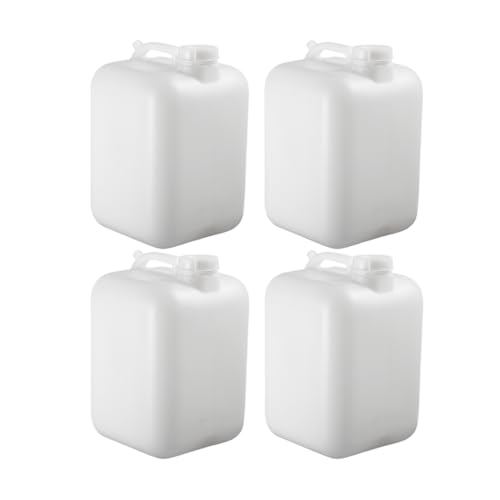
FastRack 5 Gallon Water Jug 4-Pack
Strengths
- BPA-free HDPE construction
- Leak-proof threaded lid
- Ideal for fermentation
- Reusable and rugged
- Great multi-pack value
Trade-offs
- No spigots included
- No handles for pouring
- Opaque white limits light monitoring
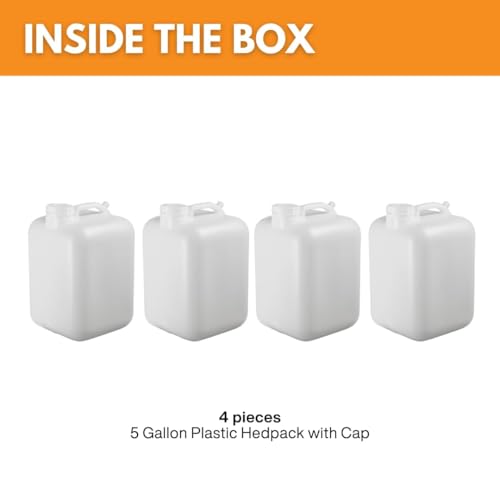
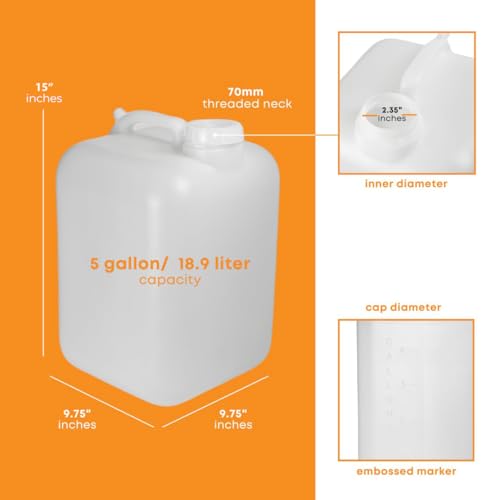
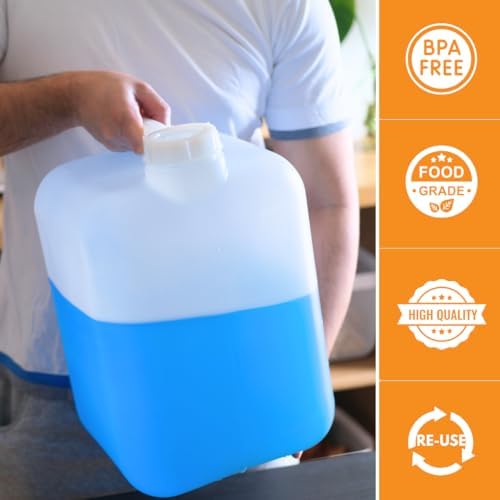
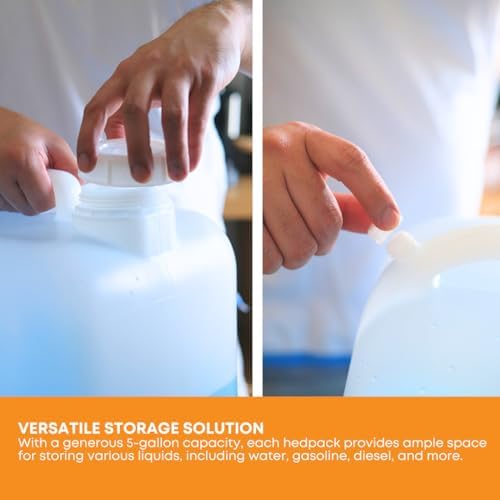
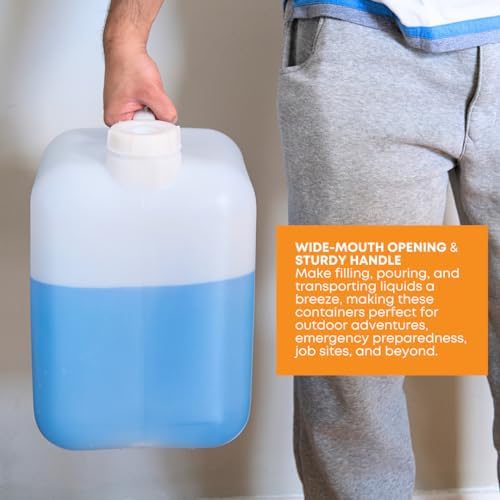
If you’re into homebrewing, fermenting, or need multiple durable vessels for liquid storage, this pack delivers solid value. These are essentially HDPE carboys, industrial-grade, rigid, and built to resist permeation, which matters if you’re storing kombucha or mead for months. The threaded lids create a tight seal, and owner feedback confirms they hold up well over repeated use, even when moved around a garage or basement.
They don’t come with spigots, so you’ll need to outfit them separately if you want easy pouring. But that also means no weak points from spigot holes degrading over time. I’d pick these over flimsier jugs any day for batch fermentation or DIY water storage where you’re okay with manual filling and siphoning. They’re not the prettiest, but they’re workhorses.
Product photos
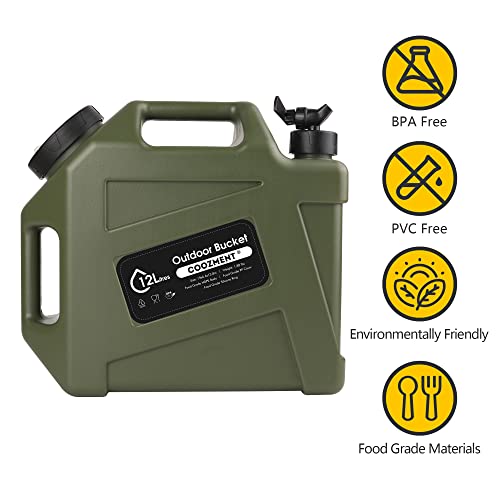
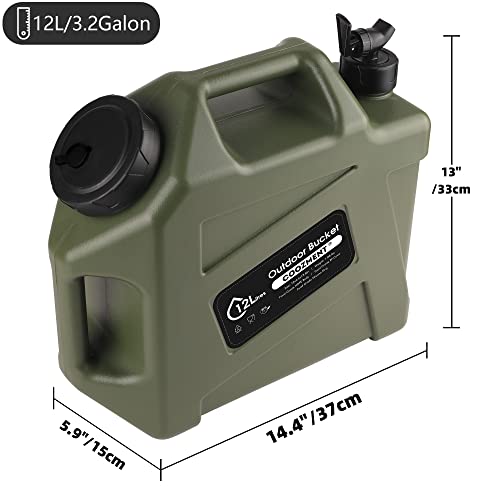
COOZMENT 3.2 Gallon Water Container
Strengths
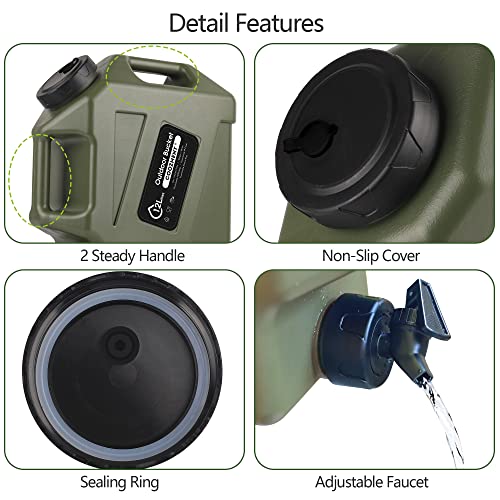
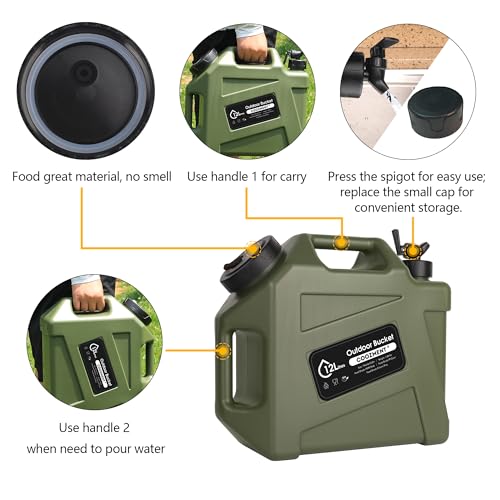
- Ergonomic push-button spigot
- Wide mouth for filling and cleaning
- Lightweight and portable
- BPA-free food-grade materials
- Includes cleaning brush
Trade-offs
- Smaller capacity
- Military green shows scuffs
- Handles could be sturdier
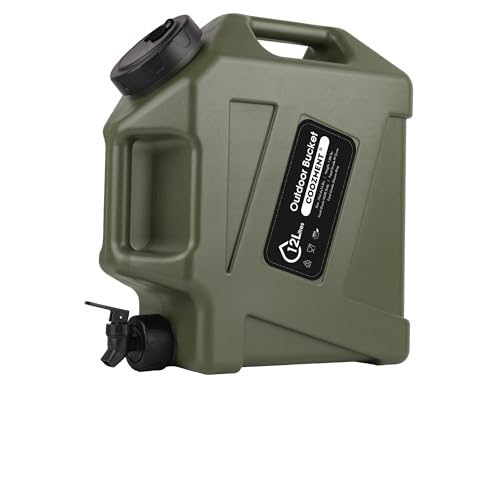
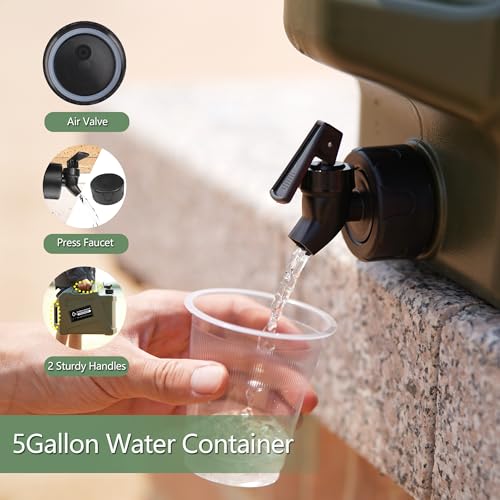
The standout here is the ergonomic spigot design, no twisting heavy lids, just a simple press or lift to pour. That may sound minor, but if you’ve ever struggled with stiff spigots on older jugs, you’ll appreciate how smooth this one operates. The 4-inch wide mouth also makes cleaning far easier than narrow-necked containers, and the included brush helps reach corners.
At 3.2 gallons, it’s lighter than 5-gallon models, making it easier to carry with two hands, especially useful for camping trips or filling pet water bins. Some owners mention the green plastic shows wear over time, but durability feedback remains positive. Compared to larger options, this is less about bulk storage and more about daily usability and portability.
Product photos
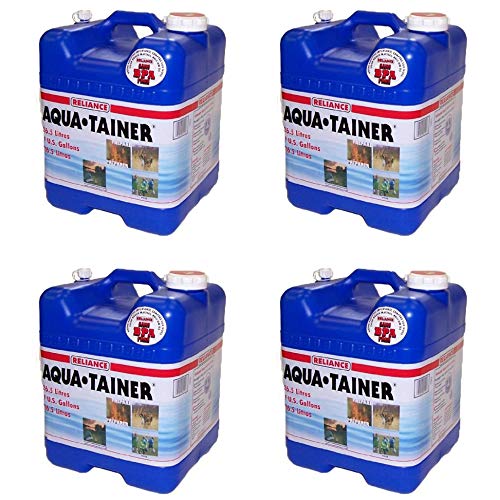
Reliance Aqua Tainer 7 Gallon 4-Pack
Strengths
- 7-gallon high capacity
- Space-saving rectangular design
- Hideaway spigot
- Easy to stack when empty
- Five-year warranty
Trade-offs
- Spigot feels flimsy to some
- No water treatment included
- Heavier than 5-gallon options
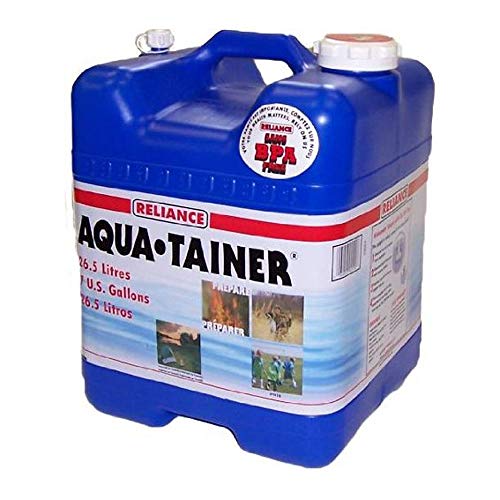
Seven gallons is an underrated sweet spot, more than standard 5-gallon jugs, yet still manageable when full. The rectangular shape of the Aqua Tainer makes it easier to stack and fit into tight spaces, especially when empty, which a lot of owners appreciate in cramped pantries or SUV trunks. The hideaway spigot is a small but meaningful upgrade; it keeps the tap protected and reduces snag hazards during transport.
Still, some reviewers note the spigot feels less robust than third-party add-ons. And while the 28-gallon total from four units is useful, the lack of integrated treatment or UV protection means you’ll need to rotate or treat water yourself. It’s a dependable option, but more basic than the stackable 5-gallon set with treatment drops.
Product photos
How We Picked These water containers
As someone who spends a lot of time thinking about food and drink preservation at Food Keepy, I approached researching water containers with a focus on both immediate usability and long-term storage solutions. Rather than a hands-on lab test, this was a research-led comparison of published specifications, owner reviews from major retailers, and insights from other reputable sources. I weighed features against price, paying close attention to materials, construction, and reported durability to arrive at these recommendations.
For this category, the most important factors were capacity, leak-proof design, and material safety. A container’s ability to hold the advertised volume reliably is crucial, as is a secure closure to prevent spills during transport or storage. Beyond that, I prioritized BPA-free, food-grade plastics to avoid any potential off-tastes or health concerns. Understanding your needs for potable water storage is also key – are you prepping for emergencies, or simply need a convenient way to carry water on outdoor adventures?
Specifications reliably tell you about capacity, dimensions, and materials used. However, owner feedback provided invaluable insight into real-world performance – things like spigot durability, ease of cleaning, and how well the containers actually stack. Reputation matters, too; brands with consistently positive reviews for quality and customer service were given more consideration. For those looking for a broader range of options, you can also find more information on containers for home.
How To Pick The Right water containers
Finding the right water container depends heavily on how and where you plan to use it. It’s not just about holding liquid; it’s about safety, portability, and long-term reliability.
A quality water container should prioritize food-grade materials, a secure seal to prevent leaks and contamination, and a design suited to its intended use. Consider capacity, durability, ease of cleaning, and whether portability or stackability is more important. Look for BPA-free plastics and features like spigots or handles for convenient dispensing and transport.
Capacity and Intended Use
The size of the water container you choose is the most basic consideration, but it’s tied directly to how you’ll use it. A small, portable jug is great for day hikes, but won’t cut it for emergency preparedness. Larger containers (like the 5-7 gallon options we’ve looked at) are ideal for having a reserve supply, but become much less manageable for moving around. Think about the number of people relying on the water supply and the duration you need it to last. Don’t overestimate your strength or storage space; a full 5-gallon container weighs roughly 40 pounds.
Material and Durability
While most water containers use plastic, the type of plastic matters. You want containers made from food-grade, BPA-free polyethylene (PE) or high-density polyethylene (HDPE). These materials are less likely to leach chemicals into your water and are generally more durable. Look closely at the construction. Reinforced seams and a tight-fitting lid are crucial for preventing leaks, especially during transport. If you need something truly rugged, a rigid container like the Scepter 5 Gallon Water Can is a better choice than a collapsible option.
- Collapsible containers are lightweight and easy to store when empty, but they are more susceptible to punctures.
- Rigid containers offer greater durability but take up more space, even when empty.
- Containers with dark or opaque exteriors help block light, which can contribute to algae growth and affect the taste of your water when storing water long term.
A container is only as good as its seal. Always check reviews for reports of leaks, especially around the spigot or lid.
Features and Convenience
Beyond the basics, consider features that will make your life easier. Spigots are incredibly useful for dispensing water without having to tip or lift heavy containers. Handles make transporting full containers much more manageable, while stackable designs (like those found in the 5-Gallon Stackable Water Containers) maximize storage space. Some containers even include water treatment drops, which can be a valuable addition for emergency preparedness. If you’re looking for multiple options, exploring water storage containers can give you a wider range of choices. Ultimately, the best container is the one that best suits your specific needs and lifestyle.
Water Containers Compared
Here’s a comparison of key specifications for various water containers to help you make an informed decision.
| Product Title | Capacity (Gallons) | Stackable | Collapsible | Spigot Included | Material | Pack Size |
|---|---|---|---|---|---|---|
| 5-Gallon Stackable Water Containers | 5 | Yes | No | Yes | BPA-Free Plastic | 6 |
| ust 5 Gal Water Carrier Cube | 5 | No | Yes | Yes | Polyethylene | 1 |
| WaterStorageCube Collapsible 5.3 Gal | 5.3 | No | Yes | Yes | PE Plastic | 2 |
| FastRack 5 Gallon Water Jug | 5 | Yes | No | No | HDPE | 4 |
| Scepter 5 Gallon Water Can | 5 | No | No | Yes | Polyethylene | 2 |
| COOZMENT 3.2 Gallon Water Container | 3.2 | No | No | Yes | PE/PP Plastic | 1 |
| Reliance Aqua Tainer 7 Gallon | 7 | Yes | No | Yes | N/A | 4 |
Frequently Asked Questions
What’s the difference between HDPE and standard polyethylene plastics for water storage?
High-density polyethylene (HDPE) is more rigid and durable than standard polyethylene, making it a better option for containers you’ll use repeatedly or need to withstand rough handling. HDPE is also less prone to cracking and doesn’t leach chemicals as easily.
How often should I clean my water container?
You should thoroughly clean your water container after each use, or at least every three months if used for long term storage. This prevents the buildup of bacteria and algae, and ensures your water stays fresh.
Are collapsible water containers as reliable as rigid ones for long term storage?
Collapsible containers are convenient for portability, but rigid containers are generally more reliable for long-term water storage because they are less susceptible to punctures and damage. If you need a solution for long term storage, a rigid option is preferred.
Can I store water in containers that previously held other liquids?
No, you should never reuse containers that previously held anything other than potable water. Residual chemicals or flavors can contaminate your water supply, even after washing, and impact the taste. Consider investing in new sealed containers specifically for water storage.
What is the best way to sanitize a water container before filling it for storage?
The best way to sanitize a water container is to wash it with hot, soapy water, then rinse it with a solution of one tablespoon of unscented liquid household bleach per gallon of water. Let the solution sit for at least 30 minutes before rinsing thoroughly with potable water and allowing it to air dry completely.
The Bottom Line
Choosing a water container often comes down to balancing convenience with reliability. While many options exist, the 5-Gallon Stackable Water Containers strike the best overall balance of capacity, durability, and features for most people. They offer a good size for both emergency preparedness and outdoor activities, and the stackable design is a practical bonus if you need to store multiple containers.
For those specifically needing a portable solution, or seeking a budget-friendly option, the ust 5 Gal Water Carrier Cube is an excellent choice. And if you’re looking for containers to keep at the office, consider exploring containers for work to find something that suits your needs. If you need something a little smaller and easier to carry, the COOZMENT 3.2 Gallon Water Container is a good pick.
Ultimately, the most important thing isn’t a specific feature or brand, but ensuring you have a safe, dependable source of water when you need it. Prioritize food-grade materials, a secure seal, and a capacity that matches your household’s needs. Don’t get caught up in chasing the latest gadget; a well-chosen, durable container is the foundation of any good water storage plan, and you might find helpful information on 5 gallon containers.
