
How to Exterminate Pantry Moths: The Complete Elimination Guide
This post contains affiliate links. As an Amazon Associate, we earn from qualifying purchases.
To exterminate pantry moths, you must execute a five-step protocol: locate and discard every infested item, deep-clean all storage surfaces, treat remaining dry goods in a freezer for seven days, repackage everything into airtight containers, and deploy pheromone traps for three months to monitor survivors. The most common failure point is skipping the freezer step, which leaves eggs alive to restart the cycle.
That protocol isn’t a suggestion. It’s the only sequence that accounts for the insect’s biology. Pantry moths like the Indian meal moth lay 100–400 eggs directly on food. The larvae that hatch can chew through plastic bags and thin cardboard, and the adults can live for weeks without feeding. If you miss one life stage, the infestation rebounds within a month.
What follows is the mechanical breakdown of each step, the specific tools that work, and the university-sourced data on why common shortcuts fail. By the end, you’ll know exactly how to clear an infestation and, more importantly, how to make sure it never comes back.
Key Takeaways
- Pheromone traps are a monitoring tool, not a solution. They catch male moths for about three months but do nothing to eggs or larvae already in your food.
- The seven-day freezer treatment is non-negotiable. Freezing at 0°F (-18°C) for a full week is the only reliable home method to kill all eggs and larvae in suspect dry goods.
- Never use insecticide sprays in food storage areas. University extension programs universally warn that pesticides near food pose a greater health risk than the moths themselves.
- Identify your moth. Indian meal moths pupate away from food, often on ceilings or in corners, while grain moths pupate inside kernels. This changes where you need to clean.
- Airtight containers are your final defense. Glass or thick plastic containers with sealing lids prevent re-infestation from any surviving moths and stop new larvae from entering.
The 5-Step Extermination Protocol
This is the order that works. Swapping steps or skipping one gives the moths a path back in.
Step 1: Locate and Discard the Source. Empty every cupboard, shelf, and drawer where dry food is stored. Inspect each item, flour, cereal, nuts, dried fruit, pet food, birdseed, spices. Look for silken webbing, clumping, small holes in packaging, or tiny caterpillars. If you see any sign, seal the entire package in a plastic bag and take it outside to the trash immediately. Do not simply throw it in the kitchen bin.
Step 2: Deep Clean All Surfaces. With the pantry empty, vacuum every corner, shelf groove, and hinge with a crevice attachment. This picks up wandering larvae, pupae, and eggs. Follow by washing all surfaces with warm, soapy water. Dry everything thoroughly. Moisture favors pantry pest development, so a dry cabinet is a hostile cabinet.
Step 3: Treat Suspect Survivors in the Freezer. Any unopened or seemingly clean item from the infested area could harbor eggs. Place these goods in airtight freezer bags and freeze them at 0°F (-18°C) for seven days. The National Pesticide Information Center page confirms this duration kills all life stages. This step addresses the where pantry moths come from inside your own home, eggs you unknowingly brought from the store.
Step 4: Repackage into Airtight Containers. Never return dry goods to their original packaging. Transfer everything into sturdy, sealed containers. Glass jars or thick plastic containers with locking lids, like those in our guide to the best containers for flour, are essential. This creates a physical barrier that stops future larvae from entering and contains any infestation that might have been missed.
Step 5: Deploy Pheromone Traps and Monitor. Place commercial pheromone traps, such as those reviewed in our roundup of best moth traps, in the pantry. They will catch adult male moths for about three months, helping you confirm the infestation is gone. Remember, traps alone will not eliminate an infestation that has already established.
Common mistake: Stopping after cleaning and trapping. If you don’t freeze the remaining food, eggs hatch 4–8 days later and the cycle starts anew. You’ll see fresh adults in three weeks.
Why Insecticides Are a Terrible Idea
You might see aerosol “pantry pest” sprays at the store. Do not use them.
The UC Statewide IPM Program guide states directly: “Insecticides are not recommended for controlling pantry pests.” The reason is twofold. First, spraying chemicals on or near food storage surfaces creates a far greater risk of human exposure to toxins than the moths themselves pose. Second, sprays cannot penetrate food packages to kill eggs or larvae inside. They only affect adults they contact, missing the root of the problem.
The only chemicals with a role are pheromones in traps, and those are attractants, not poisons. Your safest, most effective tools are physical: the vacuum, the freezer, and the airtight seal.
Pheromone Traps: Monitor, Don’t Rely
Pheromone traps are excellent diagnostics. They are not a cure.
These traps contain a lure that mimics the scent of a female moth, attracting males. According to the UC Statewide IPM Program guide, a single trap remains effective for about three months. If you’re still catching moths after that period, you have a surviving source, likely a missed infested item or a pupa that escaped your clean-out.
| Trap Role | What It Does | What It Does NOT Do |
|---|---|---|
| Monitoring | Confirms adult moth presence after treatment. | Kill eggs, larvae, or pupae. |
| Population Reduction | Can slow infestation by removing some males. | Eliminate an established infestation. |
| Identification | Helps distinguish pantry moths from lookalikes like clothes moths. | Tell you where the infestation source is. |
Use them as the final step in the protocol, not the first. If you trap first without cleaning and freezing, you’re just catching males while a hundred eggs hatch behind your oatmeal.
The Critical Role of Dryness and Sealed Storage
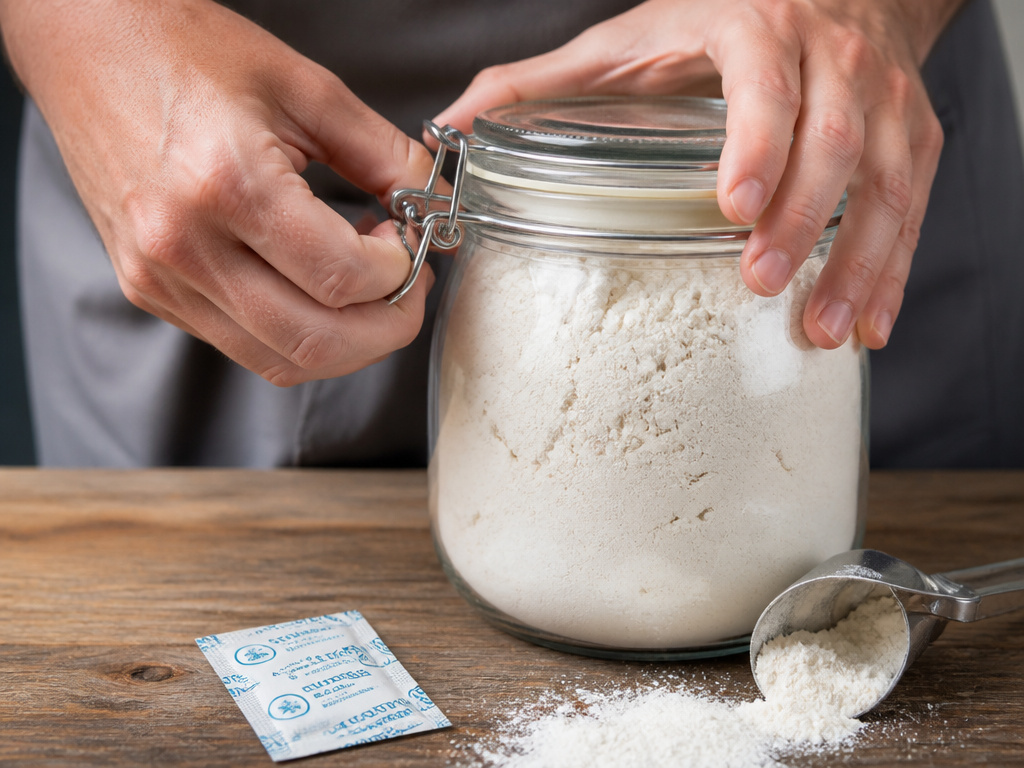 Pantry moths need more than food. They need the right environment.
The Cornell IPM pantry moth guide and other university sources highlight that moisture favors development. Spilled flour, condensation in a cupboard, or even high kitchen humidity can tip the scales. After cleaning, ensure your storage area is completely dry. Consider using a dehumidifier in damp basements where food is stored.
Your long-term strategy is sealed storage. Once you’ve exterminated the current population, your goal is to prevent a new one. This means adopting permanent habits, like using airtight flour containers for all dry staples and employing oxygen absorbers for food storage for long-term grain storage. These methods not only block pests but also preserve freshness far longer than the original packaging.
Indian Meal Moth vs. Grain Moth: Why It Matters
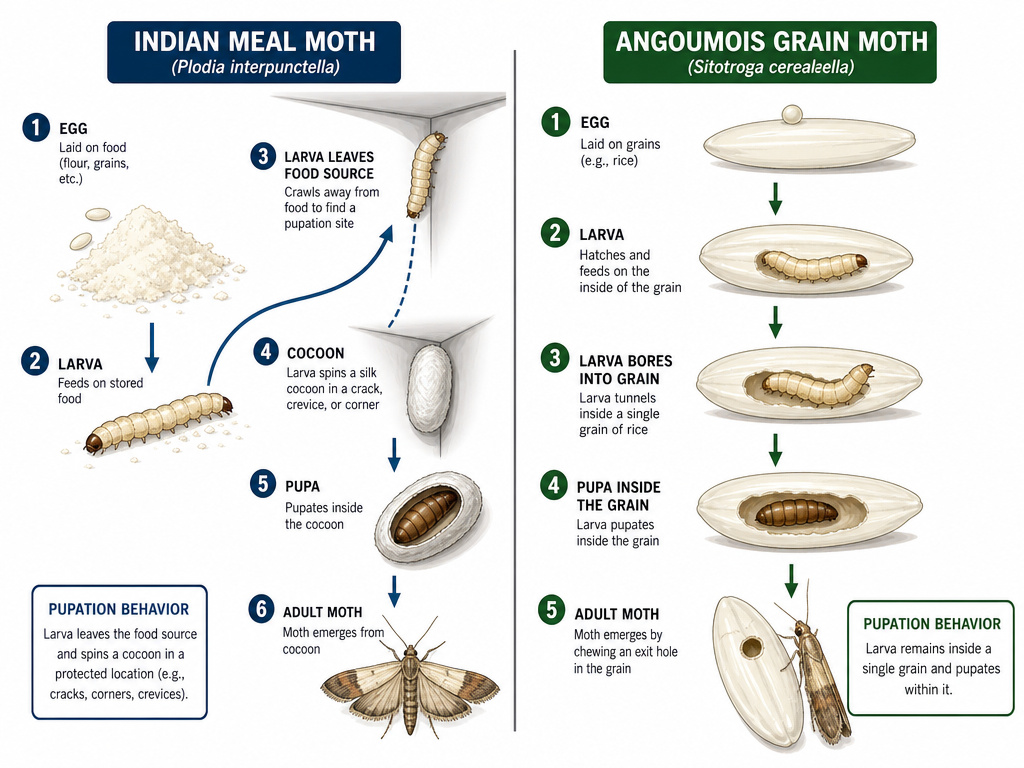 Not all pantry moths behave the same. Knowing which one you have tells you where to look for pupae.
The Indian meal moth (Plodia interpunctella), the most common home invader, is a general feeder. Its larvae will wander surprisingly far from the food source to pupate. You’ll find their cocoons in ceiling corners, along cabinet hinges, or tucked behind appliances. The Angoumois grain moth, in contrast, prefers whole grains and often pupates inside the kernel itself.
This distinction matters during cleanup. For Indian meal moths, your vacuum must reach every crack and crevice far from the pantry. For grain moths, you must be ruthless in discarding any whole grains, rice, wheat berries, corn, as they likely contain the next generation inside. Proper identification, perhaps using a resource on common pantry pests, ensures you don’t miss their hiding spot.
Where this goes sideways: Assuming all moths are the same. If you have grain moths and only clean visible surfaces, you leave pupae sleeping inside your rice jar. They emerge as adults two weeks later.
When to Call a Professional
For the vast majority of home infestations, the five-step protocol is sufficient. Professionals are needed in two specific scenarios.
First, if the infestation is in a wall void or attic space, originating from a forgotten stash of birdseed or a rodent cache. Second, for commercial-scale problems or when dealing with pests like the warehouse beetle, whose hairs can cause medical irritation. The NC State Extension guide notes fumigation is an option for commercial facilities or pests embedded inside kernels. For a typical kitchen, your own diligence is the most effective tool.
If you’ve followed the steps twice over three months and still see adults, the source is likely outside the kitchen. That’s when a pest management professional with experience in stored product pests can perform a whole-home inspection.
Frequently Asked Questions
How long does it take to get rid of pantry moths?
If you execute the full protocol diligently, you can break the life cycle in about one week (the freezer period). However, pheromone traps should be left in place for three months to monitor for any survivors. A population can rebound from a single missed egg batch, so vigilance for a full quarter is standard.
Can pantry moths infest sealed packages?
Yes. The larvae of the Indian meal moth can chew through plastic bags, thin cardboard, and even some sealed plastic containers that aren’t truly rigid. They cannot penetrate glass, thick hard plastic, or metal. This is why transferring all dry goods into pest-proof flour storage is a critical final step.
Are pantry moths harmful to eat?
University extensions like Cornell’s state that pantry moths are not known to transmit human pathogens. The primary harm is aesthetic and economic, contamination with webbing, feces, and shed skins makes food unpalatable. However, some beetle larvae (like the warehouse beetle) can cause physical irritation if consumed.
Will moths go away on their own?
No. Pantry moths have a continuous breeding cycle and can live for many weeks without food. Ignoring them allows the population to grow and spread to more of your food stores. Active, systematic extermination is required.
The Bottom Line
Exterminating pantry moths is a war of attrition fought on multiple fronts. You must attack the current generation (clean, discard), the next generation (freeze), and the environment that lets them thrive (seal, dry). The single most important thing you can do is the seven-day freezer treatment on all suspect dry goods. Without it, you’re just pruning a plant that keeps re-sprouting from the roots.
Your long-term peace of mind comes from sealed storage. Make airtight baking containers and proper flour storage non-negotiable kitchen standards. That way, the next time a moth tries to move in, it finds a fortress, not a buffet.
