
Learn How to Get Rid of Pantry Bugs Step-by-Step for Good
This post contains affiliate links. As an Amazon Associate, we earn from qualifying purchases.
To get rid of pantry bugs, you must find and discard all infested food, thoroughly clean every surface, and treat salvageable items with extreme heat (130°F for 30 minutes) or cold (0°F for 4 days). Insecticides are not recommended near food, and pantry pests can live for weeks without a meal, making airtight containers and continuous monitoring essential.
That “find and discard” step sounds simple. It isn’t. The real work is in the timeline, pantry pests survive for weeks without food, and adult Indianmeal moths fly for up to three weeks after you’ve thrown out their food source. The cleanup you do today only catches the visible generation. The next one is already hiding in a crevice you missed, waiting for a single crumb.
What follows: the exact temperatures and durations that kill eggs, why a spray bottle is the wrong tool, and the container upgrade that stops a reinfestation before it starts.
Key Takeaways
- Discard first, clean second. Vacuuming before bagging infested food spreads eggs. Seal everything in outdoor trash immediately.
- Heat beats cold for speed. An oven at 130°F for 30 minutes kills all life stages. Freezing at 0°F works but takes four full days.
- Insecticides are banned near food. Sprays are ineffective on insects inside packaging and create a chemical contamination risk that outweighs the pest problem.
- Airtight containers are non-negotiable. Glass, metal, or heavy plastic with locking lids prevent escape and re-entry. Bag clips and twist ties fail.
- Monitor for three months. Use pheromone traps to catch surviving adults. If you see one, you likely missed a food source.
The 4-Step Process to Eliminate Pantry Bugs
Most guides tell you to clean. This one tells you the order: find, discard, clean, then treat. Swap the sequence and you just vacuum larvae into the air to settle elsewhere.
Technical Snippet: Effective pantry pest eradication requires specific environmental extremes. According to extension service guidelines, heating infested goods to 130°F (54.4°C) for at least 30 minutes kills all insects and eggs. Alternatively, freezing at 0°F (-17.8°C) for a minimum of four days achieves the same result. These thresholds are non-negotiable for breaking the reproductive cycle.
Step 1: Find the Source (It’s Never Just One Package)
Empty every shelf, drawer, and cabinet. Look beyond the flour bag. Check birdseed, decorative corn, pet food, dried flowers, and spice tins. Pantry beetles like the Drugstore beetle are generalist feeders, they’ve been found in everything from paprika to wool.
Signs aren’t just bugs. Look for silken webbing across a surface, fine frass (insect excrement) at the bottom of a container, or tiny exit holes in grains. Mature Indianmeal moth larvae travel far from their food to pupate; you might find cocoons in the corner where the wall meets the ceiling.
Common mistake: Stopping when you find one infested bag. By the time you spot a pantry pest, it has usually spread to other food packages. Assume everything open is suspect.
Step 2: Discard With Extreme Prejudice
Take infested packages directly outside to your trash bin. Do not carry them through the house to an indoor can. Do not open them over a sink. Seal them in a plastic bag first if the packaging is torn.
Heavily infested items are garbage. For lightly infested items you wish to salvage, you have two science-backed paths: heat or cold. This isn’t about preference; it’s about matching the method to your kitchen tools and timeline.
| Treatment Method | Temperature | Minimum Duration | Best For |
|---|---|---|---|
| Oven Heating | 130°F (54.4°C) | 30 minutes | Flour, grains, spices (spread thin on a tray) |
| Freezing | 0°F (-17.8°C) | 4 days | Nuts, whole grains, dried fruit, pet food |
| Freezing (less cold) | 27°F (-2.8°C) | 7 days | If your freezer doesn’t hit 0°F |
Why this works: Insect eggs are resilient to casual cold but cannot survive sustained thermal extremes. The 130°F threshold denatures proteins; the 0°F freeze ruptures cells through ice crystal formation. Shorter durations or higher temperatures often recommended online simply don’t work on all life stages.
Step 3: Clean Like a Surgeon
Now you clean. Remove all shelves and drawers if possible.
- Vacuum every crack, corner, and crevice. Use the crevice tool. This removes eggs, pupae, and frass that brushing would miss.
- Wash surfaces with soap and hot water. Avoid bleach, ammonia, or disinfectants. These chemicals won’t prevent pests from returning and pose a danger if they contact food later. Soap removes the food residues and insect secretions that attract new pests.
- Let everything dry completely. Moisture favors pest development. A dry environment is your first defense.
Where this goes sideways: Using a vacuum with a bag and not disposing of it immediately. Empty the canister or discard the vacuum bag outdoors after use. An indoor trash can becomes a new breeding site.
Step 4: Treat Salvageable Food & Prevent Return
This is where most people lose the war. You’ve cleared the battlefield, but survivors are waiting.
First, treat what you keep. For items you salvaged via heat or cold, let them cool or thaw, then transfer them immediately into airtight containers. Glass jars with sealing lids like Kilner or Mason jars are ideal. For bulk items, heavy-duty plastic bins with locking gaskets (like OXO Pop containers) work. The goal is to prevent any surviving insect from escaping to reinfest, and to block new insects from entering.
Second, monitor relentlessly. Install pheromone traps like the Trapper Pantry Moth Trap. Place one in each cabinet. These traps use species-specific scents to lure and capture adult male moths, breaking the breeding cycle. They are not a treatment; they are an early-warning system. Keep them active for at least three months.
Finally, change your buying habits. Purchase dried foods in quantities you’ll use within two to four months. Store infrequently used items like pancake flour, specialty grains, and spices in the freezer permanently. This prevents bugs in flour and other staples before an infestation can even start.
Pantry Bug Identification: Know Your Enemy
You can’t fight what you don’t recognize. Different pests hint at different food sources and have unique behaviors.
| Pest | Key Identifier | Common Food Sources | Special Note |
|---|---|---|---|
| Indianmeal Moth | ½ inch moth; wing base is whitish-gray, tip is coppery. | Cereal, flour, nuts, dried fruit, chocolate, pet food. | Larvae travel far, spinning silken threads. |
| Sawtoothed Grain Beetle | Tiny (1/10″), flat, with six “teeth” on each side of the thorax. | Grains, cereal, nuts, dried meat, candy, seeds. | Cannot fly. Gets into tightly sealed packages. |
| Drugstore Beetle | Small, reddish-brown, rounded. Head tucked down, not visible from above. | A generalist. Spices, pet food, drugs, cereal, books. | The name comes from infesting pharmacy shelves. |
| Warehouse Beetle | Small, mottled brown beetle. | Dog food, bird seed, dried fruit, flour, cornmeal. | Larval hairs can irritate the mouth and throat if ingested. |
If you see small moths, you’re likely dealing with a pantry moth infestation. If you see tiny beetles, you have a pantry beetle problem. The treatment protocol is identical, but knowing which helps you target your inspection, moths near ceiling corners, beetles deep in cabinet cracks.
Why Insecticides Are a Bad Idea
You’ll see the spray bottle on the store shelf next to the traps. Don’t buy it.
I won’t recommend insecticide sprays for pantry pests. The visual appeal of a quick kill is a trap. The chemicals don’t reach insects inside food packaging, they leave residues that contaminate surfaces, and the health risk of spraying near food outweighs the nuisance of the bugs themselves. This isn’t scare talk; it’s the explicit warning from every university extension service.
The official UC IPM program page states insecticides are not recommended for controlling pantry pests. The California pesticide regulator guide emphasizes that spraying will not prevent pests from returning if the food source remains.
The mechanism is simple: sprays are contact killers. They might hit a wandering adult beetle, but they do nothing to the eggs, larvae, and pupae safely nestled inside a grain of rice or a folded bag seam. Worse, if the spray contacts food, utensils, or dishes, you must throw those items away. The cure becomes more hazardous than the problem.
Effective control comes from the physical methods already outlined: removal, heat, cold, and exclusion. A can of spray gives false confidence while leaving the real problem untouched.
How to Prevent Pantry Bugs From Coming Back
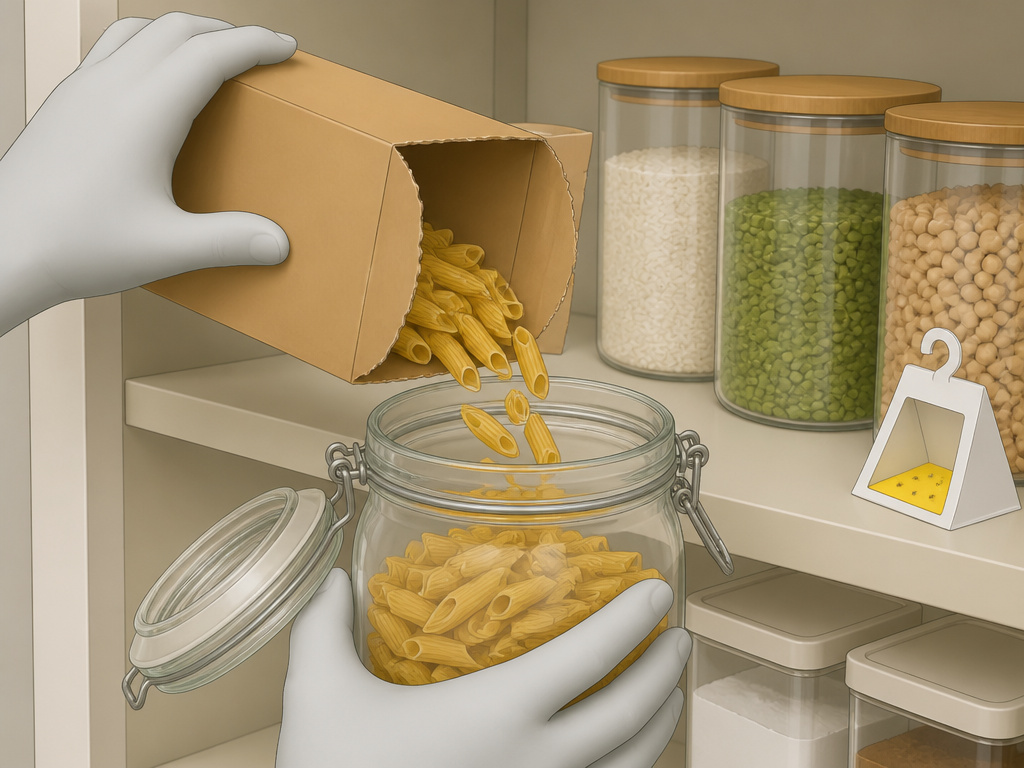
Prevention is cheaper, easier, and less disgusting than eradication. It hinges on creating an environment that is inhospitable and impenetrable.
1. Starve Them Out
This means impeccable sanitation. After cooking, wipe down counters and sweep floors immediately. Crumbs are a feast. Store all dry goods, even crackers and chips, in sealed containers. A pantry organization system where you can see everything helps you use older items first and spot problems early.
2. Block Their Entry
Your first line of defense is at the store. Inspect packages before buying. Avoid boxes or bags with tiny holes, tears, or loose seals. Once home, transfer everything out of paper, cardboard, or thin plastic bags. These materials are no barrier. Use your airtight containers for every single item.
3. Control Their Environment
Pantry pests thrive in warmth and humidity. Some species prefer temperatures above 80°F and 75-90% relative humidity. Use a dehumidifier if your pantry is damp. Store food away from heat sources like ovens or water heaters. A simple thermometer/hygrometer can tell you if you’re in the danger zone.
4. Maintain Vigilance
Keep those pheromone traps up year-round. They are your smoke alarm. Consider designating one cabinet for new or suspect items, keeping them in quarantine. When you store rice or other grains, write the purchase date on the container and aim to use it within four months.
This integrated approach, often called Integrated Pest Management (IPM), addresses the cause, not just the symptom. It’s why simply how to organize a pantry can be a more powerful pest-control move than any chemical.
Frequently Asked Questions
Can pantry bugs make you sick?
Yes, indirectly. Pantry pests can introduce microbes that cause food to rot, especially in warm, humid conditions. Some beetle larvae produce secretions that give food a foul odor and taste. The hairs from Warehouse beetle larvae can irritate the mouth, throat, and stomach if ingested. The pests themselves are not poisonous, but they contaminate food.
How long can pantry bugs live without food?
Long time. Pantry pests can live for many weeks without a food source. Adult Indianmeal moths can fly and survive for up to three weeks after their infested food is removed. This is why a single cleaning session often fails; you must monitor for months to ensure the population dies out.
Does bay leaves or vinegar get rid of pantry moths?
No. Bay leaves are a weak repellent at best and do not kill eggs or larvae. Vinegar is a great cleaner but not an insecticide. Relying on these home remedies allows an infestation to grow. Use proven methods: extreme temperature treatment and airtight sealing.
Can I save food that has bugs in it?
It depends on the level of infestation and the food type. Heavily webbed, obviously contaminated food should be discarded. For lightly infested whole grains, nuts, or flour, you can salvage it by heating it in a 130°F oven for 30 minutes or freezing it at 0°F for four days, then sifting or picking out the dead insects before transferring to an airtight container.
What are the best containers to prevent bugs?
Glass jars with sealing lids (Mason, Kilner) and heavy-duty plastic containers with locking, silicone-gasketed lids (OXO Pop, Rubbermaid Brilliance) are the best. The seal must be absolute. Thin plastic containers with snap lids or bags with clip closures are not sufficient to prevent determined pantry beetles or moth larvae.
The Bottom Line
Getting rid of pantry bugs is a project, not a task. It demands a systematic, patient approach grounded in specific numbers: 130°F for 30 minutes, 0°F for 4 days, and a 3-month monitoring window.
Skip the shortcuts. Insecticides fail, and half-cleaning guarantees a comeback. Your success hinges on the unsexy work of discarding, heating or freezing, and investing in a suite of truly airtight containers. Once your pantry is secured, prevention becomes routine, inspect at the store, transfer at home, and trap year-round. The goal isn’t just a bug-free cabinet today, but a system that keeps it that way for good.
