
How to Keep a Garage Fridge from Freezing in Cold Winter
This post contains affiliate links. As an Amazon Associate, we earn from qualifying purchases.
To keep a garage fridge from freezing in winter, you must maintain the ambient garage temperature above 50°F (10°C) and insulate the appliance itself. Below this threshold, the single thermostat in the fresh food compartment stops calling for cooling, causing the freezer to thaw and refreeze repeatedly. The only permanent, food-safe solution is a properly insulated garage paired with a true garage-ready refrigerator.
That 50°F number isn’t a suggestion. It’s the line where the physics of a standard refrigerator’s design breaks down. Most are only factory-rated to operate down to about 55°F. Drop below 50°F, and the fresh food compartment feels cozy to the thermostat, so the compressor shuts off. Your freezer fails silently.
What follows is a breakdown of why this happens, a clear set of steps to diagnose your current risk, and the three upgrade paths that actually work when a space heater isn’t enough. This isn’t about adding a blanket. It’s about managing a thermal environment that your appliance was never built to handle.
Key Takeaways
- The freezer fails first, not the fridge. The single thermostat lives in the fresh food compartment, so a cold garage tricks it into shutting off the compressor, letting the freezer warm up and thaw.
- 50°F (10°C) is the failure threshold. Once your unheated garage dips below this point, a standard refrigerator’s performance becomes unreliable, regardless of its settings.
- DIY solutions like space heaters are energy hogs and safety risks. They treat the symptom (cold air) but don’t solve the core design mismatch.
- A true garage-ready refrigerator has a redesigned system, often with a dedicated “Garage Mode,” to operate in ambient temperatures as low as 0°F.
- Insulating the garage itself is the most effective long-term fix. It stabilizes the environment for any appliance and cuts energy waste.
The Single-Thermostat Design Problem
Your refrigerator and freezer share one compressor and one thermostat. That thermostat is always located in the fresh food compartment, where the target temperature is around 37°F. Its only job is to keep that specific box cold.
When your garage air temperature drops near or below the fridge’s target, the thermostat gets confused. It senses the cold ambient air seeping into the fridge compartment and decides no cooling is needed. The compressor stays off. Meanwhile, the freezer, which needs to be at 0°F, slowly warms up. Food thaws. Ice cream turns to soup.
Common mistake: Assuming the fridge is fine because it’s cold. The fridge compartment can be a perfect 37°F while the freezer is a dangerous 25°F. You won’t know until you open the freezer and find a puddle.
This isn’t a malfunction. It’s the predictable outcome of using an appliance outside its design limits. Manufacturers like KitchenAid and Whirlpool state their standard models are preset for an ambient temperature range of 55°F to 110°F. Drop below that 55°F floor, and all bets are off.
Is Your Garage Too Cold? The 50°F Test
You need data, not guesswork. Place a simple digital thermometer in your garage, away from direct sunlight and doors, at about the same height as your refrigerator. Log the temperature over 24 hours, especially overnight and in the early morning.
| Garage Temperature | What Happens Inside Your Fridge |
|---|---|
| Above 55°F | Normal operation. Fridge and freezer maintain set points. |
| 50°F to 55°F | Compressor runs less. Freezer may begin to struggle, especially if the door is opened frequently. |
| 39°F to 50°F | Thermostat rarely calls for cooling. Freezer thaws and may refreeze in daily warm-up cycles. |
| Below 32°F | Freezer contents survive by accident. Fridge contents may freeze. Oil in compressor thickens. |
If your garage spends more than a few hours a day in the orange or red zones, you have a problem that adjusting the dial won’t fix. This is why appliance repair services like Profixit give a “flat no” to standard fridges in unheated Winnipeg garages—the climate simply exceeds the machine’s physical capability.
Your 4-Step Winter Prep Plan
Before the first deep freeze, run through this sequence. It moves from cheap and immediate to more involved investments.
Step 1: Relocate or Elevate
If possible, move the refrigerator to the warmest part of the garage—an interior wall shared with the house is best. Avoid exterior walls and drafty garage doors. Elevating it off the concrete floor with a wooden pallet or platform also helps; concrete acts as a giant heat sink, pulling cold into the appliance’s base.
Step 2: Check and Adjust Settings
Turn both the fridge and freezer controls to their coldest settings. This forces the compressor to run more often. It’s a short-term, energy-intensive band-aid, but it can help during brief cold snaps.
Where this goes sideways: Leaving the controls on max cold when the garage warms up in spring. The unit will then run non-stop, spiking your energy bill and straining the compressor. Mark your calendar to reset the dials when ambient temperatures stabilize above 55°F.
Step 3: Improve Immediate Insulation
This is about wrapping the appliance itself, not the whole garage. The YouTube DIY approach with foam board and fabric sleeves has merit for extreme situations.
- Back and Sides: Use 1-inch foam board insulation panels cut to size. Place them against the back and sides of the fridge, leaving the top and front clear for ventilation.
- Top: A folded moving blanket placed on top can help trap cold air sinking from the freezer.
- Water Line: If your fridge has a water dispenser, insulate the supply line running into the garage. A frozen line will burst.
The goal is to create a microclimate around the fridge that’s slightly warmer and more stable than the open garage air.
Step 4: Monitor and Adjust
Place a standalone thermometer inside both the fresh food compartment and the freezer. Check them daily during a cold spell. If the freezer climbs above 15°F, your food is at risk. This monitoring is non-negotiable; it’s your only real-time proof the system is working.
The Three Real Solutions (Beyond a Space Heater)
A space heater pointed at your fridge is a last resort. It’s inefficient, a fire hazard if misused, and does nothing to address the root cause. These three paths actually solve the problem.
Solution 1: Buy a Garage-Ready Refrigerator
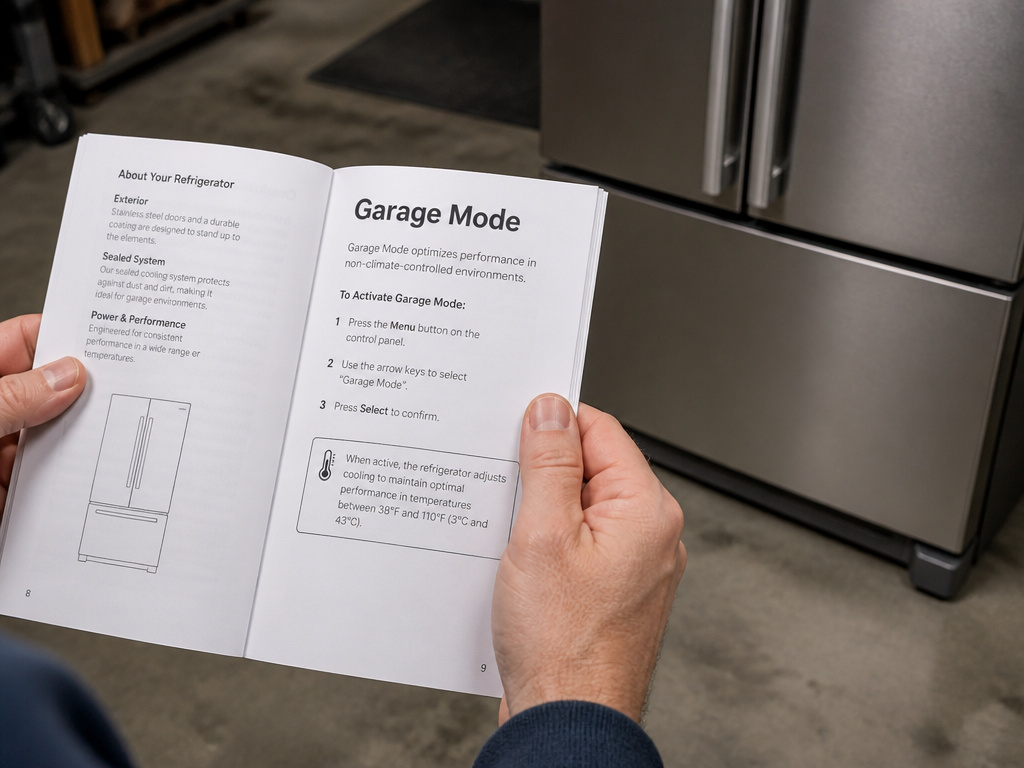
This is the engineered answer. Brands like KitchenAid and Whirlpool build these models with components rated for wider temperature swings. The key feature is often a “Garage Mode” you activate when ambient temps drop below 55°F.
| Feature | Standard Refrigerator | Garage-Ready Refrigerator |
|---|---|---|
| Ambient Range | 55°F – 110°F | As low as 0°F – up to 110°F |
| Compressor / Fan | Standard duty | Heavy-duty, better cooling in high heat |
| Insulation | Standard | Often increased to handle extremes |
| Control System | Basic thermostat | May include “Garage Mode” to force cooling in cold ambients |
| Warranty | May be voided if used in a garage | Valid for garage installation |
When shopping, look for the phrase “garage-ready” in the official model specifications, not just in a retailer’s description. For a deep dive on what to look for, our guide on garage-ready refrigerator freezers breaks down the key specs.
Solution 2: Insulate and Heat the Garage
This is the most effective permanent fix because it changes the environment itself. It’s also the most costly.
- Wall & Ceiling Insulation: Bringing your garage to a minimum of R-12 insulation dramatically slows temperature drops.
- Insulated Garage Door: Swapping a single-layer metal door for an insulated model is a game-changer.
- Mini-Split Heat Pump: For a conditioned garage space, a small ductless unit can both heat and cool, keeping the area within the 55°-80°F sweet spot year-round. This also protects other items like paint, tools, and your car battery.
If a full renovation isn’t possible, even sealing giant gaps around the garage door with weatherstripping can keep the coldest blasts of air out.
Solution 3: Install a Garage Refrigerator Heater Kit
This is a middle-ground hardware fix. A heater kit is a small, low-wattage heating element installed inside the refrigerator compartment, near the thermostat. It gently warms the air around the sensor, tricking it into thinking the fridge is warmer than it is, which prompts the compressor to run and cool the freezer.
- Pro: It’s a targeted, appliance-specific solution that uses less energy than a space heater.
- Con: It’s an add-on modifying your appliance. Installation can be tricky, and it adds a small constant energy draw. Profixit notes it doesn’t make the appliance immune to severe cold, especially if the compressor oil thickens.
These kits are sold online and at some appliance parts stores. They are a legitimate option for a standard fridge you’re committed to keeping in a moderately cold garage.
Garage Fridge vs. Garage Freezer: A Critical Distinction
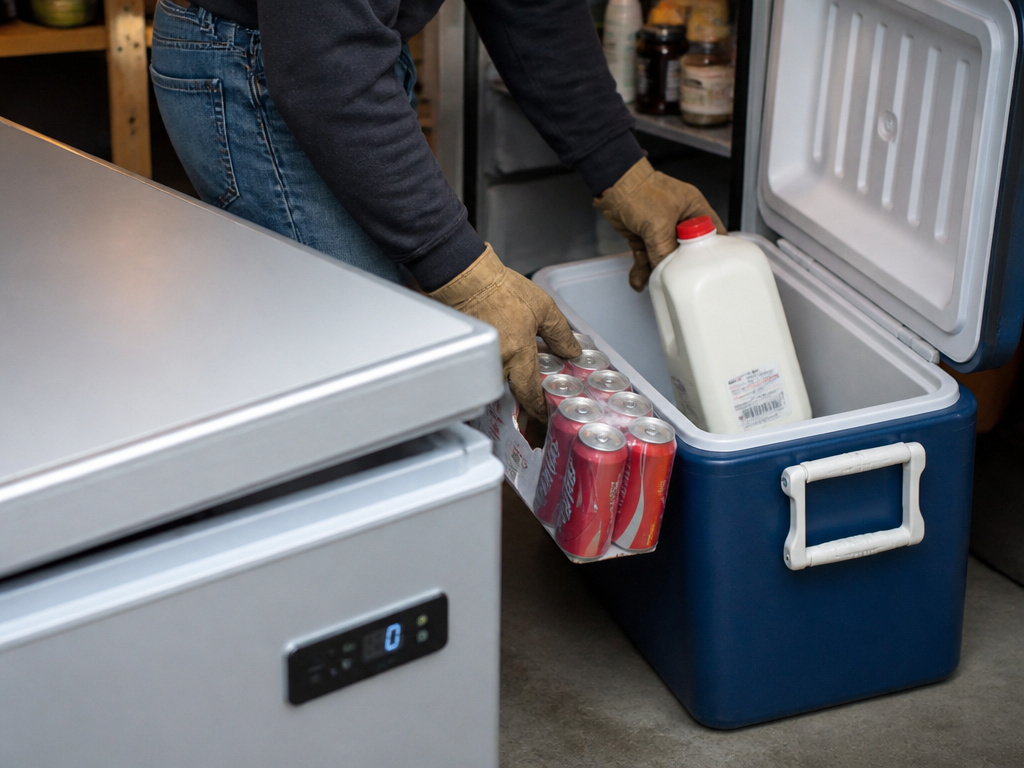
A standalone garage freezer is often a better choice for cold storage in an unheated space. Many modern freezers are designed with cold-ambient operation in mind. Since their only job is to get very cold, a chilly garage just helps them. They have their own thermostat set for 0°F, so they’ll keep running until they hit that target, regardless of the outside air.
If your garage fridge is mostly holding soda, beer, and overflow groceries, consider swapping it for a garage chest freezer and a few coolers. The freezer will run efficiently all winter, and you can bring items indoors to thaw as needed. Our review of the best garage freezers highlights models built for this exact purpose.
Frequently Asked Questions
Can I just use a heating blanket on my fridge?
No. This is a significant fire hazard. Heating blankets are not designed for continuous use wrapped around an appliance containing flammable insulation and electrical components. They can overheat, especially if covered or pinched. Use only solutions designed for this purpose, like a properly installed refrigerator heater kit.
My fridge has a “Winter Mode” dial. Is that the same as Garage Mode?
Not exactly. An old-school “Winter Mode” or “Energy Saver” switch usually just controls a small heater that prevents condensation on the door seal in humid environments. It does not force the compressor to run in cold weather. It will not prevent your freezer from thawing. Don’t rely on it.
Will unplugging my garage fridge in winter save it?
It might save on your electricity bill, but it won’t protect the appliance. If you unplug it, you must also completely empty it, clean it, and leave the doors propped open to prevent mold. A dormant fridge in a freezing garage is still at risk from condensation and internal component corrosion. It’s often more hassle than it’s worth.
Are all garage-ready refrigerators also garage-ready freezers?
Yes, but the opposite is not true. A “garage-ready” label on a combined refrigerator-freezer unit means the entire appliance is designed for the environment. However, a garage-ready freezer is a standalone unit built for the cold. If you only need frozen storage, a dedicated garage-ready chest freezer is typically more energy-efficient and reliable than the freezer compartment of a combo unit in severe cold.
How can I tell if my current fridge is garage-ready?
Check the owner’s manual or the manufacturer’s website for the exact model number. Look for the specified “ambient temperature operating range.” If it lists a minimum temperature at or below 40°F, it has some capability. If it only lists 55°F or doesn’t mention garage use, it’s a standard model. When in doubt, assume it’s not rated for the cold.
Before You Go
Keeping a garage fridge from freezing isn’t about finding one clever trick. It’s a battle against physics, fought on three fronts: monitoring the actual temperature (that 50°F line is real), adding intelligent insulation, and ultimately choosing the right appliance for the job.
For most people dealing with true winter climates, the choice boils down to two honest paths: invest in properly insulating your garage to create a safe space for any appliance, or switch from a vulnerable refrigerator to a purpose-built garage freezer. Trying to make a standard fridge work in a deep freeze is a recipe for spoiled food, a broken compressor, and frustration.
Start with the thermometer. Know your enemy. Then decide if you’re fighting the air in your garage or shopping for a new freezer for a garage that’s already built to win.
