How to Organize a Refrigerator: The Ultimate 4-Zone Guide
This post contains affiliate links. As an Amazon Associate, we earn from qualifying purchases.
To organize a fridge, you map it by temperature, not by convenience. The back bottom shelf and top shelf near the vents are coldest (34–37°F), the door is warmest (can hit 40°F+), and each zone has a job: coldest for raw meat and dairy, warmer top shelves for leftovers and drinks, door for condiments, and humidity-controlled drawers for produce. Ignoring this map costs you about a week of freshness on most items and raises your food-safety risk.
That temperature spread isn’t a suggestion, it’s physics. Cool, heavy air sinks. The compressor and fans live at the top and back. Where you place an item decides how long it lasts and how safe it stays.
What follows is the four-zone method. You’ll need a thermometer, a stack of containers, and about twenty minutes. By the end, your fridge will work with you, not against you.
Key Takeaways
- The door is for condiments, not milk. Its temperature fluctuates the most, making it the worst spot for perishable dairy and eggs.
- Raw meat always goes on the bottom shelf. This keeps drips from contaminating everything below and uses the coldest, most consistent air.
- Use your crisper drawers correctly. Low humidity for fruits (they release gas), high humidity for leafy vegetables (they hold water).
- Overloading door racks can prevent a seal. An LG manual explicitly warns that overstuffed racks can push against inner shelves and stop the door from closing fully.
- Label and date everything. A permanent marker on masking tape is the cheapest insurance against forgotten leftovers and mystery containers.
The Four Zones: Mapping Your Fridge’s Temperature
Your fridge has a consistent climate pattern. Fighting it is how food goes bad early.
The coldest spots are the back of the bottom shelf and the back of the top shelf near the cooling vents. The warmest area is the door. Most refrigerators operate within a range of 33 to 38°F (0.5 to 3°C), but that 5-degree swing matters more for some foods than others.
You can’t guess these zones. You need a refrigerator thermometer. Place it in a glass of water on the middle shelf, wait 24 hours, and check it. Then move it to the door and check again. The difference is often 5 to 10 degrees.
Zone 1: The Cold Bottom Shelf (The Safety Zone)
This is the coldest, most stable area. Its only job is to keep high-risk items safe.
- Raw meat, poultry, and fish. Always store these on a plate or tray to catch any drips. Cross-contamination is a physical process, juices drip down.
- Milk and cream. Despite the door’s built-in gallon slots, milk lasts up to a week longer here.
- Eggs. Store them in their original carton here, not in the door. The carton prevents odor absorption and buffers against temperature swings.
Skip the bottom shelf for: Leftovers or produce. You want those at eye level, not hidden in the cold depths.
Zone 2: The Cool Middle & Top Shelves (The Ready-to-Eat Zone)
These zones have slightly warmer, consistent air. They’re for items that are cooked, sealed, or ready to consume.
- Leftovers in clear, labeled containers. Visibility is everything. If you can’t see it, you won’t eat it.
- Yogurt, cheese, and deli meats.
- Drinks and prepared foods.
This is also the best place to store hard-boiled eggs, peeled and in a covered container with a damp paper towel.
Zone 3: The Door (The Condiment Zone)
The door warms up every time you open it. That’s fine for shelf-stable, high-acid, or high-sugar items that resist spoilage.
- Condiments (ketchup, mustard, soy sauce)
- Juices
- Butter (the butter compartment is usually slightly warmed)
- A box of baking soda for odors
Common mistake: Storing eggs or milk in the door. The temperature fluctuation causes eggs to lose quality faster and can cut milk’s shelf life by a third. Check your fridge temperature to see the difference yourself.
Zone 4: The Crisper Drawers (The Produce Zone)
These are not generic bins. They have humidity controls for a reason.
| Drawer Setting | Best For | Why It Works |
|---|---|---|
| Low Humidity (Vent Open) | Fruits: Apples, pears, grapes, melons | Fruits release ethylene gas. The open vent lets gas escape, preventing them from over-ripening and spoiling nearby veggies. |
| High Humidity (Vent Closed) | Leafy Vegetables: Lettuce, kale, spinach, broccoli, carrots | The closed seal traps moisture, keeping leaves from wilting and roots from going rubbery. |
If you forget which is which, remember: Fruits need to breathe, vegetables need a bath. Treat leafy herbs like a bouquet of flowers, trim the stems and place them in a jar with an inch of water, covered loosely with a bag.
Tools and Containers: Building a System That Lasts
An organization system is only as good as its containers. You don’t need expensive gear. You need the right shapes.
Clear, rectangular containers are the gold standard. They stack efficiently, let you see contents, and standardize your space. Round containers waste prime real estate.
A lazy Susan for condiments is a revelation. No more digging for that half-used salsa jar. Just spin.
Designated bins create mini-zones within zones. Use one for snack cheeses, another for yogurt cups, a small one for takeout sauce packets. When you need something, pull the whole bin out.
This is also the stage where labeling pays off. A date on every leftover container answers the “is this still good?” question instantly. It’s the single most effective habit for reducing waste.
What Not to Do: The Manual’s Warnings
Refrigerator manuals are dry, but they contain specific failure modes that general advice blogs miss.
- Don’t overload door racks. The LG LSC27960ST manual states: “Never overload the door racks because they may push against inner racks so that the door cannot be fully closed.” A broken seal wastes energy and risks spoiling everything inside.
- Don’t place hot containers directly on cold glass shelves. The GE manual warns this can thermal-shock the glass, causing it to crack.
- Let leftovers cool before refrigerating. But don’t let them sit out for more than two hours. Warm food raises the internal temperature of the entire fridge, making the compressor work harder and temporarily warming other items.
If you’re battling persistent smells even after a clean-out, the issue might be deeper. Our guide on how to remove fridge odors covers both quick fixes and long-term solutions.
Step-by-Step: The 20-Minute Fridge Reset
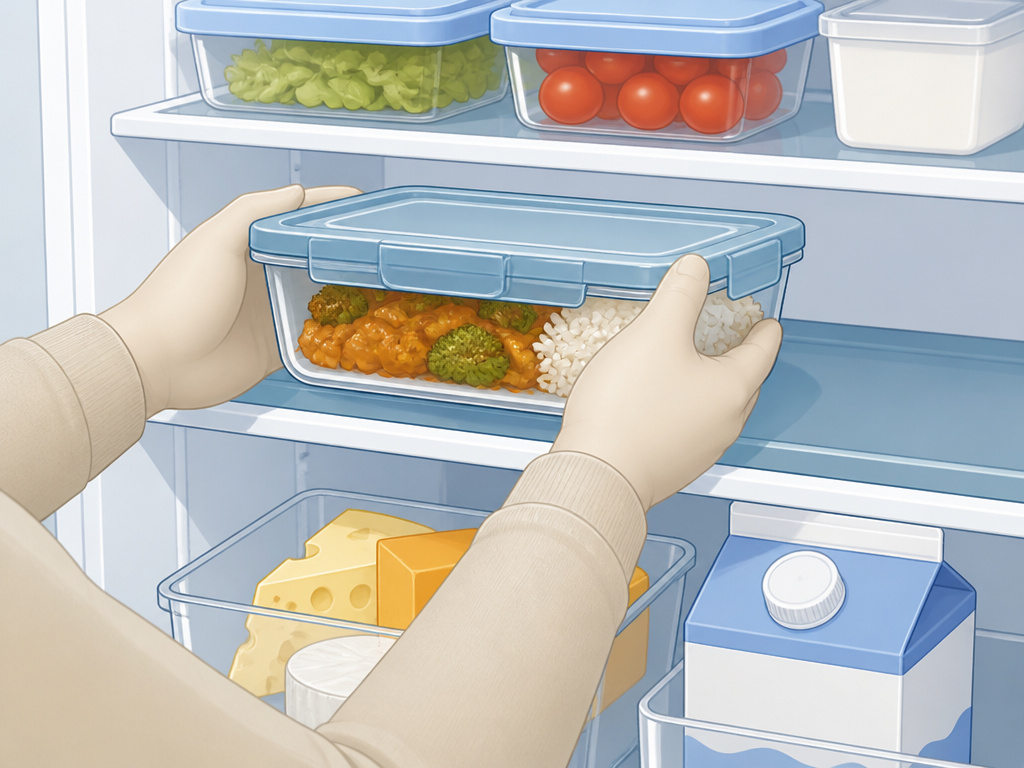
Do this when you’re about to do a grocery run, when the fridge is at its emptiest.
- Remove everything. Place perishables in a cooler. Toss anything expired, unidentifiable, or sporting mold.
- Wipe down every surface. Use a mix of baking soda and warm water. For sticky spills, our method for cleaning refrigerator shelves works without harsh chemicals.
- Place your thermometer. Put it in a glass of water on the middle shelf. You’ll check it later.
- Reload by zone, not by category. This is the crucial shift. Don’t put all “dairy” together. Put milk on the cold bottom shelf, cheese on the middle shelf, butter in the door.
- Container and label. Transfer leftovers to clear containers and mark them. Use bins to group like items.
- Adjust drawers. Set one crisper to low humidity for fruits, one to high for vegetables.
The whole process takes less time than you think. The maintenance is the easy part, once everything has a home, putting it back is automatic.
Frequently Asked Questions
What is the correct order of food in the fridge?
The order is based on safety and temperature, not food type. From bottom to top: Raw meat (bottom shelf), dairy and eggs (lower/middle shelves), ready-to-eat foods and leftovers (middle/top shelves), condiments (door). Produce goes in the designated drawers.
Where should eggs go in the fridge?
Eggs belong in their original carton on a middle or bottom shelf, not in the door. The carton protects them from absorbing odors and buffers temperature fluctuations. The door is too warm.
Does milk go on the door?
No. Milk requires the coldest, most consistent temperature to stay fresh. The door is the warmest, most variable part of the fridge. Store milk on the bottom shelf toward the back.
How do you organize a fridge with a lot of food?
Use vertical space with stackable containers. Designate bins for categories (cheese, yogurt, snacks) so you can pull out a whole group. Use a lazy Susan for condiments. Most importantly, be ruthless about discarding old items, a packed fridge blocks air circulation and creates warm spots.
The Bottom Line
Organizing a fridge isn’t about aesthetics. It’s about aligning your habits with the appliance’s engineering. A refrigerator thermometer tells you the truth about your zones. Clear containers tell you the truth about your leftovers. When you get those two things right, food lasts longer, meals come together faster, and you stop throwing money away.
Start with the thermometer. Then do the twenty-minute reset. Your fridge, and your grocery budget, will thank you.
