How to Preserve Garlic in Oil | The 4-Day Refrigerator Rule
This post contains affiliate links. As an Amazon Associate, we earn from qualifying purchases.
To preserve garlic in oil safely, you must use one of three methods: refrigerate the mixture and use it within four days, freeze it for several months, or acidify the garlic with a citric acid solution before adding oil. The raw vegetable provides a perfect, oxygen-free environment for Clostridium botulinum bacteria if left at room temperature, which is why the FDA pulled commercial products from shelves in 1989. Freezing is the safest long-term option for home cooks, while acidification, though precise, is the only path to shelf-stable infused oil.
That four-day window isn’t arbitrary. It’s the maximum time research shows non-proteolytic C. Botulinum strains need to produce toxin at temperatures just above freezing. Your home fridge likely runs warmer than the ideal 3.3°C (38°F) cited in studies, which shrinks the safe window further. This turns a simple infusion into a timed exercise.
What follows is the breakdown of those three methods, cold storage, freezing, and acidification, with the exact ratios and timelines from university extension services. You’ll also get the context behind the warnings, so you know what you’re guarding against and why the rules are so strict.
Key Takeaways
- Raw garlic in oil must be refrigerated and used within four days or frozen immediately; room temperature storage risks botulism.
- Freezing garlic pureed with oil (2 parts oil to 1 part garlic) in an airtight container is the safest method for long-term storage.
- Acidification with a 3% citric acid solution (1 part chopped garlic to 3 parts solution by weight, soaked 24 hours) can make garlic shelf-stable in oil, but the process is precise and not broadly recommended for home kitchens.
- The 1989 FDA action against commercial garlic-in-oil products underscores the real, documented risk of botulism from improper preservation.
- Softneck garlic varieties store longer (up to 9 months) than hardneck (up to 6 months) when cured whole, which impacts how much you might need to preserve in oil.
The Botulism Risk You Can’t Smell or Taste
Clostridium botulinum doesn’t spoil food. It doesn’t make it smell bad or look off. In the anaerobic environment of oil, these bacteria produce a toxin that shuts down your nervous system. The first commercial recall happened in 1989, and the official food safety regulator guidance from bodies like the UK’s Advisory Committee has reinforced the stance ever since: vegetables in oil are a high-risk category.
The bacteria’s spores are everywhere, in soil, on garlic skins. They’re heat-resistant and survive typical cooking temperatures. They only wake up and produce toxin in specific conditions: no oxygen, low acidity (pH above 4.6), and sufficient moisture. A jar of peeled garlic cloves covered in oil checks every box.
Common mistake: Assuming the oil itself is a preservative. Oil creates the anaerobic condition C. Botulinum needs. It’s a barrier to air, not to bacterial growth.
Your senses give you zero warning. The oil will look, smell, and taste perfectly fine. This is why the rules are binary and time-based, you cannot rely on visual or olfactory cues.
The 4-Day Refrigerator Rule
For short-term infused oil you plan to use immediately, refrigeration is your tool. The rule from Oregon State University is clear: peeled garlic cloves submerged in oil can be stored in the refrigerator for up to four days. After that, you must discard it.
This timeline is based on the growth rate of psychrotrophic (cold-tolerant) C. Botulinum Group II strains. A Food Protection Trends peer-reviewed study notes these strains can produce toxin in 10 days or less at 8°C (46.4°F). Most home refrigerators average around 5°C (41°F), and studies show over a quarter run warmer. The four-day rule builds in a safety buffer for inconsistent fridge performance.
Procedure:
- Peel fresh garlic cloves. Bruised or old cloves introduce more spores and moisture.
- Place cloves in a clean, dry glass jar.
- Cover completely with a neutral oil like canola or olive oil. Ensure no garlic is exposed to air.
- Seal the jar and label it with the date.
- Refrigerate immediately and use within 96 hours.
After four days, the risk doesn’t suddenly appear, it accumulates. The clock starts the moment you combine the garlic and oil. This method is best for a specific recipe you’ll finish within the week, not for building a pantry staple. For longer-term garlic storage, you need a different approach.
Freezing: The Safest Long-Term Method
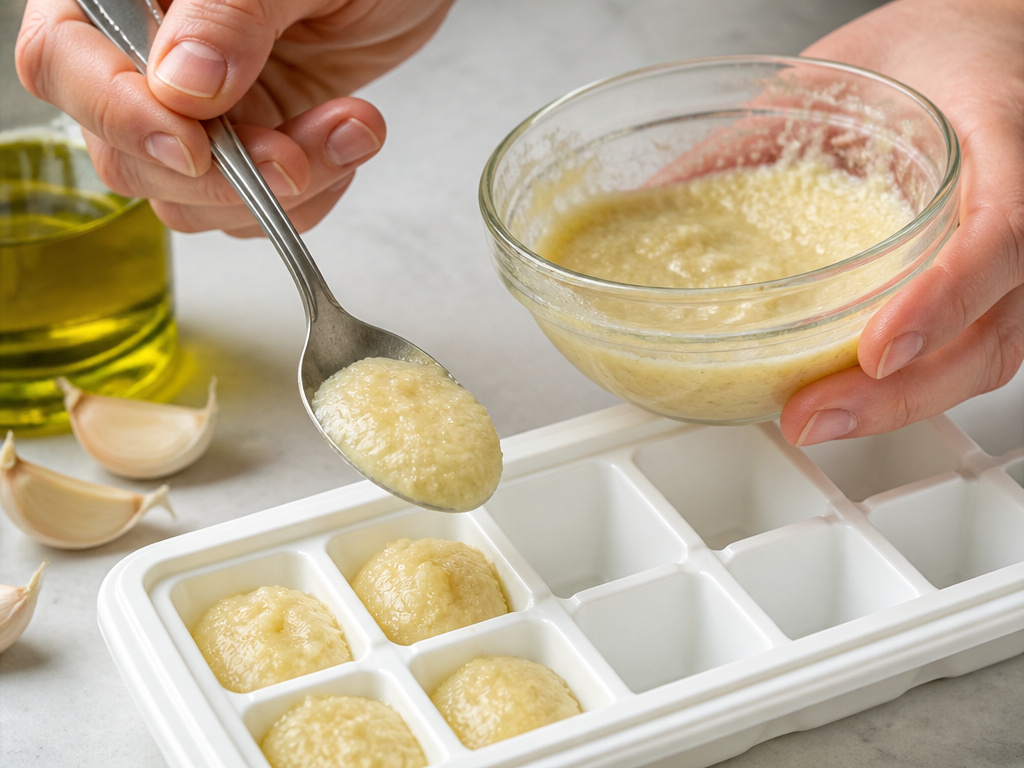 Freezing garlic in oil stops all microbial activity. It’s the method endorsed by Michigan State University Extension for storage up to several months. The texture of the garlic will soften upon thawing, making it best for cooked dishes where it will be melted into a sauce or sauté.
The most practical technique is to make a garlic paste.
How to Freeze Garlic in Oil Paste:
- Peel a large batch of garlic cloves.
- Puree them in a food processor or blender with oil. The OSU Extension garlic preservation guide recommends a ratio of two parts oil to one part garlic by volume.
- Spoon the paste into an ice cube tray, small freezer jars, or a sealed plastic bag flattened to a thin layer.
- If using a bag, score the paste with a chopstick before freezing to create portioned squares.
- Freeze immediately. Do not leave the puree at room temperature.
This frozen paste stays soft enough to scrape with a spoon. A single cube or square is roughly equivalent to one or two cloves. It’s perfect for speeding up weeknight cooking. Remember, this method is for preserving peeled garlic; for whole bulbs, traditional best garlic storage in a cool, dark place is more appropriate.
| Method | Garlic Form | Safe Storage Duration | Best For |
|---|---|---|---|
| Refrigeration | Whole peeled cloves | ≤ 4 days | Quick, fresh-infused oil for immediate use. |
| Freezing | Pureed paste (2:1 oil:garlic) | Several months | Long-term storage; soft texture for cooked dishes. |
| Acidification | Acidified chopped cloves | Months at room temp (if done correctly) | Shelf-stable, flavored oil for pantry. |
The Acidification Method
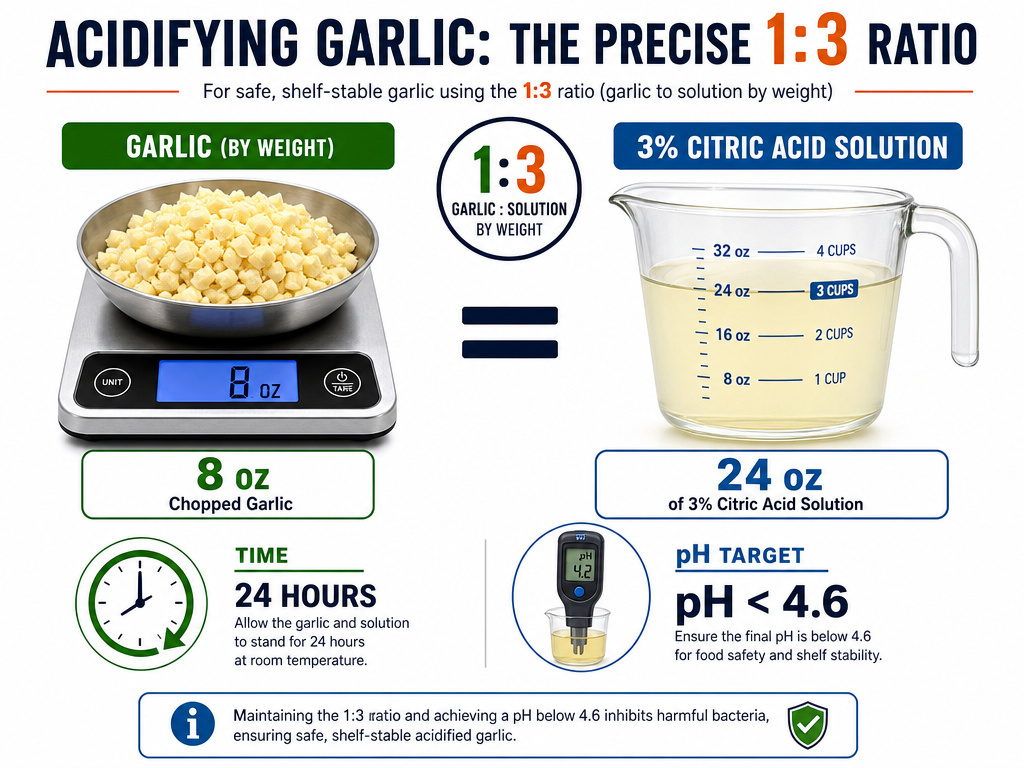 Acidification is the only way to make garlic in oil truly shelf-stable at room temperature. It works by lowering the pH of the garlic below 4.6, the threshold where C. Botulinum cannot produce toxin. This is the process mandated for all commercial garlic-in-oil products since the 1989 recall.
The International Association for Food Protection (IAFP) research provides the precise formula: 1 part chopped garlic to 3 parts 3% citric acid solution, by weight, soaked for 24 hours.
Where this goes sideways: Guessing the acid concentration or soak time. Under-acidified garlic at room temperature is the highest-risk scenario. This is why many extension services don’t recommend it for home cooks, the margin for error is small.
Step-by-Step Acidification:
- Prepare the solution: Dissolve 1 level tablespoon of granular citric acid into 2 cups of warm water. This creates the 3% solution.
- Prepare the garlic: Peel and coarsely chop 8 ounces of garlic. Pieces should be no wider than ¼-inch for even acid penetration.
- Soak: Place the chopped garlic in the citric acid solution, stir gently, cover, and hold at room temperature for 24 hours.
- Drain and oil: After 24 hours, drain the garlic thoroughly and add it to a jar. Cover with oil at your preferred ratio.
- Store: The product can now be stored at room temperature or in the refrigerator for longer flavor retention.
This method is for the dedicated home preserver. It requires a kitchen scale, precise measurements, and citric acid (available in canning sections or online). The result is a tangy, preserved garlic ideal for salad dressings or marinades. The process is similar to how you might preserve basil or other herbs in oil for flavor, but the safety stakes are higher due to garlic’s low natural acidity.
What Not to Do: Common Preservation Pitfalls
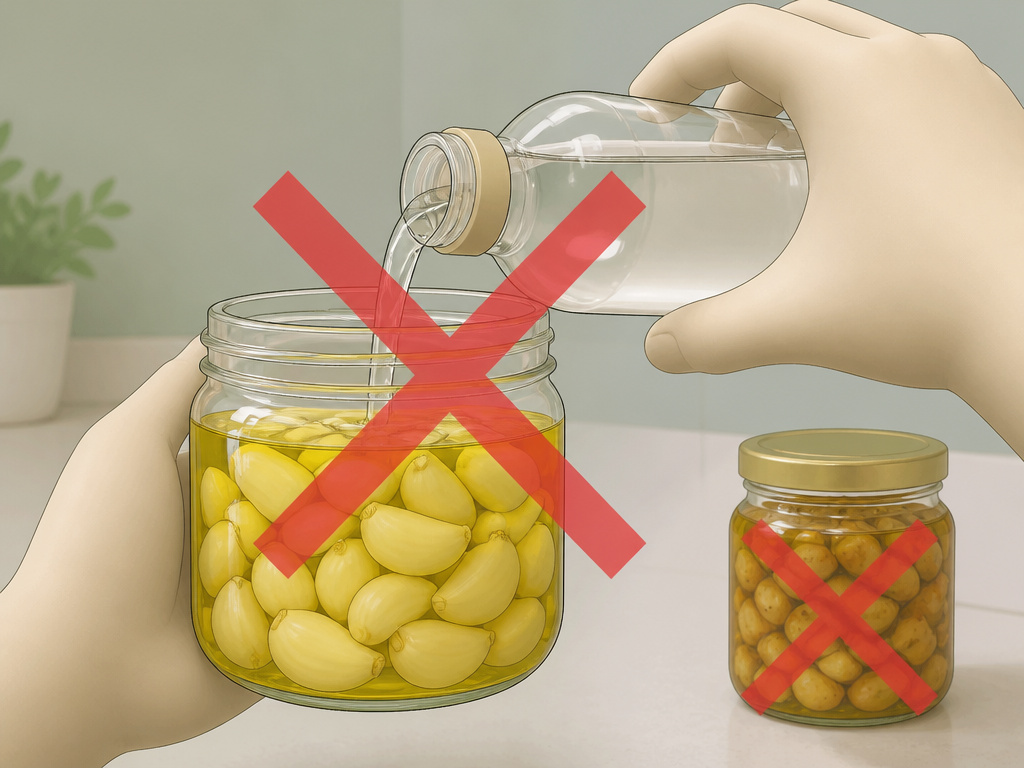 The desire for a simple, shelf-stable garlic oil is strong, but several common workarounds are dangerous.
Don’t add vinegar or lemon juice haphazardly. While acidic, the concentration and distribution are unreliable. The IAFP study tested a standardized citric acid solution for a reason, it consistently achieves the target pH. A “glug” of vinegar won’t guarantee every piece of garlic is sufficiently acidified.
Don’t use dried garlic or roasted garlic as a safety shortcut. While roasting changes the chemistry, it doesn’t guarantee a safe pH throughout. Storing roasted garlic in oil still carries a risk and should be refrigerated and used within a week or frozen. Dried garlic can be safely stored in oil, but it won’t give you the flavorful infusion you’re after.
Don’t preserve in raw honey or fermented garlic honey at room temperature. While the YouTube transcript mentions fermented garlic honey as a “healthy gut booster,” this is a separate fermentation process with its own rules and risks. It is not a safe substitute for oil preservation.
The pattern here is clear: any deviation from the three proven methods (refrigerate short-term, freeze, or acidify precisely) introduces unquantifiable risk. This is also true for preserving other low-acid vegetables like eggplant in oil or mushrooms in oil.
Choosing Your Garlic and Oil
Your starting ingredients matter. For preservation, always begin with the freshest, firmest garlic bulbs you can find. Avoid cloves with any green sprouts, soft spots, or bruises, as damage introduces more moisture and potential contaminants. If you grow your own, remember that softneck varieties have better innate storage for garlic longevity, which might mean less ends up in oil.
The oil you choose impacts flavor and storage. Olive oil will solidify in the freezer, making portioning harder. A neutral oil like canola, safflower, or grapeseed oil freezes clearly and won’t dominate the garlic flavor. For room-stable acidified garlic, a high-quality olive oil is fine, as it won’t be frozen.
If you have an abundance of other garden produce, the principles here apply broadly. The same careful approach is needed for preserving cherry tomatoes or garlic scapes in oil.
Frequently Asked Questions
Can I preserve garlic in oil without refrigeration?
Only if you first acidify the garlic using the precise citric acid method described above. Raw, untreated garlic must never be stored in oil at room temperature. Freezing is the safe alternative to refrigeration for long-term storage.
How long does garlic last in olive oil in the fridge?
According to university extension services, garlic in olive oil lasts a maximum of four days in the refrigerator. After that, the risk of botulism toxin development increases. You must discard any unused mixture after this period.
Does cooking garlic in oil make it safe to store?
No. Cooking may kill active bacteria, but it does not destroy all heat-resistant C. Botulinum spores or reliably lower the pH throughout the garlic. After cooking and combining with oil, the environment can still support spore germination and toxin production as it cools. Treat cooked garlic in oil with the same caution: refrigerate and use quickly, or freeze.
Can I use garlic powder instead of fresh garlic for infused oil?
Yes, and it eliminates the botulism risk. Dried garlic has a very low water activity, which prevents bacterial growth. Simply add garlic powder to oil. The flavor will be different, more pungent and direct, but the oil will be shelf-stable.
What are the symptoms of botulism poisoning?
Symptoms typically begin 18 to 36 hours after ingestion and include double or blurred vision, drooping eyelids, slurred speech, difficulty swallowing, dry mouth, and muscle weakness that moves down the body. It is a medical emergency that requires immediate treatment with antitoxin. There is no smell or taste warning from the contaminated food.
Before You Go
Your safest path is the freezer. Puree garlic with a neutral oil, freeze it in portions, and you’ve got ready-to-use flavor for months without a clock ticking. If you need infused oil for a dinner party this weekend, the four-day refrigerator rule works, just mark the jar and stick to the deadline. Leave the precise acidification to commercial producers unless you’re ready to measure by weight and follow the 24-hour soak.
The goal is flavor without fear. These rules aren’t scare tactics; they’re the documented outcome of what happens when a low-acid vegetable meets an anaerobic environment. By choosing the right method for your timeline, you get the convenience of prepared garlic and the certainty that it’s just as safe as it is tasty.
