Your Guide on How to Store Food: The 3-Temperature Method
This post contains affiliate links. As an Amazon Associate, we earn from qualifying purchases.
To store food correctly, you need to manage three temperature zones: the refrigerator at 35–40°F, the freezer at 0°F or below, and the pantry below 70°F. Match each food to its zone, control humidity where possible, and practice FIFO (First-In, First-Out) to use older items first. This system prevents spoilage, preserves quality, and cuts down on waste.
The 40°F refrigerator ceiling is the bacterial danger zone’s upper limit. The difference between 35°F and 40°F in your fridge’s crisper can add a week to leafy greens.A pantry at 85°F with 70% humidity turns flour into a brick in months, not years.
What follows is the breakdown of each zone, refrigerator, freezer, pantry, with the specific temperatures, timelines, and organization tactics that turn storage from guesswork into a system. You’ll know where to put everything, how long it really lasts, and what to do when the power goes out.
Key Takeaways
- Set your refrigerator to 35°F, not 40°F. That 5-degree buffer keeps dairy and meat in the optimal 33–38°F range and buys you extra safe storage time.
- Your freezer must hold 0°F or lower. Ice cream should be brick-hard. Food quality nosedives in the “temperate freezer” range of 0–32°F.
- The pantry’s enemy is humidity over 60%. It causes caking, staleness, and rust on cans. Store dry goods in airtight containers in a cool, dark place.
- During a power outage, a full, unopened freezer keeps food safe for 48 hours. A half-full one lasts about 24 hours. An unopened refrigerator holds for only 4 hours.
- Practice FIFO (First-In, First-Out). Place new items behind old ones. It’s the single most effective habit to prevent food from expiring unseen.
The Three-Temperature Zones (And Why They Matter)
Food storage involves assigning each item to one of three climate-controlled environments. Get the zone wrong, and you accelerate spoilage, degrade quality, and invite foodborne illness.
The zones are defined by temperature and, in two of them, humidity. Your refrigerator is a cold, humid box. Your freezer is a cold, dry vault. Your pantry is a cool, dry cupboard.
The Three-Temperature System | Zone | Target Temperature | Primary Function | Key Risk | |—|—|—|—| | Refrigerator | 34°F – 40°F (Aim for 35°F) | Slow microbial growth, preserve freshness | Temperature fluctuation above 40°F | | Freezer | 0°F or below | Halt microbial growth, long-term preservation | “Temperate freezing” (0–32°F) that degrades quality | | Pantry | 50°F – 70°F (Below 85°F) | Store shelf-stable, dry goods | High humidity (>60%) causing moisture damage |
The numbers are non-negotiable. The USDA Food Safety and Inspection Service guide sets the 40°F refrigerator ceiling. The Virginia Cooperative Extension storage guide specifies 0°F for freezers. These aren’t suggestions; they are the boundaries for safe food storage.
Why does a few degrees matter so much? Bacterial growth rates double with every 10°F increase. The difference between a pantry at 70°F and one at 85°F near a hot pipe can cut the shelf life of dry pasta by half. In the freezer, ice crystals remain small and stable at 0°F. Above that, they melt and re-form larger during temperature swings, piercing cell walls in meat and vegetables. You get freezer burn faster.
Your first move is to buy two appliance thermometers. Put one in the refrigerator, one in the freezer. You can’t manage what you don’t measure.
Refrigerator Rules: It’s Not Just Cold, It’s Strategic
A refrigerator has microclimates. The back wall is coldest. The door shelves are the warmest, with temperatures fluctuating every time you open it. The drawers have humidity controls. Ignoring this layout is why your milk sours while your lettuce freezes.
Set the main compartment to 35°F. This gives you a safety buffer below the 40°F danger zone and places most items in their ideal range. According to extension guides, dairy lasts longest at 34–38°F, meats at 33–36°F.
Where things go matters more than you think.
- Back Wall, Bottom Shelf (Coldest): Raw meat, poultry, fish. Always place these on a plate or in a container to catch drips. This prevents cross-contamination.
- Upper and Middle Shelves: Ready-to-eat foods, leftovers, dairy, eggs. This is the zone for items that won’t be cooked again.
- Door Shelves (Warmest): Condiments, juices, butter. Never store milk or eggs here.
- Crisper Drawers (Humidity-Controlled): Vegetables (high humidity) in one, fruits (low humidity) in the other. Fruits like apples and pears emit ethylene gas, which speeds ripening and spoilage in nearby veggies.
Common mistake: Storing milk in the door. The temperature there can be 5-10 degrees warmer than the main cavity. Your gallon will sour days earlier.
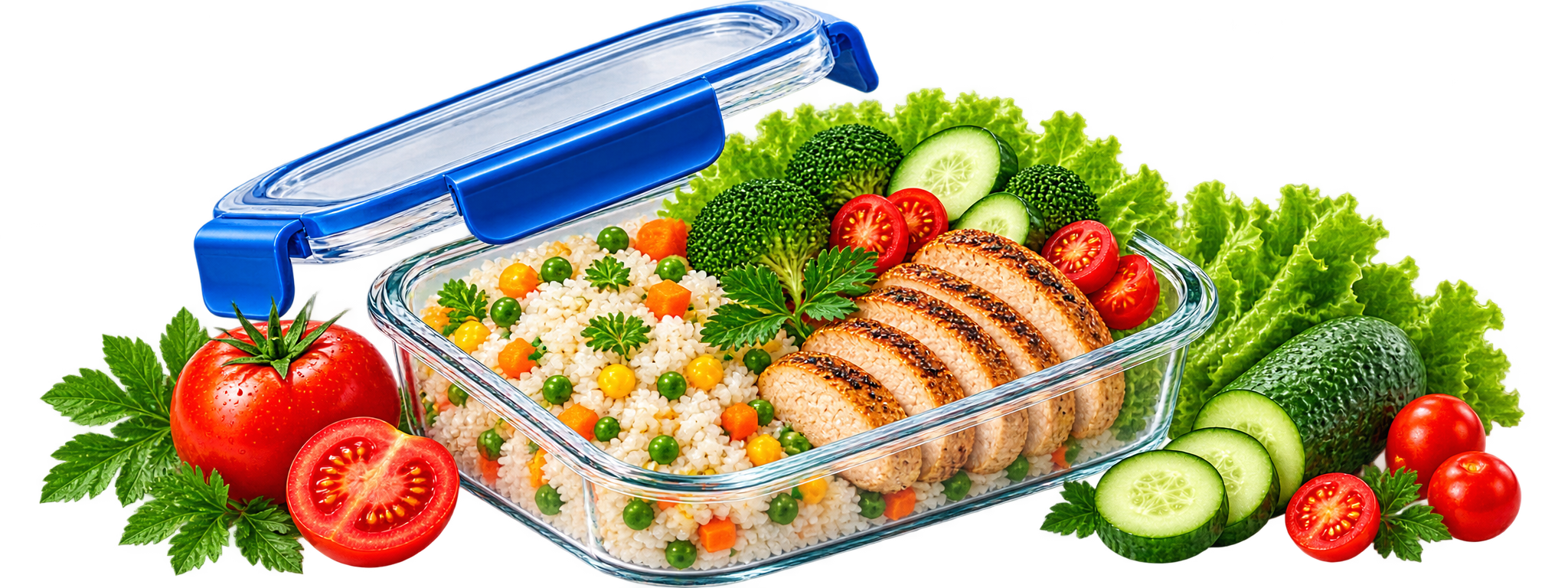
Leftovers are a special case. Portion them into shallow, airtight containers, glass ones like Pyrex or Snapware are ideal. A deep pot of soup cools slowly in the center, staying in the danger zone too long. Shallow containers chill quickly and uniformly. Label them with the date. The consensus is 3-4 days for most cooked leftovers.
This is where a good system for food containers pays off. Clear, stackable bins let you see what you have and practice FIFO without a nightly archaeology dig.
Freezer Fundamentals: Beyond “Frozen Solid”
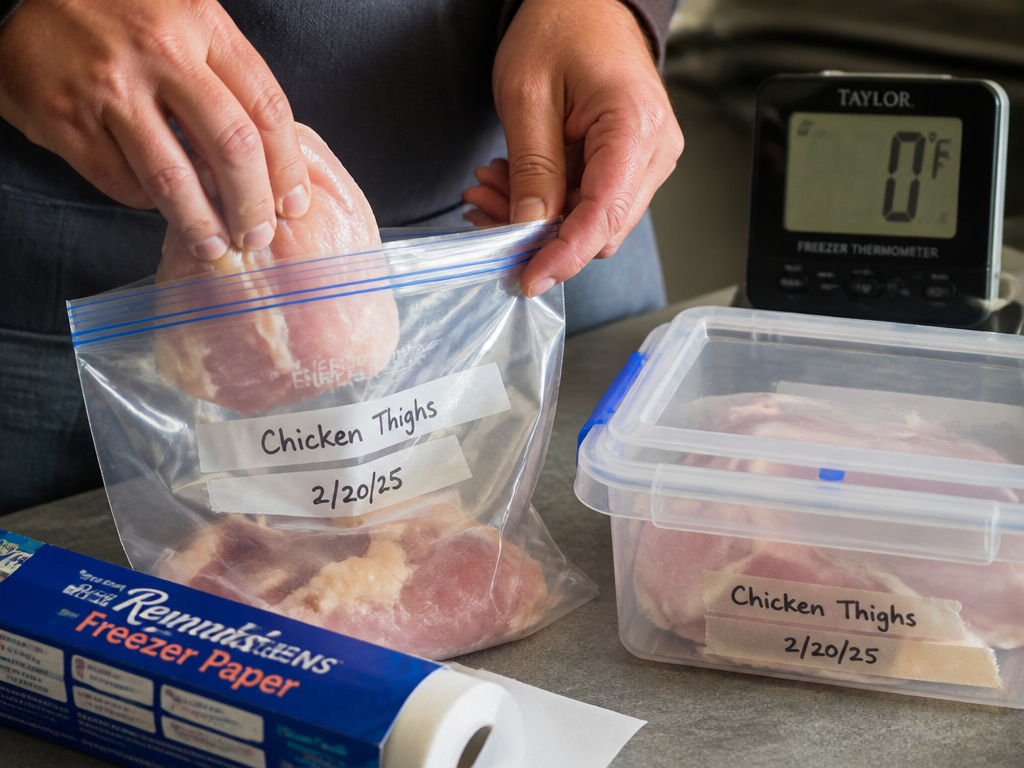 A freezer’s job is to press pause. At 0°F or below, microbial activity stops. But chemical and physical reactions slow down; they don’t stop entirely. That’s why freezer storage has time limits for quality.
Your freezer thermometer must read 0°F or negative. If your ice cream is soft-serve texture, it’s not cold enough. Food stored between 0°F and 32°F suffers from rapid quality loss, this is the “temperate freezer” zone to avoid.
Packaging is everything. You need a barrier against air, which causes freezer burn. Use moisture-proof, vapor-proof materials: 1. Heavy-duty freezer bags (squeeze out excess air). 2. Freezer paper (waxed side toward the food). 3. Rigid plastic containers designed for freezing (leave ½-inch headspace for liquids to expand).
Freeze items in flat, single layers first (“flash freezing”), then pack them together. This prevents berries or meatballs from freezing into a solid, unusable block.
The Texas A&M AgriLife Extension publication provides clear timelines: raw poultry parts last 6-9 months, lean fish 1-2 days in the fridge but 6 months in the freezer. These aren’t safety dates, but quality horizons. After that, texture and flavor decline.
For long-term staples, dehydrated food storage and canned goods storage are complementary strategies to freezer use, especially for bulk items like beans or tomatoes.
Pantry Principles: Cool, Dark, Dry, and Sealed
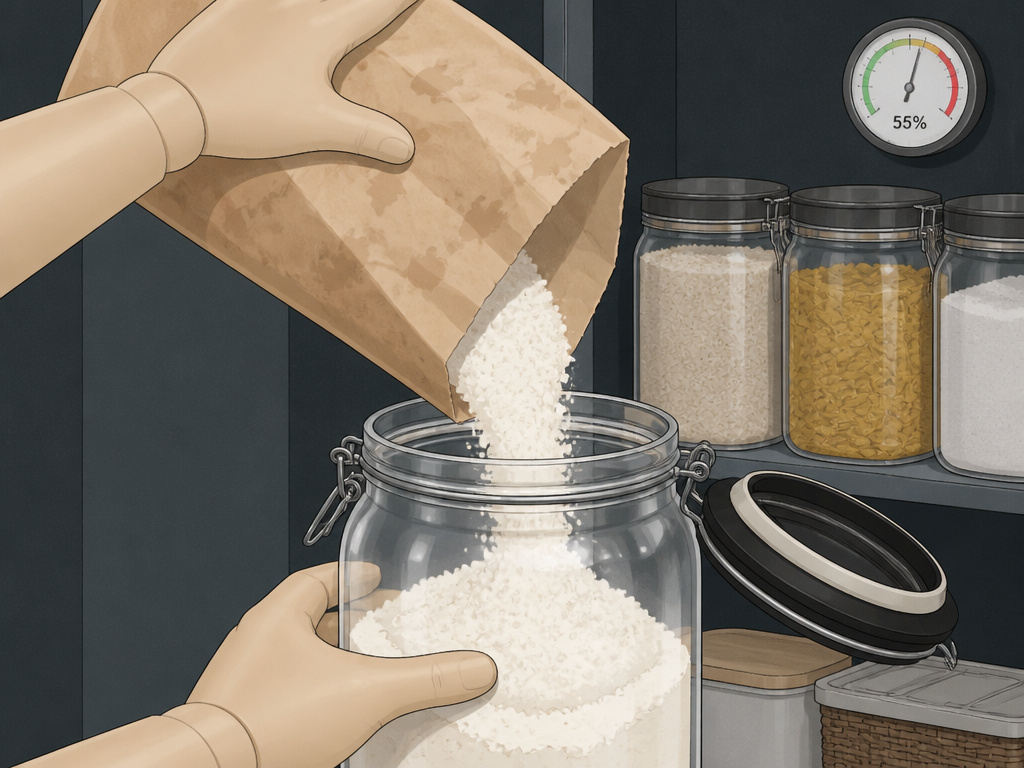 The pantry is for shelf-stable foods, but “shelf-stable” doesn’t mean indestructible. The three enemies are heat, light, and humidity. The ideal pantry stays between 50°F and 70°F, with humidity under 60%.
Where this goes sideways: Storing flour or sugar in its original paper bag in a humid kitchen. Within months, moisture wicks in, leading to clumping, staleness, and even insect infestations. The same humidity rusts canned goods at the seams.
The solution is airtight containers. Transfer dry goods like flour, rice, pasta, cereal, and sugar into sealed canisters. OXO Pop Containers or similar glass jars create a physical barrier. This keeps moisture out, pests out, and freshness in. It also lets you see your inventory at a glance.
What belongs in the pantry?
- Dry Goods: Pasta, rice, beans, cereals.
- Baking Supplies: Flour, sugar, baking powder, spices.
- Canned Goods: Vegetables, beans, soups, fruits.
- Oils: In a dark cupboard, away from the stove’s heat.
Easy to miss: Potatoes and onions. They don’t belong in the fridge or a sealed container. Store them in a cool, dark, well-ventilated place, a mesh bag in a bottom cupboard is perfect. Never store potatoes and onions together; onions release gases that cause potatoes to sprout.
Organization is key. Group like items together (baking, canned veggies, grains). Use the FIFO method religiously. When you buy new pasta, place it behind the old boxes. This simple rotation is the core of any effective long-term food storage system, big or small.
Special Scenarios and Pro Tips
Rules are for ideal conditions. Life isn’t ideal. You need a plan for power outages, bulk purchases, and those tricky items that don’t fit the standard categories.
Power Outages: The Clock Starts Now
When the power fails, your first rule is: keep the doors closed. A full, unopened freezer keeps food safe for about 48 hours. A half-full freezer lasts about 24 hours. A refrigerator keeps food cold for only 4 hours. If the ambient temperature is above 90°F, that fridge window shrinks to 1-2 hours.
If the outage will be long, consider using ice or dry ice in a cooler. If food in the freezer still has ice crystals or is at 40°F or below, it can be refrozen, though quality may suffer. When in doubt, throw it out.
Bulk Storage and FIFO in Action
Buying in bulk saves money but tests your storage skills. The moment you get home, repackage bulk items into smaller, usable portions in airtight containers. Freeze what you won’t use soon, this is perfect for flour storage (whole wheat flour goes rancid at room temperature) or bulk meat.
Create a dedicated “bulk storage” area, clearly labeled. This prevents a 25-pound bag of rice from getting lost and forgotten for years.
The Oddballs: Where Do These Go?
- Bread: Room temperature for 2-4 days for best texture. Refrigerate to delay mold, but it speeds staling. For long-term, slice and freeze it.
- Tomatoes: Never refrigerate until fully ripe. Cold temperatures destroy their flavor and texture. Store on the counter out of direct sun.
- Bananas: On the counter. If they ripen too fast, peel and freeze them for smoothies.
- Herbs: Treat leafy herbs like cut flowers. Trim stems, place in a jar with water, and cover loosely with a bag in the fridge.
- Cheese: Hard cheeses like cheddar are fine in the fridge’s cheese drawer or colder part. For specific guidance, see our guide on best practices for storing various cheeses.
These strategies move you from passive storing to active food preservation. You’re not just putting food away; you’re extending its useful life.
Frequently Asked Questions
What is the most important rule of food storage?
Temperature control. Keeping refrigerated food at or below 40°F, frozen food at 0°F or below, and dry food in a cool, dark place under 70°F prevents the growth of pathogens and preserves quality. Everything else, containers, organization, FIFO, supports this goal.
How can I organize my pantry to reduce waste?
Use clear, uniform storage containers. Group similar items (all baking, all grains). Label containers with the contents and the date you stored them. Always practice FIFO: place new purchases behind older ones. This system makes inventory visible and rotation automatic.
Can I refreeze food that has thawed?
Yes, but only if it still contains ice crystals or is 40°F or below. You must evaluate safety first. Never refreeze meat that has thawed and reached room temperature. Refreezing will always cause some loss of quality due to moisture loss.
Why do my vegetables wilt so fast in the fridge?
They’re likely losing moisture. Most refrigerators have very dry air. Use the crisper drawers, which are designed to maintain higher humidity. For leafy greens, store them unwashed in a plastic bag with a dry paper towel to absorb excess moisture. For carrots or celery, store them in a container with a little water.
Are mason jars good for food storage?
Excellent. Glass storage jars like mason jars are non-porous, airtight when sealed properly, and don’t absorb odors. They’re perfect for dry pantry goods, refrigerated leftovers, or even freezing liquids (leave ample headspace). They let you see contents and are easy to clean.
What’s the best way to store leftovers?
Cool them quickly by spreading food in a shallow layer. Then, transfer to a shallow, airtight container and refrigerate within two hours (one hour if the kitchen is above 90°F). Label with the date. Consume within 3-4 days for best safety and quality.
The Bottom Line
Storing food well is a system built on three temperatures, the right containers, and the habit of rotation. Set your fridge to 35°F, your freezer below 0°F, and keep your pantry cool and dry.Invest in a set of reliable storage systems, clear containers for the pantry, airtight ones for the freezer.
Start with the thermometer. Know your zones. Then, tackle one area at a time: organize the pantry with FIFO, optimize your fridge layout, audit your freezer packaging. This approach focuses on building routines that keep food safer, fresher, and out of the trash. Your grocery budget will thank you.
