How to Wash Your Lunch Box Safely in Dishwasher or By Hand
This post contains affiliate links. As an Amazon Associate, we earn from qualifying purchases.
To wash a lunch box, start with the material and the manufacturer’s specific warnings. Plastic, stainless steel, and insulated fabric each have a different rule, and skipping the one about bamboo lids or freezer headspace is how containers crack or seals fail within weeks.
That material split is the whole game. A stainless steel SEIDO box can go in the dishwasher, but its glass lid cannot, thermal shock from a hot wash will crack it. A plastic Rubbermaid container might be top-rack safe, but frozen plastic shatters if you drop it. The cleaning method isn’t a choice; it’s a consequence of the specs printed on the box or buried in the manual.
What follows: a breakdown by material, the exact steps for hand washing and dishwasher use, how to kill odors for good, and the manufacturer-specific warnings most cleaning guides skip because they’re not in the generic advice. By the end, you’ll know which box gets which treatment, and why forcing the wrong one costs you a container.
Key Takeaways
- Your lunch box’s material dictates the entire cleaning process. Stainless steel bodies are often dishwasher-safe, but attached glass or bamboo lids are hand-wash only to prevent cracking.
- Disinfecting and sanitizing are different protocols with different required contact times. For hard, non-porous surfaces, a disinfectant like Clorox Free & Clear Mist must stay visibly wet for 2 minutes to kill germs.
- Stubborn odors need a two-step attack. Wash first, then use an overnight baking soda paste or direct sunlight. Vinegar sprays work but can leave a scent; sunlight oxidizes odor molecules away completely.
- Check for removable parts before any wash. Magnets (PlanetBox), silicone seals, and ice packs must come out. Forgetting them leads to lost parts or damaged components.
- Air drying is non-negotiable. Sealing a slightly damp box guarantees mold growth in the seams within 48 hours. Leave every compartment open until bone dry.
The Three Things That Decide Your Method
You don’t pick how to wash a lunch box. The box picks for you, based on three specs you can find in 30 seconds.
First, the primary material. Is it hard plastic, stainless steel, or insulated fabric? Hard plastic and stainless steel often handle dishwashers, but always on the top rack. Insulated fabric never goes in a dishwasher, the agitation shreds the lining and the insulation clumps. That’s a hand-wash-only category.
Second, the lid and seal material. This is where people wreck perfectly good boxes. A stainless steel body with a bamboo lid is common. The steel is dishwasher-safe. The bamboo is not, it warps and cracks. The SEIDO lunch box uses a glass lid with a silicone seal; the company’s care guide explicitly says hand wash the lid to preserve the silicone seals and prevent thermal shock. Putting it in the dishwasher is a direct path to a cracked lid and a leaky box.
Third, the manufacturer’s printed warning. This fine print outlines the failure timeline. Rubbermaid notes that plastics become brittle when frozen, so a LunchBlox dropped straight from the freezer can crack.SEIDO states you must leave 1-2cm of headspace when freezing liquids in their containers. Ignore that, and the expanding ice will deform the steel at the seams. PlanetBox says to remove all magnets before washing. Skip that, and you’ll be finding tiny magnets in your dishwasher filter for a month.
Common mistake: Treating the entire lunch box as a single unit. The body, lid, seal, and any accessories (ice packs, magnets) each have their own material tolerance. Washing them together as one piece guarantees at least one component fails prematurely.
| Material | Dishwasher Safe? | Critical Limitation | If You Skip It |
|---|---|---|---|
| Hard Plastic (e.g., Rubbermaid) | Often, top rack only | Brittle when frozen/fresh from freezer | Dropping it cracks the corner within 2-3 cycles |
| Stainless Steel (e.g., SEIDO) | Usually, top rack only | Glass/bamboo lid is hand-wash only | Thermal shock cracks the lid; silicone seal degrades |
| Insulated Fabric | Never | Lining shreds, insulation clumps | Bag loses its thermal properties after 1-2 machine washes |
| Bamboo Components | Never | Warps and splinters in heat/water | Lid no longer fits snugly, leading to leaks |
The Step-by-Step Clean for Most Boxes
This is the baseline routine for a non-fabric, non-biohazard lunch box. It assumes you’ve already pulled the lid and any removable parts.
Start by shaking out every crumb over a trash can or sink. Do this first. Trying to wash around lodged food particles just grinds them into the surface.
Next, fill a sink or basin with warm water and a few drops of mild dish soap. Don’t use abrasive cleaners or scouring pads on any surface, they microscratch stainless steel and dull plastic, making both harder to clean next time and more likely to hold odors. Use a soft sponge or brush. For corners and seal grooves, a soft-bristle toothbrush is the right tool.
Scrub the interior, then the exterior. Pay attention to the rim where the lid seals, food residue loves to hide there and compromises the seal’s grip. If your box has a removable silicone seal, pop it out and wash it separately. This is the single most effective move against lingering smells.
Rinse under warm running water until all soap suds are gone. Soap residue itself can taste weird and attract new grime.
Now, dry it. Not with a towel that leaves lint, but by air. Place the box and all its parts on a drying rack, ensuring every compartment and the lid are open and upside down so water drains out. Walk away for at least an hour, maybe two. A sealed box with trapped moisture grows mold you can’t see in the seams. That mold smell comes back every time you open it, no matter how well you scrubbed.
What about the dishwasher? If the manufacturer says top-rack safe, go ahead. But still remove any non-dishwasher parts like bamboo lids or magnets. Use a normal cycle and standard detergent. The high heat and strong jets are fine for the approved materials. Just know that over many cycles, the heat can eventually degrade plastic elasticity and discolor some stainless steels. Hand washing always extends the life.
Killing Odors, Stains, and Germs
A clean box isn’t always a safe box. Spills happen. Milk leaks. A forgotten berry stains. You need to move from cleaning to disinfecting.
For odors, washing alone often fails. The smell molecules bind to the plastic or steel. After washing and fully drying, you have two proven paths.
The first is baking soda. Make a thick paste with water and smear it over the entire interior. Let it sit for 15 minutes, then rinse. For a pervasive funk, pour dry baking soda inside, close it up, and leave it overnight. The soda absorbs the odor molecules. Sunlight is the other weapon. After washing, leave the open box in direct sun for a few hours. UV light breaks down the organic compounds causing the smell. It’s free and highly effective.
For stains and disinfection, you need a different tool. Routine cleaning removes dirt. Disinfecting kills germs. On a hard, non-porous surface like plastic or stainless steel, use an EPA-registered disinfectant spray like Clorox Free & Clear. Spray until the surface is visibly wet and leave it wet for 2 full minutes. Then you can let it air dry; no rinsing is needed if the product label says so. This contact time is the required period for the chemicals to work.
For insulated fabric bags, you can’t use that spray heavily. Instead, after a soapy hand wash and rinse, you can lightly sanitize the interior fabric with the same mist, holding the can 6-8 inches away. The surface must stay damp for 2 minutes to sanitize. Never saturate the fabric, a soaked insulation layer never fully dries and will mildew from the inside out.
Where this goes sideways: Using bleach or chlorine cleaners on stainless steel or lunch boxes with seals. PlanetBox’s support page explicitly says “Do not use bleach.” These chemicals can pit stainless steel over time and degrade silicone seals, making them brittle and leaky within a month of regular use.
Manufacturer-Specific Edge Cases
 The generic advice works until it doesn’t. Real lunch boxes have quirks documented only in their own manuals.
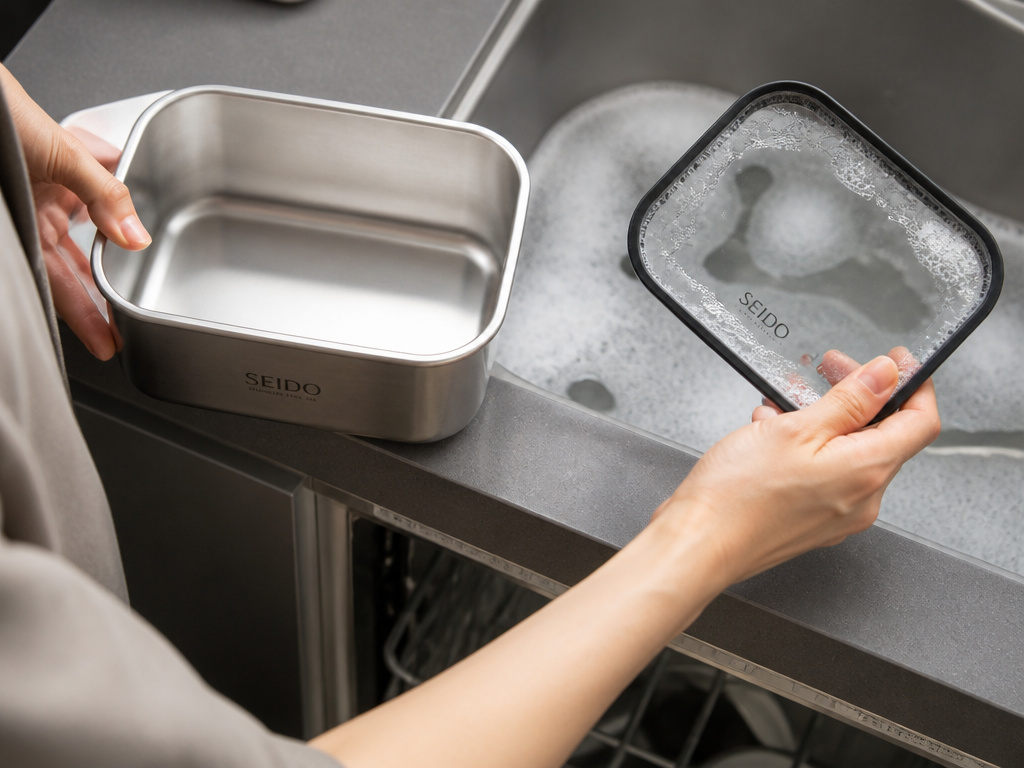
Take the SEIDO stainless steel lunch box. Its care guide is a masterclass in specifics. The containers are freezer safe to -40°C. But you must leave 1-2cm of headspace for liquids. It also says to hand wash the glass lids to prevent thermal shock. Why? Moving a cold glass lid directly to a hot dishwasher, or reheating a frozen meal with the lid on, creates a temperature differential that cracks the glass. It’s not a maybe. It’s a predictable outcome.
The PlanetBox is another example. Its support article states: “Be sure to remove the magnets before washing.” All Dippers and the Satellite Dish are dishwasher safe, but the magnets are not. Lose them, and the decorative fun is gone.
Then there are bamboo lids, like on some UNPR boxes. The user manual is clear: “Only lunch box body is dishwasher and microwave safe. The bamboo lid is for hand wash only.” Bamboo absorbs water and expands; the heat of a dishwasher then dries it rapidly, causing warping and checks (small cracks). The lid will never fit the same again.
What about Rubbermaid’s Blue Ice packs? They’re top-rack dishwasher safe, but the liquid inside is not for ingestion. And the plastic container itself gets less flexible when cold, a frozen LunchBlox is more likely to crack from impact.
| Brand / Model | Specific Edge Case | Official Guidance | Consequence of Ignoring |
|---|---|---|---|
| SEIDO Stainless Steel | Freezing liquids, glass lids | Leave 1-2cm headspace; hand wash glass lids | Deformed container from ice expansion; cracked lid from thermal shock |
| PlanetBox | Magnets, stainless steel care | Remove magnets; dry immediately after washing to avoid water marks | Lost magnets; permanent water spot stains on steel |
| UNPR (Bamboo Lid) | Lid material vs. Body material | Body: dishwasher safe. Bamboo lid: hand wash only. | Warped, ill-fitting lid that leaks |
| Rubbermaid LunchBlox | Plastic temperature sensitivity | More flexible when warm, less flexible when cold/frozen | Cracked container if dropped while frozen |
What About the Dishwasher?
The dishwasher question is simple, but the answer has layers.
Yes, many hard plastic and stainless steel lunch box bodies are dishwasher safe. The keyword is “top rack.” The lower rack is too close to the heating element, which can warp plastic and overheat certain materials. Top rack only.
But “dishwasher safe” doesn’t mean “every part is dishwasher safe.” You must dissect your box: * Is the lid the same material as the body? If it’s bamboo, wood, or certain plastics, no. * Are there silicone seals? They’re usually fine, but prolonged heat exposure can dry them out. Hand washing seals is always the gentler option. * Are there any accessories? Remove ice packs, magnets, or removable dividers (like PlanetBox Dippers) unless the manual says otherwise.
The dishwasher’s detergent and heat are the other actors. Standard dish detergent is fine. But pods or gels with heavy bleach or citric acid additives can be harsh on plastics and discolor stainless steel over dozens of cycles. If your box starts looking dull or scratched, switch to hand washing.
Finally, the dry cycle. The heated dry setting in your dishwasher can warp thin plastics or put extra stress on container seams. If you’re cautious, turn off the heated dry and let the boxes air dry in the rack instead.
The bottom line: the dishwasher is a convenience tool, not a longevity tool. It will clean your box effectively. It will also, over years, contribute to wear that hand washing would delay. For a box you use daily, hand washing most of the time and using the dishwasher once a week is a smart compromise.
Frequently Asked Questions
Can you put a lunch box in the washing machine?
No. Never put a hard-sided lunch box in a clothes washer. The agitation and spin cycle will bang it against the drum, cracking plastic and denting steel. Soft-sided insulated fabric lunch bags might be machine washable, but you must check the specific care tag. Most are not, and machine washing ruins the internal insulation, clumping it and destroying its ability to keep food cold.
How often should you wash a lunch box?
Wash it after every use. At minimum, give it a quick rinse and wipe daily. A full soap-and-water scrub should happen weekly, or immediately after any spill of dairy, meat juice, or sugary food. Letting residues sit for days is how odors set in and stains become permanent. A simple routine beats a deep crisis clean every time.
Why does my lunch box still smell after washing?
Odor molecules bind to the material, especially plastic. Washing removes surface grime but not these embedded compounds. To eliminate the smell, you need an absorbent or a breakdown agent. After washing, try a baking soda paste applied for 15 minutes, or leave an open box in direct sunlight for a few hours. For plastic, a light spray with white vinegar (let it dry fully) can also work, but vinegar can leave its own scent.
Are all stainless steel lunch boxes dishwasher safe?
The stainless steel body usually is, but the lid often is not. Many premium stainless boxes, like SEIDO, use glass lids for a better seal. Glass is susceptible to thermal shock, a sudden temperature change from a hot dishwasher cycle can crack it. Always check the manufacturer’s care guide. If it says “hand wash lid,” do it. Putting a glass-lidded box in the dishwasher is the fastest way to need a replacement lid.
What’s the best way to dry a lunch box?
Air dry, completely open, in a well-ventilated space. Do not towel dry, as lint can stick to surfaces. Do not seal the box or put the lid on while any moisture remains. Trapped dampness in seams or under seals is the primary cause of mold growth. Prop the box open, turn compartments upside down, and walk away for at least a few hours. If you’re in a humid climate, a fan pointed at it helps.
Before You Go
Washing a lunch box involves matching your method to the materials you’re holding. Get that match wrong, and you’re not cleaning, you’re slowly breaking the container.
The rules are simple once you know them. Plastic and stainless steel bodies can often handle the dishwasher’s top rack. But lids made of bamboo, glass, or certain plastics cannot. Always remove magnets, seals, and ice packs first. Dry everything bone-dry, every time. For smells, move past soap to baking soda or sunlight.
If you want one answer for a typical hard-sided box: hand wash with mild soap, scrub the seals separately, air dry fully, and use a disinfectant spray weekly. That covers 90% of boxes for 100% of their lifespan. The other 10%? That’s what the manufacturer’s manual is for. Read it once, and you’ve bought yourself years.
