The Best Food to Take Camping Without a Fridge for Safety
This post contains affiliate links. As an Amazon Associate, we earn from qualifying purchases.
Camping without a fridge means sticking to foods that are safe at ambient temperatures. The USDA defines safe, shelf-stable options like canned meats, peanut butter, dried fruits, nuts, beef jerky, and powdered drinks. Perishable foods like raw meat, dairy, and cooked leftovers enter the “Danger Zone” of 40°F to 140°F and become unsafe after two hours, or just one hour if the temperature is above 90°F.
That two-hour window is cumulative. It doesn’t reset each time you pull the sandwich out of your pack. Every minute your food spends between 40°F and 140°F counts toward the limit, and bacteria double fastest between 60°F and 125°F. A day hike in the 70s gives you more leeway than a beach trip where the cooler sits in direct sun.
What follows is the breakdown of what actually works: the science behind the timing, a complete list of no-fridge foods by category, how to pack them, and the one common mistake that turns a safe plan into a risky one.
Key Takeaways
- The USDA’s 40°F–140°F “Danger Zone” is the critical rule: perishable food is unsafe after 2 hours total exposure (1 hour above 90°F).
- Shelf-stable is king: canned meats (tuna, chicken), peanut butter, dried fruits, nuts, beef jerky, powdered milk, and whole, uncut fruits and vegetables require no cooling.
- Some foods are sneakily perishable: cooked rice, pasta salads, cut melons, and hard-boiled eggs need refrigeration and belong in a cooler, not a backpack.
- Multi-day trips demand different planning. Rely on dehydrated meals, canned goods, and dry staples for days two and beyond.
- Packing order matters. Use airtight containers for dry goods and always store raw meat below ready-to-eat items in a cooler to prevent cross-contamination.
The Core Safety Rule: The 40°F–140°F Danger Zone
Food should not be left in the “danger zone” (40°F–140°F) for more than two to three hours, less if the temperature is over 90°F. This is cumulative, it does not start each time food is served. Bacteria multiply most rapidly at temperatures of 60°F–125°F.
This blockquote from Oregon State University Extension Service is the mechanical reason you get sick. Bacteria on food reproduce exponentially in warm conditions.The 2-hour window is the total time your potato salad can spend between 40°F and 140°F before the bacterial load becomes dangerous. In a hot car or a sunny backpack, that clock runs fast.
The USDA food safety guide states this rule clearly. So does the Clemson Extension factsheet. It’s not a conservative estimate, it’s the documented threshold where risk spikes.
Where this goes sideways: Assuming the clock resets when you put food back in the shade. It doesn’t. If your turkey sandwich sat in a 75°F car for an hour on the drive to the trailhead, you have one hour left for lunch and the hike back, not a fresh two hours. That cumulative exposure is what new campers miss.
Why the 1-Hour Rule Above 90°F Exists
At extreme heat, bacterial growth isn’t just faster; it’s explosive. The NDSU Extension notes that above 90°F, the safe window shrinks to just one hour. This isn’t for desert hikes only. A black backpack left on a sunny picnic table can easily hit internal temperatures over 100°F on a regular summer day.
If the temperature is in the 70s or 80s, you have a two-hour window. This comes straight from the NDSU food safety publication. The takeaway is simple: know the forecast. A 95°F day changes everything from your menu to your packing strategy.
What You Can Actually Eat: The No-Fridge Food List
Forget “non-perishable.” Think about water content and pH. Bacteria need moisture to grow. Removing that moisture through drying, or locking it away in a can with a sterile seal, is what makes food safe. The lists from Minnesota Department of Health and Purdue Extension are your shopping list.
Shelf-Stable Food Categories
| Category | Examples | Why It Works | Meal Idea |
|---|---|---|---|
| Canned Proteins | Tuna, chicken, ham, spam, corned beef | Sterilized during canning; sealed environment blocks bacteria and oxygen. | Tuna mixed with individual mayo packets on crackers. |
| Dried & Dehydrated Foods | Beef jerky, dehydrated soups, dried fruit, nuts, powdered milk | Low water content (dehydrated) or high salt/sugar (jerky) inhibits microbial growth. | Jerky with nuts and dried mango for a trail mix lunch. |
| Nut Butters & Spreads | Peanut butter, almond butter (in plastic jars) | Low moisture, high oil content, and often added stabilizers create a hostile environment for spoilage. | Peanut butter on tortillas or bagels. |
| Dry Staples | Crackers, bread, tortillas, dry pasta, instant rice | Very low moisture; molds only grow if introduced moisture is present (like humidity). | Crackers with canned cheese spread. |
| Powdered & Concentrated Drinks | Powdered milk, electrolyte mixes, concentrated juice boxes | Water removed; reconstitute with safe water when ready to drink. | Juice box with a shelf-stable pudding cup. |
These are full meals. A can of chicken, a single-serve packet of mayo, and some crackers make a cold chicken salad.Tortillas last longer than bread and don’t crush as easily. This is the core of your long-term food storage plan for any trip beyond a few hours.
The Perishables You Must Leave Behind (or Cool)
Some foods are landmines. They look safe but aren’t.
- Cooked grains and pasta. Rice, pasta salad, quinoa, these are moist, neutral-pH, and perfect for bacterial growth. They are not safe without continuous cooling.
- Cut fruits and vegetables. A whole apple is fine. Sliced apples are a risk. The cut surface exposes moisture and sugars. This includes melon, which is especially hazardous.
- Hard-boiled eggs. The shell is not a sterile barrier after cooking. They need refrigeration.
- Deli meats and cooked meats. Unless they’re dried into jerky or sealed in a can, they belong on ice.
The principle is straightforward: if it’s moist, cooked, and neutral in pH, it needs a fridge or a cooler. This is why understanding methods to keep food cold is a complementary skill.
Planning for Short Hikes vs. Multi-Day Backpacking
A day hike and a 4-day backpacking trip have almost nothing in common menu-wise. The USDA FSIS is blunt: for trips longer than a day, shelf-stable items are required for days after the first.
The Day Hike (Under 6 Hours)
You can push the rules a little here. A well-insulated backpack with a frozen water bottle can keep a sandwich safely cool for a morning hike. The key is starting cold, straight from the fridge, and consuming everything within that tight 2-hour post-cooling window. Your main focus is on keeping things cold for a brief period.
Common mistake: Packing a pasta salad for a 5-hour summer hike. Even with an ice pack, the salad will likely spend over 2 hours in the danger zone by the time you eat lunch. Stick to the shelf-stable table above.
Multi-Day Backpacking (2+ Days)
Here, you live off your food list. Coolers are too heavy. This is the domain of dehydrated meals, tuna pouches, peanut butter, and tortillas. Your planning shifts to calorie density, weight, and nutritional balance.
- Breakfast: Instant oatmeal packets, powdered milk, dried fruit.
- Lunch: Tortillas with peanut butter and honey packets, beef jerky, nuts.
- Dinner: Commercial dehydrated backpacking meals (just add boiling water), or DIY: instant rice with a chicken pouch and dried veggies.
Your food security hinges on proper dehydrated food storage. Moisture is the enemy. A single damp night can ruin a week’s worth of homemade dehydrated meals.
How to Pack Without a Fridge
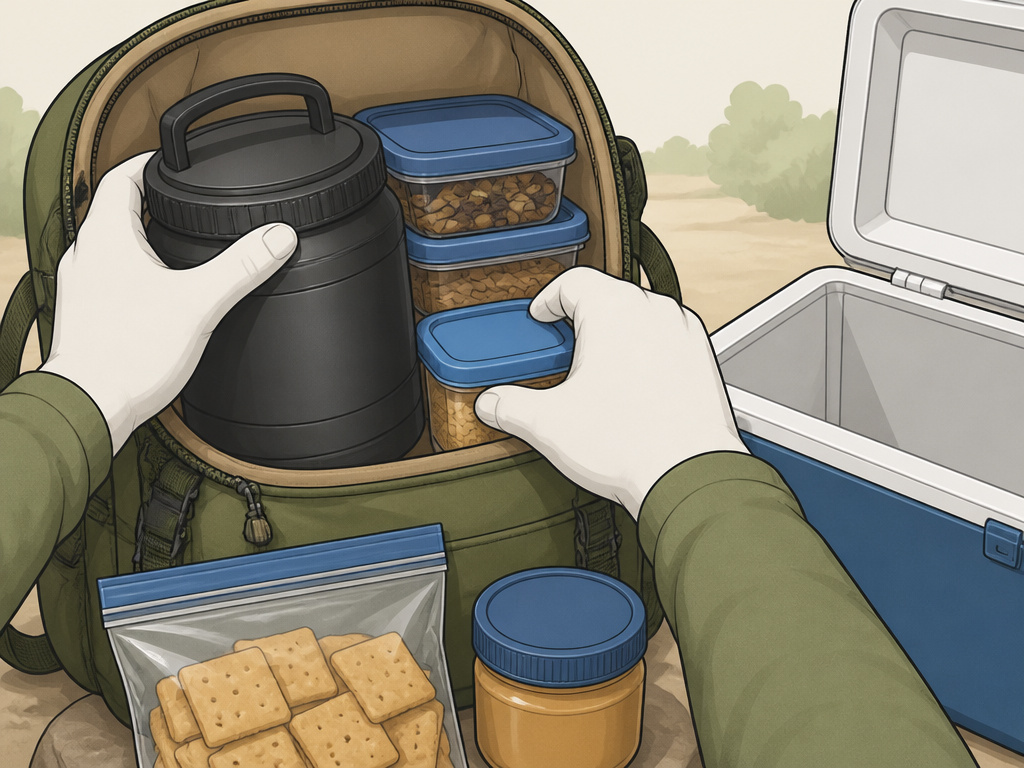
Packing is where safety is won or lost. How you arrange your items is as important as what you bring.
First, choose the right containers. For dry goods, airtight food containers prevent moisture and pests. For bear country, a bear canister is non-negotiable.
Second, order matters. If you are using a cooler for some perishables (like for a car-camping first day), pack in reverse order. The food you’ll eat last goes in first, at the bottom. Always pack raw meat, if you have it, below everything else to prevent juices from dripping. This is a core food preservation practice.
Third, repackage to save space and weight. Dump boxes of crackers into a sturdy zip-top bag. Portion out peanut butter into small reusable containers. This reduces bulk and trash you have to carry out.
The One Cooler Hack That Actually Works
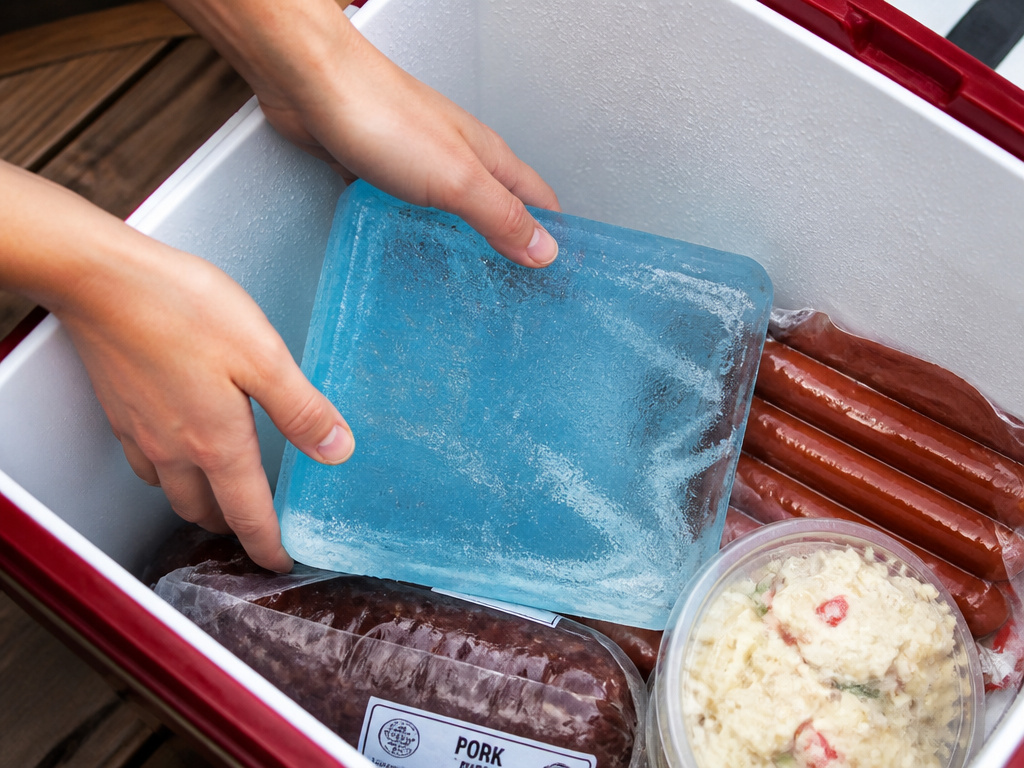
If your trip involves a car and you want some fresh food for the first night, a cooler is your tool. But a half-hearted cooler is worse than none, it creates a false sense of security.
The hack focuses on the cold source. A block of ice lasts far longer than cubes.Freeze water in a plastic container or use several frozen gel packs. Pre-chill the cooler itself with ice water for an hour before packing. Then, pack your food, already cold from the fridge, tightly around the ice blocks.
Skip the cooler if you’re backpacking more than a mile from the trailhead. The weight isn’t worth it. A small, lightweight portable cooler might work for kayak or car camping, but for the trail, shelf-stable is the only rational choice.
Your cooler is a delaying device. Once the ice is gone, the clock on the Danger Zone starts.The principles of long-term food storage don’t apply to a cooler. It’s short-term preservation only.
Frequently Asked Questions
Can you take cheese camping without a fridge?
Hard, aged cheeses like Parmesan, Asiago, or sealed cheese sticks can last a day or two unrefrigerated. Soft cheeses like mozzarella, cream cheese, or cheddar slices are perishable and need a cooler. When in doubt, choose sealed, shelf-stable cheese spreads or wax-coated cheese rounds.
Is canned food safe to eat if the can is dented?
Small, superficial dent on the side or rim is usually fine. Avoid cans with deep dents, especially on the seams or ends, or those that are bulging. A bulging can indicates gas production from bacterial growth, do not open it, and dispose of it carefully. Proper canned food storage means inspecting cans before you pack them.
How long do dehydrated meals last without refrigeration?
Commercial dehydrated backpacking meals, when unopened, can last 5-7 years due to their ultra-low moisture content and oxygen-absorbing packets. Homemade dehydrated meals, if properly dried and stored in airtight containers, are best consumed within 6-12 months. Always check for off odors or signs of moisture before use.
What about eggs for camping?
Whole, uncooked eggs in their shell can be safe at cool ambient temperatures for a few days, many countries don’t refrigerate eggs. For longer or hotter trips, use powdered eggs. Hard-boiled eggs are perishable and must be kept cold, as the cooking process removes the protective bloom and can introduce bacteria through cracks.
Can I eat takeout food on the way to the campsite?
Yes, but you must follow the 2-hour rule. If you pick up fried chicken at noon for a 2 PM arrival and eat it immediately, it’s likely safe. If you pick it up at noon, drive for three hours in a hot car, and then let it sit out at the site, you’ve far exceeded the safe window. The safer move is to buy it the day before, refrigerate it, and pack it cold in your cooler.
Before You Go
Camping without a fridge simplifies your menu but sharpens the rules. The 40°F–140°F Danger Zone and its 2-hour limit (1-hour above 90°F) are non-negotiable physics. Your safe foods are canned meats, dried fruits, nuts, jerky, peanut butter, and dry staples. For anything moist and cooked, you need a cold source and a firm timeline.
Plan according to the trip length: a day hike allows a little flexibility with a frozen water bottle; a multi-day trek demands commitment to shelf-stable foods. Pack smart with airtight containers, and never let a cooler trick you into complacency. When the clock runs out, throw the food out. The cost of a questionable sandwich is never worth the risk.
