What Food Has the Longest Shelf Life? Top 30+ Year Staples
This post contains affiliate links. As an Amazon Associate, we earn from qualifying purchases.
Freeze-dried foods in #10 cans or Mylar pouches with oxygen absorbers have the longest shelf life, reliably lasting 20 to &30 years when kept cool. White rice, dried beans, salt, and sugar can also last decades, but only when stored in the same specialized packaging. The shelf life printed on a grocery-store package is a quality guess, not a safety deadline.
That gap between the 2-year date on a bag of rice and its potential 30-year life is where the whole topic lives. It’s not about the food itself. It’s about the four forces attacking it: heat, moisture, oxygen, and light. Control them, and you turn pantry staples into a multi-decade resource.
What follows is a breakdown of the true endurance champions, the specific storage methods that unlock their potential, and the science behind why some foods last while others spoil in months. You’ll learn why brown rice fails where white rice succeeds, and how a $2 oxygen absorber is the difference between a 5-year pantry and a 30-year one.
Key Takeaways
- Packaging is everything. White rice lasts 4-5 years in its store bag but 25+ years in a Mylar bag with an oxygen absorber. The food is the same; the barrier is not.
- “Indefinite” doesn’t mean invincible. Salt and sugar last forever chemically, but they will clump and harden if exposed to humidity. Dryness is non-negotiable.
- Fat and oil are the enemy of longevity. Brown rice (6-12 months) fails because of its germ oil; white rice wins because that oil is milled away.
- Temperature is a silent shelf-life thief. Every 10°F increase above 70°F can halve the storage life of many dry goods. A cool basement beats a warm garage.
- Freeze-dried is the gold standard. With over 99% moisture removed and sealed against oxygen, commercial freeze-dried meals are the only common foods rated for 20-30 years straight from the manufacturer.
The Absolute Shelf Life Champions
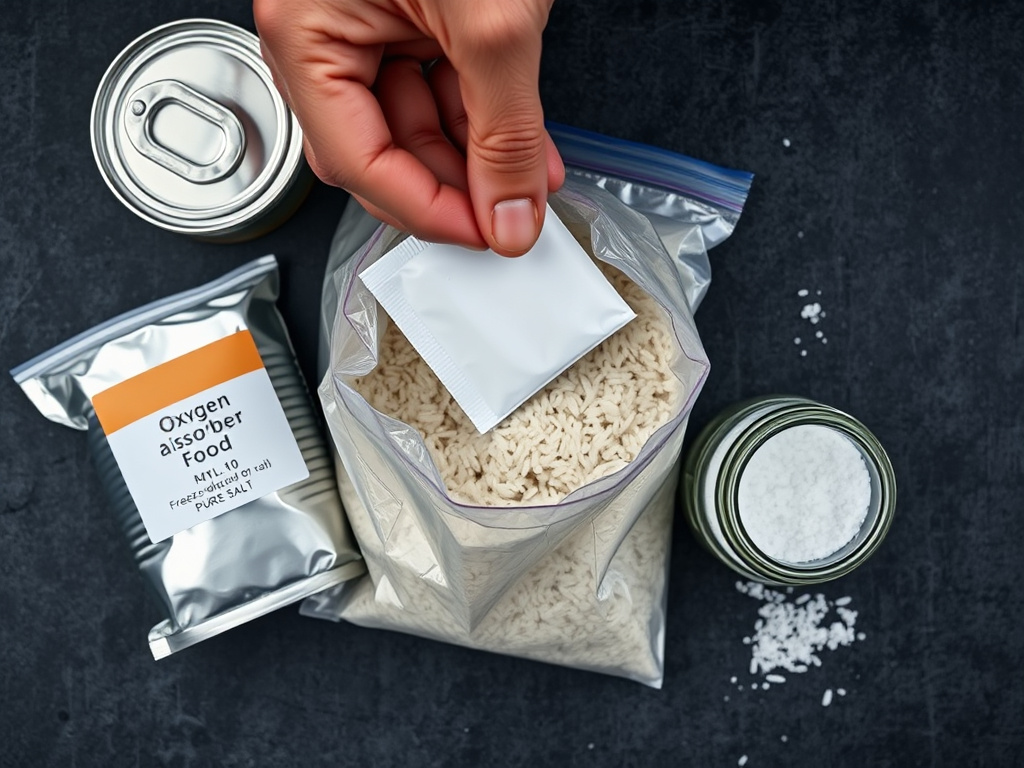
Forget “best by” dates. The following foods, when paired with professional-grade storage, are measured in decades, not years. Their timelines come from university extension food preservation guides and commercial storage studies.
Freeze-dried fruits, vegetables, and entrees in #10 cans or foil-laminated pouches, stored with oxygen absorbers at stable temperatures below 70°F, maintain nutrition and flavor for 20 to 30 years. This is the benchmark for long-term food storage.
Freeze-Dried Foods
This is the top performer. The commercial freeze-drying process removes over 99% of moisture while preserving cellular structure. Without water, microbial life can’t exist, and chemical reactions slow to a crawl. You’ll find these in #10 cans or thick Mylar pouches, always with an oxygen absorber inside. They are lightweight, rehydrate quickly, and are the core of most commercial 30-year emergency food supplies.
White Rice
Here’s where most people’s intuition fails. A bag of store-brand white rice might suggest a 2-year shelf life. But according to storage studies, that same rice, repackaged in Mylar bags for storage with oxygen absorbers, can last 25 years or more. The key is the removal of the bran and germ, where all the oils reside. White rice is essentially a sterile starch, a blank canvas that pests and bacteria find uninteresting without moisture.
Dried Beans
Like white rice, dried beans are a storage powerhouse, with a similar 25+-year potential when properly sealed. They must be fully dried (commercial ones are) and protected from moisture re-entry. A single oxygen absorbers for storage packet inside a sealed container does two jobs: it removes oxygen that causes rancidity and creates a nitrogen atmosphere that suffocates any potential insect eggs.
Salt (Pure)
Pure sodium chloride does not spoil. It’s a mineral. Archaeologists find edible salt in ancient sites. The “indefinite” shelf life claim is chemically true. The practical threat is moisture, which makes it clump. For long-term salt storage, keep it in a moisture-proof container. Iodized salt has a shorter life because the iodine can dissipate after a few years.
Sugar (White Granulated)
Sugar’s shelf life is also considered indefinite. Its preservation power comes from its hyperosmotic nature, it pulls water out of any microbial cell that touches it, effectively desiccating it. It can harden into a rock if it gets damp, but it remains safe to consume. Breaking it back up is a chore, so the goal for storing sugar is the same as salt: keep it perfectly dry.
| Food | Pantry Life (Original Packaging) | Long-Term Life (Mylar + Oxygen Absorbers) | Primary Threat |
|---|---|---|---|
| Freeze-Dried Entrees | N/A (sold pre-sealed) | 20-30 years | Oxygen, Light |
| White Rice | 4-5 years | 25+ years | Moisture, Insects |
| Dried Beans | 3-5 years | 25+ years | Moisture, Insects |
| Salt | Indefinite | Indefinite | Moisture (clumping) |
| Sugar | Indefinite | Indefinite | Moisture (hardening) |
Why These Foods Last So Long
The champions listed above share a common trait: they are hostile environments for the agents of decay. Understanding this turns storage from a guessing game into a system.
They Lack Available Water
Microorganisms need water to grow. Scientists measure this with a metric called “water activity” (Aw). Pure water has an Aw of 1.0. Most bacteria stop growing below 0.91. Mold needs at least 0.80. White sugar has an Aw of about 0.60. Dried beans are around 0.50. At these levels, cells can’t take in nutrients or expel waste. They’re effectively in stasis. This is why a food preservation technique like drying has been used for millennia.
They Are Low in Fat or Oil
Fats oxidize. This chemical reaction, called rancidity, happens even without microbial help and makes food taste stale or “off.” Brown rice contains the germ, which is rich in oils. Those oils give it a nutty flavor and more nutrients, but they also limit its shelf life to 6-12 months. White rice has that germ milled off. The same principle applies to whole wheat flour versus white flour. For longevity, refined wins.
They Are Simple Chemically
Salt (NaCl) and sugar (C12H22O11) are simple, stable molecules. They don’t break down into other compounds under normal pantry conditions. There’s nothing there to spoil. Complex foods, like powdered milk or whole-grain cereals, contain proteins, fats, and a mix of carbohydrates that can interact over time, leading to flavor and texture changes even in the absence of spoilage microbes.
Where this goes sideways: Storing brown rice like white rice. The oils in the germ will turn rancid within a year, giving it a bitter, stale taste no matter how well you’ve sealed it. You can smell it when you open the bag.
The Storage Rules That Make or Break Shelf Life
You can have the perfect food and ruin it in a year with bad storage. The shelf life numbers in the first section assume you’re following these rules. They are the difference between a 5-year pantry and a 30-year one.
1. Attack the Oxygen
Oxygen is the enemy of long-term storage. It allows oxidation (rancidity) and supports the growth of aerobic bacteria and molds. An oxygen absorber is a small packet containing iron powder. Once sealed in a container, the iron rusts, chemically binding with the oxygen and creating a nitrogen-rich atmosphere. This is non-negotiable for achieving 25-year claims. It’s the core tool for preserving dry foods.
2. Choose the Right Barrier
A Ziploc bag is a barrier against spills, not against oxygen and moisture over years. Mylar bags are polyester film laminated with aluminum foil. They are impervious to oxygen, moisture, and light. For the ultimate protection, food-grade buckets with gamma-seal lids make excellent outer containers for Mylar-bagged goods, adding a physical barrier against rodents and crushing. This is the standard for any serious long-term food storage.
3. Control Temperature and Humidity
Heat accelerates all chemical reactions, including rancidity. A cool, stable environment is paramount. The ideal range is between 50°F and 70°F. A basement is often perfect; an attic or garage is usually a disaster. Humidity threatens dry goods by raising water activity. Always store your sealed containers off concrete floors, which can wick moisture.
4. Block the Light
Light, especially sunlight, degrades vitamins and causes colors to fade. It also contributes to heat gain. Opaque containers or storage in a dark cupboard solve this. This is one reason why food storage containers made of opaque HDPE plastic are preferred over clear glass for very long-term storage.
| Storage Factor | Ideal Condition | Consequence of Ignoring It |
|---|---|---|
| Oxygen | Removed with absorbers | Rancidity within 1-3 years; mold risk |
| Moisture Barrier | Mylar bag or #10 can | Moisture ingress, clumping, mold |
| Temperature | Cool (50-70°F), stable | Shelf life halves per 10°F above 70°F |
| Light | Complete darkness | Nutrient loss, flavor degradation |
What About Other Common Foods?
Not everything is a 30-year champion. Many pantry staples have respectable but shorter lifespans, and their limits teach us about the principles at play.
Pasta
Dry pasta, made from durum semolina, is another long-life carbohydrate. Its low moisture and fat content give it a shelf life of 2-3 years in the box, easily extending past 10 years in oxygen-free storage. The hard, dense structure resists insect infestation better than more porous grains.
Flour
White, all-purpose flour is a problem child. Even though it’s refined, it has a much larger surface area than whole grains, making it susceptible to oxidation. Its shelf life is typically 1-2 years in the pantry. For long-term storage, it’s better to store wheat berries and a grain mill, as the intact berry protects the oily germ inside until grinding.
Canned Goods
Commercial canned foods (low-acid like meats, beans, corn) are excellent for mid-term storage. The canning process destroys microorganisms and creates a vacuum seal. They can remain safe to eat for 2-5 years past their “best by” date if the can is undamaged. High-acid foods (tomatoes, fruit) have a shorter optimal window of 12-18 months due to the acid’s interaction with the can lining.
Powdered Milk
Non-fat powdered milk, sealed with oxygen absorbers, can last 10-15 years. The fat is removed for this very reason. Whole milk powder, with its fat content, will go rancid much faster, often within a couple of years even when sealed.
Frequently Asked Questions
Does honey last forever?
Honey is legendary for its longevity due to its low water activity and natural acidity. While it can crystallize, it doesn’t spoil. However, for it to last “forever,” it must be kept sealed. If moisture gets in, it can ferment. Pure, raw honey in a sealed container is as close to a forever food as you can get.
Why does brown rice go bad so quickly?
Brown rice retains its nutrient-rich bran and germ layer. That germ contains oils. Those oils are unsaturated fats, which are highly susceptible to oxidation and rancidity. Once rancid, the rice develops a bitter taste and stale smell. It’s still safe to eat but unpalatable. For a reliable food storage carbohydrate, white rice is the clear choice.
Can you really eat canned food 10 years later?
For low-acid canned goods (meats, vegetables, soups) in perfect condition, no dents, rust, or bulging, it’s possible, but not advisable as a plan. After 2-5 years, nutritional quality and taste decline significantly. A bulging can means bacterial gas production; discard it immediately. The USDA Food Product Dating page provides the official guidance: “Best if Used By” is about quality, not safety, but extreme age increases risk.
What is the single most important thing for long shelf life?
Remove the oxygen. Whether you’re using a vacuum sealer, an oxygen absorber in a Mylar bag, or a #10 can packed under nitrogen, an oxygen-free environment is the biggest lever you can pull. It stops rancidity, prevents insect survival, and puts mold growth on hold. All other rules support this one goal.
Is it worth packing dry goods myself?
It depends on your goals. For building a deep pantry to rotate through within 5 years, original packaging in a cool, dark place is sufficient. For building a 20+ year emergency reserve that you “set and forget,” professional packaging with Mylar and oxygen absorbers is worth the effort and cost. It converts everyday groceries into a truly long-term asset.
The Bottom Line
The food with the longest shelf life isn’t a single item; it’s any dry, low-fat, low-moisture staple that you’ve partnered with the right packaging. White rice, dried beans, salt, and sugar are the affordable foundations. Freeze-dried meals are the premium, hassle-free option. The magic isn’t in the food alone, it’s in the Mylar bag, the oxygen absorber, the cool dark closet.
Start with the foods you actually eat. Buy an extra bag of rice or beans next time you shop, some Mylar bags and oxygen absorbers, and repackage one batch. You’ll see the process is simple. You’ll have taken a grocery item with a 2-year date and turned it into a 25-year resource. That’s the real answer to what food lasts the longest: the food you bother to store correctly.
