
Why Is My Freezer Not Freezing? | 6 Common Causes & Fixes
This post contains affiliate links. As an Amazon Associate, we earn from qualifying purchases.
A freezer that won’t freeze is almost always due to one of six specific mechanical or airflow failures: a faulty defrost system, dirty condenser coils, a broken evaporator fan, a bad door seal, a failed thermostat, or a sealed-system leak. Check the simplest issues first, like a clogged air vent or a dirty condenser, before calling for expensive repairs.
That shortlist is the diagnostic map every appliance technician uses. The order matters. The most expensive failure, a refrigerant leak, is statistically the least likely, while the most common culprit is a simple airflow block or a failed $40 fan motor that you can test yourself with a $20 multimeter.
What follows is a walkthrough of each failure point, starting with the free checks you can do in five minutes and moving to the components that require tools. You’ll learn how to listen for the right sounds, what normal freezer temperatures actually are, and how long your food is safe if the compressor quits.
Key Takeaways
- Listen first. A silent freezer is a dead freezer. You should hear the compressor humming and fans running. No sound means a power, control board, or compressor issue.
- Check airflow before electricity. Over 50% of “not freezing” complaints are solved by cleaning condenser coils, unblocking vents, or fixing a warped door gasket.
- Freezers need time. After adjusting the thermostat or defrosting, allow 24 hours for the temperature to stabilize before declaring the fix a failure.
- Food has a grace period. A full, closed freezer will keep food frozen for at least 24 hours during a power outage. After that, you need dry ice.
- Know when to call a pro. If you’ve cleaned the coils, confirmed the fans spin, and the compressor runs but doesn’t get cold, the problem is likely in the sealed refrigerant system, a job for a certified technician.
What Are the Most Common Reasons a Freezer Stops Freezing?
Diagnosis works from the outside in. Start with the free, no-tool checks before you unplug anything or reach for a screwdriver. This table outlines the progression from simple to complex.
| Problem Area | Common Symptoms | Typical Fix |
|---|---|---|
| Airflow & Blockages | Frost only in one area, compressor runs constantly | Clean condenser coils, unblock interior vents |
| Door Seal (Gasket) | Frost along door edges, general warmth, high humidity smell | Clean gasket, test seal, replace if torn |
| Evaporator Fan | Cold fridge but warm freezer, no air movement sound | Check for ice jam, test fan motor with multimeter |
| Defrost System | Heavy frost coating evaporator coils, weak cooling | Test defrost heater and thermostat |
| Thermostat / Control | Inaccurate temperature, compressor short-cycling | Test continuity, replace control board |
| Sealed System (Refrigerant) | Compressor runs but stays warm, no cooling anywhere | Professional repair required |
The technical snapshot: In a functioning freezer, a compressor pumps refrigerant through evaporator coils inside, absorbing heat. An evaporator fan blows air over these cold coils into the compartment. A separate defrost heater periodically melts frost off the coils. Failure at any point, airflow, heat removal, or defrost, cools the system.
The evaporator fan is a prime suspect. It’s a small motor that spins a plastic blade, moving cold air from the coils into the freezer cavity. If it seizes, cold air stays trapped behind the back panel. You’ll often find the refrigerator section stays somewhat cool (because cold air sinks) while the freezer warms up. Listen for a faint humming or whirring behind the back wall of the freezer. Silence there is a strong clue.
The Freezer Door Isn’t Sealing Properly
A warped or dirty door gasket lets warm, moist air seep in constantly. The freezer motor fights a losing battle, running non-stop to compensate while frost builds up around the door frame. This is the number one cause of high energy bills and weak cooling that owners miss.
Test the seal with the dollar bill method. Open the door, place a dollar bill halfway in, and close the door on it. Try to pull the bill out. You should feel consistent resistance all the way around the door. If it slides out easily or drops, the seal is failing. Clean the gasket with warm, soapy water, built-up grime can prevent a tight seal. Inspect for cracks or tears, especially in the corners.
Where this goes sideways: A bad seal doesn’t just waste energy. The constant humidity influx causes rapid frost buildup on the evaporator coils. That ice insulates the coils, making them less efficient, and can eventually jam the evaporator fan blade. The problem compounds weekly.
The Defrost System Has Failed
Modern freezers automate defrosting. Several times a day, a heating element turns on to melt frost off the evaporator coils, and a drain carries the water away. If the heater, the defrost thermostat (which tells the heater when to turn off), or the drain fails, ice buries the coils.
You’ll see the signs. Remove the interior back panel of the freezer (consult your manual). The evaporator coils should look like a clean, shiny radiator. If they’re a solid block of fuzzy white ice, the defrost system has quit. This ice acts like a parka, insulating the coils so they can’t absorb heat. The freezer temperature will creep up, and the compressor may run constantly trying to overcome it.
How Do You Diagnose a Freezer with No Cold at All?
When the freezer is simply room temperature, your diagnostic tree narrows. Start with the absolute basics: is it plugged in? Is the outlet live? Is the circuit breaker tripped? Next, listen.
Step 1: Listen for the compressor. It should produce a low hum or vibration. No hum suggests a power issue, a failed start relay, or a dead compressor. Step 2: Listen for the condenser fan. This fan cools the compressor and condenser coils, usually located at the bottom rear. If it’s clogged with dust or its motor is dead, the compressor will overheat and shut off. Step 3: Feel for heat. The condenser coils (black grille on the back or bottom front behind a kickplate) should feel warm when the compressor is running. If the compressor is running but the coils stay cool, refrigerant may have leaked out, a sealed-system failure.
Common mistake: Assuming the worst first. Before you mourn a dead compressor, pull the unit out and vacuum the condenser coils. A thick mat of dust and pet hair can overheat the system, triggering a thermal overload switch that shuts everything down. Clean it, plug it back in, and wait an hour.
Dirty Condenser Coils Are a Silent Killer
Condenser coils dissipate heat from the refrigerant. When they’re clogged with dust, they can’t release heat efficiently. The system pressure rises, the compressor overheats, and it either shuts off via its overload protector or runs endlessly while cooling poorly.
Cleaning them is the most impactful maintenance task. Unplug the freezer. For rear coils, use a condenser coil brush and a vacuum to gently remove dust. For front-mounted coils behind a bottom grille, remove the panel and vacuum. Do this every six months if you have pets or a dusty house.
What Should You Do Immediately When the Freezer Stops?
Your first move isn’t diagnosis, it’s damage control. Get a refrigerator/freezer thermometer and place it in the center of the freezer. This gives you objective data. Is it at 20°F or 40°F?
Then, implement the 24-hour rule. If you’ve just adjusted the thermostat, plugged the unit in after a move, or completed a defrost, the manufacturer’s guidance is clear: wait a full day for temperatures to stabilize. Frigidaire and LG both specify this period in their service documents. Tinkering every few hours resets the cooling cycle.
If the freezer is off due to a power outage, keep the door closed. A full freezer holds safe temperatures for at least 24 hours. For a prolonged outage, source dry ice, seven or eight pounds every 24 hours can keep the compartment frozen. Never taste food to determine safety. If the thermometer reads above 40°F for over two hours, or if food has thawed and has ice crystals melted, discard it.
Can the Problem Be a Simple Setting or Placement Issue?
Yes. Two often-overlooked issues are thermostat setting and ambient temperature.
First, check the thermostat dial. It may have been bumped to a warmer setting. The factory default is often “4” on a 1-7 scale. Second, consider where the freezer lives. Is it in a hot garage or a sunroom? Most manuals, like the one for part number 216657700A, warn that ambient temperatures above 110°F (43°C) can overwhelm the cooling system. Conversely, a room below 55°F can cause the compressor to not cycle on often enough. Ensure there’s at least 3 inches of clearance on all sides for proper airflow.
Overloading the freezer also strains it. Packing it solid blocks internal air circulation. Follow the guideline of freezing only three pounds of fresh food per cubic foot of space at a time, and distribute packages evenly.
When Is It Time to Call a Professional Technician?
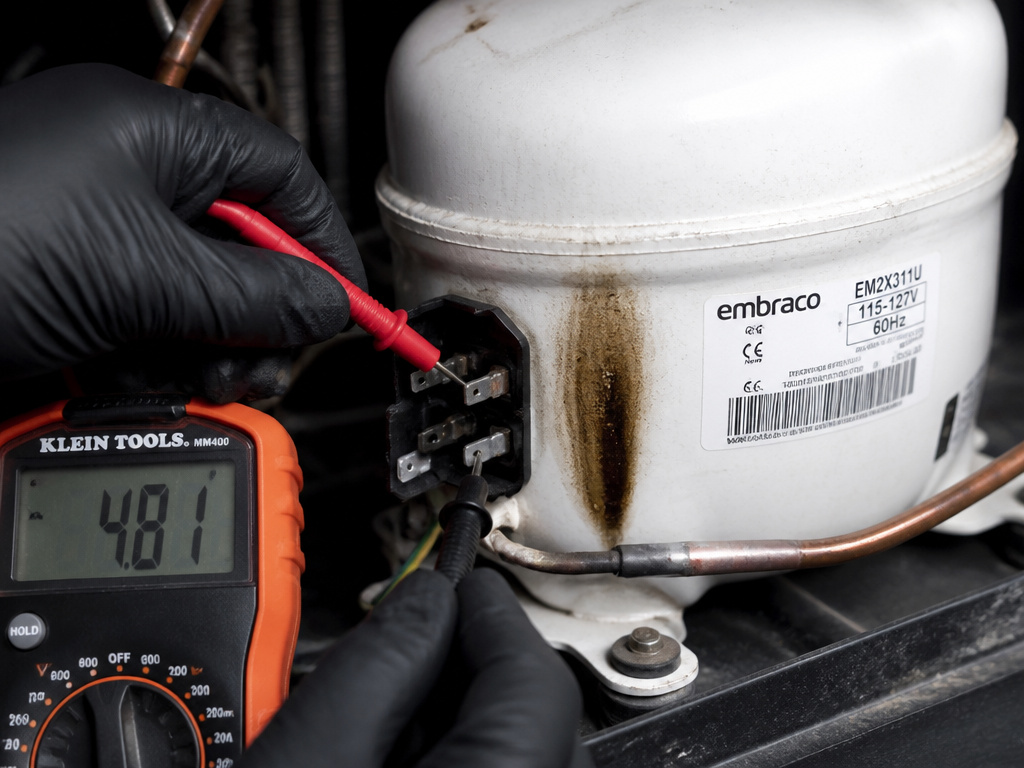 Call a pro when your troubleshooting points to the sealed system (compressor runs, coils are clean, fans work, but no cooling) or for complex electrical diagnoses. Replacing a compressor or fixing a refrigerant leak is not a DIY job, it requires specialized tools, recovery equipment, and certification to handle refrigerants.
Also call a technician if: * You see oil around the compressor or refrigerant lines (indicates a leak). * The compressor tries to start with a loud click but then goes silent (failed start relay or compressor). * You are uncomfortable testing electrical components with a multimeter.
The cost of a service call versus the value and age of your freezer is the final calculation. For a unit over ten years old, a major repair often costs more than half the price of a new, more efficient model.
Frequently Asked Questions
Can a freezer be cold but not freezing?
Yes. This usually points to a weak compressor, low refrigerant, or a partially failed defrost system. The system has enough capacity to get cool but not to reach the 0°F to -6°F range needed for freezing. A failing evaporator fan can also cause this, as it doesn’t move enough air.
Why is my freezer not freezing but my refrigerator is cold?
This classic symptom almost always implicates the evaporator fan motor. This fan moves cold air from the freezer coils into the refrigerator section. When it fails, the refrigerator loses its cold air supply and warms up, but the freezer also suffers because airflow across its own coils is blocked. A solid ice block from a failed defrost system can also jam this fan.
How long will food last in a freezer without power?
Full, unopened freezer keeps food frozen for about 48 hours. A half-full freezer lasts about 24 hours. The key is keeping the door shut. Use block ice or dry ice to extend this time. Once power returns, check each item. If it still contains ice crystals or is at 40°F or below, it can be refrozen, though quality may suffer.
What does it mean if the freezer is running but not cooling?
The compressor is operating, but the cooling cycle is incomplete. The most common reasons are dirty condenser coils (can’t reject heat), a failed evaporator fan (can’t distribute cold air), or a clogged defrost drain causing ice to block airflow. A faulty thermostat telling the compressor to turn off too soon is another possibility.
Is it worth repairing an old freezer?
It depends. If the repair is under $200 and the freezer is less than 8 years old, repair is usually economical. If the diagnosis is a sealed-system leak or a compressor failure on a unit older than 10 years, replacement is almost always the smarter financial choice. Newer models are significantly more energy-efficient.
The Bottom Line
Start with the simple, free fixes: clean the condenser coils, test the door seal, and unblock the interior vents. Over half of all freezer cooling problems live there. If that doesn’t work, the evaporator fan and defrost system are the next most likely suspects, both are testable with a basic multimeter.
Remember the timelines. Give any adjustment 24 hours to take full effect. Know that your food has a 24-hour safety buffer in a power outage. And recognize the signs of a sealed-system failure, a running but warm compressor, as your cue to call a professional. Keeping your freezer cold isn’t about luck; it’s about methodically checking a short list of failures until you find the one that’s stopped the cold.
