Freezer Temperature Guide: What It Is & Why -18°C Preserves Food
This post contains affiliate links. As an Amazon Associate, we earn from qualifying purchases.
Set your freezer to -18°C (0°F). That’s the temperature every major manufacturer. Bosch, Electrolux, Frigidaire, prints in their manuals for long-term food preservation. It slows bacterial and enzymatic activity to a near halt, extending the shelf life of meat to 8 months, fish to 6 months, and vegetables to a full year. Stray warmer than -15°C and ice cream turns gummy in weeks; go colder than -23°C and you’re wasting energy without a tangible food safety benefit for home storage.
That number isn’t arbitrary. It’s the result of decades of food science and international cold-chain standards. Your freezer has a range, but the sweet spot is a narrow band right at that -18°C mark.
What follows is the breakdown of why that number matters, how your specific model’s design and your kitchen’s climate affect it, and the exact steps to verify your freezer is holding the line. You’ll also learn when to ignore the dial, like during a big shopping trip, and what the temperature readout on the door is really telling you.
Key Takeaways
- The universal safe-storage temperature is -18°C (0°F). This is the factory setting for most home freezers.
- Freezer thermometers are non-negotiable. The display on the door shows the set point, not the actual temperature everywhere inside.
- Climate class matters. A freezer rated for a temperate “N” class (+16°C to +32°C) will struggle in a hot garage, leading to warmer internal temps and shorter food life.
- Adjustments take time. Wait at least 24 hours after changing the setting for the temperature to fully stabilize.
- Shelf life plummets above -15°C. At -10°C, the storage time for most frozen foods is cut by more than half.
The -18°C (0°F) Standard Explained
Open a Bosch or Electrolux manual and the recommendation is unambiguous. The Bosch freezer manual states the factory setting is -18°C for a reason: “At a temperature of -18 °C… Cheese, poultry and meat: up to 8 months. Vegetables and fruit: up to 12 months.” This isn’t a suggestion. It’s the threshold where microbial growth and enzyme activity are effectively paused, not just slowed.
The recommended freezer temperature for long-term storage is -18°C (0°F). This standard is based on international food safety protocols and is the set point at which the deterioration of texture, flavor, and nutrients in frozen foods is minimized for maximum shelf life.
Why not colder? For home storage, there’s diminishing returns. Going from -18°C to -23°C uses significantly more energy but doesn’t meaningfully extend the safe storage period for your chicken breasts or frozen peas. The exception is specialized storage, like some laboratory samples or vaccines, which require -70°C or -80°C freezers. For your kitchen, -18°C is the entire game.
The moment you set the dial warmer, the clock speeds up. The same Bosch manual outlines the shelf life at -18°C. Raise the temperature to -15°C, and those timelines shrink. Ice crystals grow larger, damaging cell walls. Foods lose moisture to the dry freezer air, accelerating freezer burn. You’ll see it first on poorly wrapped items: those chalky, grey patches on steak or the leathery skin on frozen fruit.
Manufacturer Ranges and Your Control Dial
Your freezer’s control panel offers a range, not a single temperature. It’s crucial to know what that range is.
| Brand / Model | Recommended Setting | Adjustable Range | Source |
|---|---|---|---|
| Bosch Freezer | -18°C | -16°C to -26°C | Bosch Manual 8001135755_A |
| Electrolux Freezer | -18°C | Approx. -15°C to -24°C | Electrolux Manual |
| Follett FZRVAC4P (Lab) | -18°F (-27.8°C) preset | Up to 0°F (-17°C) | Follett Manual |
The takeaway: even if your dial shows numbers from 1 to 7, those correspond to a temperature range. “7” is usually the coldest, potentially down to -24°C or lower. “1” might only get you to -15°C. You need a freezer thermometer to translate the dial position into an actual temperature.
Common mistake: Assuming the door display shows the current air temperature. It usually shows the target set point. The real temperature inside the cabinet can be several degrees different, especially right after you add warm groceries.
How to Check Your Freezer Temperature
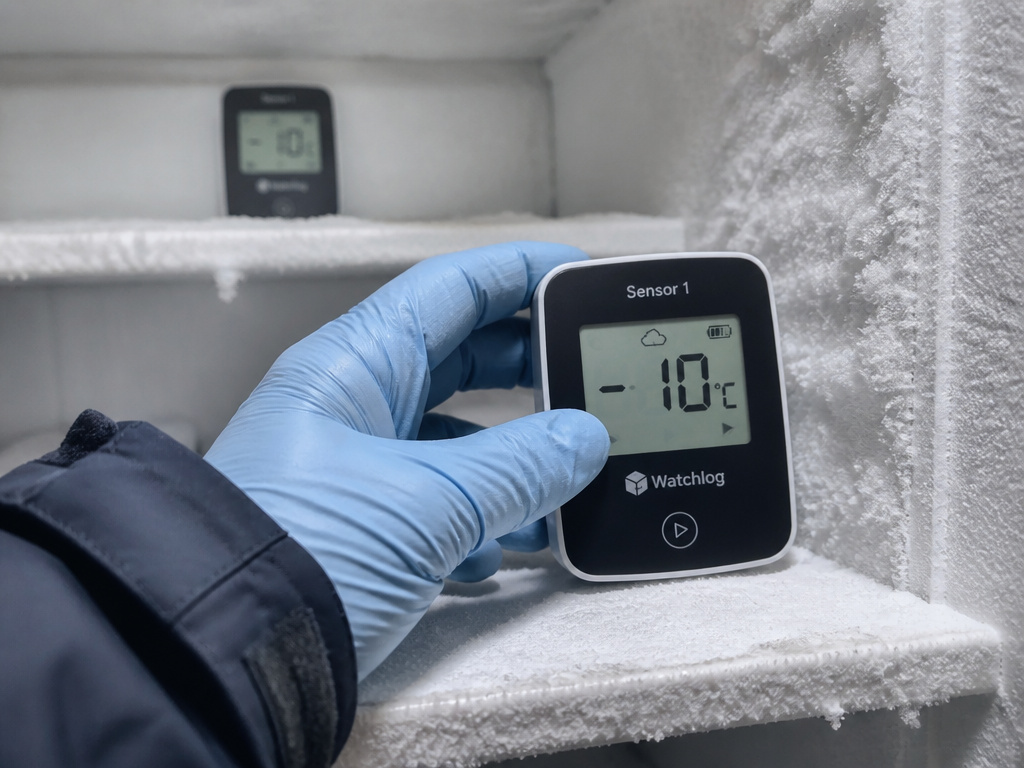
You cannot manage what you don’t measure. The digital display on your freezer door is a goal, not a report. To know the truth, you need an independent thermometer placed in the right spot.
- Get the right tool. Use a standalone digital thermometer designed for freezer use. Alcohol-based analog models are okay but slower to react. Place it in the middle of the freezer, on a shelf, not touching walls or food.
- Wait 24 hours. After placing the thermometer or adjusting the thermostat, close the door and leave it. The temperature needs a full day to stabilize, especially after adding new items.
- Check at different times. The temperature fluctuates during the defrost cycle and compressor runs. Check your freezer temperature monitor in the morning and evening for a couple of days to find the average.
- Map the zones. Put a second thermometer (or move your first) to the front top shelf and the back bottom corner. You might find a 3-5 degree difference. Store sensitive items like ice cream in the coldest, most consistent spot.
If your readings are consistently off, say, -12°C when set to -18°C, you have a problem. It could be a failing seal, a blocked vent, or a overfull freezer restricting air flow. This is the first step in freezer troubleshooting.
Why Your Freezer’s Location Matters
A freezer doesn’t work in a vacuum. It exhausts heat. If you put it in a hot, poorly ventilated space like a garage in summer, it has to work harder to pump that heat out. This is where climate class ratings come in.
The Bosch manual specifies four classes: – SN (Subnormal): +10°C to +32°C – N (Normal): +16°C to +32°C – ST (Subtropical): +16°C to +38°C – T (Tropical): +16°C to +43°C
If your freezer is rated “N” and your garage hits 38°C, the compressor will run non-stop trying to keep up. The internal temperature will creep upward, and food will spoil faster. It also drastically shortens the appliance’s lifespan. Always check the manual’s climate class before deciding where to put it.
When to Adjust the Temperature (And When Not To)
The -18°C rule has two practical exceptions: loading and defrosting.
Use the “Super Freezing” or “Fast Freeze” function. This isn’t a gimmick. When you come back from the store with 10 pounds of warm meat, adding it to a -18°C freezer forces the compressor to work overtime and raises the overall temperature, threatening already-frozen food. Hitting the super freeze button before you go shopping drops the temperature to around -25°C or lower, creating a thermal buffer. The Bosch manual advises turning it on 24 hours before a big freeze to maximize capacity. After 24 hours, turn it off. It’s an energy hog.
Understand the defrost cycle. Frost-free freezers warm up slightly during a defrost cycle to melt ice off the coils. This is normal. The temperature might rise to -10°C for a short period. A quality freezer is designed to bring the temperature back down quickly without significantly impacting food safety. If your freezer is old or overstuffed, this recovery can take too long. If you notice frequent, prolonged warming, it might be time for a manual defrost or service.
Skip this if: You’re trying to “speed up” freezing by turning the dial to max cold after adding food. The super freeze function does this more efficiently and automatically returns to normal. Cranking the dial manually risks forgetting to turn it back, leaving your freezer at -25°C indefinitely and skyrocketing your energy bill.
The Special Case of Ice Makers
Your ice maker’s output is a direct thermometer. If it’s producing small, cloudy, or slow-forming ice, your freezer is too warm. Most manuals, like the one from Electrolux, explicitly state: “Set the freezer to a colder setting to increase the output of the ice maker.” Allow 24 hours after adjustment to see a change. If the ice production is still poor, you might have a separate issue with the water line or the maker itself.
Freezer Temperature and Food Shelf Life
Temperature isn’t just about safety; it’s about quality. The shelf life numbers in the Bosch manual (-18°C for 8 months for meat) are maximums for perfectly packaged food. Every degree above that target cuts the time significantly.
| Food Type | Max Shelf Life at -18°C | Likely Shelf Life at -10°C | Primary Quality Loss |
|---|---|---|---|
| Lean Fish (Cod) | 6 months | 2-3 months | Texture becomes mushy; rancid flavors develop. |
| Chicken Breasts | 8 months | 3-4 months | Dry, stringy texture; freezer burn appears faster. |
| Berries | 12 months | 4-6 months | Become limp and watery; lose vibrant color. |
| Ice Cream | 2-3 months | 3-4 weeks | Develops icy crystals; turns gummy and loses air. |
This is the real-world impact of a warm freezer. Your frozen peas might be “safe” at -10°C, but they’ll taste like cardboard by month four. This quality loss is directly tied to the causes of freezer burn: moisture migration and oxidation. The best defense, besides correct temperature, is proper packaging like vacuum sealing.
Lab-Grade Precision: The Edge Case
Home freezers have one job. Laboratory freezers, like the Follett undercounter models used for vaccines, have a different standard. Their commissioning process involves a 24-hour spatial temperature mapping exercise using distributed loggers throughout the cabinet volume. This identifies hot and cold spots before critical samples are stored. It’s a reminder that even a “set point” of -18°C doesn’t guarantee uniform temperature everywhere. For your most precious frozen items, a side of heritage breed pork, summer berries you picked, consider rotating their position every few months.
Frequently Asked Questions
Is -18°C cold enough for raw meat?
Yes. -18°C (0°F) is the international standard for long-term frozen storage of raw meat, poultry, and fish. At this temperature, bacterial growth is completely halted. The storage clock, 8 months for meat, 6 months for fish, is primarily about quality (texture, flavor, moisture retention), not safety.
My freezer has a numbered dial, not a temperature readout. What should I set it to?
Start at the midpoint. Most dials (1-7 or 1-5) have the coldest setting at the highest number. Set it to 4 on a 1-7 scale, then use a standalone thermometer for freezer to check the actual temperature after 24 hours. Adjust the dial one notch, wait another 24 hours, and check again. Repeat until the thermometer reads between -18°C and -20°C.
Why does my freezer feel warmer than it should?
You’re likely feeling the temperature during its defrost cycle, or you’re checking right after the door has been open. Also, the air inside a properly cold freezer can feel “warmer” than expected because it’s so dry. Trust the thermometer, not your hand. If the thermometer confirms it’s warm (above -15°C), check for blocked vents, a damaged door seal, or overloading. A persistent issue may require cleaning the freezer coils or a service call.
How often should I check my freezer temperature?
Formally, once a month is sufficient for a stable freezer. Practically, check it anytime you notice a change: softer ice cream, longer freeze times for new items, or the compressor running more frequently. Also check it seasonally, a freezer in an uninsulated space will perform differently in summer versus winter.
Can a freezer be too cold?
For food storage, yes. Below -23°C (-10°F), you’re using significantly more energy for no appreciable extension in food quality or safety. Some manual defrost freezer models can get extremely cold (below -30°C), which is useful for flash-freezing or long-term storage of certain fats, but it’s overkill for everyday use and wasteful on your power bill.
The Bottom Line
The answer to “what the freezer temperature” should be is -18°C. That number is printed in your manual for a reason. It’s the line between food that stays preserved for months and food that deteriorates in weeks.
Your job is to verify it with a real thermometer, understand how your kitchen’s ambient temperature affects it, and use the super freeze function as a tool, not a crutch. A consistent -18°C, combined with proper packaging, is the most effective freezer burn prevention strategy you have. Everything else is just noise.
