Sun Tea in Plastic Containers: Is It Safe? The 40°C Rule
This post contains affiliate links. As an Amazon Associate, we earn from qualifying purchases.
You can make sun tea in a plastic container, but you should not. The heat from sunlight can cause chemicals like BPA and phthalates to leach from the plastic into your tea, a process that peer-reviewed studies show begins at temperatures as low as 40°C (104°F). While some plastics like polypropylene (PP) release a cocktail of endocrine disruptors, others like general-purpose polystyrene (GPPS) may only leach specific compounds. The only way to guarantee safety is to use a glass or stainless steel container.
The 40°C line is the point where a 2025 study in Scientific Reports first detected significant leaching of chemicals like DEHP from polypropylene cups. Your car dashboard or a sunny patio can hit that temperature in under an hour on a warm day.This means the standard 3-6 hour sun tea brew is almost guaranteed to operate in the chemical migration zone.
What follows is a breakdown of the specific plastics that fail, the exact chemicals they release, and the container materials that don’t trade safety for convenience. We’ll also look at a forgotten 1989 patent for a plastic sun tea adapter, proof that even inventors saw plastic as a compromise needing a workaround.
Key Takeaways
- Leaching starts at 40°C (104°F), a temperature easily reached in direct sunlight. A 2025 study found DEHP levels of 555 ng/L in PP cups at this threshold.
- Polypropylene (PP) releases the broadest range of endocrine-disrupting chemicals (EDCs), including BPA and multiple phthalates, with levels spiking at higher temperatures.
- General-purpose polystyrene (GPPS) performed better in studies, not releasing BPA, DBP, or BBP at any temperature, but it still leached DEHP and nonylphenol when hot.
- Never use old, scratched, or cloudy plastic containers, as damage accelerates chemical release. Repeated washing and exposure to sunlight degrade the plastic polymer.
- The only safe, non-leaching materials for sun tea are glass, stainless steel, and ceramic. These are inert and do not react with heat or acidic tea.
The Science: Temperature & Chemical Leaching
The core problem is plastic plus heat. Modern food packaging is a complex polymer matrix containing plasticizers, stabilizers, and other additives to achieve flexibility and durability.Heat increases the kinetic energy of these molecules, helping them break free from the plastic matrix and migrate into whatever liquid is inside.
Technical Snapshot: A 2025 simulation study in Scientific Reports tested polypropylene (PP) and general-purpose polystyrene (GPPS) cups across a temperature range. At 4°C and 10°C, no target endocrine-disrupting chemicals (EDCs) were detected. At 40°C, all five target EDCs. DEHP, DBP, BBP, nonylphenol, and BPA, were present in PP cups. Concentrations increased significantly with temperature, with DEHP release from PP containers reaching 1615.3 ng/L at 100°C.
The study’s finding of a 40°C threshold is critical. This isn’t boiling water; it’s a warm summer day. The interior of a sealed plastic container sitting in direct sunlight can easily surpass this. The brewing process for sun tea, which relies on solar thermal energy, intentionally creates these conditions for hours.
Which Chemicals Are We Talking About?
The main concerns are endocrine-disrupting chemicals (EDCs), which can interfere with hormonal systems. The research focuses on two main groups.
Phthalates, like Di-(2-ethylhexyl) phthalate (DEHP), are plasticizers that make plastics flexible. They are not chemically bound to the plastic, so they can leach out easily. The Scientific Reports study identified DEHP as the most abundant phthalate released, especially from PP. Bisphenol A (BPA) is a hardening agent found in polycarbonate plastics and epoxy resins. While many newer plastics are marketed as “BPA-free,” they may use alternative bisphenols (like BPS) that have similar health concerns. The PMC review of BPA release notes that factors like UV exposure, repeated washing, and alkaline conditions (think of adding lemon to your tea) can all increase BPA migration.
Common mistake: Assuming “BPA-free” means “chemical-free.” Many BPA-free plastics still leach other estrogenic compounds, especially when heated. The safety designation often refers to one specific chemical, not the overall stability of the polymer.
Plastic vs. Plastic: Not All Are Equal
Your container’s resin identification code, that number inside the recycling triangle, tells a partial story. But two plastics with the same number can behave differently based on their additive mix. The research highlights a stark difference between two common types.
| Plastic Type | Common Uses | Leaching Profile (per 2025 Study) | Risk Assessment for Sun Tea |
|---|---|---|---|
| Polypropylene (PP – #5) | Yogurt cups, deli containers, reusable food storage. | Released all five target EDCs (DEHP, DBP, BBP, NP, BPA) at temperatures ≥40°C. DEHP release was highest. | High Risk. The broadest chemical release begins at typical sun-tea temperatures. |
| General-Purpose Polystyrene (GPPS – #6) | Clear disposable cups, plastic cutlery, CD cases. | Released only DEHP and Nonylphenol at ≥40°C. Did not release BPA, DBP, or BBP at any temperature. | Moderate Risk. Fewer chemicals detected, but DEHP is a major concern. Not recommended. |
| Polyethylene Terephthalate (PET – #1) | Single-use water & soda bottles. | According to the PMC review, BPA release in PET is lower than in polycarbonate. However, a 2008 study cited found BPA at 45.1 ng/L after 8 days in a hot car. | Risk from Reuse. Designed for single use. Heat and reuse degrade it, increasing leaching. |
| High-Density Polyethylene (HDPE – #2) | Milk jugs, opaque detergent bottles. | The PMC review lists HDPE as a safer alternative to PC for lower BPA release. Less studied for sun tea specifically. | Unknown Risk. Likely safer than PP, but not intended for heated beverage storage. |
The takeaway is that polypropylene (PP), often considered a “safer” reusable plastic, is actually the worst performer under heat in the context of sun tea. This directly contradicts the common advice to use “#5 plastic” for food storage. For hot liquids, that advice fails.
The 40°C Problem: How Your Sun Tea Reaches It
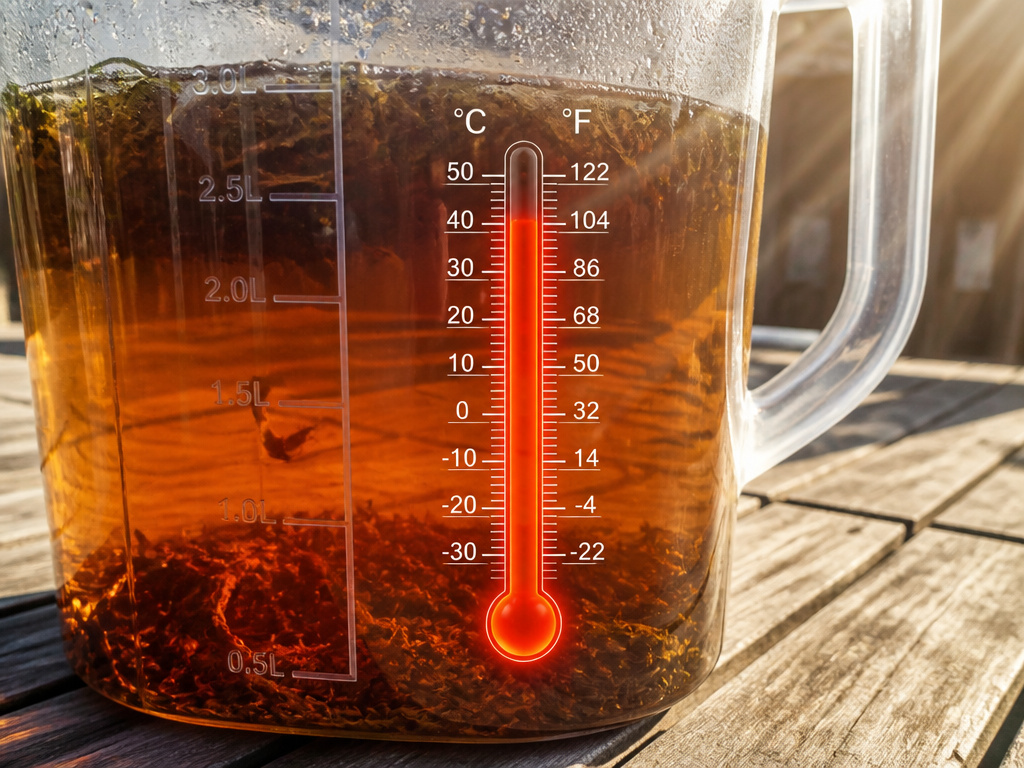 You don’t need a thermometer to know your tea is getting hot. The process is simple physics. A sealed, clear or translucent container acts as a miniature greenhouse. Sunlight passes through, heats the water and tea, and the trapped thermal energy has nowhere to go.
A car’s interior is the most extreme example. A study cited in the NIH review recorded BPA in PET bottled water reaching 45.1 ng/L after just 8 days in a car under sunlight. While sun tea brews for hours, not days, it shows how effectively enclosed spaces amplify heat. On a patio or porch, ambient air temperature matters less than direct solar radiation. A container in full sun can be 20-30 degrees Fahrenheit hotter than the surrounding air. On an 85°F (29°C) day, the liquid inside can quickly approach 110-120°F (43-49°C), sailing past the 40°C leaching threshold.
Where this goes sideways: Using a colored or opaque plastic pitcher. While it might block some light, it often absorbs more heat, raising the liquid temperature even faster than a clear container. You can’t see the brew color, but the chemicals are still migrating.
This is why the safety of plastic containers for general food storage hinges on temperature. What’s fine for refrigerator leftovers becomes a liability for a heated beverage.
Safer Alternatives to Plastic
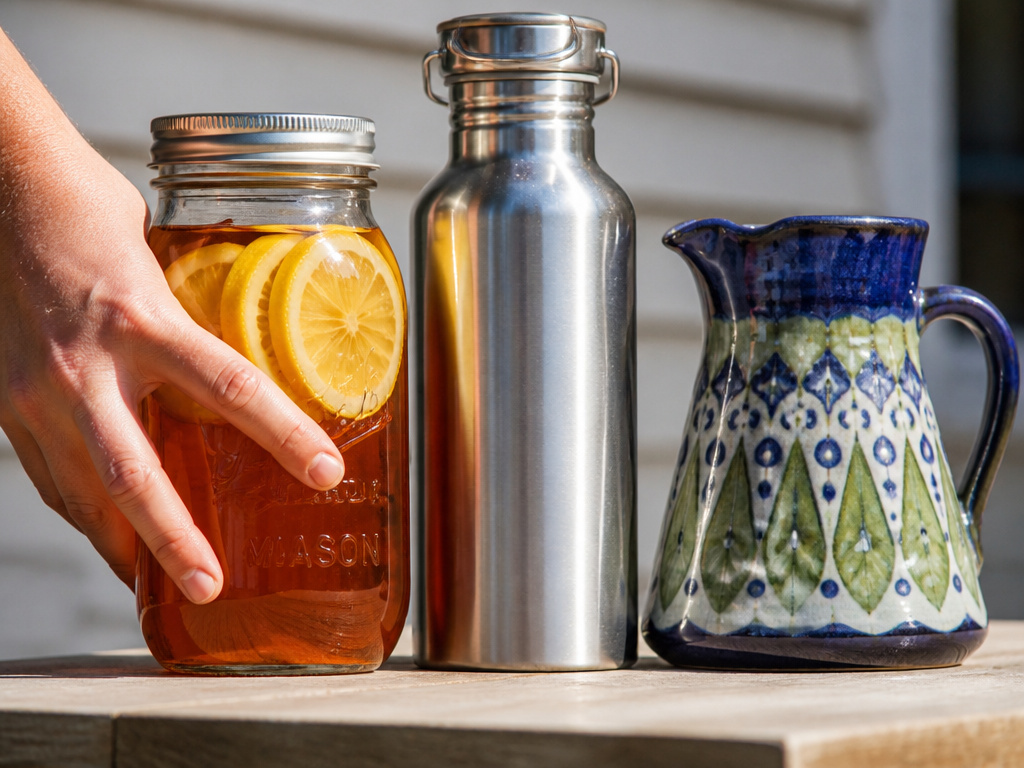 The solution is to move to inert materials. These do not react chemically with their contents, regardless of heat, acidity, or sunlight exposure.
Glass is the undisputed champion. It’s non-porous, chemically inert, and allows you to monitor the brew. A clear glass sun tea jar with a secure lid is the standard for a reason. It poses zero risk of chemical migration. For a secure, dedicated option, look for a 1-gallon glass sun tea jar with a clamp lid or spigot. Stainless steel is equally safe, durable, and blocks all light, which can be an advantage if you want to prevent light degradation of the tea’s flavors. Use a wide-mouth stainless steel insulated bottle if you want to brew and keep it cold later. Ceramic glazed containers are also inert, provided the glaze is intact and lead-free. They are less common for sun tea but are a safe choice if you have a large ceramic pitcher.
The pivot away from plastic is about recognizing that heat changes the game. This is the same principle behind warnings against microwaving plastic containers.The polymer isn’t designed for that thermal stress.
What About “Food-Grade” or “BPA-Free” Plastic Pitchers?
These labels are marketing ceilings, not safety floors. “Food-grade” means the plastic is approved for contact with food under expected use conditions. Sun tea, with its hours of heat exposure, is not the expected condition for a plastic pitcher designed for cold beverages. “BPA-free” only addresses one chemical. The polypropylene container leaching study showed PP leaching a suite of phthalates (BBP, DEHP, DBP) and nonylphenol, none of which are BPA. The health concerns simply shift to other compounds.
If you must use plastic, the research suggests GPPS (clear #6 polystyrene) leaches a narrower range of chemicals than PP. However, this is an observation that GPPS performed less badly in one controlled study. You are still introducing risk.
A Quick History: The Plastic Sun Tea Adapter
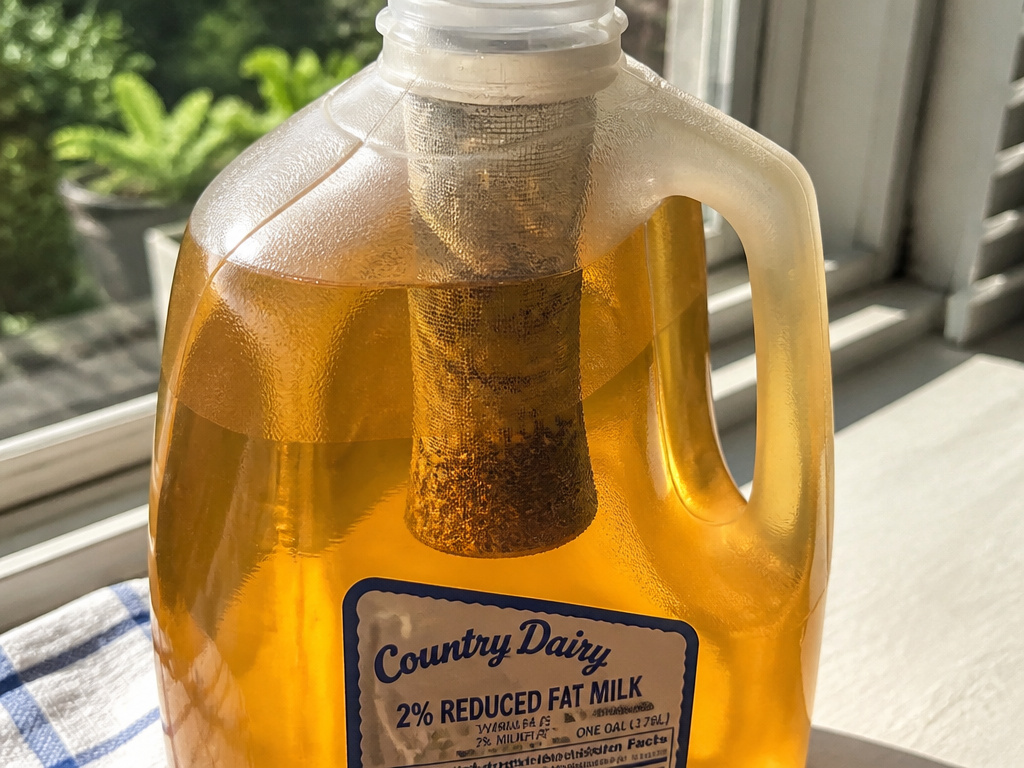 The desire to use plastic for sun tea isn’t new. In 1989, a U.S. Patent (US 4821630) was granted for a “Sun tea adapter for plastic cartons.” The inventor specifically designed a mesh cylinder to hold tea bags inside a one-gallon plastic milk carton, allowing the original cap to seal it.
The patent’s text is telling: “Heretofore, only transparent glass containers have been used” for sun tea. The inventor saw a problem, people wanted to use cheap, disposable plastic jugs, and created an adapter to make it possible. The patent doesn’t address chemical safety; it addresses convenience. This historical footnote underscores that plastic has always been a compromise for this method, and even decades ago, glass was the assumed standard.
How to Make Safe Sun Tea (The Right Way)
The method is simple when you remove the plastic variable.
- Choose your container. Use a clean, 1-gallon glass jar or a large stainless steel bottle. A glass sun tea jar with a spigot makes serving easy.
- Add tea. Use 4-6 family-size tea bags or 8-12 regular bags. For a more refined flavor, opt for loose-leaf tea in a large mesh basket.
- Fill with water. Use cold, filtered water. Leave some headspace for the tea bags to expand.
- Seal and place. Secure the lid tightly to keep out insects. Place the container in a spot that gets direct sunlight for most of the afternoon.
- Brew. Let it steep for 3-5 hours. The tea is done when it reaches a deep amber color. Don’t exceed 6 hours, as over-steeping makes bitter tea and, in any container, increases the risk of minimal microbial growth.
- Refrigerate immediately. Remove the tea bags, give it a stir, and place the entire container in the fridge. Sun tea should be consumed within 3-4 days.
The part nobody mentions: If you add lemon or other citrus during the brewing stage, you’re lowering the pH of the water. The PMC review notes that acidic conditions can increase the rate of chemical migration from some plastics. With glass or steel, this is a non-issue.
Frequently Asked Questions
Can I use a plastic gallon jug, like a milk jug, for sun tea?
You should not. A 2025 study found that polypropylene (PP) and related plastics begin leaching endocrine-disrupting chemicals at 40°C (104°F), a temperature easily reached in sunlight. Even if the jug is labeled “food-grade,” it is not rated for prolonged hot liquid storage. The 1989 sun tea adapter patent highlights that this was always seen as a makeshift method.
What is the safest container for making sun tea?
Clear glass jar is the safest and most effective container. It is chemically inert, so no chemicals leach into your tea, and it allows sunlight through to heat the water. Stainless steel is also completely safe but will block light.
How long does sun tea last in the refrigerator?
Properly made sun tea, stored in a clean, airtight container like a glass pitcher, will last 3-4 days in the refrigerator. If you notice any cloudiness, strange odor, or slimy texture, discard it immediately.
Does sun tea go bad if left out too long?
Yes. If left at room temperature for more than a few hours after brewing, sun tea can become a breeding ground for bacteria and mold. Always refrigerate it as soon as the brewing is complete. The “too long” concern is twofold: microbial growth and, if in plastic, exponentially increasing chemical leaching.
Is it safe to make sun tea in a plastic pitcher if I only leave it out for an hour?
The safety risk is not defined by time alone, but by temperature. On a hot, sunny day, the water inside a sealed plastic pitcher can reach the critical 40°C leaching threshold in well under an hour. The chemical migration process begins at that point, so even a short brew is not without risk.
The Bottom Line
Sun tea in a plastic container is a game of chemical Russian roulette where the trigger is a 40°C afternoon. Peer-reviewed science has mapped the exact temperature where leaching begins and identified polypropylene as a particular culprit. While “BPA-free” labels might offer comfort, they don’t guard against the cocktail of phthalates and other endocrine disruptors that heat can pull from the plastic.
The safe path is unambiguous. Use glass. It’s transparent, inert, and has been the proper tool for the job since before the 1989 patent tried to adapt plastic to it. A simple glass jar turns a potentially risky brew into a safe, summer ritual. Your tea should taste like tea, not like the container it was made in.
