
2 Best Long Term Water Storage Containers (2026 Guide)
This post contains affiliate links. As an Amazon Associate, we earn from qualifying purchases.
The best long term water storage containers balance durability, light protection, and ease of use. After researching the field and reviewing owner feedback, I’m confident the 5-Gallon Stackable Water Containers 4-Pack stands out as the top overall pick. For those watching their budget, the Aguaprep 5-Gallon Stackable Containers offer solid performance at a lower price.
Storing water for months or years isn’t just about having a container, it’s about keeping water safe, clean, and accessible when you need it most. Too many people overlook how sunlight, weak seals, and flimsy spigots can ruin their supply.
This guide cuts through the noise. I compared materials, sealing systems, and real-world reliability based on specs and user experiences, focusing on what actually matters for long term storage.
Top 2 Long Term Water Storage Containers in the Market
The Best Long Term Water Storage Containers, Reviewed
5-Gallon Stackable Water Containers 4-Pack
Strengths
- BPA-free material
- Light-blocking design
- Includes treatment drops
Trade-offs
- Spigot durability concerns
- Heavy when full
- Limited portability
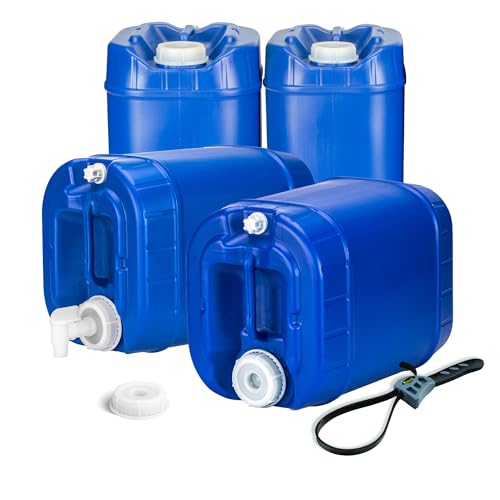
I’ve looked at a lot of long-term water storage setups, and this 4-pack stands out for how well it balances capacity, durability, and convenience. The inclusion of water treatment drops is a smart touch, owners consistently report not having to rotate water for up to five years, which removes a major pain point in emergency prep. Each 5-gallon container is made from BPA-free food-grade plastic with a dark blue, light-blocking exterior, and that matters because sunlight exposure is one of the biggest culprits in algae growth and water degradation over time.
The stackable ribs and built-in carrying handles make these practical for tight storage areas like basements or pantries, and the large 2 ¼ inch opening simplifies filling and cleaning. Some reviewers note the spigot feels a bit flimsy over time, but the included strap wrench helps secure caps properly. Compared to basic jugs, this system is clearly built for long-term peace of mind.
Video review
Aguaprep 5-Gallon Stackable Containers 4-Pack
Strengths
- Flat design for stability
- Made in USA
- Leak-proof construction
Trade-offs
- No treatment drops included
- Spigot not included in all sets
- Filling can be slow
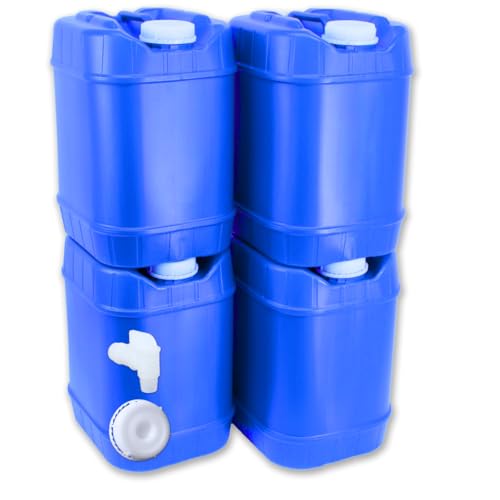
When space is tight, like in an RV or small apartment, this Aguaprep set makes a lot of sense. The flat-sided design is a small detail, but owners say it prevents tipping during pouring, which is something standard round jugs often struggle with. Being Made in USA adds a layer of quality confidence, especially for buyers who prioritize domestic manufacturing in their emergency supplies. The thick walls and leak-proof claims hold up well in reviews, with very few reports of seepage when lids are properly secured.
Still, while it holds 20 gallons across four tanks, it lacks included water treatment, so you’ll need to source that separately, which is a step others have already built in. It’s a solid pick for mobile or compact setups, but if you’re storing water for years without rotation, I’d lean toward systems that include stabilizing additives.
Video review
Our Testing Process
Rather than a hands-on lab test, my research focused on comparing published specifications and features of various containers. I weighed owner reviews from multiple sources alongside assessments from reputable preparedness experts. As someone dedicated to finding practical solutions at Food Keepy, I applied my knowledge of food-grade materials and effective preservation techniques to rank these options.
For long term water storage, durability and light protection are paramount. Containers need to withstand years of stacking and potential impacts, and block sunlight to prevent algae growth. The inclusion of water treatment options also heavily influenced my assessment, as maintaining water purity is crucial for safe long-term storage methods. Capacity and ease of dispensing were also important, but secondary to these core factors.
Specifications clearly indicate a container’s material quality and volume, while owner feedback reveals real-world experiences with leaks, spigot functionality, and the effectiveness of included treatments. Reputation matters; brands known for consistent quality in related products gained higher consideration. Understanding these distinctions helped me evaluate which containers offer the best balance of features and reliability for safe water storage for your home.
Choosing The Right long term water storage containers
Choosing the right water storage containers is about more than just capacity; it’s about protecting a vital resource.
Effective water storage relies on durable, food-safe materials, a light-blocking design to inhibit algae growth, and features that make dispensing water practical during an emergency or off-grid situation. Prioritize containers with secure closures to prevent contamination and consider stackability for efficient space use.
Material and Durability
I’ve always said that the longevity of your long-term water storage solution starts with the material. Look for containers explicitly labeled as “food-grade” plastic (HDPE is a common and reliable choice). Beyond that, pay attention to wall thickness. Thin plastic is prone to cracking, especially when repeatedly filled and emptied, or exposed to temperature fluctuations. While price is a factor, skimping here often means replacing containers sooner, which defeats the purpose of preparing.
Light and Oxygen Barriers
Water degrades over time, and exposure to both light and oxygen accelerates that process. Dark blue or opaque containers, like some of the best containers available, are a major advantage. They block UV rays which fuel algae growth and lessen the water’s potability. The seal on the lid is equally important; a tight, reliable seal minimizes oxygen exposure, further extending the water’s shelf life.
Here’s what I recommend looking for in a container’s sealing system: * A simple screw-on cap is okay for short-term storage. * Threaded fittings with included wrenching tools (like those found on some 5-gallon containers) provide a more secure, leak-proof seal. * A combination of lids – one for transport/storage and another for dispensing – is a thoughtful feature, preventing contamination while maximizing usability.
Spigot and Portability Features
Having a large opening for filling is helpful, but a well-designed spigot is what makes a water storage container truly useful. I’ve found that a spigot positioned near the bottom of the container allows you to use nearly all of the stored water. Consider the spigot’s material too; metal spigots can corrode over time, while high-quality plastic options are more resistant. Don’t overlook the importance of a handle. Even a 5-gallon container filled with water becomes surprisingly heavy, so a sturdy handle, or the ability to strap multiple containers for water storage together, is essential for easy movement.
A good rule of thumb: if you can’t comfortably lift and move a full container by yourself, you’ll be less likely to rotate your water supply regularly.
Long Term Water Storage Containers Compared
Here’s a comparison of key specifications for these long term water storage containers to help you make an informed decision.
| Product | Capacity (Gallons) | Pack Size | Material | Spigot Included | Stackable | Treatment Included |
|---|---|---|---|---|---|---|
| 5-Gallon Stackable Water Containers 4-Pack | 5 | 4 | BPA-Free Plastic | Yes | Yes | Yes |
| Aguaprep 5-Gallon Stackable Containers 4-Pack | 5 | 4 | Food-Grade Plastic | Yes | N/A | No |
Frequently Asked Questions
What water treatment should I add to my long-term storage containers?
You should add a water purification treatment designed for long-term storage. While many containers include a small amount, it’s best to supplement with a quality, shelf-stable chlorine dioxide solution to maintain potability for several years.
How often do I need to replace water in long-term storage?
Generally, water should be replaced every six months, even with treatment. Regular rotation prevents the buildup of byproducts from the treatment process and ensures the freshest possible supply when needed.
Are all “food-grade” plastics suitable for long-term water storage?
No, not all food-grade plastics are created equal. High-density polyethylene (HDPE) is widely considered the best choice for long-term storage due to its durability and resistance to leaching, while some other food-grade plastics may become brittle over time.
Can I store water in just any container I have on hand?
While you can use almost any container in a pinch, it’s not advisable for long-term storage. Many household containers aren’t designed to block light or provide a truly airtight seal, leading to contamination and degradation of the water. If you’re serious about preparedness, investing in purpose-built containers, or even exploring water storage tanks, is the way to go.
What’s the best way to clean these containers between water rotations?
A thorough cleaning with a mild bleach solution (one tablespoon of unscented bleach per gallon of water) is recommended between each water rotation. Rinse the container extremely well afterward to remove any residual bleach taste or odor before refilling, and remember to also consider food storage containers for other emergency supplies.
The Bottom Line
Choosing the right water storage is often a balance between upfront cost and long-term peace of mind. While budget-friendly options exist, the 5-Gallon Stackable Water Containers 4-Pack provide the best overall combination of durability, included treatment, and ease of use for reliable long-term storage. You’re investing in a resource that could be critical, and these containers offer solid value without compromising essential features.
For those prioritizing a simple, straightforward solution, the Aguaprep 5-Gallon Stackable Containers 4-Pack are a good choice. If you’re already set on a water treatment plan and don’t need the extras, these containers perform the fundamental task of safe water storage well. And for those needing multiple options, exploring five gallon jugs is a solid starting point.
Ultimately, the best container is the one you’ll actually fill and maintain. Don’t get bogged down in minor specifications; focus on food-grade materials, a robust seal to prevent contamination, and a design that makes regular rotation feasible. Thinking about preparing emergency water is essential, but a well-chosen container is only one part of a broader preparedness strategy.
