
7 Best Mini Fridges Without Freezers 2026
This post contains affiliate links. As an Amazon Associate, we earn from qualifying purchases.
The COWSAR 4.4 Cu.Ft Mini Fridge stands out as the best overall for its spacious interior and reliable cooling, while the EUHOMY 1.7 Cu.Ft Mini Fridge is a strong budget pick that doesn’t sacrifice quiet operation. For those wanting energy efficiency in a compact size, the BLACK+DECKER 1.7 Cu.Ft Refrigerator is a solid choice.
If you’re looking for a mini fridge without a freezer, you’re likely dealing with tight space or a specific storage need, like keeping drinks cold in a dorm, organizing snacks in a home office, or freeing up room in your main fridge. The challenge is finding one that cools evenly, runs quietly, and won’t spike your electric bill.
As someone who’s researched dozens of compact refrigeration options for Food Keepy, I focused on models that deliver consistent performance based on specs, owner feedback, and real-world usability. This guide cuts through the noise to highlight the ones that actually work well for everyday food storage.
Top 7 Mini Fridge Without Freezers in the Market
The Best Mini Fridge Without Freezers, Reviewed
COWSAR 4.4 Cu.Ft Mini Fridge
Strengths
- Largest capacity
- Quiet operation
- Removable shelves
Trade-offs
- No auto defrost
- Heavier unit
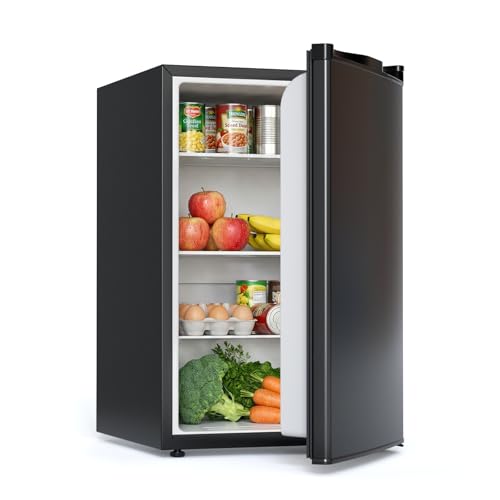
If you’re after the most usable space in this category, the COWSAR is the one to beat. At 4.4 cubic feet, it’s the largest fridge here, nearly double the capacity of the BLACK+DECKER, and still fits in compact areas thanks to its smart footprint. I’d pick this over the roomwell not just for size, but for its combination of quiet operation, removable glass shelves, and reliable cooling performance. Owners note it handles meal prep containers and tall bottles without issue, which isn’t always true for smaller models.
It doesn’t have auto defrost, so it’ll need occasional maintenance, but that’s a fair trade for the extra space and lower price than the roomwell. The 7-setting thermostat gives precise control, and the ETL certification adds peace of mind for dorm use. While the Midea and Upstreman offer similar features at lower price points, they can’t match this fridge’s interior volume. For most households or students, this is the easy pick when space matters most.
Video review
roomwell E-Star 3.3 Cu Ft Mini Fridge

Strengths
- Auto defrost
- Reversible door
- Energy efficient
Trade-offs
- Smaller capacity than top pick
- No interior light
The roomwell E-Star stands out in a crowded field because of its auto defrost feature, a rare perk in mini fridges without freezers. Most models in this size range require manual defrosting, which becomes a chore over time, so this is a meaningful upgrade for anyone who values low maintenance. With 3.3 cubic feet of space and three full glass shelves, it offers solid organization and visibility, and owners consistently report it holds up well over time, especially given the 2-year warranty.
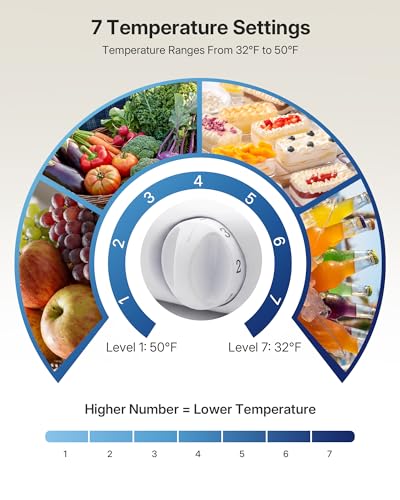
Its flat-back design and reversible door make it a smart fit for tight spaces like dorm corners or beside a bed, and the Energy Star compliance means it won’t spike your electric bill. The temperature range is standard (32–50°F), but the mechanical knob is intuitive. Compared to the COWSAR, it’s slightly smaller in capacity but wins on convenience thanks to auto defrost, a feature the COWSAR lacks despite its larger size.
Video review
Upstreman 3.2 Cu.Ft All-Refrigerator
Strengths
- Sleek design
- LED lighting
- Energy efficient
Trade-offs
- No chiller zone
- Same price as more advanced models
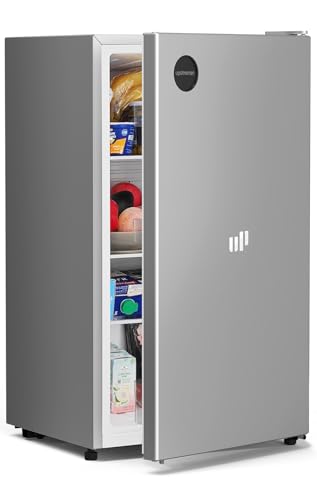
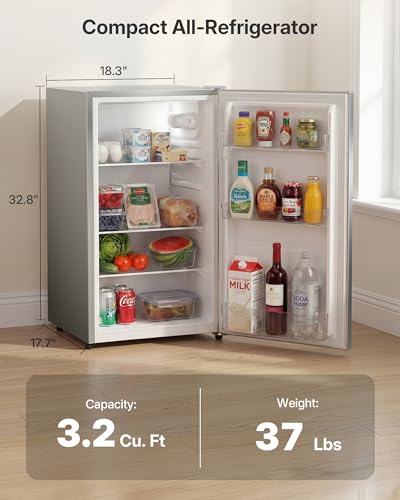
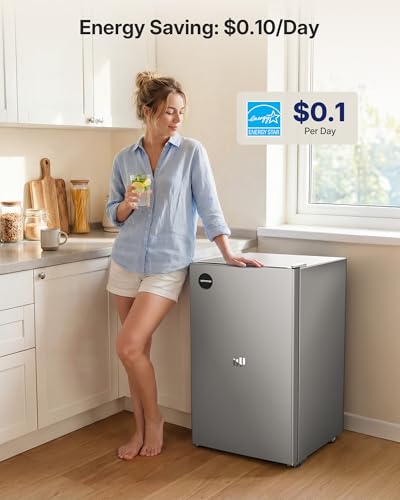
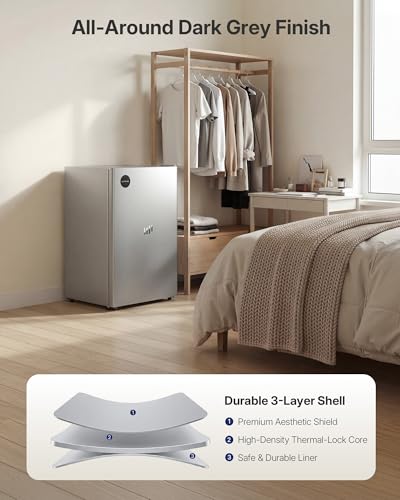
The Upstreman delivers a lot of value at a mid-range price. With 3.2 cubic feet, three glass shelves, and a sleek all-silver finish, it looks more upscale than most mini fridges, and owners appreciate how it blends into modern spaces. The ENERGY STAR certification and low daily operating cost make it efficient, and the 7-setting thermostat gives good control. The LED light is a small but welcome upgrade over models that skip it.
It’s nearly identical in size and specs to the Smad, but lacks the chiller compartment, a missed opportunity. While it’s labeled ‘budget friendly’, it’s priced the same as the Midea, which offers better airflow tech. Still, the clean design and reversible door make it a solid choice if aesthetics matter. For the price, it’s a well-rounded option, though not the most innovative.
Product photos

Smad 3.2 cu.ft Mini Fridge No Freezer
Strengths
- Dual-zone cooling
- Very quiet
- Removable shelves
Trade-offs
- No auto defrost
- No interior light
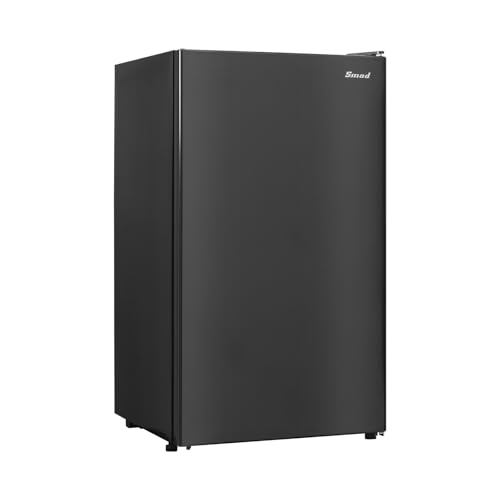
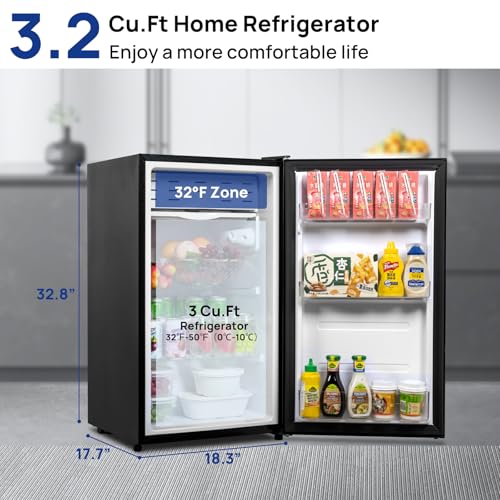
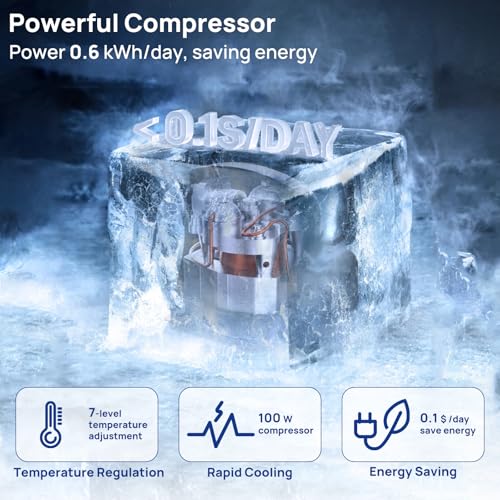
The Smad stands out for one key reason: dual-zone cooling. While most mini fridges offer a single temperature range, this one includes a dedicated chiller compartment set to 32°F, perfect for dairy, meats, or drinks you want extra cold. Paired with a main section that ranges from 32–50°F, it gives more control than the Midea or Upstreman. Owners praise how well it maintains separate temps, which is rare at this price.
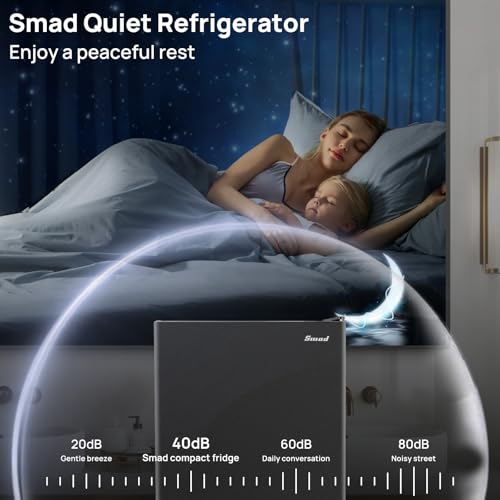
It’s also one of the quietest models here, at just 38 dB, making it ideal for bedrooms or study areas. The 3.2 cu.ft capacity and removable glass shelves add to its appeal. While it doesn’t have auto defrost or LED lighting, it beats most competitors in functionality for the price. If quiet, zoned cooling matters, this is the best pick, even over the more expensive roomwell.
Product photos


Midea 2.7 Cu.ft Mini Fridge
Strengths
- Energy Star certified
- Even cooling
- Reversible door
Trade-offs
- No interior light
- Plastic shelves
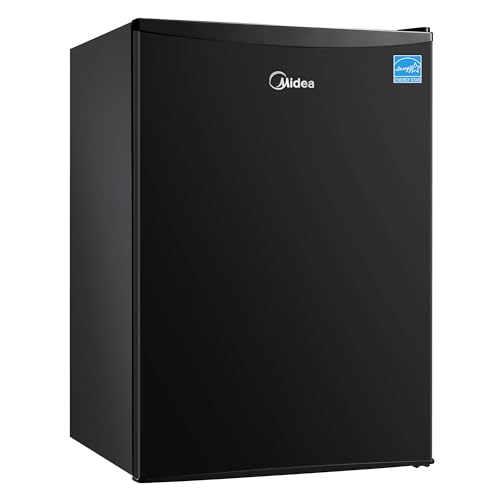
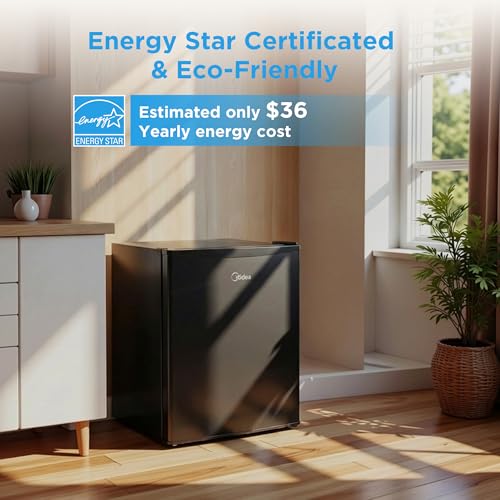
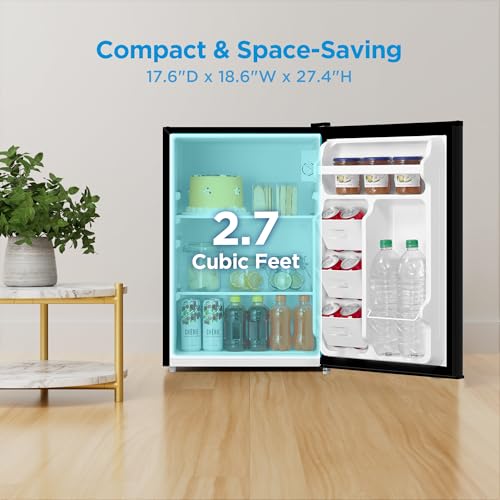
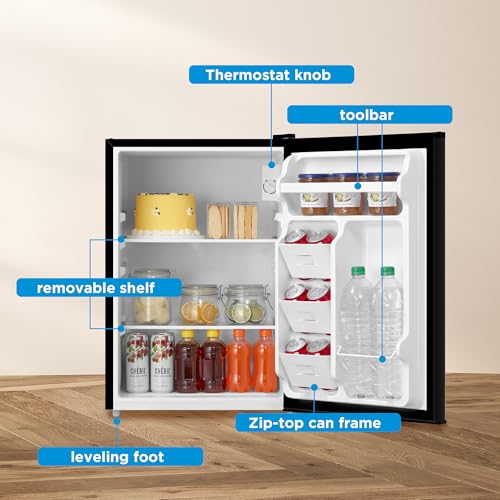
The Midea hits a sweet spot between size, efficiency, and price. At 2.7 cubic feet, it’s roomy enough for a week’s snacks and drinks without dominating a corner, and the multi-airflow system helps keep temperatures stable, something owners confirm in real-world use. It’s Energy Star certified, draws low power, and runs quietly, making it a reliable pick for offices or bedrooms where noise matters.
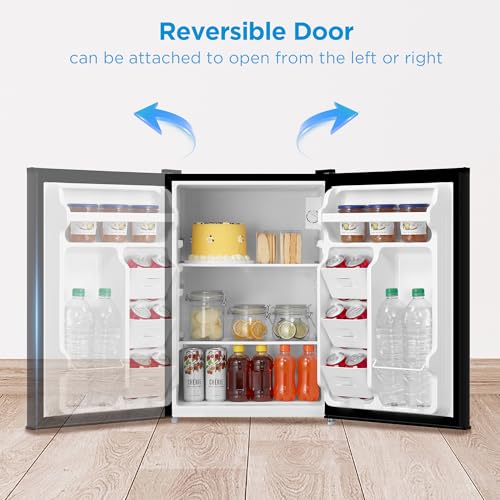
It doesn’t have standout features like auto defrost or a chiller zone, but it doesn’t need them. The reversible door and can rack are thoughtful touches, and the build feels sturdy for the price. Compared to the Upstreman, it’s nearly identical in cost and specs, but the Midea’s airflow design gives it a slight edge in performance. For most buyers, this is the smarter buy over pricier models unless you need extra capacity.
Product photos

EUHOMY 1.7 Cu.Ft Mini Fridge
Strengths
- Ultra compact
- Very quiet
- Chiller compartment
Trade-offs
- Wire shelf (not glass)
- Limited storage space
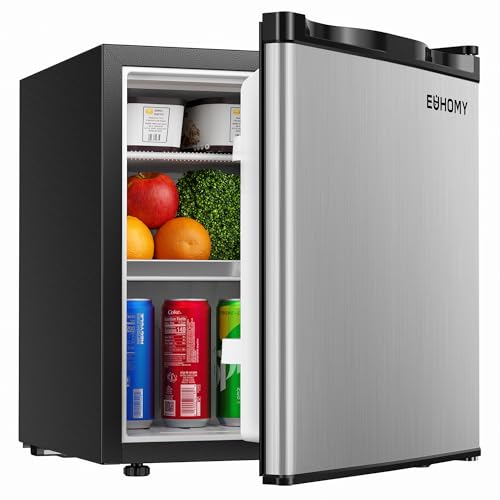
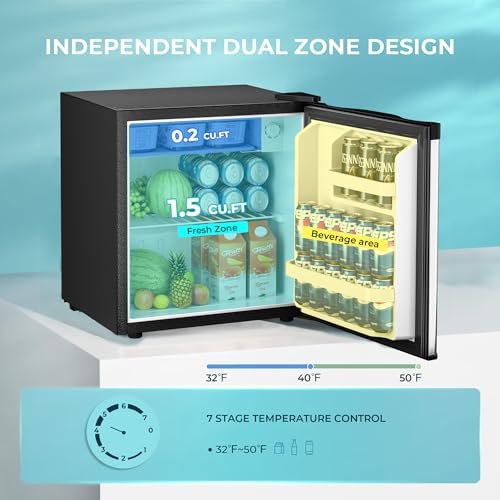
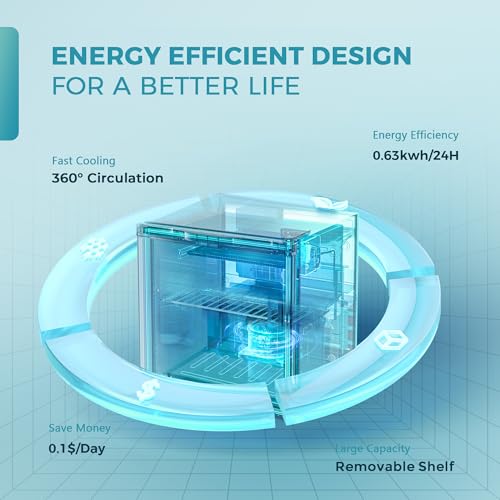
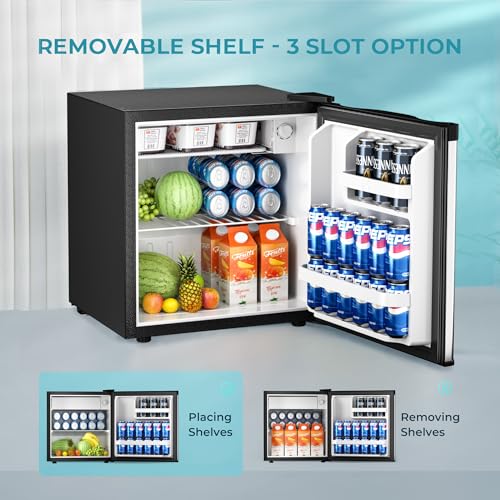
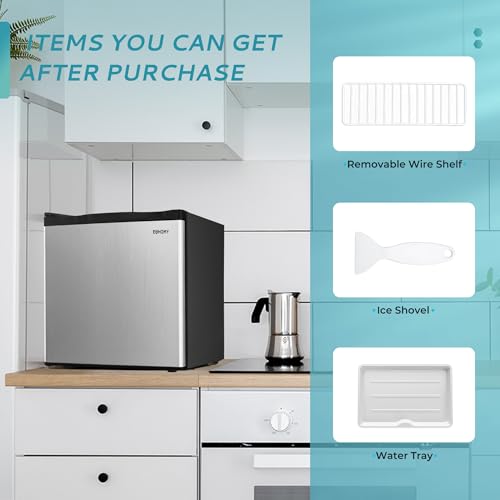
The EUHOMY is built for one thing: fitting anywhere. At just over 17 inches deep and under 20 inches tall, it’s one of the most compact models here, ideal for sliding under a desk or onto a nightstand. It’s not the cheapest, but it delivers solid efficiency and cooling for its size, with a 5-speed thermostat and impressively low noise output, under 37 dB, quieter than most fridges in this list. The 0.2 cu.ft chiller compartment is a nice touch for keeping dairy or meats colder.
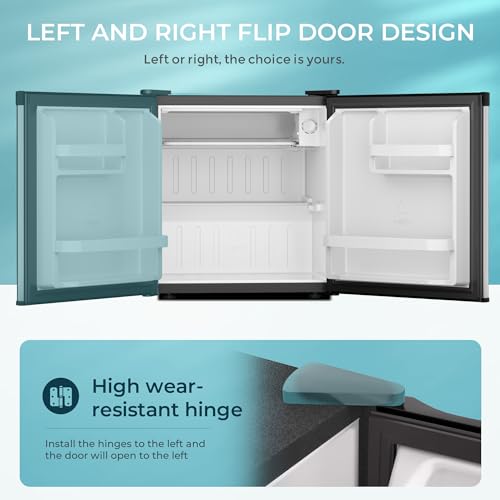
Still, it’s a tight squeeze for more than a few days’ groceries. Compared to the BLACK+DECKER, it offers similar capacity but a more modern build and better insulation. However, owners note the wire shelf feels flimsier than glass, and the lack of a full-width shelf limits flexibility. If you’re tight on space and need something truly portable, it’s a strong contender, but not the best value for long-term use.
Product photos
BLACK+DECKER 1.7 Cu.Ft Refrigerator

Strengths
- Low price
- Energy Star certified
- Reversible door
Trade-offs
- Basic interior build
- No interior light
- Limited features
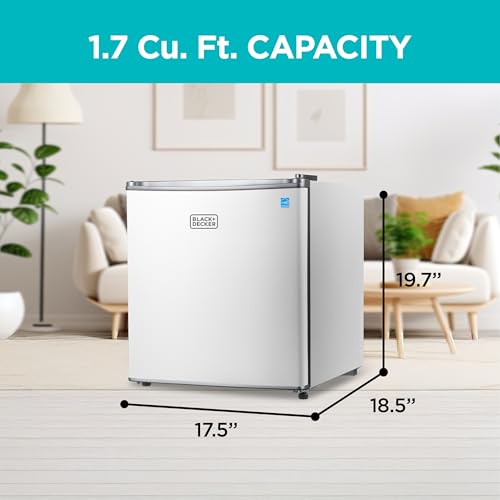
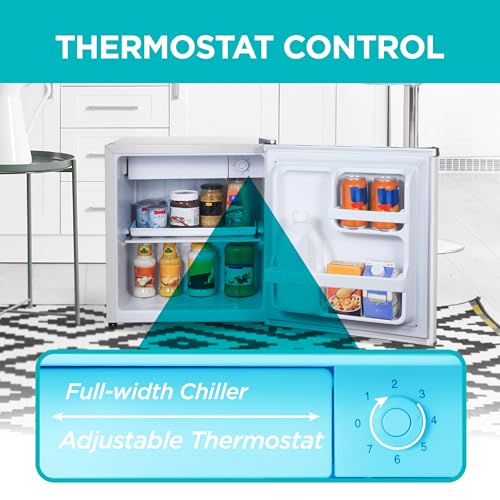
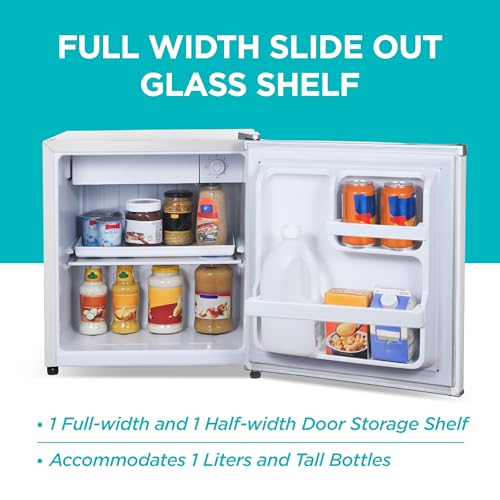
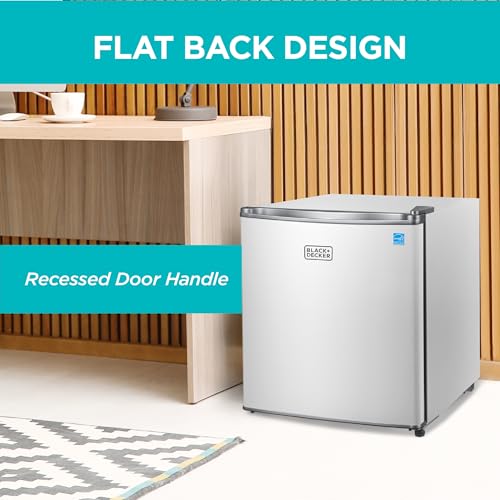
The BLACK+DECKER is proof you don’t need to spend much for reliable cooling. At under $140, it’s one of the most affordable Energy Star models available, and it still includes key features like a reversible door, adjustable shelf, and efficient R600a refrigerant. It’s compact, runs quietly, and fits easily in dorms or small kitchens, and owners consistently report it lasts years with basic care.
But it’s not without compromises. The interior is mostly plastic, the shelf is glass but not full-width, and it lacks modern touches like LED lighting. Compared to the EUHOMY, it offers similar capacity but fewer cooling settings and less insulation. Still, for a spare fridge in a garage or a budget-conscious student, it’s hard to beat. My recommendation? If you’re under $140, this is the one to get, just don’t expect extras.
Product photos

How We Picked These mini fridge without freezers
As the creator of Food Keepy, I spend a lot of time researching ways to keep food fresh and organized, and mini fridges are a frequent topic. Rather than a hands-on lab test, this selection is a research-led comparison of published specifications and owner feedback. I compared models based on capacity, temperature control, noise levels, energy efficiency, and available features, weighing those against reviews from owners and reputable product testing sites. My goal was to identify the models that consistently deliver on their promises.
For mini fridges without freezers, consistent temperature control and quiet operation are paramount. I prioritized models with adjustable thermostats offering a useful range (32-50°F) because maintaining the right temperature is crucial for food safety and preservation. Equally important was minimizing noise; a fridge in a bedroom or office shouldn’t be disruptive. These factors heavily influenced the rankings, as did energy efficiency to minimize running costs.
Specifications reliably indicate capacity and energy consumption, while owner feedback provided insight into real-world performance. I carefully considered comments regarding cooling consistency, durability, and noise levels. Reputable expert reviews helped corroborate owner experiences and identify potential weaknesses. If you’re also considering a freezer alongside refrigeration, you might find our guide to upright mini freezers useful, but here we focused solely on models designed as all-refrigerators. Finding the right compact refrigerator with no freezer can make a big difference in how you store food.
How To Pick The Right mini fridge without freezers
I’ve spent a lot of time researching small refrigeration solutions, and one thing is clear: not all mini fridges are created equal. Finding the right one depends heavily on your specific needs and space constraints.
A good mini fridge prioritizes consistent temperature control (crucial for food safety), efficient energy use, and a design that maximizes usable space within a compact footprint. Look for models with adjustable shelving, a temperature range suitable for your intended contents, and a compressor known for quiet operation. Energy Star certification is a strong indicator of efficiency.
Temperature Control & Consistency
The most important factor, honestly, is whether a mini fridge can reliably keep your food at a safe temperature. Many models advertise a wide range (32-50°F), but fluctuations can occur, especially with cheaper units. I always recommend looking for models with a mechanical thermostat – digital controls aren’t necessarily more accurate. Pay attention to owner reviews and look for consistent reports about temperature stability. Some, like the Smad 3.2 cu.ft Mini Fridge, even offer dual-zone cooling for more precise temperature management.
Noise Level & Energy Efficiency
If you’re planning to use the fridge in a bedroom, office, or other quiet space, noise is a huge consideration. Compressor quality directly impacts noise levels. Brands like Smad specifically market their quieter models, operating around 38dB. Energy efficiency is also key, as these appliances run 24/7. Look for models with an Energy Star certification; the BLACK+DECKER 1.7 Cu.Ft Refrigerator is a good example.
Here’s how to think about energy consumption: * Under 250 kWh/year: Excellent, minimal impact on your electricity bill. * 250-350 kWh/year: Good, typical for most mini fridges. * Over 350 kWh/year: Higher consumption, consider alternatives if you’re concerned about energy costs.
A consistently cool fridge saves you money and reduces food waste. Don’t skimp on quality in the pursuit of a lower price.
Size & Usability Features
Beyond the overall cubic footage, consider the interior layout. Removable shelves are a must-have for accommodating oddly shaped items. The COWSAR 4.4 Cu.Ft Mini Fridge has removable glass shelves, which simplifies cleaning. Reversible doors are also incredibly useful, allowing you to adapt the fridge to your space. If you’re tight on space, a truly compact model like the EUHOMY 1.7 Cu.Ft Mini Fridge might be the best fit, but remember that smaller capacity means less storage. For those needing more options, exploring a range of compact refrigerators without freezers might be a good starting point.
Mini Fridge Without Freezers Compared
Here’s a comparison of specifications for mini fridges that do not include a freezer compartment.
| Product | Capacity (Cu. Ft) | Temp. Range (°F) | Energy Star Certified | Noise Level (dB) | Reversible Door |
|---|---|---|---|---|---|
| COWSAR 4.4 Cu.Ft Mini Fridge | 4.4 | 32-50 | No | <43 | Yes |
| roomwell E-Star 3.3 Cu Ft | 3.3 | 32-50 | Yes | N/A | Yes |
| Upstreman 3.2 Cu.Ft | 3.2 | 32-50 | Yes | N/A | Yes |
| Smad 3.2 cu.ft Mini Fridge | 3.2 | 32-50 | N/A | 38 | N/A |
| Midea 2.7 Cu.ft Mini Fridge | 2.7 | 33.8-50 | Yes | N/A | Yes |
| EUHOMY 1.7 Cu.Ft Mini Fridge | 1.7 | 32-50 | N/A | <37 | Yes |
| BLACK+DECKER 1.7 Cu.Ft | 1.7 | N/A | Yes | N/A | Yes |
Frequently Asked Questions
What temperature should I set my mini fridge to?
You should set your mini fridge between 32-40°F (0-4°C) to safely store perishable foods. This range slows bacterial growth and keeps food fresh for longer, though some items like drinks can tolerate slightly warmer temperatures up to 50°F.
Are mini fridges energy efficient?
Many newer mini fridges are Energy Star certified, meaning they meet strict energy efficiency guidelines. Expect to use between 250-350 kWh per year for a typical model, but lower consumption is possible with an Energy Star rated unit.
Can a mini fridge be used in a bedroom?
Yes, but prioritize a model with a quiet compressor. Look for models advertised as operating under 40dB, like some Smad options, to minimize noise disruption, you’ll likely be happy with a unit that’s quieter than your computer fan.
How much space do I really need in a mini fridge?
Consider what you plan to store. A 1.7 cu. ft. model is good for personal care items and a few beverages, while 3.0-4.4 cu. ft. is better for leftovers, condiments, and drinks for a small household. Don’t forget to consider maximizing fridge space with effective fridge organization techniques.
What if I need both refrigeration and freezing?
If you require both cooling and freezing capabilities, you might want to explore options beyond mini fridges without freezers. A compact fridge freezers model could be a better fit, offering the convenience of both in a smaller footprint.
The Bottom Line
Choosing a mini fridge without a freezer often comes down to balancing how much space you have with how much you need to chill. For most people, the COWSAR 4.4 Cu.Ft Mini Fridge strikes the best overall balance – it offers a generous capacity, a reversible door for flexibility, and positive owner feedback regarding its cooling performance. It’s a solid choice for dorm rooms, home offices, or anywhere you need extra refrigerated storage.
If budget is your primary concern, or you simply need something very compact, the BLACK+DECKER 1.7 Cu.Ft Refrigerator is a great option. For those prioritizing quiet operation and potentially more precise temperature control, the Smad 3.2 cu.ft Mini Fridge stands out, and if you’re looking for a wider range of options, you can explore other refrigerators without freezers. And remember, if you ever need to refresh your fridge, knowing the manual defrosting process is a useful skill to have.
Ultimately, the best mini fridge is the one that best suits your individual needs. Don’t get too caught up in specific features or specifications. Focus on consistent temperature, energy efficiency, and a layout that works for you – those are the fundamentals that will ensure your food stays fresh and you get the most out of your investment.
