
4 Best Nut Milk Bags of 2026
This post contains affiliate links. As an Amazon Associate, we earn from qualifying purchases.
The best nut milk bags balance filtration, durability, and ease of use. After comparing the field, the 4 Pack 12″ Nylon Nut Milk Bags stand out as the overall top pick for their fine mesh and reliable performance. For a budget-friendly bulk option, the Huppar 6 Pack 16″ Cotton Nut Milk Bags deliver solid value without sacrificing much on quality.
If you’ve ever ended up with gritty almond milk or a torn bag mid-strain, you know how frustrating a poor-quality nut milk bag can be. These small tools make or break homemade plant-based milks, yogurts, and even cold-pressed juices.
As someone who researches kitchen efficiency and waste reduction at Food Keepy, I focused on specs and owner feedback to find bags that actually last. This guide breaks down what really matters, material, mesh size, and construction, so you can choose one that fits your routine and delivers clean, smooth results every time.
Top 3 Nut Milk Bags in the Market
The Best Nut Milk Bags, Reviewed
4 Pack 12″ Nylon Nut Milk Bags

Strengths
- Fine even mesh
- Fast filtration
- Quick-drying nylon
- 4-pack convenience
- Strong stitching
Trade-offs
- Synthetic material
- Not biodegradable
This nylon set is my pick for best overall performance, not because it’s natural, but because it works efficiently, consistently, and holds up. The Grade 100 fine mesh is specifically tuned for nut milk, filtering out nearly all grit in one pass. Reviewers repeatedly mention how much smoother their almond and oat milk turns out compared to cotton or cheesecloth. The food-grade nylon is BPA-free, quick-drying, and resists odors, which matters when you’re reusing bags weekly.
The reinforced triple-stitched seams and U-bottom design make these tough under pressure, and the wider opening helps with filling and emptying. Four bags at this price point means you can rotate them or keep spares on hand. While I personally lean toward natural materials in the kitchen, I can’t ignore that this one delivers superior function. If you hate pulpy milk and want speed and reliability, this beats the cotton options on pure performance.
Video review
2 Pack 12″ Natural Cotton Nut Milk Bags

Strengths
- Natural unbleached cotton
- Tight weave
- Easy to clean
- Double-stitched bottom
- Great for small batches
Trade-offs
- Only 2-pack
- Moderate durability
- Slower than nylon
This 2-pack leans into the naturalist approach, 100% unbleached cotton with a tightly woven 66×70 thread count that strikes a balance between filtration and flow. On paper, that weave is fine enough to catch most pulp but not so tight that you’re waiting forever for milk to drip through. Owners praise the outward seam design, which makes cleaning easier since gunk doesn’t hide along inner stitching lines. The double-stitched bottom adds durability, and for small-batch users, the 12″x12″ size is very manageable.
It’s not the most durable option under aggressive squeezing, and a few reviewers mention thin spots over time. But for those avoiding nylon and making smaller servings, say, a single serving of almond or oat milk a few times a week, this is a solid, health-focused pick. Compared to looser cheesecloths, it delivers noticeably smoother results, though not quite as refined as micron-rated nylon bags.
Video review
Huppar 6 Pack 16″ Cotton Nut Milk Bags

Strengths
- Unbleached cotton
- Extra-large size
- 6-pack value
- Reinforced stitching
- Multi-use design
Trade-offs
- Slower filtration
- Requires thorough drying
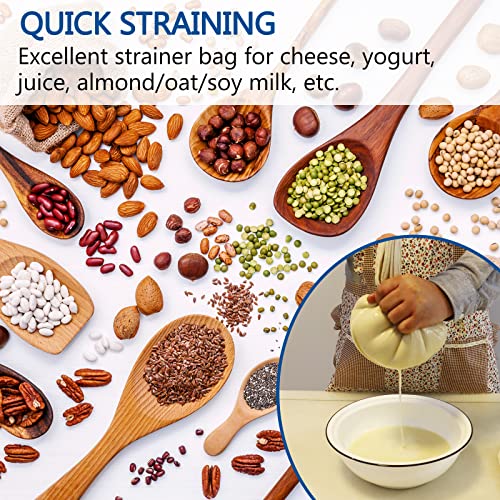
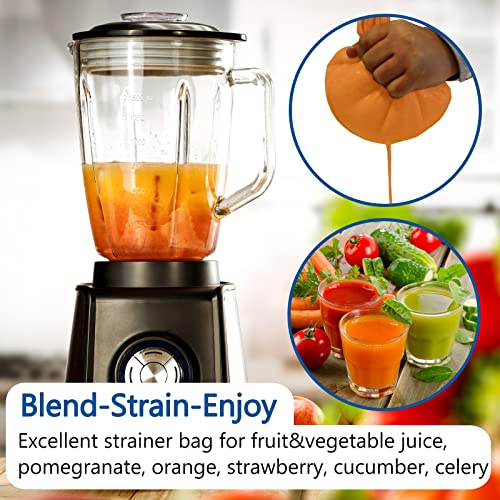
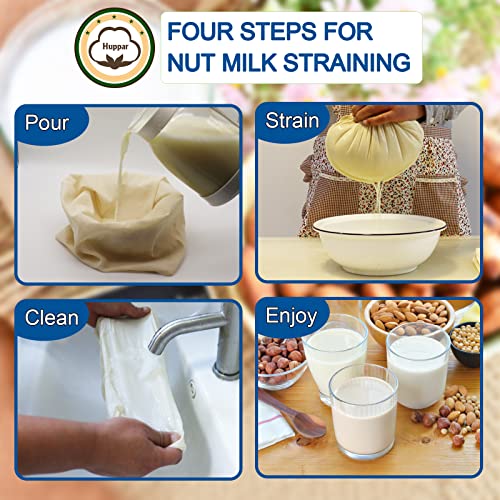
The Huppar 6-pack stands out for anyone who makes nut milk regularly and wants to do big batches without multiple rounds of straining. The 16″x16″ size is unusually large for this category, and owners consistently report it cuts down strain time significantly, especially when working with almond or oat slurries. The unbleached cotton is a clear win for health-conscious users who want to avoid synthetics, and the U-shaped bottom really does help with squeezing, fewer corners mean less pulp trapped and easier cleanup.
With triple stitching and a drawstring, these hold up well over repeated use, and reviewers confirm they stay intact even after months of weekly milk-making. While cotton is slower than nylon, the trade-off is purity and environmental friendliness. If you prioritize natural materials and volume, this set delivers. That said, it’s not the fastest dripper, so patience is needed for silky-smooth results.
Product photos


How We Chose These nut milk bags
My research involved comparing the published specifications and features of numerous nut milk bags, with a focus on materials, mesh size, and construction quality. I then weighed owner reviews from major retailers alongside expert opinions found in food blogs and cooking publications. Ultimately, I ranked bags based on their potential for effective straining, durability, and ease of cleaning – criteria essential for regular use in a home kitchen.
For nut milk bags, the mesh size and construction are paramount. A finer mesh (like the 200 micron options) delivers a smoother final product, but can slow down the straining process. Durability, indicated by reinforced stitching and material quality, determines how long the bag will last with repeated use. I prioritized these factors because they directly impact the user experience and long-term value.
Specifications clearly indicate mesh size and dimensions, but owner feedback proved invaluable for assessing real-world performance. Reviews often highlighted how easily liquids flowed through a bag, or whether pulp consistently remained trapped. Reputation also played a role; brands consistently praised for quality materials and construction were given more consideration. For longer-term food storage needs, exploring freezer burn protection bags is also a helpful step.
How To Choose The nut milk bags
I’ve spent years researching food storage solutions at Food Keepy, and one thing I’ve learned is that even seemingly simple tools can have a huge impact on kitchen efficiency and reducing food waste. Nut milk bags are a perfect example – a small investment that opens the door to homemade, fresher, and more affordable alternatives to store-bought products.
A quality nut milk bag should prioritize food-safe materials, a tightly woven mesh for effective filtration, and durable construction to withstand repeated use and squeezing. Look for reinforced seams and a design that facilitates easy cleaning and thorough rinsing. Mesh size is critical; finer meshes yield smoother results but can be slower to drain.
Material Matters
The material a nut milk bag is made from is the first thing I recommend considering. Nylon bags, like the 4 Pack 12″ Nylon Nut Milk Bags, offer a very fine mesh and generally quicker filtration. However, many people prefer the natural aspect of cotton. Cotton nut milk bags – you’ll find options like the Huppar 6 Pack 16″ Cotton Nut Milk Bags – are unbleached and offer a slightly different texture to the final product. Ultimately, the choice comes down to personal preference and how important synthetic materials are to you.
Mesh Size and Filtration
The mesh size is where things get technical. A tighter weave means fewer particles get through, resulting in smoother nut milk, yogurt, or juice. However, it also means a slower straining process. The Nut Milk Bags 10 Pack 200 Mesh boast a very fine 200 mesh, ideal for those seeking the clearest results.
Here’s a quick breakdown of what to expect:
- 90 Mesh: Similar to cheesecloth, good for quick straining but allows more sediment through.
- 120-160 Mesh: A good all-purpose size balancing speed and clarity.
- 200+ Mesh: Provides the smoothest results, but requires more patience and effort.
Don’t assume a tighter mesh is always better. Sometimes a little texture is desirable – especially when making things like yogurt.
Size, Durability, and Value
Beyond the material and mesh, consider the size and construction. Larger bags, like the Huppar set, are convenient for bigger batches, but can be harder to manage if you’re only making a single serving. Reinforced stitching is key; I always look for triple-stitched seams to prevent leaks and tears. If you’re looking to stock up, a larger set can be a great value, but be sure the quality doesn’t suffer. Speaking of keeping things fresh, don’t forget about other storage solutions – I’ve written about my picks for the best freezer bags to help you preserve your homemade creations. And if you’re also interested in keeping your bread fresh, check out my recommendations for reusable bread bags.
Nut Milk Bags Compared
Here’s a comparison of key specifications for various nut milk bags to help you choose the right one.
| Product Title | Material | Size (in) | Pack Size | Mesh Count | Best For |
|---|---|---|---|---|---|
| 4 Pack 12″ Nylon Nut Milk Bags | Nylon | 12″ | 4 | 100 | Best Overall |
| 2 Pack 12″ Natural Cotton Nut Milk Bags | Cotton | 12″ | 2 | 66×70 | Best for Pulp-Free Straining |
| Huppar 6 Pack 16″ Cotton Nut Milk Bags | Cotton | 16″ | 6 | N/A | Best Value Bulk Set |
| Nut Milk Bags 10 Pack 200 Mesh | Nylon | 12×8/8×6 | 10 | 200 | Best Fine Mesh Filtration |
Frequently Asked Questions
What mesh size is best for making cheese?
A 120-160 mesh size is generally best for making most cheeses; it provides a good balance between straining speed and retaining enough texture for a quality final product. While finer meshes exist, they can significantly slow down the process without a noticeable improvement in cheese texture.
Can nut milk bags be used for other liquids besides nut milk?
Yes, nut milk bags are incredibly versatile. Many people successfully use them for straining cold brew coffee, making yogurt, squeezing juice from fruits and vegetables, and even storing coconut milk if you need a quick, reusable solution.
Are nylon nut milk bags safe for food?
Most nylon nut milk bags are made from food-grade nylon, which is considered safe for contact with food. However, always check the product description to confirm it specifically states the nylon is food-safe and BPA-free to avoid any potential concerns.
How do I clean a nut milk bag after use?
I recommend rinsing the bag immediately after use with warm water to remove any pulp residue. Then, you can hand wash it with mild dish soap or place it in the top rack of your dishwasher. Turning the bag inside out during washing and drying helps ensure it’s thoroughly cleaned.
What should I look for in a durable nut milk bag?
Durability comes down to construction. Look for bags with tightly woven mesh and, most importantly, reinforced seams – triple stitching is a good sign. A higher-quality material, whether nylon or cotton, also contributes to a bag that will withstand repeated use and washing.
The Bottom Line
Choosing a nut milk bag often comes down to balancing convenience with control. Do you want the quickest straining process, or the smoothest, most refined result? For overall performance and a great experience with most nut milk recipes, I recommend the 4 Pack 12″ Nylon Nut Milk Bags. They hit a sweet spot in terms of mesh size, durability, and user feedback.
If you have very specific needs, the other options shine. For those prioritizing a pulp-free straining experience, the 2 Pack 12″ Natural Cotton Nut Milk Bags are an excellent choice. And if you plan on making large batches frequently – or simply want to stock up – the Huppar 6 Pack 16″ Cotton Nut Milk Bags offer the best value. Don’t forget that proper food storage extends beyond just making the milk; learning about freezing soup in bags can help you use your homemade creations fully!
Ultimately, the “best” bag is the one you’ll actually use consistently. Don’t get too caught up in the micron count or material type. Focus on getting a bag made from food-safe materials, with solid construction, and a mesh size appropriate for your intended use. And when you’re finished, consider how you’ll dispose of any pulp – exploring eco-friendly bags for composting is a great way to reduce waste.
