8 Best Sauerkraut Jars of 2026
This post contains affiliate links. As an Amazon Associate, we earn from qualifying purchases.
The best overall sauerkraut jar is the Qianfenie 1 Gallon Upgrade Fermentation Jar, thanks to its reliable airlock and included weight. For those on a budget, the 32 oz Mason Jar Fermentation Kit works well for small batches and fits standard mason jars.
Fermenting vegetables at home should be simple and safe, but choosing the wrong jar can lead to mold, off-flavors, or frustrating leaks. After comparing the field and reviewing owner feedback, I focused on what really matters: consistent airlocks, durable glass, and designs that keep vegetables submerged.
This guide covers the top picks based on real-world performance, material quality, and ease of use. I looked at specs, user experiences, and how well each model supports successful anaerobic fermentation. If you’re also exploring other ways to preserve food, check out my recommendations for jars for pickling and how to properly sterilize jars before starting.
Top 8 Sauerkraut Jars in the Market
The Best Sauerkraut Jars, Reviewed
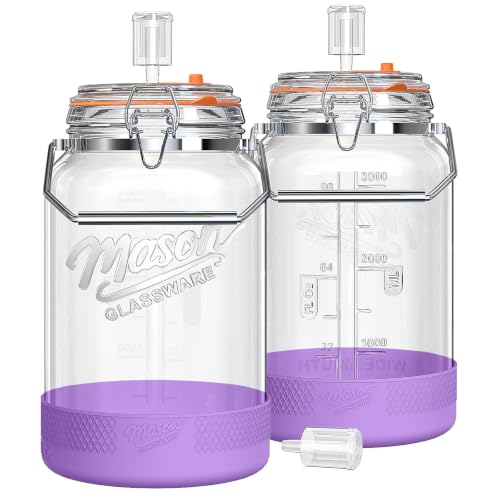
Qianfenie 1 Gallon Upgrade Fermentation Jar
Strengths
- Stainless steel handles
- Non-slip base
- Measurement markings
Trade-offs
- Higher price point
- Heavier when full
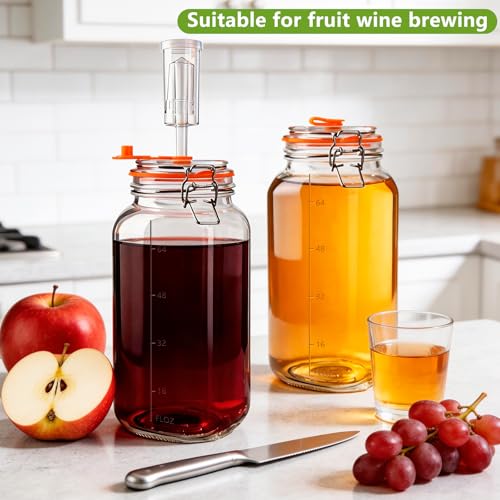
If I were building my ideal fermentation station, this would be the model I’d lean toward. The 1-gallon size gives you serious capacity without becoming unwieldy, and the included stainless steel handles make lifting and moving a full jar much safer. Reviewers note the non-slip silicone base actually works, no more sliding around on countertops during active fermentation.
What really sets this apart is the 2-in-1 design. Once fermentation is done, you can remove the airlock and use the jar as an airtight storage container. That’s a smart feature for someone like me who values kitchen efficiency. The built-in measurement marks are also a thoughtful touch, no guessing how much brine you’ve added.
Video review
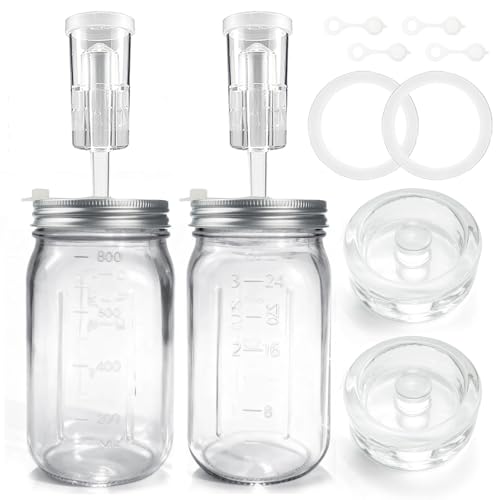
32 oz Mason Jar Fermentation Kit
Strengths
- Affordable
- Stainless steel lids
- Compact size
Trade-offs
- Very small capacity
- Plastic airlocks
- Not for large batches
At this price, it’s hard to ignore what you’re getting. Two 32oz jars with all the essentials, airlocks, weights, gaskets, makes this the most budget-friendly entry point on the list. The stainless steel lids are a quality upgrade over plastic, and the food-grade PC airlocks hold up well according to long-term owners.
But here’s the catch: 32oz is tiny for sauerkraut. You’ll be lucky to get two small jars out of a single cabbage. It’s better suited for testing recipes or making small batches of hot sauce or fermented garlic. If you’re serious about regular fermentation, you’ll outgrow these fast.
Video review
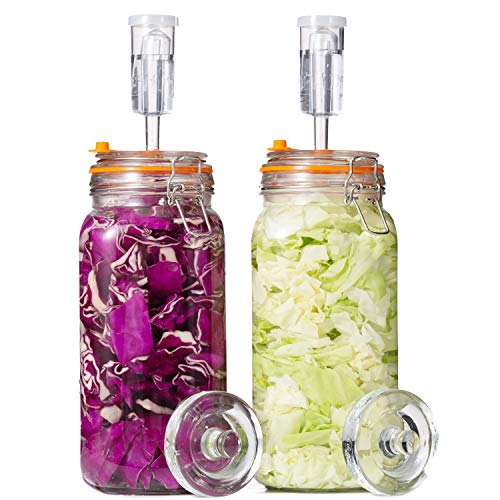
JILLMO 2L Wide Mouth Fermentation Jar
Strengths
- Large 2L capacity
- Durable glass
- Dishwasher safe
Trade-offs
- No handles
- Bulky for small kitchens
- No measurement marks
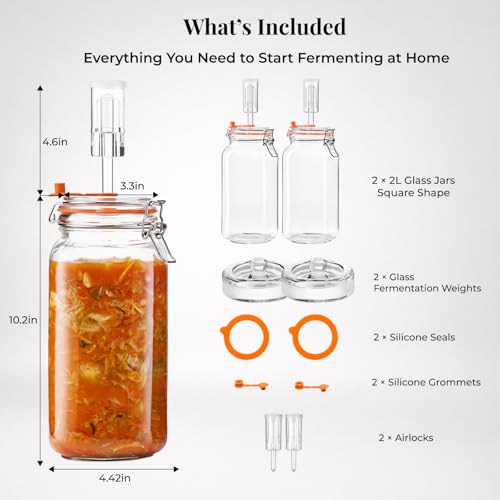
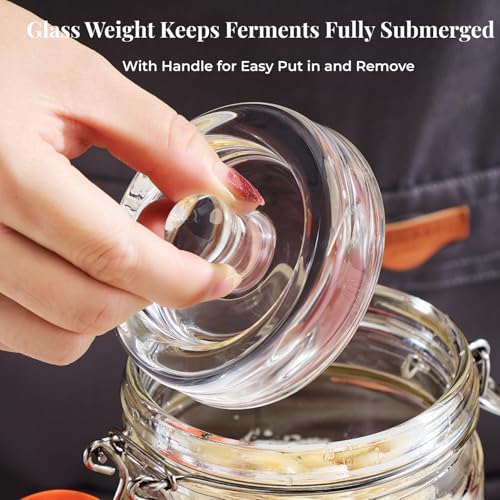
When you need volume, this 2L 2-pack delivers. Two full 2-liter jars mean you can ferment enough sauerkraut to last months, which is perfect for anyone serious about probiotic foods. The glass weights are substantial, and owners confirm they stay put, no floating cabbage here.
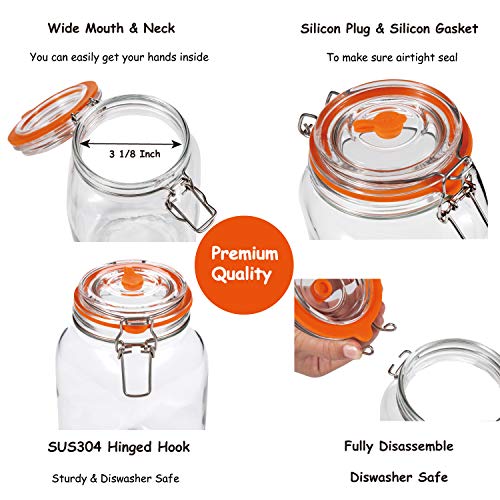
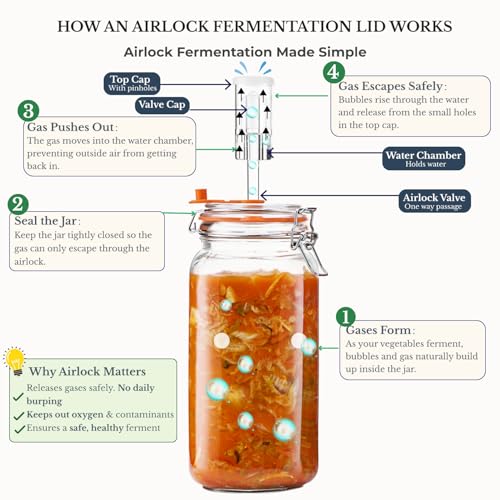
The clamp lid system with silicone seal is robust, and the 3-piece airlock works reliably across long fermentations. I appreciate that everything is dishwasher safe, after multiple batches, easy cleanup matters. This is the model I’d recommend to someone who’s moved past experimenting and wants to integrate fermentation into their routine.
Product photos

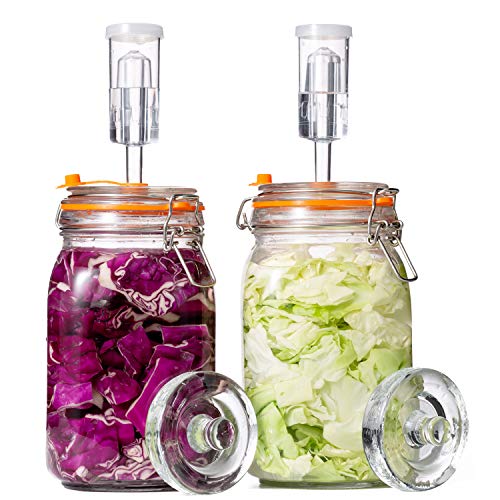
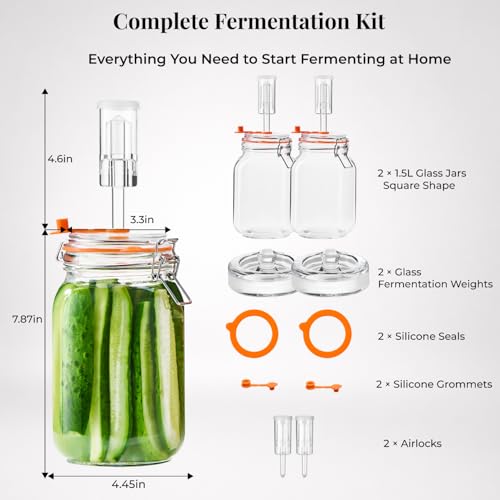
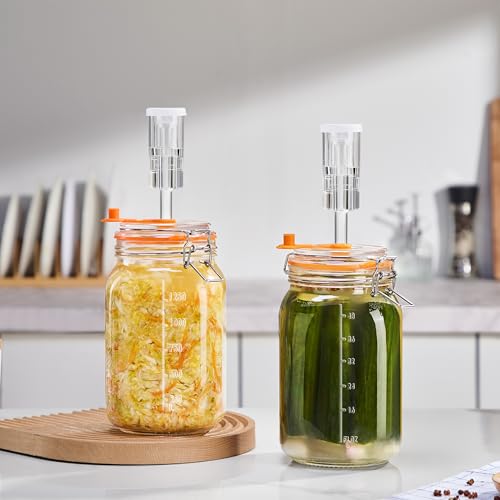
JILLMO 1.5L Fermentation Jar with Weight
Strengths
- Balanced 1.5L size
- Airtight seal
- Easy cleanup
Trade-offs
- No measurement marks
- No handles
- Slightly narrower mouth
The 1.5L size is the Goldilocks zone for many home fermenters, big enough for a decent batch, small enough to fit on most shelves. This 2-pack strikes a balance between capacity and convenience, making it my top pick for everyday use. The glass weights and airlock system are consistent with JILLMO’s higher-end models, so you don’t sacrifice function for size.
Owners appreciate the airtight seal and the fact that the jars clean up easily in the dishwasher. The lack of measurement markings is a minor oversight, but not a dealbreaker. If you’re looking for a mid-range option that doesn’t lean too small or too bulky, this is it.
Product photos
BPFY 2L Glass Fermenting Jars with Weights
Strengths
- Complete kit
- Glass weights included
- Dishwasher safe
Trade-offs
- No measurement markings
- Limited batch size
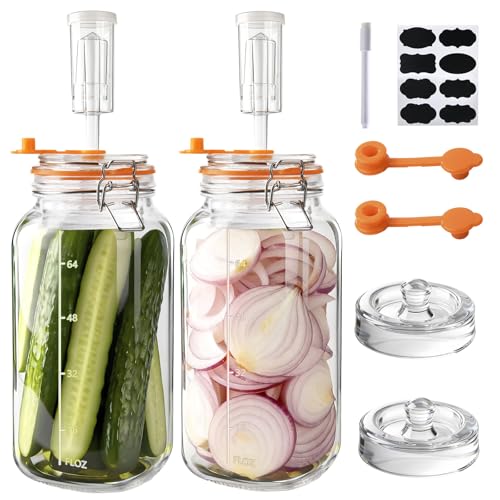
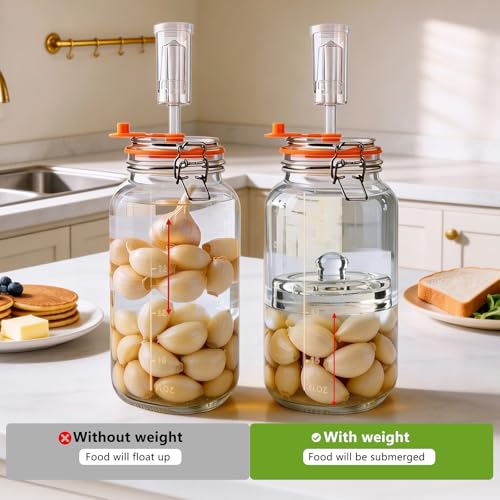
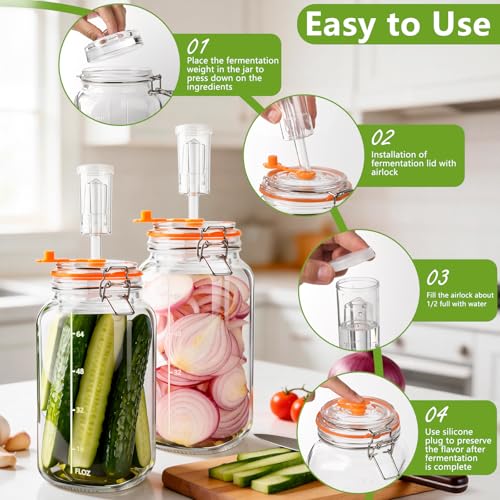
This kit hits all the right notes for someone just starting out with fermentation. The 2L size is practical for a first batch of sauerkraut or kimchi, and having two jars means you can experiment with different recipes or have backup ready. Owners consistently report that the glass weights do their job well, keeping vegetables submerged, which I know from research is the most critical factor in avoiding mold and failed ferments.
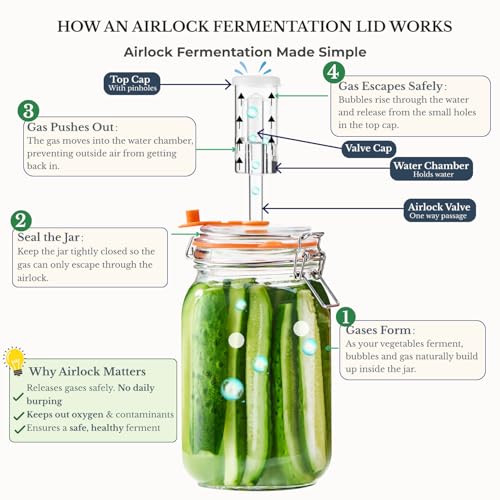
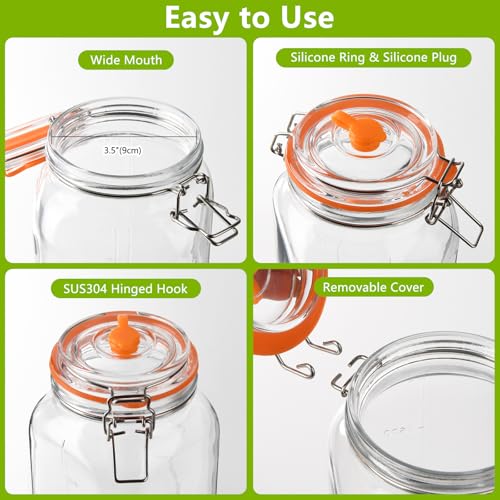
The 3-piece airlock system is a standout, creating a reliable anaerobic environment without needing to ‘burp’ the jar. That’s a big win for beginners who might otherwise panic over pressure buildup. The wide mouth makes packing and cleaning easy, and the fact that it’s dishwasher safe is a small but meaningful convenience.
Product photos

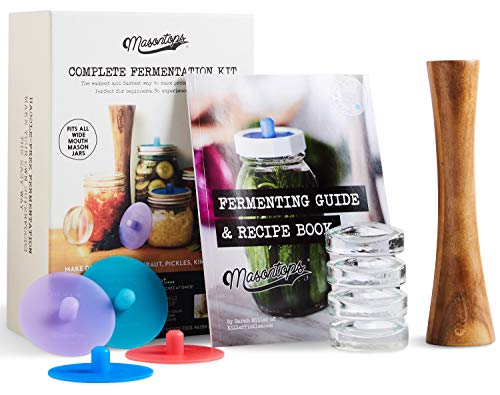
Masontops Mason Jar Fermentation Kit
Strengths
- High-quality airlock lids
- Wooden tamper included
- Reusable
Trade-offs
- Jars not included
- Weights sold separately
- More setup required
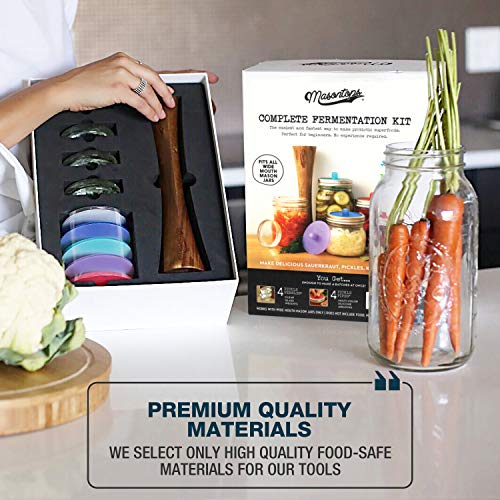
This kit assumes you already own wide mouth mason jars, which makes it a smart choice if you’re not starting from scratch. The Pickle Pipe airlock system is clever: it vents gas without letting oxygen in, and owners say it’s nearly foolproof. The included acacia wood packer is a nice touch, especially for pressing down cabbage to release brine.
But you’ll need to supply your own jars, weights, and storage solutions. That means extra cost and coordination. If you’re already deep into mason jar life, this is a seamless add-on. But for someone building a system from the ground up, it’s less convenient than an all-in-one kit.
Product photos


JILLMO 1.1L Fermentation Jar Kit
Strengths
- Ideal small size
- Heavy glass weights
- Dishwasher safe
Trade-offs
- No handles
- No measurement marks
- Limited scalability
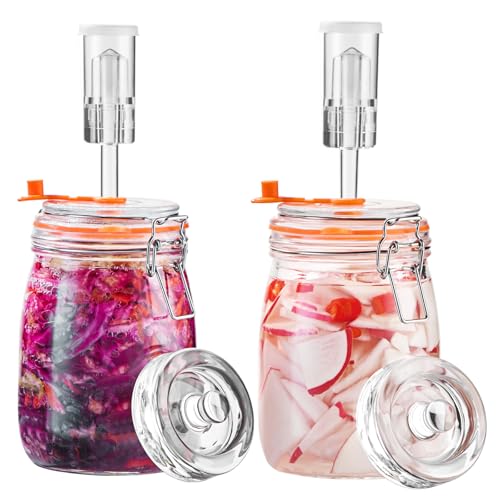
The 1.1L size is where this one shines, it’s just right for small-batch fermenting. If you’re testing a new sauerkraut recipe or making a single serving of kimchi, you don’t want to commit to a gallon-sized jar. This hits the sweet spot for portion control and kitchen efficiency.
Owners consistently praise the heavy glass weights for keeping veggies fully submerged. The hinged stainless steel clip creates a solid seal, and the wide mouth makes cleaning a breeze. It’s not the flashiest option, but for someone like me who values practicality, it’s a quiet winner.
Product photos

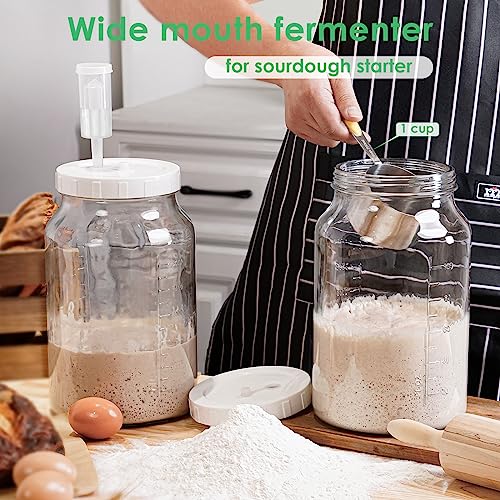
Qianfenie 1 Gallon Fermentation Jar 2 Pack

Strengths
- 2-pack value
- Scale markings
- Screw lids included
Trade-offs
- Lids require firm sealing
- No handles
- Heavy when full
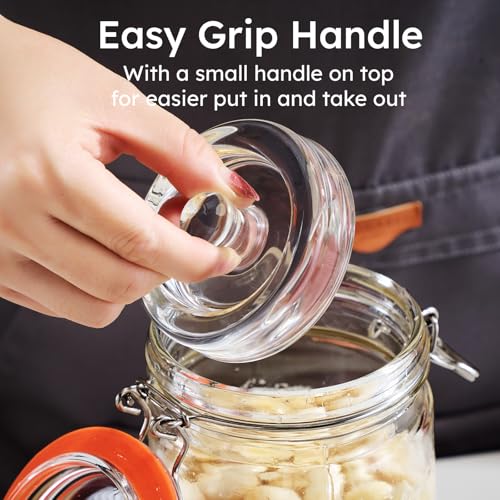
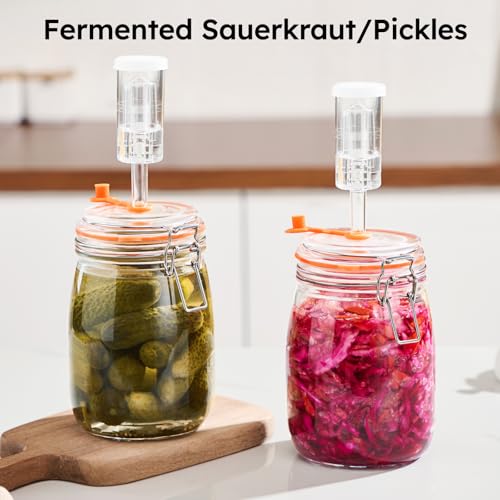
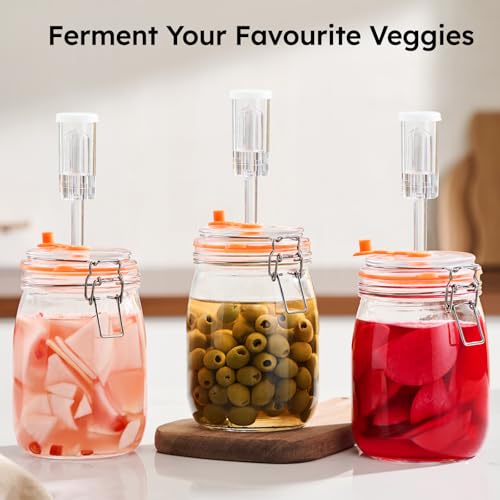
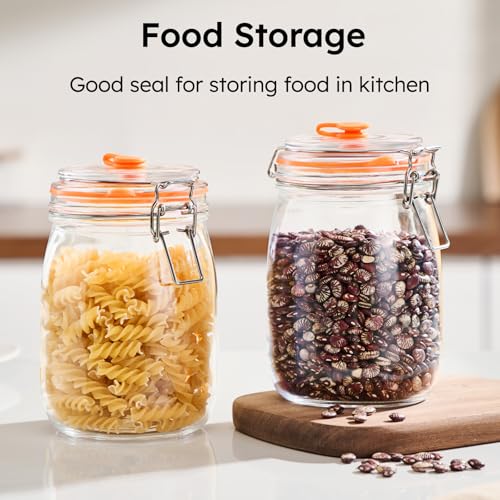
This 2-pack delivers serious value. Two full-gallon jars, three airlocks, and extra gaskets mean you can ferment multiple batches or have backups on hand. The wide mouth with scale markings is a practical feature, being able to track liquid levels without opening the jar reduces contamination risk.
The included chalkboard labels are a thoughtful touch for tracking fermentation dates and contents. Some owners mention the lids take a firm press to seal, but that also means they stay leak-proof. For the price, it’s hard to beat the versatility, these double as dry food storage once fermentation is done.
Product photos




How We Evaluated sauerkraut jars
As someone deeply involved in the world of food preservation through Food Keepy, I approached researching sauerkraut jars by looking at a combination of product specifications, owner reviews, and established fermentation principles. Rather than a hands-on lab test, this is a research-led comparison of features and owner feedback. I compiled data from numerous retailers and manufacturer details, then weighed that against what current users are saying about their experiences – both positive and negative – across multiple platforms.
For sauerkraut jars, the most important factors are consistently reliable airlocks and the material quality of the jar itself. A good airlock prevents mold and unwanted bacteria while allowing carbon dioxide to escape, which is critical for successful fermentation. Durable, lead-free glass is also paramount; you want a jar that will withstand repeated use and temperature changes without cracking or leaching chemicals. Size and included accessories are also key considerations, impacting batch size and overall convenience.
Specifications reliably tell you about jar capacity, glass thickness, and included components. However, owner feedback is where you learn about real-world performance. I paid close attention to comments regarding leak-proof seals, ease of cleaning, and whether the weights actually keep vegetables submerged. Finding the right jar often comes down to balancing these factors with your fermentation goals, and if you’re also looking for jars for other preserving tasks, checking out resources for recommended canning jars can be helpful. And, of course, ensuring your jars are properly prepared is key – learning how to sterilize jars is a vital first step.
How To Choose The sauerkraut jars
Finding the right vessel is key to successful fermentation, and there are more options than you might think.
A quality sauerkraut jar facilitates anaerobic fermentation through an airtight seal and proper venting. Look for durable, food-grade glass, a wide mouth for easy packing and cleaning, and a reliable airlock system to release CO2 while preventing contamination. Glass weights are also essential for keeping vegetables submerged in brine, which is crucial for preventing mold and unwanted bacteria growth.
Capacity and Batch Size
The size of the jar you choose will largely depend on how much sauerkraut, kimchi, or pickles you intend to make at a time. Smaller jars (under 1.5L) are great for beginners or for experimenting with smaller batches and new recipes. Larger jars (1 gallon or more) are better suited for those who regularly ferment larger quantities or want to preserve a significant harvest. Consider your household size and consumption habits; a single person likely won’t need a gallon jar right away. Don’t overestimate your needs, as partially filled jars can increase the risk of spoilage.
Airlock System and Seal Quality
The airlock system is perhaps the most critical component of a good fermentation jar. It allows carbon dioxide (a byproduct of fermentation) to escape while preventing oxygen and unwanted microbes from entering. Some jars use a three-piece airlock filled with water, while others employ a simpler one-way valve. I’ve found that the three-piece systems, when properly maintained, offer a more reliable seal. Beyond the airlock itself, pay attention to the quality of the lid and gasket. A tight, food-grade silicone seal is essential for maintaining an anaerobic environment. If you’re also interested in preserving your creations, take a look at these jars for pickling for options that work well for both fermentation and long-term storage.
Material and Ease of Use
Glass is the preferred material for fermentation jars because it’s non-reactive, easy to clean, and doesn’t impart any flavors to your ferment. Look for jars made from thick, lead-free glass to ensure durability. A wide-mouth opening is a huge convenience, making it much easier to pack the vegetables tightly and clean the jar thoroughly afterwards.
Here’s what I recommend considering when it comes to usability:
- Dishwasher Safety: A nice-to-have, but not essential.
- Measurement Markings: Helpful for following recipes accurately.
- Included Weights: A dedicated fermentation weight is vital; don’t settle for a jar that doesn’t include one, or be prepared to purchase one separately. Keeping vegetables fully submerged is the single most important factor in preventing mold, and a properly sized weight ensures consistent success.
A tight seal isn’t enough. Submerge your vegetables! A consistent brine level, maintained by a good fermentation weight, is the key to a successful, safe ferment.
If you’re looking to explore more options, I’ve put together a guide to the best jars for fermentation that covers a range of styles and price points.
Sauerkraut Jars Compared
Here’s a comparison of key specifications for various sauerkraut jars to help you choose the best option for your needs.
| Product Title | Capacity | Material (Jar) | Includes Weights? | Includes Airlock? | Mouth Width |
|---|---|---|---|---|---|
| Qianfenie 1 Gallon Upgrade Fermentation Jar | 1 Gallon | Glass | Yes | Yes | Wide Mouth |
| 32 oz Mason Jar Fermentation Kit | 32 oz | Glass | Yes | Yes | Wide Mouth |
| JILLMO 2L Wide Mouth Fermentation Jar | 2L | Glass | Yes | Yes | Wide Mouth |
| JILLMO 1.5L Fermentation Jar with Weight | 1.5L | Glass | Yes | Yes | Wide Mouth |
| BPFY 2L Glass Fermenting Jars with Weights | 2L | Glass | Yes | Yes | Wide Mouth |
| Masontops Mason Jar Fermentation Kit | N/A (for 4 jars) | Glass | Yes | Yes | Wide Mouth |
| JILLMO 1.1L Fermentation Jar Kit | 1.1L | Glass | Yes | Yes | 3.3″ |
| Qianfenie 1 Gallon Fermentation Jar 2 Pack | 1 Gallon (x2) | Glass | N/A | Yes | 4.3″ |
Frequently Asked Questions
What size jar is best for a first-time sauerkraut maker?
A 32-ounce jar is ideal for beginners, allowing you to experiment with smaller batches without committing to a large volume. It’s a manageable size to learn the fermentation process and adjust recipes to your taste.
Are plastic fermentation weights safe to use?
While some are labeled as food-grade, glass weights are generally preferred. They don’t harbor flavors or odors and are less likely to stain or degrade over time, contributing to a cleaner fermentation environment.
Can I use a regular mason jar for fermentation if it doesn’t have an airlock?
You can, but it’s significantly riskier. Without an airlock to release gases and prevent oxygen from entering, mold growth is much more likely, potentially ruining your batch. Consider investing in a proper fermentation kit or best jars designed for this purpose.
How often do I need to “burp” a fermentation jar with an airlock?
With a properly functioning airlock, you generally shouldn’t need to burp the jar at all. The airlock is designed to automatically release carbon dioxide buildup. However, if you notice the airlock isn’t bubbling and pressure seems to be increasing, gently opening the lid briefly can relieve it.
What’s the best way to store leftover sauerkraut after fermentation is complete?
Once fermentation is finished, transferring the sauerkraut to an airtight container and refrigerating it is key. You can also explore options for freezing sauerkraut to extend its shelf life even further, though texture may change slightly.
The Bottom Line
Choosing a sauerkraut jar really comes down to how much control you want versus how much fuss you’re willing to deal with. For consistent results and a reliable fermentation process, the Qianfenie 1 Gallon Upgrade Fermentation Jar stands out. Its larger capacity is great for regular fermenters, and the included airlock and weights offer peace of mind.
If you’re just starting out or prefer smaller batches, the JILLMO 1.5L Fermentation Jar with Weight is an excellent choice. For those wanting to outfit multiple jars at once, the Masontops Mason Jar Fermentation Kit provides a convenient, if slightly more involved, solution. And if you’re also looking for durable storage options beyond fermentation, exploring top glass jar brands can be a smart move.
Ultimately, the most important things aren’t the fancy features or the size of the jar. Consistent temperature, a proper brine solution, and ensuring your vegetables stay submerged are the fundamentals. Taking the time to properly seal canning jars – or in this case, ensuring a good seal on your fermentation jar – and maintaining a clean workspace will do more for your success than any single specification.
