Can You Freeze Sauerkraut in a Bag? Our Long-Term Findings
This post contains affiliate links. As an Amazon Associate, we earn from qualifying purchases.
You can freeze sauerkraut in a bag for long-term storage, but it’s a trade-off between shelf life and quality. Use a freezer-safe bag, leave ½ inch of headspace, squeeze out all air, and freeze immediately. This preserves safety for 8-12 months, but the slow freezing process kills most probiotic bacteria and turns the cabbage soggy. For probiotics, refrigerate instead; for texture, consider a flash-freeze workaround.
That ½-inch gap is the difference between a bag that seals and one that bursts. The liquid expands as it freezes. Leave no room, and you’ll find kraut juice leaked across your freezer shelf by morning. The real cost isn’t the mess, it’s the air that gets in once the seal fails, which turns the remaining sauerkraut gray and mushy within a month.
What follows: the exact bag-freezing steps drawn from extension service manuals, what the 1955 study says about probiotic survival, the workaround for keeping some crunch, and when you should skip the freezer entirely and just use the fridge.
Key Takeaways
- Freezing in a bag is safe but kills most live probiotics, slow freezing ruptures bacterial cell walls.
- Leave ½ inch of headspace in the bag to prevent rupture from liquid expansion during freezing.
- A second freeze is lethal to remaining bacteria; portion your sauerkraut to avoid refreezing.
- For better texture, try a flash-freeze method using an ice bath before transferring to the freezer.
- Refrigeration preserves both probiotics and crunch for up to six months, freezing is a last resort for very large batches.
What Actually Happens When You Freeze Sauerkraut?
Freezing doesn’t just make food cold. It changes its physical structure. For sauerkraut, that means ice crystals form inside the cabbage cells and the bacterial cells. These crystals act like tiny knives.
Slow freezing the regular way might kill the probiotics. The ice crystals that form inside the bacterial cells rupture their walls. That’s why freeze-drying, which removes water before freezing, gives bacteria a fighting chance.
This isn’t a new discovery. A 1955 study in the Journal of Bacteriology tracked bacterial survival through multiple freezes. The researchers found that while some bacteria could survive a first freeze, a second freeze was almost always lethal, regardless of the timing. Your home freezer’s slow freeze cycle is the first hit. Thawing and refreezing is the knockout.
The cabbage itself suffers too. The cell walls break down, releasing water. That’s why thawed sauerkraut feels soggy and loses its signature crunch. You can’t put that crispness back.
The Step-by-Step Process for Bag-Freezing Sauerkraut
Follow this sequence to minimize damage and prevent freezer burn. The goal is to freeze it once, correctly.
Tools You’ll Need
- Freezer-safe bags (like Ziploc Freezer bags). Not all plastic bags are rated for sub-zero temperatures.
- A measuring cup or kitchen scale.
- A straw or vacuum sealer for air removal.
- A permanent marker for labeling.
The 5 Steps, In Order
- Cool the sauerkraut completely. Packing warm sauerkraut creates condensation inside the bag, which turns to ice crystals and accelerates sogginess.
- Portion it. Divide your batch into meal-sized amounts. This is the single best way to avoid refreezing. Thaw only what you need.
- Bag it, leaving ½ inch headspace. The Penn State Extension fermentation guide specifies this headspace for a reason. Liquid expands when frozen. Fill the bag, then press the contents down to leave that gap at the top.
- Remove the air. Squeeze the bag gently from the bottom up, or use a straw to suck out the last air before sealing. For large batches, a vacuum sealer is ideal. This step is how you prevent freezer burn.
- Label and freeze flat. Write the date and contents on the bag. Lay it flat on a freezer shelf to freeze quickly. A flat bag also stacks neatly, which helps you organize your freezer efficiently.
Where this goes sideways: Skipping the headspace. The bag seams split under pressure, the juice leaks, and the exposed kraut develops freezer burn within weeks. You’ll see white, dried patches on the cabbage.
| Step | Critical Detail | Consequence If Skipped |
|---|---|---|
| Cooling | To room temperature | Condensation adds ice, speeds sogginess |
| Portioning | Single-meal sizes | Forces refreezing, kills all probiotics |
| Headspace | ½ inch at top | Bag ruptures, causes leakage and burn |
| Air Removal | Squeeze or vacuum | Frost forms inside bag, texture degrades |
| Freezing Flat | On a level shelf | Freezes slower, creates larger ice crystals |
Bag vs. Container: Which Freezes Better?
You have two main choices: bags or rigid containers. Your goal decides the winner.
Freezer bags win for space and air removal. You can squeeze out almost all the air, which is the best defense against freezer burn. They also freeze flat, making them the best partner for a chest freezer organization system. The downside is physical protection, they can be punctured.
Rigid containers win for protection and stackability. A hard freezer-safe container won’t puncture and is easier to label. The downside is air. Even with a tight lid, more air is trapped inside compared to a vacuum-sealed bag. That air is what causes frost and flavor loss over time.
For sauerkraut, the bag’s air-removal advantage usually outweighs the container’s durability. The real enemy is oxygen, not crushing.
How Freezing Affects Probiotics and Flavor
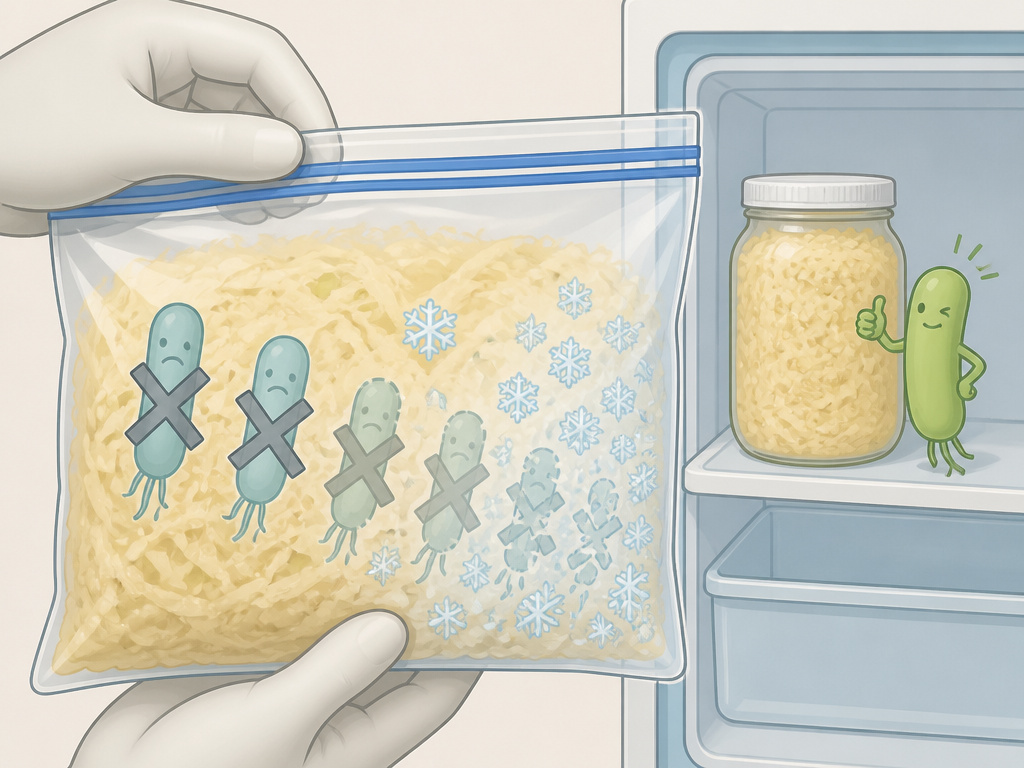
This is the trade-off. You gain months of storage but lose the very thing many people eat sauerkraut for: the live, active cultures.
The lactobacilli and other bacteria produced during fermentation are living organisms. Your freezer is a harsh environment for them. The Purdue Extension sauerkraut PDF focuses on safety and texture, not probiotic survival, because freezing isn’t a recommended method for preserving that benefit.
Common mistake: Freezing sauerkraut to “save” the probiotics. The cold dormancy myth doesn’t hold. Slow freezing kills; any survivors are weakened and die upon thawing.
Flavor changes too. The tangy, acidic punch can mellow and flatten after freezing. The complex notes created by fermentation break down. What you get back is a sour, salty cabbage that works as a cooking ingredient but lacks the bright, live flavor of fresh kraut.
If probiotic content is your priority, the freezer is the wrong tool. The refrigerator is your ally. Tightly covered, sauerkraut maintains live cultures for up to six months in the fridge.
The “Flash Freeze” Workaround for Better Texture
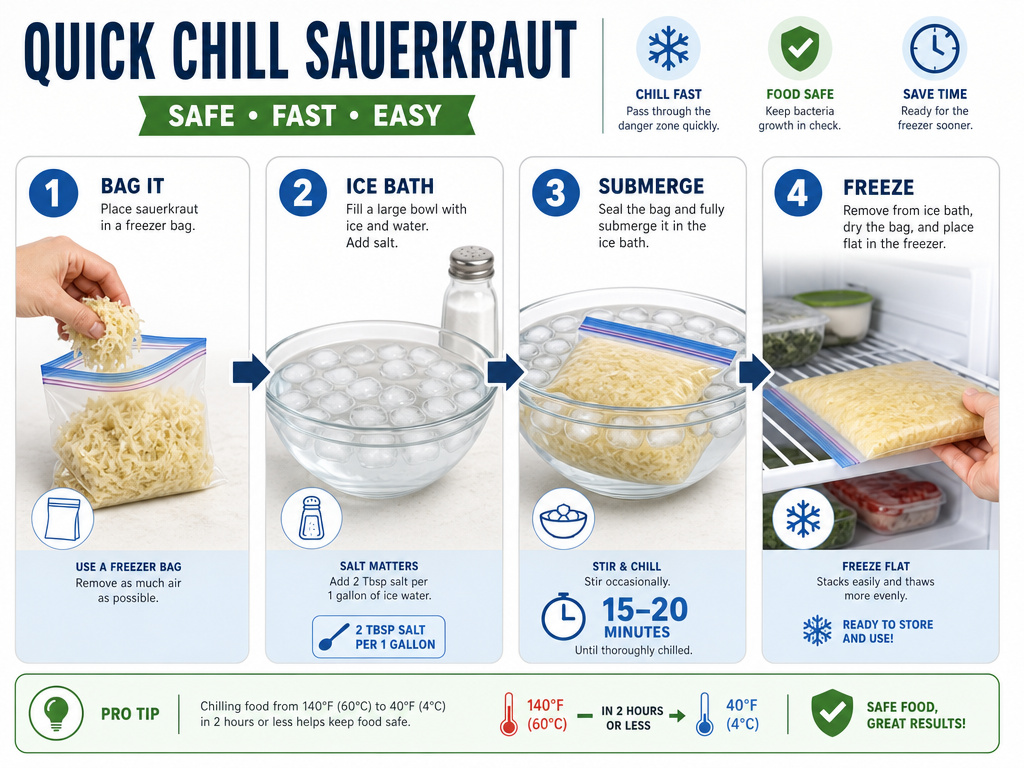
You can’t replicate an industrial freeze-dryer at home. But you can speed up the freezing process to form smaller ice crystals, which causes less cell damage. Smaller crystals mean slightly better texture.
This method uses an ice bath to drop the temperature rapidly before the bag goes into the freezer.
- Portion your sauerkraut into a freezer bag, leaving headspace. Seal it.
- Fill a large bowl or bucket with ice. Add cold water and a handful of salt to lower the temperature further.
- Submerge the sealed bag in the ice bath for 15-20 minutes. This chills the core temperature quickly.
- Immediately remove the bag, pat it dry, and place it flat in the freezer.
The goal is to start the freezing process from a much colder point. It won’t save the probiotics, but it can help the cabbage retain a bit more firmness. This is the same principle used when freezing tomatoes to preserve their shape.
How Long Does Frozen Sauerkraut Last?
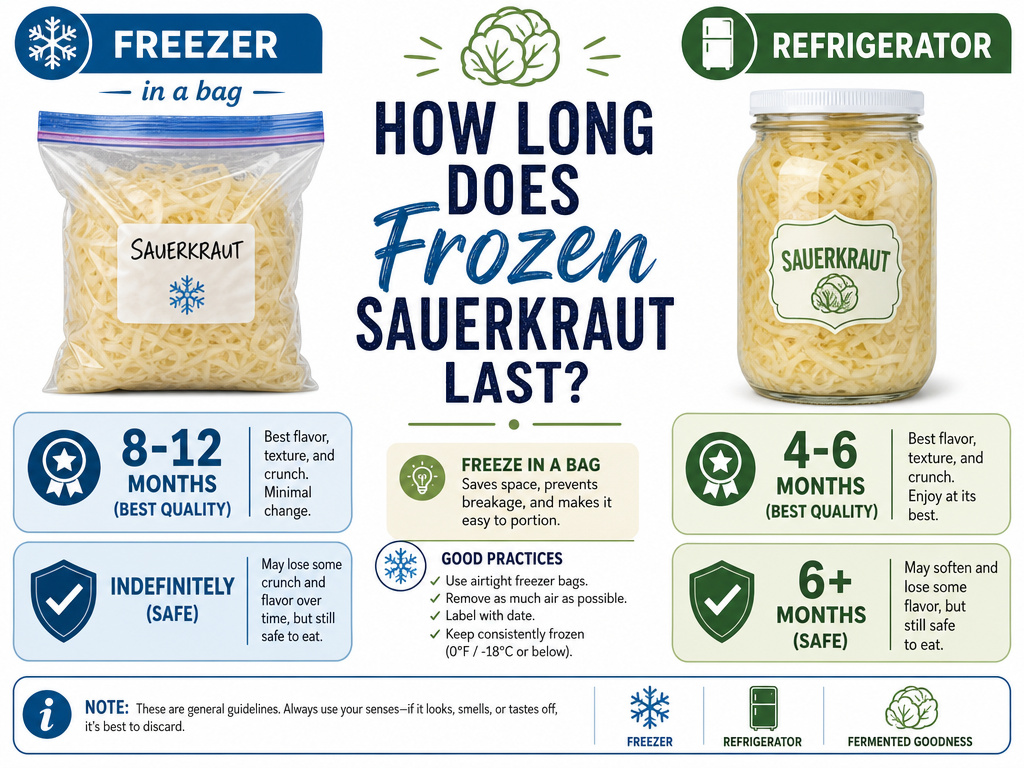
Safety and quality have different timelines. A freezer at 0°F keeps food safe almost indefinitely. But quality degrades on a much shorter clock.
| Storage Method | Best Quality Duration | Safe Duration | Primary Risk After Timeline |
|---|---|---|---|
| Freezer (Bag) | 8–12 months | Indefinitely | Texture turns to mush, flavor fades |
| Refrigerator | 4–6 months | 6+ months | Probiotic activity declines, may soften |
“Best quality” means it still tastes like sauerkraut and has some structural integrity. After a year, it’s often a sour, salty pulp that works only as a cooking ingredient for soups or stews.
Label your bags with the freezing date. Use the oldest bag first. This first-in, first-out practice is the core of any good freezer organization strategy.
When You Shouldn’t Freeze Sauerkraut in a Bag
The freezer isn’t always the answer. Recognize these scenarios.
Don’t freeze it if you eat sauerkraut for probiotics. The loss is too great. Use the fridge. Don’t freeze it if you have less than a quart. The space and effort aren’t worth it. Refrigerate and use it within a few weeks. Don’t freeze it if the sauerkraut is already soft or mushy. Freezing will not improve texture; it will amplify the sogginess. Don’t freeze cooked sauerkraut for health benefits. Cooking heat (above 115°F) kills probiotics before the bag even goes into the freezer. You’re freezing a dead product.
In these cases, freezing is a waste of energy and freezer space. It gives you a longer-lasting ingredient but strips away the reasons you might want to keep it.
Thawing and Using Frozen Sauerkraut
Thawing is the final chance to mess it up. The wrong method can finish off any remaining texture.
The right way: Move the bag from the freezer to the refrigerator 12-24 hours before you need it. Let it thaw slowly and evenly in the cold.
The wrong way: Using the microwave or hot water. This uneven heat accelerates the breakdown, turning the kraut into a warm, watery mess. You can’t recover from that.
Once thawed, use it within 24 hours. Do not refreeze it. Pour off any excess liquid in the bag before using. That liquid is the water expelled from the broken cells, it’s very salty and can throw off the flavor of your dish.
Frozen sauerkraut works best as a cooked ingredient. Add it to soups, stews, casseroles, or braised dishes. The cooking process will soften it anyway, so the texture loss matters less. It’s not ideal for a cold topping on a hot dog where crunch is key.
Frequently Asked Questions
Does freezing kill all probiotics in sauerkraut?
Freezing kills most, but not necessarily all, probiotics. The slow freeze cycle in a home freezer is damaging, and a second freeze is lethal to any survivors, according to the 1955 bacteriology study. If live probiotics are your goal, do not freeze.
Can you freeze sauerkraut in its original glass jar?
You can, but it’s risky. You must use freezer-safe glass and leave significant headspace. Even then, glass can crack from thermal stress or the pressure of expansion. Transferring to a freezer bag is safer and more effective.
How do you prevent freezer burn on sauerkraut?
Remove all air. The most effective method is vacuum sealing, which creates an airtight barrier. With a standard bag, squeeze out as much air as possible before sealing. Freezer burn is dehydration caused by air exposure; no air means no burn.
Is it better to freeze or can sauerkraut?
For long-term storage of flavor and safety, canning is the traditional, recommended method by extension services. For convenience and space, freezing in a bag is easier. Canning uses heat which also kills probiotics, so neither method preserves live cultures.
Can you freeze sauerkraut twice?
You should not. The 1955 research is clear: a second freezing event kills virtually all remaining bacteria. The texture also degrades dramatically after a second thaw. Portion your sauerkraut before the first freeze to avoid this.
Does frozen sauerkraut go bad?
It remains safe to eat indefinitely if kept at 0°F, but the quality deteriorates. Look for signs of freezer burn (dry, white patches) or an off odor after long storage. If it smells foul or shows mold (which is rare in the freezer), discard it.
The Bottom Line
You can freeze sauerkraut in a bag to stop the clock on spoilage for up to a year. Do it right: leave ½ inch headspace, remove all air, and freeze it only once. But understand the cost, you trade away most of the probiotics and the satisfying crunch.
For a large harvest that won’t fit in the fridge, bag-freezing is a practical solution. For a jar you’re slowly working through, the refrigerator is the smarter choice. It keeps the culture alive and the texture intact. Freezing isn’t wrong; it’s just a specific tool for a specific job. Use it when shelf life is the only goal, and you’ll know exactly what you’re getting.
