Reusing Canning Lids: The USDA’s Stance and Practical Tips
This post contains affiliate links. As an Amazon Associate, we earn from qualifying purchases.
You cannot safely reuse standard metal canning lids for home food preservation. The USDA, National Center for Home Food Preservation, and manufacturers like Ball and Kerr all state these lids are designed for a single use because the sealing compound permanently deforms during the first seal. Reusing them introduces a measurable risk of seal failure and foodborne illness.
That answer is non-negotiable for safety. But it leaves a practical gap: what about the lids sitting in your cupboard, the ones that look perfect? Or the official guidance that seems to waste a perfectly good piece of metal?
The rest cuts through the noise. We’ll walk through the physical reason reuse fails, the one tool that can test a used lid’s integrity (and why it’s still a gamble), and the official alternatives that don’t risk your pantry.
Key Takeaways
- The sealing compound on a Ball or Kerr lid flattens under heat and vacuum, creating a compression set. It cannot rebound to seal a second jar rim perfectly.
- Lids have a 5-year shelf life from manufacture, even unopened. The compound degrades and loses elasticity.
- You can reuse screw bands indefinitely if they’re not rusty or bent. The band doesn’t create the seal; the lid does.
- A mason jar vacuum sealer can test a used lid’s seal strength, but a passing test doesn’t guarantee safety through a year of shelf storage.
- For true reuse, invest in Tattler reusable lids or use old lids only for dry storage in the pantry, never for canning.
The Sealing Compound’s One-Job Design
A two-piece canning lid is a pressure-activated, single-use gasket system, not a simple cap. The flat metal disk has a rubbery sealing compound ringed around its underside.The separate screw band holds it in place.
During processing, the jar’s contents heat up, driving air out. As it cools, a vacuum forms inside. This vacuum pulls the flexible lid down tight against the glass rim. The sealing compound compresses into the microscopic imperfections of the jar, creating an airtight lock.
The sealing compound on canning lids works well for 5 years from the manufacturing date. Once that date is exceeded, the lids may fail to seal, again posing a food safety risk. – National Center for Home Food Preservation via Ask Extension
This compression is permanent. Engineers call it a “compression set.” The material doesn’t spring back. When you pry that lid off, the compound now has a flat spot molded by your specific jar. It will never match another jar’s rim with the same intimacy.
Think of it like a wax seal on an old letter. You melt the wax, press your signet ring into it, and let it harden. You can break the seal and reuse the wax, but you cannot get that crisp, deep impression again. The lid’s compound is that wax.
This is why the K-State canning lids guide states it plainly: “The second most important thing you need to know is never use a lid twice.”
Why a “Good” Used Lid Still Fails
You might look at a used lid and see no cracks, no rust, a seemingly intact gasket. The failure occurs at the molecular level where the compound meets the glass.
The vacuum in a properly canned jar is strong. It can pull the lid down with several pounds of force. This force is what keeps bacteria and air out for up to 18 months on the shelf. A used lid, with its pre-flattened compound, might hold a weak seal for a week or a month. But the gradual stress of temperature changes and pressure shifts will break that weak bond.
The timeline is the killer. A jar can lose half its vacuum within six months with a compromised seal. You won’t know until you go to open it and find the lid loose, or worse, see mold.
A Real-World Test: The Vacuum Sealer Check
This is where online advice gets dangerous. A common YouTube hack suggests testing used lids with a mason jar vacuum sealer. The logic seems sound: if the sealer can pull a vacuum on the lid now, it should hold during canning.
The tool works. A food saver with a jar attachment or a dedicated jar sealer can suck the air out of a jar in seconds. If the lid holds firm, it passes the test.
But here’s the catch. A vacuum sealer test is instantaneous. It applies vacuum for five seconds. Canning applies vacuum, then subjects the jar to shelf-life stresses for a year. The test proves a lid can seal once, right now. It does not prove the seal will endure.
It’s like testing a bicycle tire patch by inflating it in your garage. It holds air. That doesn’t mean it will hold air over 500 miles of rough road. The long-term fatigue is what fails.
Where this goes sideways: Relying on a vacuum sealer test for canning safety. The seal might hold for a day, but food spoilage bacteria work on a timeline of months. A false sense of security is the real risk.
If you use this method, use it only for dry storage. Testing a lid for a jar of rice or beans is fine. Using that “passed” lid to can green beans is playing odds with botulism.
Official Guidelines vs. Anecdotal Reports
The official line is unambiguous. Every university extension service and the Clemson canning FAQ align with the manufacturers: do not reuse.
| Source | Position on Reusing Standard Lids | Key Reason Cited |
|---|---|---|
| USDA / NCHFP | Not recommended. | Processing times validated for new, two-piece lids only. |
| Ball / Kerr | Never use a lid twice. | Sealing compound is designed and guaranteed for one seal. |
| Utah State University Extension | “Highly unlikely” to seal. | Most, if not all, jars will not seal. |
Then you have the homesteader forums and video channels. They report reusing lids for years with a “99% seal rate.” They often follow strict protocols: using a dent-free lid opener, never washing lids in the dishwasher, avoiding vinegar in the canner water.
Who’s right? Both are, from their own vantage point.
The official guidelines are built for public health. They must assume variable skill, old jars, hard water, and forgetfulness. Their advice must work for every canner in every kitchen, with zero margin for error. So the rule is absolute.
The anecdotal reports come from highly practiced individuals using meticulous, non-standard methods. Their success is real, but it’s not replicable at scale. It’s also survivorship bias—you don’t see videos from the people whose reused lids failed and made them sick.
The USU Ask an Expert PDF bridges this gap honestly: “While it might be possible… It is highly unlikely. We have had consumers tell us they tried and most, if not all, their jars did not seal.”
What You Can Reuse and Safe Alternatives
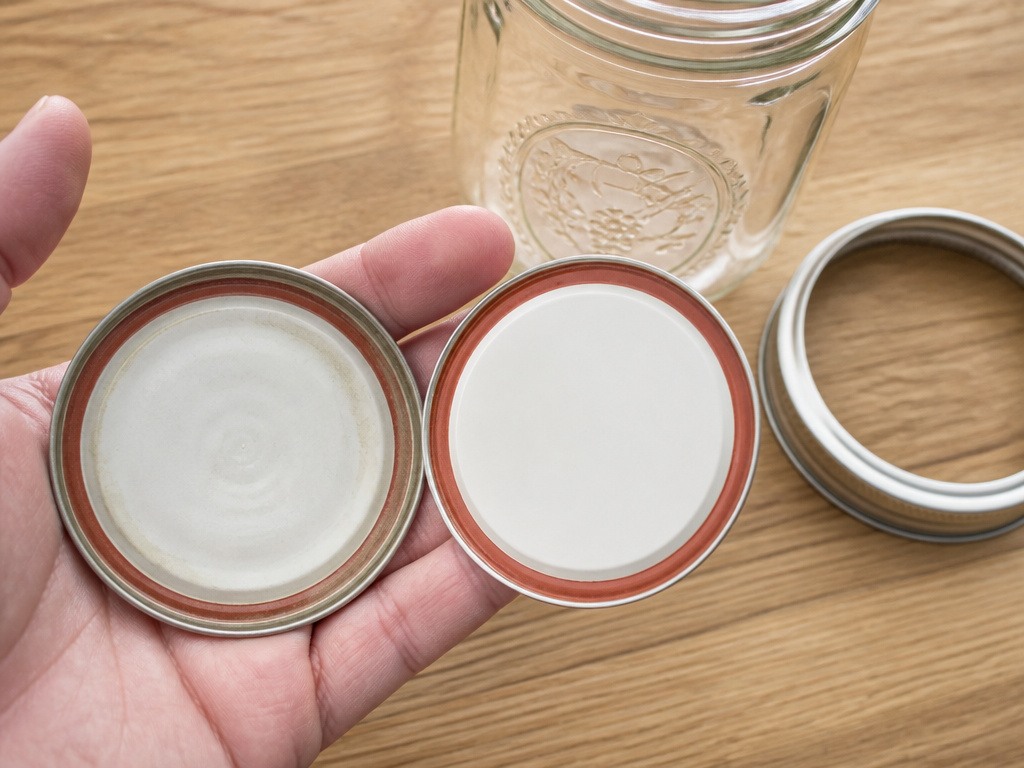 Your frustration is valid. Throwing away metal that looks fine feels wasteful. So let’s shift focus to what you can reuse without guilt or risk.
Screw Bands Are Reusable
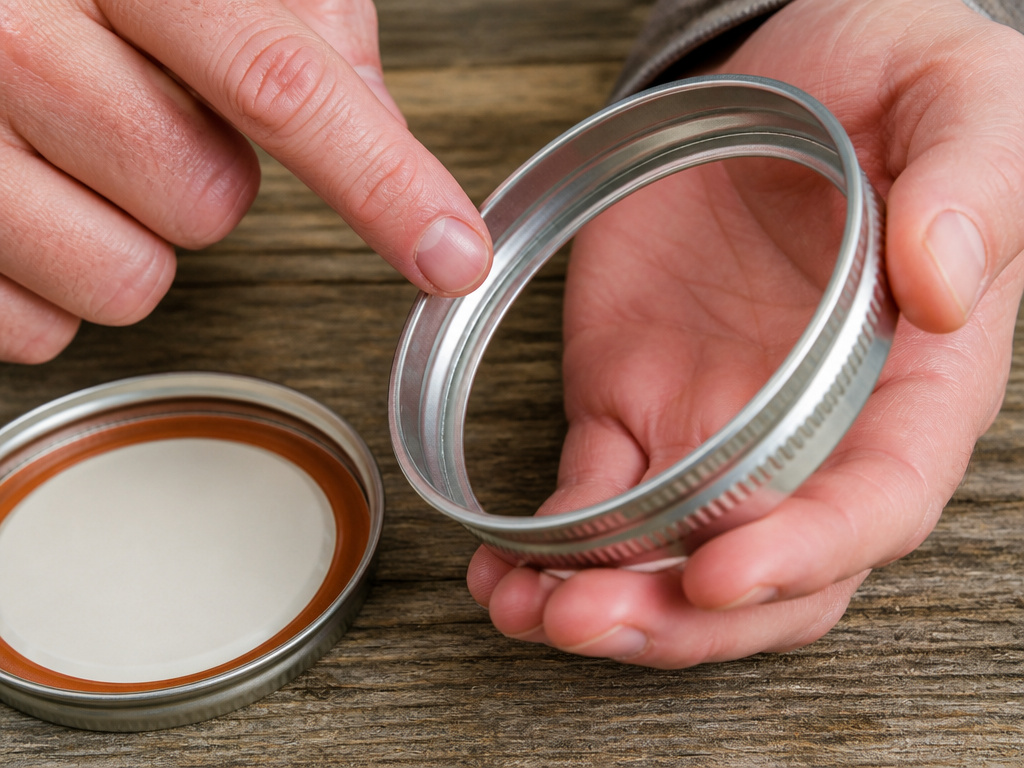 The metal ring that screws onto the jar is a clamp, not part of the seal. You can reuse it forever, provided it meets two checks:No rust. Rust weakens the metal and can stain jars.
2. No bends or dents. A deformed band won’t apply even pressure.
The metal ring that screws onto the jar is a clamp, not part of the seal. You can reuse it forever, provided it meets two checks:No rust. Rust weakens the metal and can stain jars.
2. No bends or dents. A deformed band won’t apply even pressure.
Wash bands in warm soapy water, dry thoroughly, and store them separately from your new lids. This is standard practice and recommended by all sources.
Plastic Storage Caps for the Fridge
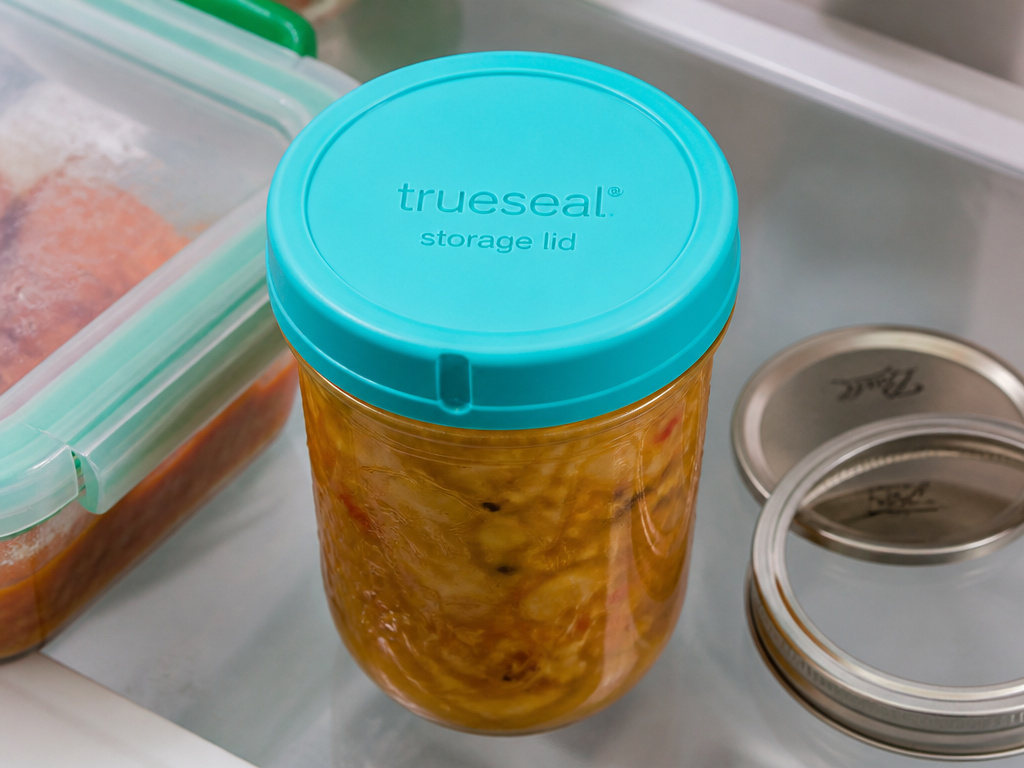 Those colored plastic caps that snap onto jar threads? They’re for refrigeration and dry storage only. The Ball website explicitly markets them for holding leftovers in the fridge, not for canning. They’re reusable for that job indefinitely.
Tattler Reusable Lids: The Official Alternative
If you want a reusable system designed for canning, Tattler makes plastic lids with separate rubber gaskets. The National Center for Home Food Preservation began a study on them in 2013, though no official results have been published. User reports are mixed—they require a different technique (overtightening before processing, then loosening slightly after) and have a higher learning curve.
They represent a middle ground. They aren’t the USDA standard, but they are a product engineered for reuse. If you go this route, buy from a reputable source and follow Tattler’s instructions to the letter, not your instinct from metal lids.
The Dry Storage Loophole
This is the safest way to use a “used” canning lid. Once a lid has sealed a jar of salsa, you can wash it and use it to cover a jar of dry pasta, rice, or flour in the pantry. It won’t create a vacuum seal, but it will keep dust and bugs out. This is explicitly endorsed by extension services: “You can reuse canning lids to store dry items, however.”
The Step-by-Step for a Guaranteed Seal
If you’re going to can, do it right. The goal is to preserve food safely for a year. Here is the non-negotiable sequence for using new lids.
- Check the date. Find the manufacture date on the box. If it’s over 5 years old, recycle the lids. The compound is likely degraded.
- Wash, don’t boil. Wash lids in warm, soapy water. The USDA no longer recommends boiling or simmering lids, as it can damage the sealing compound. Room-temperature lids are fine.
- Prepare the jar. Ensure the rim is flawless—no chips, no cracks. This is where a defect will break the seal. Having a set of reliable best canning jars is a foundational investment.
- Wipe the rim. Use a clean, damp cloth to remove any food residue. A single grain of salt or speck of fat breaks the seal.
- Apply lid and band. Set the lid on the jar. Screw the band down finger-tip tight. This means snug, then a slight quarter-turn more. Do not crank it. Overtightening prevents air from escaping during processing, which prevents the vacuum from forming.
- Process correctly. Follow a tested recipe from the National Center for Home Food Preservation for time, method (water bath or pressure), and altitude adjustment. This is the most important step. Good canning supplies include a reliable canner and a tested recipe book.
- Cool and test. Let jars cool undisturbed for 12-24 hours. Then, press the center of the lid. It should be concave and not click or flex. Remove the band to confirm the seal holds without it.
Skipping any of these steps increases your seal failure rate. The most common culprits are over-tightened bands, damaged jar rims, and food residue.
Frequently Asked Questions
Can you reuse canning lids for water bath canning?
No. The sealing mechanism and risk are identical for water bath and pressure canning. The lid doesn’t know which method you used; it only knows it was compressed once. Acidic foods in a water bath might spoil visibly faster if the seal fails, but the risk of failure is the same.
How many times can you reuse Tattler lids?
Tattler states their lids and gaskets can be reused indefinitely with proper care. The rubber gasket is the consumable part and may need replacement after 5-10 uses if it becomes nicked or warped. Always inspect the gasket before each use.
Do you have to boil lids before canning?
No. This is an outdated practice from the 1960s when lids used a latex-based compound. Modern lids use Plastisol, which does not require heating. The current recommendation from Ball and the USDA is to wash lids in warm, soapy water and use them at room temperature. Boiling can actually warp the lid or compound.
Why did my new lid not seal?
New lid can fail if the jar rim is chipped, if food residue was on the rim, if the band was overtightened, or if the processing time or method was incorrect. Always start troubleshooting by checking the jar itself. A great seal starts with a perfect jar from a list of best canning jars for pressure canning.
What should I do with unused, old lids?
If they are within 5 years of manufacture, use them for your next canning project. If they are older, use them for dry storage lids in the pantry, or recycle them. Do not gamble your canned food on a degraded compound.
Before You Go
The math is simple. A box of 12 regular mouth lids costs a few dollars. The potential cost of a failed seal is wasted food, time, and in the worst case, a hospital visit. The official “no” is based on that risk calculation.
Your best path is to accept the single-use design for canning, reuse your screw bands endlessly, and invest in a vacuum sealer for dry goods if you hate waste. For new canners, a canning kit for beginners that includes a box of new lids removes this whole dilemma.
Canning is science, not folklore. The rules exist because they were written after decades of documented failure. Follow them, and your pantry stays safe.
