How to Store Reusable Plastic Bags to Avoid Contamination
This post contains affiliate links. As an Amazon Associate, we earn from qualifying purchases.
Store reusable plastic bags by washing them after each use, keeping them bone-dry, and separating them by food type, raw meat bags never touch produce bags. The Virginia Cooperative Extension notes that Listeria monocytogenes and Salmonella can survive on a contaminated bag for up to 21 days, which is why a simple wipe-down isn’t enough.
That survival window changes everything. Most advice tells you to keep bags clean and dry. It doesn’t tell you that a damp spot from last week’s lettuce could still be hosting enough pathogens to cross-contaminate today’s berries three weeks later. The storage game isn’t about tidiness; it’s about interrupting a biological timeline.
What follows: the three non-negotiable rules from public health guides, the one storage spot you must avoid, and how to handle each bag material so it doesn’t fall apart in the process.
Key Takeaways
- Bacteria live for weeks. Listeria and Salmonella survive on contaminated bag surfaces for up to 21 days, per a Virginia Tech study.
- Dry is non-negotiable. A single damp bag in a pile creates a bacterial incubator. Air-dry completely before folding.
- Separate or sterilize. Dedicate bags for raw meats, produce, and ready-to-eat foods. If you can’t, you must disinfect between every use.
- The car trunk is a hazard. Warm, humid conditions promote bacterial growth. Store bags indoors in a clean, cool, dry place.
- Don’t invert some bags. Turning insulated or lined bags inside-out to dry can rip seams and damage seals, according to America’s Test Kitchen.
The 21-Day Survival Rule (and Why It Matters)
Most cleaning guides treat reusable bags as a dirt problem. They’re a pathogen problem. The Virginia Cooperative Extension publication FST-476, “Best Practices for Reusable Grocery Bags,” states the timeline plainly: Listeria monocytogenes and Salmonella can survive on reusable bags for up to 21 days if contaminated, regardless of the bag’s material.
Virginia Cooperative Extension best practices PDF notes that these bacteria transfer primarily through moisture. A wet spot from produce or a leak from a meat package doesn’t just make a mess; it sets a three-week countdown clock on that bag’s surface.
That’s the mechanism. The bag isn’t inert. It’s a substrate. The 21-day survival rule reframes “clean when dirty” to “clean after every use for high-risk items.” The consequence of missing a cleaning cycle isn’t a stain; it’s a potential foodborne illness vector that outlasts your next two shopping trips.
The Food Marketing Institute’s FMI grocery bag care guidance echoes this, emphasizing consumer education to minimize cross-contamination. Their stance is that awareness of the risk is the first step, knowing the clock is ticking changes how you handle the bag when you unpack.
The Three Storage Rules You Can’t Skip
The official advice boils down to three actions: separate, contain, and dedicate. These aren’t suggestions; they’re the protocol that interrupts the 21-day survival window.
1. Separate by Food Type
You need a system, not a pile. The goal is to prevent raw meat juices from ever touching a surface that will later carry your apples. – Raw Meats, Poultry, Seafood: These get their own dedicated bags. Color-coding works, red for meat, for example. – Fresh Produce: Another dedicated set. The dirt on unwashed vegetables carries its own microbial load. – Ready-to-Eat Foods: Bread, cheese, packaged snacks. These must never share space with the raw meat bags.
If you can’t maintain dedicated bags, the rule shifts. You must disinfect the bag between switching food types. A quick wipe isn’t disinfecting; it requires contact time with an appropriate cleaner.
2. Contain the Leaks First
This is the step people think they can skip. They can’t.
Common mistake: Putting raw meat packages directly into a reusable bag. A single pinprick leak contaminates the entire interior, and that juice soaks into seams.
The fix is non-negotiable. Place meat, poultry, and fish inside a disposable plastic bag first. This isn’t about being less eco-friendly; it’s about creating a single-use, containable barrier for the highest-risk item. The disposable bag gets tossed immediately after unpacking. The reusable bag’s interior stays clean.
3. Dedicate Bags to Groceries Only
The trunk of your car is not a clean space. Gym shoes, sports gear, pet supplies, or trash have no business near your food bags. The Monterey County health department guide explicitly advises against storing reusable bags in cars for this reason, it’s a cross-contamination highway.
| Bag Use | Risk Level | Consequence if Mixed |
|---|---|---|
| Groceries Only | Low | Stays within the controlled 21-day risk. |
| Gym Clothes / Shoes | High | Introduces sweat, soil, and external bacteria directly onto the bag interior. |
| Pet Supplies | High | Transfers pet dander, saliva, and outdoor contaminants. |
| General Transport (Books, etc.) | Medium | Deposits environmental bacteria from tables, floors, and car seats. |
Store your grocery-dedicated bags in a clean, dry place indoors, a closet shelf, a dedicated bin, a hook by the door. Not the car. Not the garage floor.
Material-Specific Cleaning: You Can’t Treat Them All the Same
A reusable plastic bag is a category, not a uniform product. The cleaning method that saves a nylon bag will destroy an insulated one. You must match the process to the fabric.
The Hand-Wash-Only Group
This covers most reusable plastic bags made from recycled plastic or polypropylene. The Iowa State University Extension notes these require hand washing in warm, soapy water with particular attention to inner and outer seams. Line dry or air dry completely. The dishwasher’s heat warps the plastic and weakens seals.
Nylon bags follow a similar rule: flip them inside-out, wash by hand or on a gentle cycle in warm, soapy water, and air dry. Machine drying melts or shrinks nylon.
The Disinfectant Wipe Group
Insulated bags live by a different standard. They’re often used for raw meats and dairy, so they need the most vigilant care. The official guidance is blunt: clean after each use with a disinfecting wipe and allow to air dry completely before storing. If leakage occurs, you must turn the liner inside-out (if possible without damaging seams), wash with hot, soapy water, and air dry.
Where this goes sideways: Turning most reusable bags inside-out for washing and drying. America’s Test Kitchen advises against it for many models, noting it can rip seams and damage seals. You scrub the inside while the bag is right-side out.
The Machine-Washable Exception
Some cloth or canvas blend bags are machine-washable. Toss them in with your regular laundry on a warm cycle and tumble dry low. Check the tag first. If there’s no tag, assume it’s hand-wash only.
The Absolute Worst Place to Store Them (And Where to Put Them Instead)
The trunk of your car fails on every count. It’s warm, it’s humid, and it’s a storage catch-all for everything you wouldn’t want near your food. The County of Monterey’s guidelines specifically call out car storage for promoting bacterial growth.
A reusable bag stored in a hot trunk becomes an incubator. Any residual moisture from a damp spinach leaf or a condensation-covered milk jug has nowhere to go. Bacteria multiply faster in warmth. What was a minor risk when you brought the bags inside becomes a major one by your next trip.
Your storage spot needs three things: 1. Cool and Dry: A pantry shelf, a dedicated kitchen drawer, a hook in a climate-controlled garage. 2. Clean: Not the floor. Not next to the trash can. Not on the same shelf as cleaning chemicals. 3. Accessible: If they’re a pain to get to, you won’t use the right bag for the right job.
A simple system beats a perfect one you ignore. A bin by the door labeled “Meat,” “Produce,” and “Dry Goods” works. A single pile in the trunk doesn’t.
How to Dry Them So They Don’t Smell
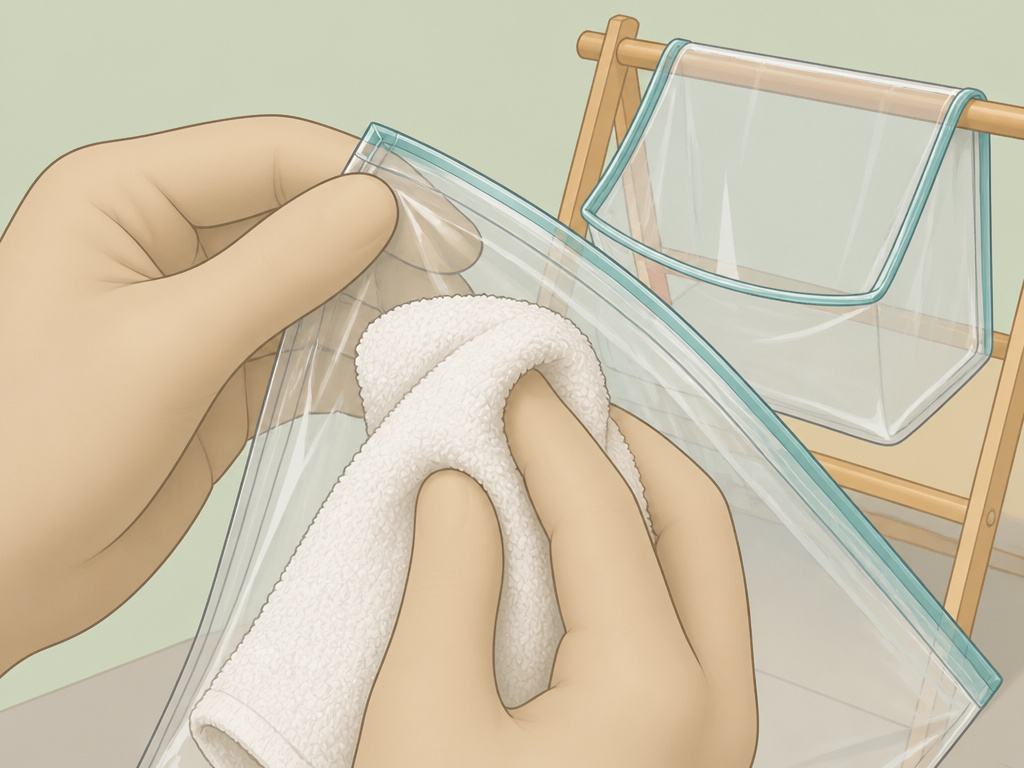
Drying is the most skipped step. It’s also the most critical. A bag that feels dry to the touch can still hold enough moisture in its seams to keep the 21-day clock ticking.
Air circulation is everything. After washing, hang the bag open over a chair back, a doorknob, or a dedicated drying rack. A bag drying rack that holds them open is worth the space if you use bags weekly. Never fold or stash a bag that’s even slightly damp.
Easy to miss: The closure seal and the bottom corners. These are moisture traps. Use a clean towel to press into the seams and corners, then leave the bag propped open overnight.
If a smell persists after a proper wash and dry, it’s likely mold or bacteria in the micro-crevices of the material. At that point, soaking in a vinegar-water solution (1 part white vinegar to 3 parts water) for 30 minutes before rewashing can help. For persistent odors, check our guide on methods to deodorize plastic containers.
When to Replace a Reusable Plastic Bag
They’re not immortal. A good reusable plastic bag lasts for dozens of trips, but signs of wear mean it’s time to retire it. – Fraying Seams or Stitching: Once the interior lining is compromised, you can’t clean the substrate beneath it. – Persistent Stains or Odors: If a stain won’t lift and a vinegar soak doesn’t remove the smell, the material is likely harboring bacteria in stained areas. – Stiff, Brittle, or Cracked Material: Plastic degrades with heat and repeated washing. Cracks are impossible to sanitize. – Damaged Zippers or Seals: A seal that doesn’t close fully defeats the purpose of containing leaks.
When you replace them, consider the upgrade path. Reusable silicone bags like those from Stasher are more heat-tolerant and often dishwasher-safe. Reusable food storage bags designed for freezing handle temperature swings better. For general shopping, a set of reusable grocery bags made from thicker, woven polypropylene will outlast the flimsy promotional ones.
Frequently Asked Questions
Can you put reusable plastic bags in the dishwasher?
Some can, most cannot. Check the manufacturer’s label. Many reusable plastic bags and reusable ziplock bags are not dishwasher-safe, the heat warps the plastic and weakens the seal. If the label says top-rack only, believe it. When in doubt, hand-wash.
How often should you wash reusable grocery bags?
Wash them after every trip if they carried raw meat, poultry, seafood, or unwashed produce. For bags used only for packaged, dry, or ready-to-eat goods, you can wash them every 2-3 uses, provided they stay completely dry. The 21-day bacterial survival rule makes “when they look dirty” a dangerous standard.
Is it safe to store reusable bags in the car?
No. The Monterey County Environmental Health Department explicitly advises against it. Car trunks get warm and humid, creating ideal conditions for any residual bacteria to grow. Store bags indoors in a clean, dry, cool place.
Can you use the same bag for meat and vegetables?
Only if you disinfect it thoroughly between uses. The official recommendation from multiple food safety sources is to use separate, dedicated bags. The risk of cross-contamination is high, and proper disinfection is more involved than a simple wipe-down.
Do reusable bags save money?
Over time, yes. If you live in an area with a bag fee, a reusable grocery bag pays for itself in a few trips. The real savings come from reducing food waste caused by premature spoilage from cross-contamination, a cost that’s harder to calculate but very real.
The Bottom Line
Storing reusable plastic bags isn’t about organization. It’s about food safety. The 21-day bacterial survival timeline turns a damp bag in your trunk into a liability. Separate your bags by food type, contain raw meat leaks with a disposable liner, and wash based on the bag’s material, not a guess. Dry them bone-dry before they ever see a storage closet. Skip those steps, and you’re not just cluttering your kitchen. You’re gambling with the clock.
