What Is Freezer Paper & How Its 3-Layer Barrier Beats Plastic
This post contains affiliate links. As an Amazon Associate, we earn from qualifying purchases.
Freezer paper is a polyethylene-coated kraft paper designed to wrap and protect food for freezer storage. Its three-layer structure, a paper core for strength, a polyethylene barrier for moisture resistance, and a wax-free coating, creates an airtight seal that prevents freezer burn for 3 to 15 months, depending on the specific grade.
That polyethylene coating is the whole game. It doesn’t just sit on the surface like a wax layer on wax paper. It laminates into the kraft fibers, bonding into a single sheet that won’t crack at -18°C. Skip that detail and you’re comparing a welded seam to a sticker.
What follows: the three grades you’ll find at a butcher counter or online, why the FDA compliance line matters for direct food contact, and the one non-food use that changes how you see the stuff entirely.
Key Takeaways
- Freezer paper is kraft paper laminated with polyethylene, not wax. The plastic bonds to the paper for a flexible, crack-proof moisture barrier.
- Three main grades exist: Kold Lok™/Natural Kraft (3–6 months), Freshgard™ (6–9 months), and Super Loxol™ (12–15 months). The difference is in the polyethylene coating weight and formulation.
- It’s FDA-compliant for direct food contact, which means the materials are safe to touch raw meat, fish, and poultry without leaching chemicals.
- Never use it in the oven. Polyethylene melts around 115–135°C, and the paper will smoke, burn, and potentially release fumes.
- Beyond the freezer, it’s a staple in textile arts for fabric stabilization and in library conservation for wrapping wet books before freezing.
How Freezer Paper Actually Works
Freezer paper works because of a physical bond, not just a coating. A sheet of long-fiber kraft paper gets laminated with a layer of low-density polyethylene (LDPE). This isn’t a spray-on finish. The plastic is heat-bonded, creating a single sheet where the polyethylene is an integral part of the structure.
The polyethylene liner keeps things like grease, ketchup, mayonnaise, or oil from leaking through. The paper presents a clean white surface for writing or labeling.
That bond is why it stays flexible at freezer temperatures. Wax paper’s paraffin coating is brittle and will flake off when cold. Polyethylene won’t crack. The kraft core gives it tear resistance, so a dropped package of ribs won’t split open on the floor. You get a sheet that’s soft enough to wrap tightly but strong enough to handle.
The shiny side is the plastic side. Always place that against the food. The plastic creates the moisture barrier, locking water in and air out. The dull paper side faces out, giving you a surface you can label with a marker. Wrap it tight, fold the seams, and tape it shut. The seal doesn’t need to be perfect, the plastic does the sealing.
Freezer Paper vs. Wax Paper vs. Parchment Paper
They look similar on a roll. They perform nothing alike.
Freezer paper is for cold. The polyethylene coating seals in moisture and prevents freezer burn. It’s FDA-compliant for direct food contact. You would never bake with it.
Wax paper has a thin paraffin wax coating. The wax can melt at low oven temperatures and will absolutely smoke in a hot oven. It’s for cold or room-temp uses like lining trays for setting chocolate. Don’t use it for wrapping raw meat for the freezer, the wax barrier is weak and permeable.
Parchment paper is for heat. It’s silicone-coated or untreated, designed to be non-stick and withstand oven temperatures up to 220°C. It provides zero moisture barrier. Food wrapped in parchment and frozen will develop freezer burn quickly.
| Paper Type | Best For | Never Use For | Key Differentiator |
|---|---|---|---|
| Freezer Paper | Wrapping raw meat for freezer storage (3–15 month protection) | Baking, broiling, or any direct heat | Polyethylene laminated coating, flexible when cold |
| Wax Paper | Lining trays for no-bake desserts, separating burger patties | Freezer storage, oven use, microwave | Thin paraffin wax coating, melts around 40–60°C |
| Parchment Paper | Baking, roasting, lining sheet pans | Freezer storage (poor moisture barrier) | Silicone-coated or uncoated, heat-resistant up to 220°C |
The mix-up happens because all three come on a roll. Check the box. If it says “freezer paper,” you have the plastic-laminated stuff. If you’re unsure, feel it. Freezer paper has a distinct, slightly tacky plastic sheen on one side. Wax paper feels waxy and brittle.
The Three Grades Explained (And Which One You Need)
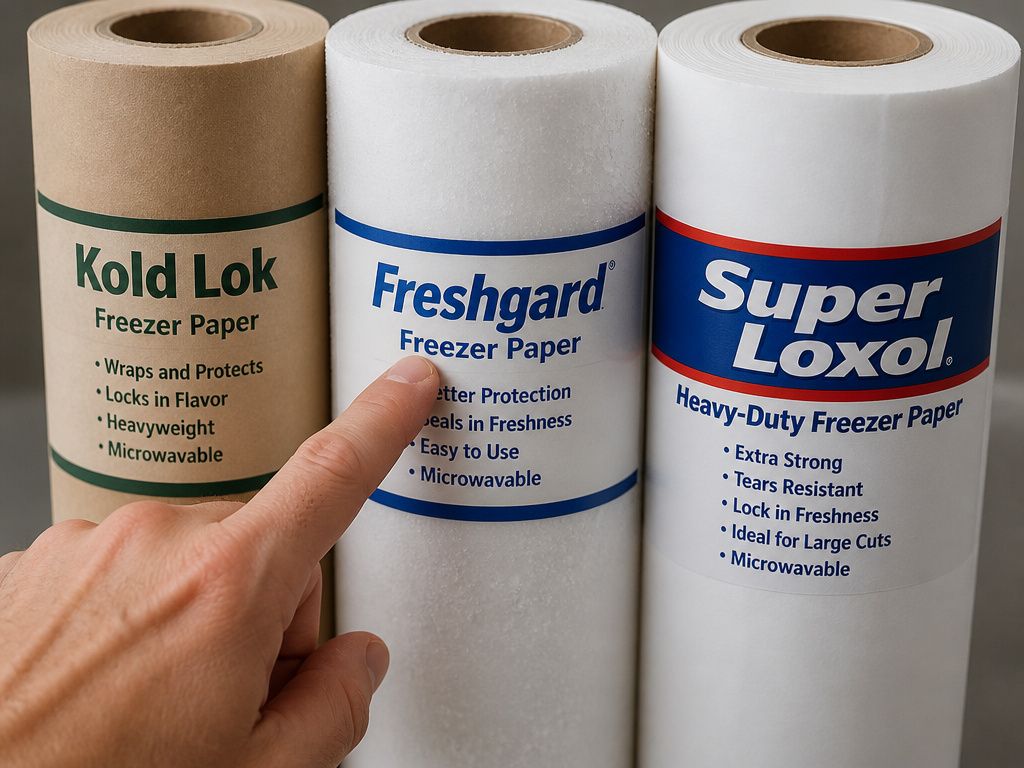 Not all freezer paper is the same. Manufacturers grade it by how long the polyethylene barrier can protect against moisture loss and oxidation. The timeline isn’t a guess, it’s a tested specification.
Graphic Packaging, a major producer, segments its product into three tiers with distinct names and performance windows. The difference comes down to the weight and formulation of the polyethylene coating.
| Grade Name | Protection Window | Typical Use Case | Polyethylene Coating Note |
|---|---|---|---|
| Kold Lok™ / Natural Kraft | 3–6 months | Home freezer storage, short-term meat wrapping | Standard LDPE laminate, 5 lb per 3m ft² |
| Freshgard™ | 6–9 months | Commercial deli, longer-term home storage | Heavier LDPE coating, enhanced barrier |
| Super Loxol™ | 12–15 months | Industrial meat packing, extended storage | Premium LDPE formulation, highest barrier |
For a home kitchen, Kold Lok or its generic equivalent is the default. It handles a 3–6 month freeze on cuts like steaks, chops, and ground meat. If you buy a half cow or hunt and need to store large quantities for most of a year, step up to Freshgard. Super Loxol is for professional contexts, a restaurant or processor storing product for a full year before sale.
Norpak’s Freezer Wrap offers a similar one-year protection window. It comes in two sheet weights: a 35 lb (57 GSM) and a 40 lb (65 GSM) bleached kraft, each laminated with 5 lb (8 GSM) of polyethylene.
Common mistake: Assuming all white rolls are the same. A generic “freezer paper” might only give you 2–3 months of real protection before ice crystals form. The grade printed on the commercial case matters.
Your butcher likely uses Freshgard or Super Loxol. That’s why meat from a professional counter often freezes better than what you wrap at home. They’re using a heavier-duty product.
What About Butcher Paper?
Butcher paper is a different category. It’s typically a plain, uncoated kraft paper, sometimes pink or white. It’s breathable, which is why it’s used for wrapping smoked meats, it lets smoke penetrate and moisture escape, preventing a soggy bark. It is not a moisture barrier.
Freezer paper vs butcher paper comes down to the plastic layer. Butcher paper has none. It will not protect against freezer burn. Some “peach paper” or pink butcher paper is coated with a light wax, but that’s for release, not for sealing. For the freezer, you need the laminated plastic of freezer paper. For the smoker, you want the breathability of butcher paper.
Roll and Sheet Specifications You’ll Actually See
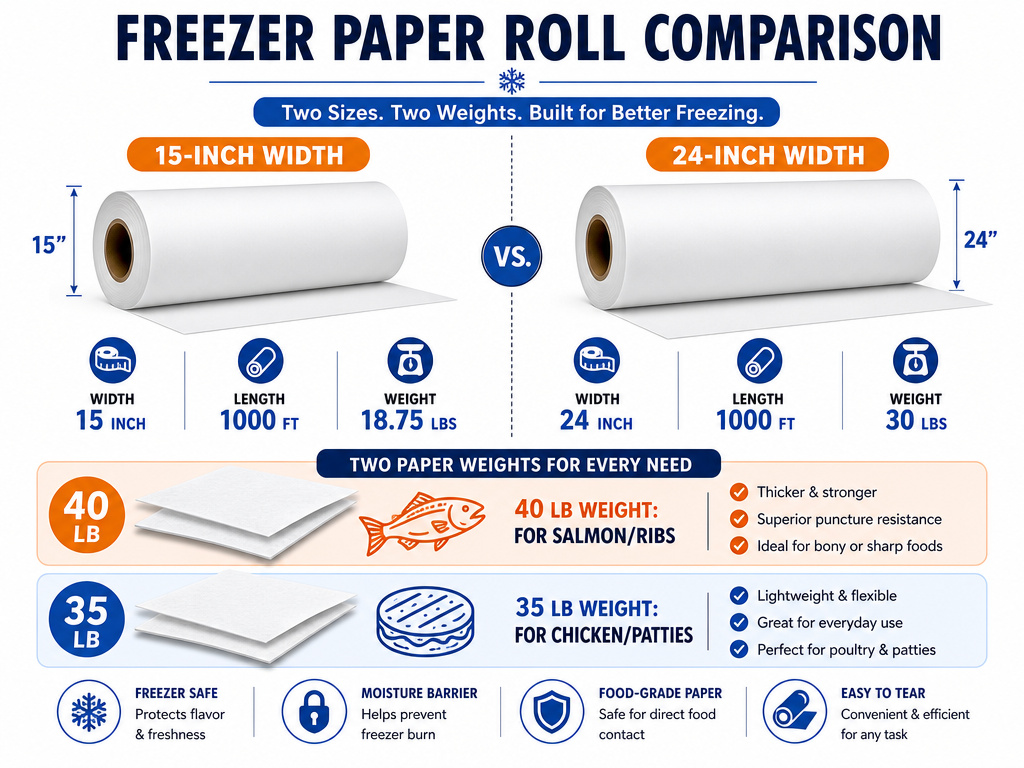 Freezer paper comes in rolls and pre-cut sheets. The roll dimensions tell you what you’re buying.
Graphic Packaging sells its Kold Lok line in 15”, 18”, and 24” wide rolls, each 1100 feet long. An 18” roll case weighs 24.3 lbs. A 24” roll case weighs 32 lbs. These are commercial sizes. For home use, you’ll find cut-down versions at grocery stores, often 15” wide and 50–100 feet long.
Norpak’s sheet products are common in food service. Their F1321 POLY sheets measure 13 by 21 inches, packed 50 lbs to a case. For rolls, they offer widths from 15” to 24”, all 1000 feet long. A 15” x 1000 ft roll weighs 18.75 lbs, while a 24” x 1000 ft roll weighs 30 lbs.
Why does the weight matter? Heavier paper (measured in pounds per ream or GSM, grams per square meter) is more tear-resistant. A 40 lb sheet can handle a whole salmon or a rack of ribs without puncturing. A lighter 35 lb sheet is fine for chicken breasts or burger patties. For home use, the standard grocery store roll is almost always a 35 lb equivalent.
Non-Food Uses You Probably Haven’t Considered
 The same properties that make it great for the freezer, a stable, plastic-coated sheet, make it useful elsewhere.
In textile arts and quilting, the dull paper side accepts printer ink. Crafters iron the shiny plastic side onto fabric, using the heat-activated adhesive quality of the polyethylene to temporarily stabilize the material for cutting precise shapes or for appliqué. The plastic peels off cleanly later.
Where this goes sideways: Using a plastic embroidery hoop with freezer-paper-stabilized fabric. The plastic-on-plastic surface is too slippery. A bamboo hoop grips better.
Libraries and archives use it in emergency conservation. When books get wet, the first step is to wrap them in freezer paper before freezing. The plastic barrier prevents the wet pages from sticking together, buying time for professional restoration. The CAMEO freezer paper entry from the Museum of Fine Arts Boston documents this use.
It’s also a decent painters’ masking paper. The plastic backing stops paint bleed-through better than plain paper. And because it’s FDA-compliant, it’s safe for craft projects with kids, no worry about chemical transfer if they put it in their mouths.
What Freezer Paper Is Not Meant For
Do not put it in the oven, toaster oven, or microwave. Polyethylene melts at between 115°C and 135°C. In a standard 180°C oven, it will melt, smoke, and could catch fire. The paper itself is flammable. This is the opposite of oven safety.
It’s also not a great long-term fridge wrap. The plastic barrier works best in the dry, cold environment of a freezer. In the fridge, where temperature fluctuations cause condensation, other wraps like plastic cling film or reusable containers often perform better.
And it’s not a replacement for parchment paper for baking. One is for cold, one is for heat. Confusing them ruins dinner.
How to Use Freezer Paper Correctly
Using freezer paper is straightforward, but there’s a technique to the seal.
- Cut a piece larger than your item. You need enough to fully envelope it with a 2–3 inch overhang on all sides.
- Place the food in the center of the dull side. The shiny plastic side should face the food.
- Wrap tightly. Pull the paper snug around the item, pressing the plastic against the surface to push out air pockets. Air is the enemy of freezer storage.
- Fold the seams. Overlap the edges and crease them down neatly, like wrapping a present. The goal is a flat, compact package.
- Seal with tape. Use packing tape or heavy-duty freezer tape. Masking tape and Scotch tape will fail in the cold.
For irregular shapes like a whole chicken or a roast, use the butcher’s wrap. This involves creating a tight, twisted seal at the ends to form a waterproof barrier. It takes practice, but it’s the gold standard for preventing freezer burn.
Label everything with a permanent marker on the dull side. Write the contents and the date. In six months, you won’t remember if that’s pork loin or beef brisket.
Frequently Asked Questions
Is freezer paper the same as wax paper?
No. Freezer paper has a polyethylene plastic coating laminated to kraft paper. Wax paper has a paraffin wax coating. The plastic in freezer paper creates a true moisture barrier for freezing; the wax on wax paper is brittle and permeable. Wax paper is for room-temperature tasks like lining trays.
Can you write on freezer paper?
Yes, on the dull paper side. Use a permanent marker. The shiny plastic side won’t hold ink well. This makes labeling frozen packages easy.
Is freezer paper compostable or recyclable?
Generally, no. The polyethylene plastic coating prevents both composting and standard paper recycling. The bonded materials can’t be separated at most recycling facilities. Check with your local waste management, but assume it goes in the trash.
How long does food last in freezer paper?
It depends on the grade. Standard home-use paper (like Kold Lok) protects for 3–6 months. Mid-grade (Freshgard) lasts 6–9 months. Premium commercial paper (Super Loxol) can protect for 12–15 months. These timelines assume a constant freezer temperature of -18°C or lower.
Can I use freezer paper in the oven?
Never. The polyethylene coating melts around 115–135°C, well below standard baking temperatures. It will smoke, burn, and could ignite. Use parchment paper for oven safety.
The Bottom Line
Freezer paper is a specific tool. Its job is to create a plastic-sealed, airtight environment for food in the deep freeze. It beats plastic bags for preventing freezer burn on irregular cuts because you can form a tight seal against the surface. It beats wax paper because the coating doesn’t crack in the cold.
For the home cook, a roll of standard 15-inch freezer paper covers 90 percent of needs. Use it for wrapping cuts of meat, fish fillets, or even blocks of cheese before placing them in a freezer bag for an extra layer of protection. Just remember the rule: shiny side in, label on the outside, and keep it far away from the oven.
