Counter Fruit Storage Guide: How to Avoid Cold Damage & Rot
This post contains affiliate links. As an Amazon Associate, we earn from qualifying purchases.
Store most fruit on the counter only if you plan to eat it within a week, and never refrigerate bananas, citrus, mangoes, melons, papayas, persimmons, pineapple, plantains, or pomegranates. Cold damage ruins their texture and stops ripening. The real work is sorting which fruits belong out for ripening, which are fine at room temperature, and which should go straight to the fridge.
That week-long limit isn’t arbitrary. It comes from a specific storage guideline for apples, but it applies as a useful ceiling for most countertop fruit. After seven days at room temperature, quality drops, moisture escapes, and bacterial risk inside the Danger Zone (40°–140°F) climbs. Counter storage is an active ripening phase for some fruits and the final destination for others.
What follows: the short list of fruits that live on the counter, the longer list of fruits that ripen there before the fridge, and the critical group you should never chill. We’ll cover ethylene gas mechanics, the tools that help (paper bags, vented bowls), and the exact signs that tell you it’s time to move things to the refrigerator.
Key Takeaways
- Never refrigerate bananas, citrus fruits, mangoes, melons, papayas, persimmons, pineapple, plantains, or pomegranates. Cold stops their ripening and turns flesh mealy.
- Use the 7-day rule for apples and as a general counter-storage limit before quality declines.
- Store unripe stone fruits (avocados, peaches, nectarines, kiwis, pears, plums) on the counter until they yield to gentle pressure, then refrigerate.
- Keep all counter fruit away from direct sunlight and heat sources like stoves to prevent accelerated spoilage.
- Separate ethylene-producing fruits (apples, avocados, bananas) from ethylene-sensitive vegetables (leafy greens, carrots, cucumbers) if stored in the same pantry area.
Which Fruits Can Stay on the Counter?
This list is shorter than most people think. Only a handful of fruits are true countertop residents, meant to be kept at room temperature from store to stomach. Others are just passing through on their way to ripeness.
The NDSU fruit selection and storage guide is clear: refrigeration can cause cold damage or prevent ripening for bananas, citrus fruits, mangoes, melons, papayas, persimmons, pineapple, plantains, and pomegranates. Chill these, and you’ll get a brown, mushy banana or a dry, flavorless pineapple. Their enzymes work within a specific temperature range; fridge air halts that process.
Common mistake: Putting a pineapple in the fridge to “keep it fresh.” Cold shock gives it a tough, woody core and kills its sweet aroma. Leave it on the counter until you cut it.
Citrus fruits like oranges, lemons, and grapefruits have thick, protective rinds. They’re designed for ambient storage. A cool, dark pantry corner is perfect. The same goes for whole watermelons and cantaloupes. Their shelf life at room temperature is measured in weeks, not days.
But what about apples? The rule here is specific and often missed.
The 7-Day Rule for Apples and Pears
If you plan to eat apples within a week, the counter is fine. The UTIA short-term produce storage guide notes that apples stored less than seven days can stay at room temperature. After that, the quality slide is measurable. They lose crispness and begin to wrinkle.
The clock starts from the day you buy them, not the day they were picked. For pears, the same logic applies: hard pears ripen on the counter; ripe pears go into the fridge if you need a few extra days.
| Fruit | Counter Life (Days) | When to Move to Fridge | Signs It’s Gone Too Far |
|---|---|---|---|
| Apples | Up to 7 | After 7 days for longer storage | Skin wrinkles, flesh feels soft |
| Pears | Until ripe (yields at stem) | Immediately once ripe | Bruised, mushy spots, fermented smell |
| Citrus (oranges, lemons) | 7-14 | Do not refrigerate | Rind feels light, spongy; dry inside |
| Bananas | Until ripe (speckled yellow) | Do not refrigerate; peel & freeze if overripe | Entirely brown, liquid seeping |
| Pineapple | 3-5 | Do not refrigerate until cut | Smells sour or fermented; eyes look sunken |
This table recognizes the transition from optimal to declining. A pear that yields at the stem is perfect.One that yields down the side is past its prime.
Fruits That Ripen on the Counter First
 This is the largest group. These fruits arrive at the grocery store hard and unripe for a reason: they ship better. Your counter is their finishing school.
Stone fruits like peaches, nectarines, plums, and apricots need room temperature to produce ethylene gas, the natural hormone that triggers softening and sweetness. So do avocados, kiwis, and mangoes (though mangoes ultimately shouldn’t be refrigerated). The Mississippi State storage tips PDF calls these “ethylene-producing fruits” and lists them explicitly.
The trick is knowing the precise moment of ripeness.
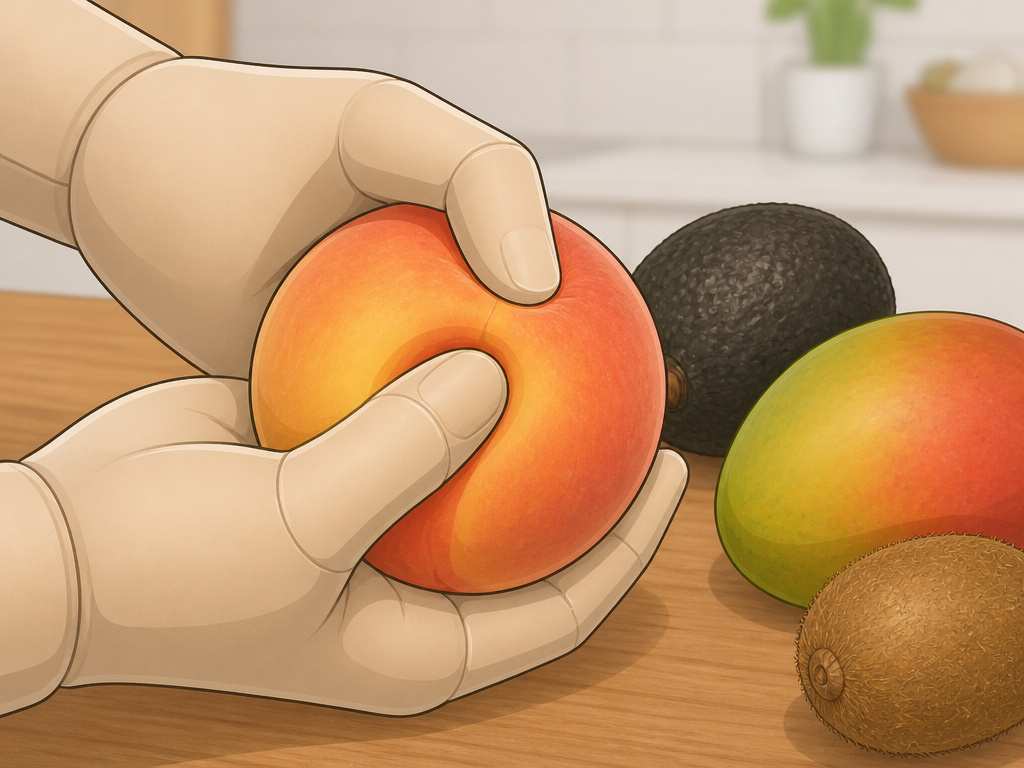
Hold the fruit in the palm of your hand and apply gentle pressure with your thumb. If it yields slightly, it’s ready. If it feels rock-hard, it needs another day. If your thumb sinks in, it’s overripe.
Once they hit that perfect give, you have a choice. Eat them that day, or slow down the process by moving them to the refrigerator’s crisper drawer. This extends their peak by two to four days. For avocados, this is the only way to avoid the twenty-minute window between rock-hard and brown mush.
Why this works: Ripening enzymes are temperature-sensitive. At room temperature, they work fast. In the cold fridge, they slow to a crawl. Moving fruit at peak ripeness to the cold is like hitting pause.
The Cold Damage List: Fruits You Should Never Refrigerate
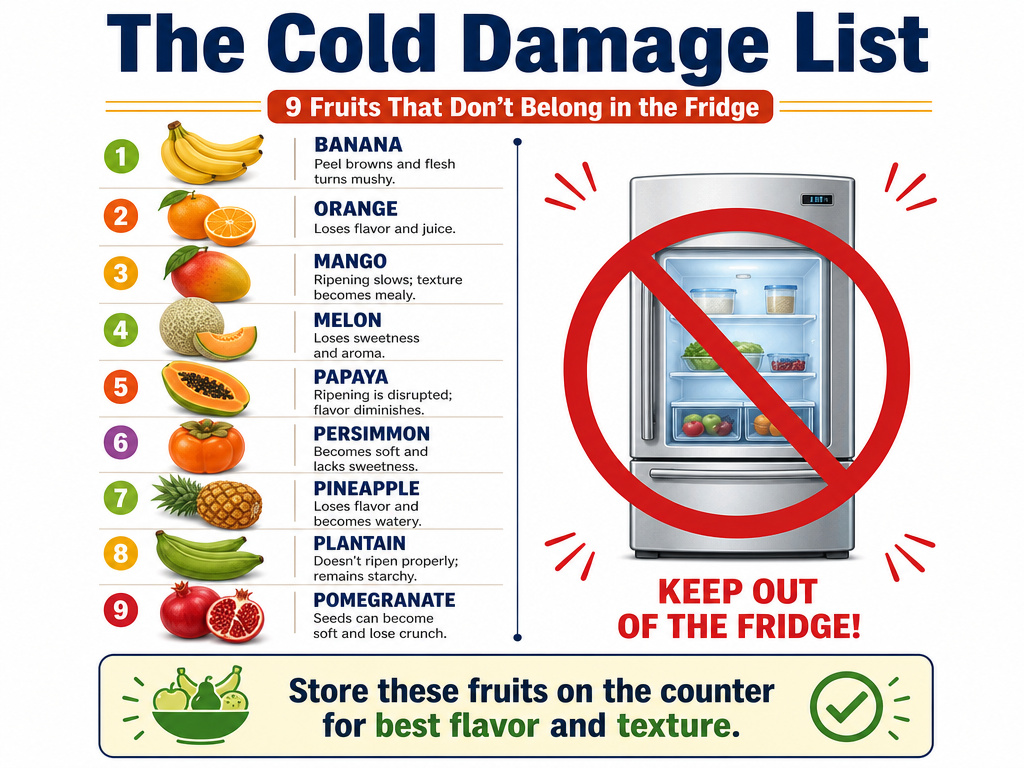 This is non-negotiable. Putting certain fruits in the refrigerator doesn’t just pause ripening; it actively damages their cellular structure. The result is a texture that’s either unpleasantly mealy or leathery tough, and flavor that never fully develops.
The list from extension sources is consistent: – Bananas – Citrus Fruits (oranges, grapefruit, lemons, limes) – Mangoes – Melons (whole cantaloupe, watermelon, honeydew) – Papayas – Persimmons – Pineapple – Plantains – Pomegranates
The OSU food storage for safety guide explains that cold injury disrupts the fruit’s metabolic processes. For tropical fruits like pineapple and mango, temperatures below 50°F can cause internal browning and a loss of juiciness. A banana’s peel will turn black in the fridge, and the flesh beneath turns to a sweet but mushy paste.
This is about eating quality. A pineapple stored on the counter for five days will be far sweeter and more aromatic than one shoved in the fridge on day one.
How Ethylene Gas Changes the Game
Ethylene is a natural plant hormone released as a gas by some fruits as they ripen. It’s a signal. “I’m ripening,” the apple says, and any nearby fruit that can hear the signal starts ripening too. This is great if you want to speed up a hard avocado. It’s terrible if you’ve left that apple next to your broccoli.
Where this goes sideways: Storing an apple in the same fruit bowl as your bell peppers. The ethylene from the apple accelerates softening and decay in the pepper, leading to a slimy mess days sooner.
The PNW612 storage safety publication notes that ethylene can cause most vegetables and some fruits to deteriorate quickly. This is why modern refrigerators have separate produce drawers for humidity control and to keep ethylene producers away from sensitive items.
| High Ethylene Producers | Ethylene-Sensitive Produce |
|---|---|
| Apples | Asparagus, Broccoli, Carrots |
| Avocados | Cucumbers, Leafy Greens |
| Bananas | Lettuce, Peppers, Potatoes |
| Peaches & Nectarines | Summer Squash, Watermelon |
| Pears |
If your kitchen layout mixes fruits and vegetables on open shelves or in a pantry, this table is your cheat sheet. Keep the two columns apart. Better yet, use the refrigerator’s separation if the sensitive item belongs in the cold.
Tools and Setups for Counter Storage
You don’t need special equipment. You need to avoid the common traps: plastic bags, direct sun, and crowded bowls.
A vented plastic bowl or a paper bag is the best tool for ripening. It traps just enough ethylene gas around the fruit to speed up the process without creating a humid, mold-friendly environment. A sealed plastic bag is a mistake. It leads to condensation, which leads to rot.
Keep your fruit bowl or ripening area away from the stove, oven, or a sunny window. Heat accelerates spoilage. The Oregon State food quality document states pantry temperatures should be below 85°F for quality storage. A sunlit countertop can easily exceed that.
What about those decorative ceramic fruit bowls? They’re fine, as long as they’re wide and shallow. Deep piles crush the fruit at the bottom, creating bruises that become mold sites within days. Rotate the fruit every couple of days if you have a large batch.
When to Move Fruit from Counter to Fridge
The decision point is ripeness, not the calendar. But for fruits that can handle refrigeration, there’s a clear sequence.
- Stone fruits (peaches, plums, nectarines): Move to fridge as soon as they yield to gentle pressure. This gives you a 3-5 day window to eat them.
- Avocados & Kiwis: Same rule. Ripe = refrigerate.
- Berries, cherries, grapes: Never ripen on the counter. These go directly into the fridge in their original ventilated container or a paper-towel-lined airtight container.
- Cut fruit: The rule is universal and critical. The University of California food safety guide states that once sliced, any fruit must be refrigerated within two hours. The exposed flesh is a direct path for bacteria.
The fridge is not a time machine. It won’t improve an under-ripe fruit, and it will ruin a ripe tropical one. Its job is to extend the peak of already-ripe, cold-tolerant fruit by a few precious days.
Frequently Asked Questions
Can you store apples on the counter?
Yes, but only for up to seven days. After that, they lose crispness and should be refrigerated to maintain quality for a longer period. If you buy a large bag, store only a week’s worth on the counter and put the rest in the fridge immediately.
How do you keep bananas fresh on the counter?
Keep them in a cool, dark spot away from other fruits if you want to slow ripening. To speed ripening, place them in a paper bag. Once they reach your preferred ripeness (speckled for eating, browner for baking), you can peel and freeze them for later use. Never put unpeeled bananas in the refrigerator.
What is the best way to store tomatoes?
The best way to store tomatoes is on the counter, stem-side up, until fully ripe. Refrigeration makes them mealy and dulls their flavor. Once cut, they must be refrigerated. For long-term storage of ripe tomatoes, a cool pantry around 55°F is better than a cold fridge.
Should you store onions and potatoes with fruit?
No. Keep your onion storage and potato storage areas completely separate from your fruit bowl. Potatoes and onions prefer cool, dark, dry places like a pantry or cellar. The ethylene gas from fruit can cause potatoes to sprout prematurely and onions to soften.
How long can you leave cut fruit on the counter?
Never longer than two hours. Cut fruit enters the Danger Zone (40°–140°F) for bacterial growth. After two hours at room temperature, it should be discarded for safety. Always refrigerate cut fruit in an airtight container.
Before You Go
Counter storage is a temporary stage, not a long-term solution. Its two jobs are finishing the ripening of stone fruit and providing short-term access to ready-to-eat staples like citrus and bananas. Remember the short list of fruits that never belong in the cold, and respect the two-hour rule for anything you’ve cut. Organize your space to keep ethylene producers away from your vegetables, and use the fridge as the final stop for ripe, cold-tolerant fruit. This way, you get the best texture and flavor from every piece.
