How to Stock a Pantry: The Real Shelf Life Labels Hide
This post contains affiliate links. As an Amazon Associate, we earn from qualifying purchases.
Stocking a pantry means buying foods that last under your specific storage conditions. The goal isn’t just a full shelf; it’s a shelf of ingredients that stay usable for months. That requires matching your purchases to your pantry’s temperature, humidity, and your own cooking habits.
Most guides tell you what to buy. They skip the part about what happens after you buy it. A bag of flour goes rancid in six months if your pantry sits next to the hot water heater. Canned tomatoes last 18 months at 70°F, but only half that time if your cupboard hits 85°F on summer afternoons. The difference is printed in university extension bulletins that most home cooks never see.
What follows: the three environmental specs that matter more than any shopping list, the real shelf-life numbers from agricultural schools, and the container strategy that actually keeps bugs out. This turns a generic “stock up” list into a system that cuts your food waste by the next grocery cycle.
Key Takeaways
- Your pantry’s temperature is the single biggest factor in shelf life. Aim for 50–70°F; every 10°F above 70°F can cut a product’s life in half.
- Highly acidic canned goods (tomatoes, fruit) last 12–18 months. Low-acid canned goods (meats, vegetables) can last 2–5 years, but only if the can is undamaged and stored cool.
- Dry goods like flour, rice, and pasta need airtight, rigid containers—not the bags they come in—to block moisture, odors, and insect larvae already present in some commercial packaging.
- Practice FIFO (First In, First Out) and label every container with the purchase or opening date. Your memory is not a reliable food safety system.
- Build your stock around core meal anchors you actually cook weekly, not aspirational ingredients that will sit untouched for a year.
What Are the Basic Pantry Staples?
Forget the 100-item master lists. A functional pantry supports the meals you make most. Start with categories that form the backbone of those dishes: a cooking fat, an allium, a starch, a protein, and a seasoning agent.
Common mistake: Buying bulk grains without a plan for their use. A 25-pound bag of brown rice has a one-year shelf life at best. If you only use two cups a month, you’ll face rancidity or bugs before you’re halfway through.
Your first shopping trip should cover these five categories with one or two versatile items each. This isn’t about prepping for the apocalypse; it’s about ensuring you can always make a simple meal.
| Category | Versatile Starter Picks | Why They Work |
|---|---|---|
| Cooking Fat | Vegetable oil, olive oil | High smoke point for sautéing; olive oil for dressings. |
| Allium | Yellow onions, garlic powder | Onions last 1-3 months in a cool, dark spot; garlic powder is a shelf-stable flavor anchor. |
| Starch | Long-grain white rice, dried pasta | White rice lasts 2 years; dried pasta lasts 1-2 years. Both cook quickly and absorb other flavors. |
| Protein | Canned beans, canned tuna | Ready to eat, no refrigeration needed until opened. Canned beans last 2-5 years. |
| Seasoning | Kosher salt, black peppercorns, dried oregano | Salt and whole peppercorns last indefinitely; dried herbs keep flavor for about a year. |
From this core, you can build out. Add canned tomatoes for sauces, flour for baking or thickening, and sugar for both sweet and savory applications. The Kansas State University Safe Food Storage PDF provides a detailed chart on how long these staples last at 70°F—use it as your buying guide.
The 50-70°F Rule That Doubles Shelf Life
Temperature is the throttle on your food’s chemical clock. The University of Georgia Extension and other experts consistently cite 50 to 70°F as the ideal pantry range.Storing food above 100°F, like in a cupboard next to an oven, can lower quality “considerably.”
A pantry temperature between 50°F and 70°F maintains the best possible quality of dry and canned goods for the longest amount of time. Storing foods near ovens, furnaces, water heaters, or hot pipes hastens nutrient loss and causes undesirable changes in color, texture, and flavor.
The mechanism is simple: heat accelerates chemical reactions. Oils oxidize and turn rancid. Enzymes in flour break down starches faster. Even canned goods, while safe from bacteria, suffer texture and flavor loss. For every 10°F above 70°F, expect shelf life to drop by half.
Your first stocking task is auditing. Buy a simple thermometer and leave it in your pantry for 24 hours.If it reads above 75°F, you have two choices: relocate your pantry stock to a cooler closet or basement, or drastically shorten the “best by” dates on every item you buy. This one reading changes everything you put on the shelf.
How Long Does Pantry Food Really Last?
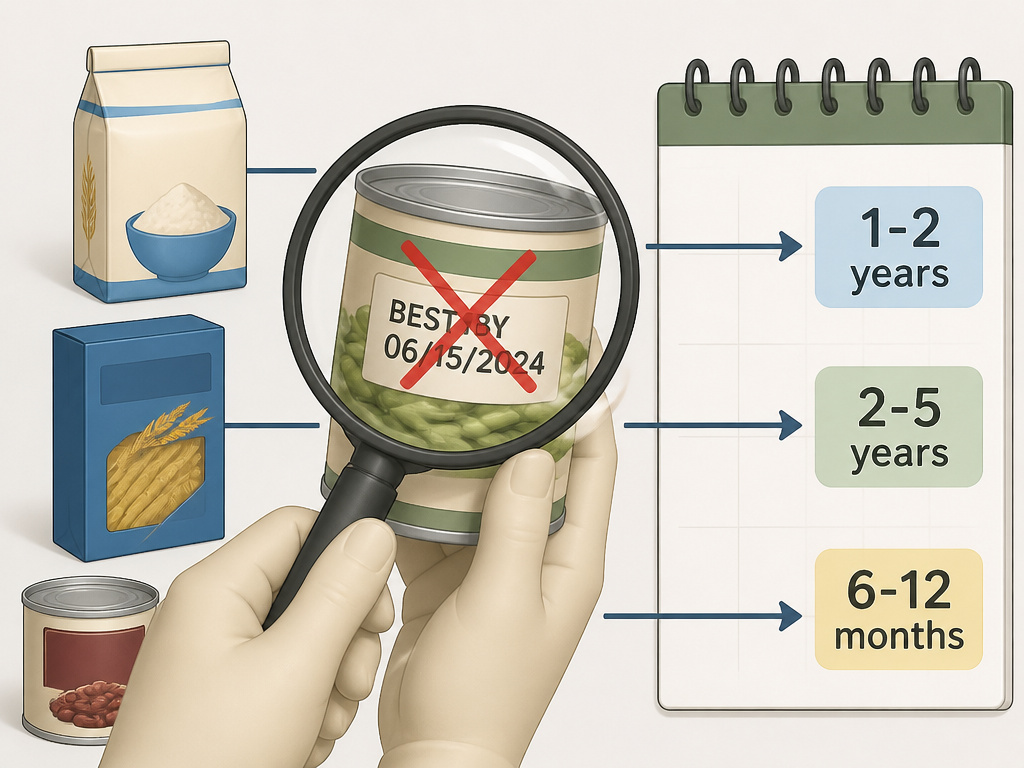 Your labels lie. “Best by,” “Use by,” and “Sell by” dates are about quality, not safety. For shelf-stable food, real longevity comes from the food type itself and the storage conditions you provide.
Here’s the data from the sources most home cooks miss. The Clemson Home & Garden Information Center pantry guide provides clear timelines. Let’s translate them into buying decisions.
Canned Goods: Your Long-Term Anchors
- High-Acid Foods (Tomatoes, Fruit, Pickles): 12–18 months. The acid slowly reacts with the can lining over years, which can eventually affect taste.
- Low-Acid Foods (Vegetables, Meats, Beans): 2–5 years. These are your bulk-buy winners. Always inspect cans for dents, rust, or bulging before stocking.
Dry Goods: The Clock Starts at Purchase
- White Rice & Pasta: 1–2 years.
- Brown Rice, Whole-Wheat Flour, Nuts: 6–12 months. Their natural oils go rancid.
- Dried Beans & Lentils: 1 year+.
- All-Purpose Flour: 6–8 months.
- Granulated Sugar, Salt: Indefinitely if kept dry.
Where this goes sideways: Assuming an unopened package is sealed. Weevils and moth larvae can be inside commercial flour, rice, or cereal boxes when you buy them. Freezing new dry goods for 72 hours before pantry storage kills any eggs. Skip this, and you’ll see webs in your flour within a month.
The Academy of Nutrition and Dietetics safety tips stress that once you open any dry good, the clock resets. Transfer the contents to an airtight container immediately. Opened flour or cereal lasts only 2–3 months at room temperature before stale flavors set in.
The Container Hierarchy: Glass, Metal, Then Plastic
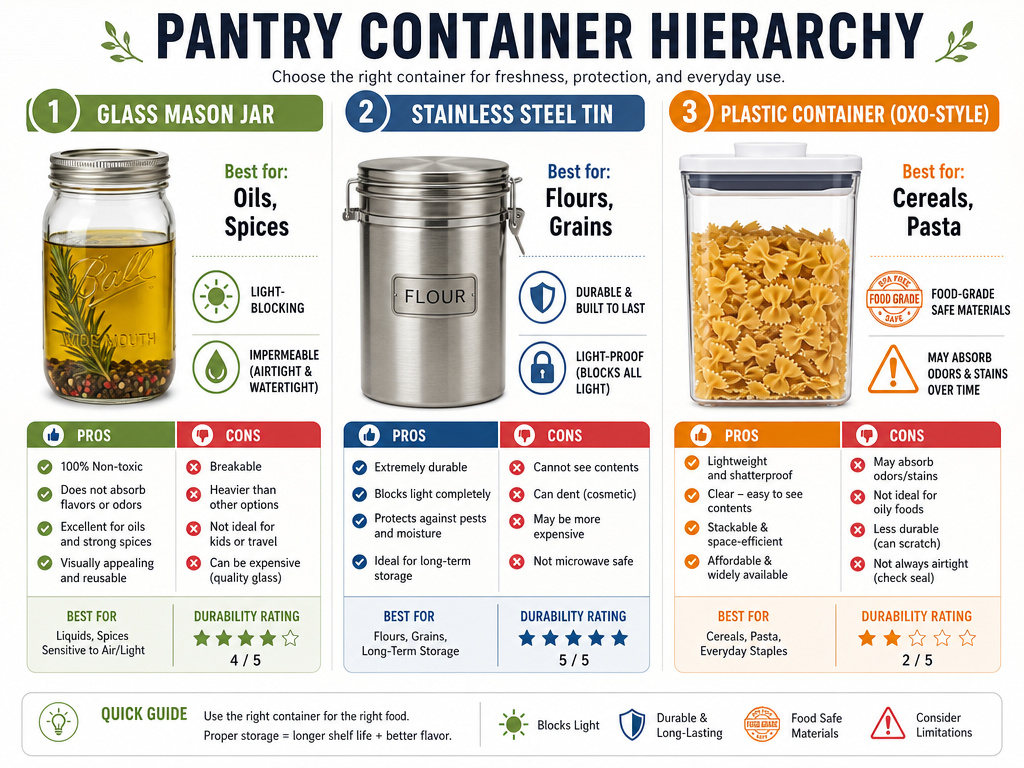 Airtight is the baseline. The material of your storage containers decides what else it blocks: light, odors, and fat molecules.
- Glass (e.g., Mason Jars, IKEA Korken): Impermeable to everything. Blocks light if opaque. Ideal for oils, spices, and anything you want to see. Heavy, and breakable.
- Metal (e.g., Stainless Steel Tins): Impermeable, light-proof, and durable. Best for flours, grains, and coffee. Prevents rancidity better than plastic.
- Food-Grade Plastic (e.g., OXO Pop Containers): Lightweight and clear. Must be stamped “food-grade” to avoid chemical leaching. Good for cereals, pasta, and sugar. Over time, plastics can absorb colors and odors (think chili powder or curry).
Your choice depends on the enemy. For rice and flour, the enemy is the Indian meal moth, whose larvae can chew through plastic bags and thin plastic containers. A glass jar or thick plastic bin with a locking gasket seals them out. For nuts and whole-grain flours, the enemy is oxygen and light, which turn oils rancid. An opaque metal tin wins.
I won’t use clear plastic for my whole-grain flour anymore. After six months in a sunny pantry, the flour developed a faint crayon smell. Now it’s all in labeled metal canisters in the back of a dark cupboard. The difference is a year of shelf life versus six months.
Label every container with the item and the date you stored it. A dry-erase marker on the lid or a simple masking-tape tag works. This non-negotiable step enables the FIFO system.
A Realistic Stocking Strategy, Room by Room
Your pantry might be a closet, a set of shelves, or a few kitchen cabinets. The strategy scales, but the priorities shift.
For a Dedicated Pantry Closet:
Use vertical space with sturdy pantry shelves. Group items by category (baking, canned goods, grains) and keep the most frequently used items at eye level. This is where you can stock bulk buys confidently, assuming temperature is controlled.
For a Small Pantry or Cabinet:
This is about density, not volume. The goal for a small pantry is to see everything you have. Use slim, uniform containers that fit tightly on shelves. Prioritize the staples you use weekly and buy smaller packages more often to avoid overcrowding and forgotten items.
For Kitchen Cupboard Storage:
You’re likely working with higher temperatures here. Reserve these prime spots for cooking oils, spices, and canned goods you’ll use within the year. Never store flour, rice, or nuts here if the kitchen gets warm. Transfer them to a cooler, darker spot after opening.
No matter the space, the rule is the same: group by category, label everything, and put new purchases behind old ones. This visual pantry organization forces you to use the oldest product first.
Your First Pantry Stocking Shopping List
Take this list, adjust quantities based on your household size, and stick to the categories. This builds the foundation without overbuying.
Canned & Jarred:
- 2 cans diced tomatoes
- 2 cans beans (black, kidney, or chickpeas)
- 1 jar pasta sauce
- 1 can tuna or chicken
- 1 small jar of peanut butter
Dry Goods:
- 1 lb dried pasta
- 2 lbs white rice
- 1 lb all-purpose flour
- 1 lb granulated sugar
- 1 container old-fashioned oats
Oils & Seasonings:
- 1 bottle vegetable or canola oil
- 1 bottle olive oil
- 1 box kosher salt
- 1 container black peppercorns
- 2-3 dried herbs (oregano, basil, chili flakes)
Alliums & Such:
- 3-5 yellow onions
- 1 head of garlic
After this trip, your next focus is proper storage for canned food, learning how to store flour in its new container, and techniques to store rice to prevent bugs. These are the next-layer skills that protect your investment.
Frequently Asked Questions
What is the most forgotten pantry staple?
Vinegar. White distilled vinegar lasts indefinitely and is a cleaning agent, pickle brine, and flavor brightener. Apple cider vinegar has a similar shelf life. A bottle tucked in the back will still be good years later when you need it.
How do I prevent bugs in my new pantry stock?
Prevention starts at the store. Inspect packages for tiny holes or webbing. At home, freeze new grains, flours, and cereals for 72 hours to kill any insect eggs. Then, immediately transfer them into airtight glass or metal containers. Keep the pantry clean of crumbs. For active infestations, our guide on pantry pests details the cleanup steps.
Can I store potatoes and onions in the pantry?
You can, but not together. Onions release gases that cause potatoes to sprout and rot faster. Store onions in a cool, dark, well-ventilated basket. Store potatoes in a separate, slightly cooler (45-50°F), dark place like a basement if possible. At room temperature, both last only 1-3 months.
Is it worth buying a dedicated pantry shelving system?
Only if your pantry is deep or awkwardly shaped. For most standard closets, adjustable wire shelving from a hardware store is sufficient. The system isn’t as important as the containers on it and the rotation habit you maintain.
How often should I audit my pantry?
Do a quick visual check monthly when you’re putting away groceries. Do a full audit every 3-4 months. Pull everything out, check dates, inspect for pests, wipe down shelves, and reorganize using FIFO. This twenty-minute task prevents ninety-dollar waste.
The Bottom Line
Stocking a pantry is a system built on knowing your storage climate, choosing foods with known longevity, and using containers that defend against time, air, and pests. Start with the core staples that match your actual cooking, use university extension data as your shelf-life guide, and label everything with the date.
The well-stocked pantry is the one where every item has a known expiration and a planned use. That’s how you turn stockpiling into saving—money, time, and food.
