Learn How to Store Potatoes for Maximum Freshness and No Sprouts
This post contains affiliate links. As an Amazon Associate, we earn from qualifying purchases.
Store potatoes in a cool, dark, well-ventilated space between 45°F and and 50°F, but only after a mandatory two-week curing period at 50-55°F with humidity above 95%. Skipping curing leaves wounds unsealed, invites rot, and halves your storage window. The real game is managing the air around them, a temperature swing of more than 0.5°F per day or introducing air that’s more than 4°C warmer than the tubers triggers condensation, which is where storage rot begins.
That gap between curing and holding temperature is where most home storage fails. You can’t just toss them in a cool basement and expect them to last. The skin needs to transform from a permeable membrane into a sealed barrier, and that only happens under specific, warm, humid conditions the final storage spot can’t provide.
What follows: the exact two-week curing protocol from university extensions, the physics of condensation that turns a dry bin into a mold farm, how to spot and isolate problem tubers before they spoil the lot, and the one warming step commercial packers never skip that keeps potatoes from bruising on their way to your table.
Key Takeaways
- Cure first, store second. A strict 10-14 days at 50-55°F with 95%+ humidity seals cuts and matures the skin. Storing immediately at 45°F stops this process cold.
- Condensation is the enemy. It happens when air warmer than the potatoes hits them. Keep store air within 4°C (about 7°F) of the tuber temperature to prevent wet surfaces and rot.
- Not all potatoes store the same. Starchy russets for baking need cooler temps (38-45°F) for fresh market, while chipping potatoes stay warmer (50-55°F) to avoid cold sweetening.
- Warm before you handle. If potatoes are stored below 50°F, bring them to 50°F for a day or two before moving them. Cold tubers bruise like apples.
- Isolate the wounded. Potatoes with cuts, scabs, or signs of disease should be cured separately and used first. A 2% rot rate in a bin means don’t store it at all.
The Non-Negotiable First Step: Curing
Most guides tell you to find a cool, dark place. They skip the part that comes before. A potato fresh from the ground is actively respiring, covered in microscopic wounds, and wearing a skin that’s still gas-permeable. Putting it straight into cold storage is like sending a soldier into battle without a helmet.
The University of Maine potato storage guide calls for 50 to 55 degrees Fahrenheit with 95-100% relative humidity for two weeks. This isn’t a suggestion; it’s the biological requirement for suberization. Under those conditions, cells around any cut or bruise multiply and deposit a corky layer called suberin. The skin itself thickens and matures, switching from a net that loses moisture to a barrier that retains it.
Technical Snapshot: Curing is a wound-healing and skin-maturation process triggered by warm (50–55°F), humid (>95% RH) conditions. It forms a suberin layer over injuries and reduces weight loss during subsequent storage by over 70% compared to uncured tubers. The process is complete in 10–14 days under ideal airflow.
If your humidity is too low, the tubers lose weight instead of healing. If the temperature is too high, you encourage sprouting; too low, and the process stalls. A basement corner with a humidifier and a thermometer gets you there. A cardboard box with a damp cloth draped loosely over the top can work for a small batch. The goal is stagnant, moist air around the potatoes, not a direct spray.
This principle is why the best potato storage methods used by farmers always allocate space and time for curing before the long chill. It’s the single most effective thing you can do to prevent storage rot.
Getting the Temperature Right: It’s Not One Setting
After curing, you lower the temperature. The keyword is lower, not crash. The UC IPM potato storage guidelines advise reducing temperature by no more than 0.5°F per day until you reach the holding temperature. A sudden drop causes stress, internal bruising, and again, invites condensation.
Your target holding temperature isn’t a single number. It depends on what you’re storing for.
| Potato Type & Use | Ideal Holding Temperature | Why This Range |
|---|---|---|
| Fresh Market (Baking/Eating) | 38°F to 45°F | Maximizes shelf life, minimizes sprouting. |
| Seed Potatoes | 37°F to 40°F | Prevents sprouting until planting season, maintains viability. |
| Chipping Potatoes | 50°F to 55°F | Prevents “cold sweetening” where starches convert to sugars, causing burnt chips. |
| French Fry Potatoes | 45°F to 50°F | Balances shelf life with the need to avoid excess sugars for frying. |
For most home gardeners storing a mixed harvest, a compromise of 45°F is safe. It slows sprouting on table stock and is cool enough for most processing types, provided you use them within a few months. Starchy potatoes like Russets for baking prefer the cooler end of the fresh market range. If you’re specifically growing a variety for chips, you’ll need to keep them warmer.
This table highlights a critical gap in commodity advice: the one-size-fits-all “cool, dark place.” Knowing your potato’s final use changes how you store it. The same logic applies when you’re looking at methods for preserving potatoes, canning demands a different pre-treatment than freezing, which is different from root cellaring.
Managing Humidity and Condensation: The Invisible War
Potatoes are over 70% water. The air around them wants to balance out. This physics is where storage goes sideways more often than not.
The ideal relative humidity in the storage space is 85-95%. This high level keeps the tubers from shriveling. But humid air is a loaded gun. If that air cools down suddenly, like when it touches a potato that’s colder than the air, the air can’t hold all that moisture anymore. The water drops out. Onto the potato.
That’s condensation.
Where this goes sideways: Letting warm, humid outdoor air into a cool storage bin. The air hits the cold potatoes, drops its moisture on them, and you’ve just created a wet surface where rot spores germinate. The problem shows as dark, sunken lesions within a week.
The UC Agriculture potato storage page warns directly about introducing warm supply air to cold tubers. The fix is to manage air exchange carefully. Only ventilate when the outside air temperature is within ±4°C (about 7°F) of the potato temperature. If your potatoes are at 45°F (7°C), don’t bring in air that’s above 54°F (12°C) or below 40°F (4°C).
In a home setup, this means your storage area needs to be buffered. An uninsulated garage that swings from 30°F at night to 65°F on a sunny day is a condensation factory. A basement corner, an insulated shed, or a dedicated root cellar provides that stable environment. This stability is a core principle of general food storage for all produce, not just potatoes.
The Tools and Setup You Actually Need
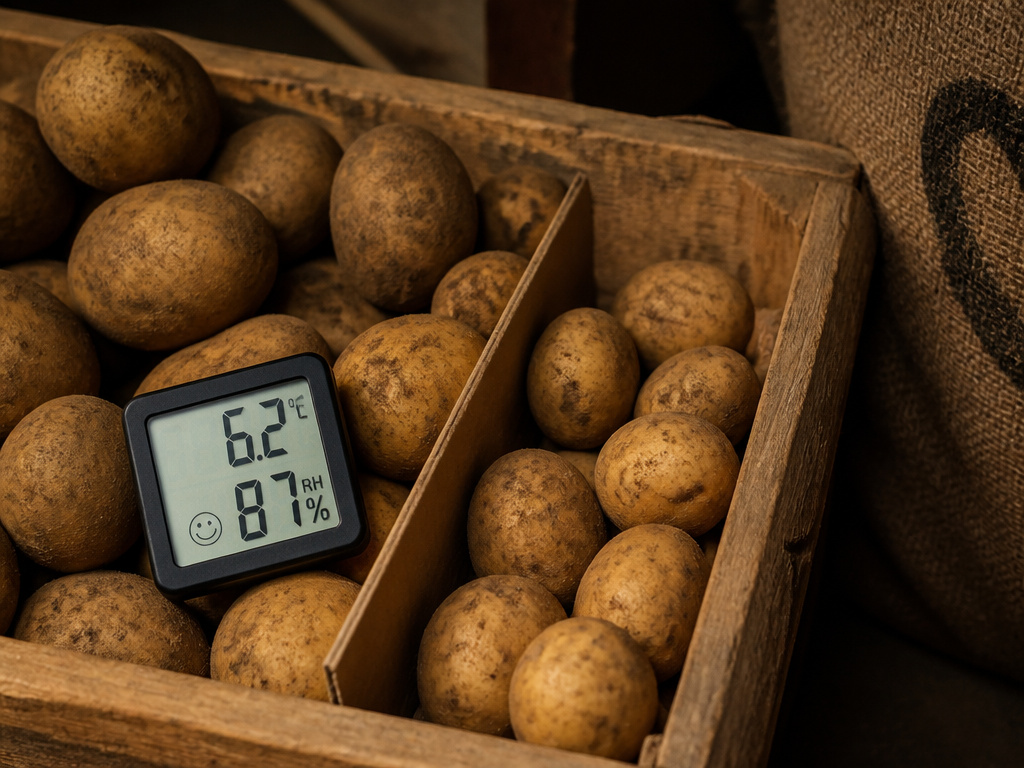
You don’t need a commercial bulk bin. You need to replicate its functions: darkness, steady temperature, high humidity, and breathability.
- Containers: Use breathable containers. Wooden crates, cardboard boxes, or burlap sacks. Never plastic bags or airtight totes, they trap respiratory moisture and cause condensation inside the container. Woven baskets work for small amounts.
- Insulation: Your storage space needs thermal mass to buffer temperature swings. Concrete walls, earth banks, or even stacks of water jugs can act as a buffer. An old refrigerator (unplugged, with a jar of water inside) can be a micro-cellar.
- Monitoring: A simple digital hygrometer/thermometer is non-negotiable. Place it at potato level, not on a wall. Sensor accuracy matters; you need to trust a difference of half a degree.
- Separation: Use dividers or multiple small containers. This lets you isolate a problem batch without dumping the entire harvest. It also improves air circulation around each tuber.
The goal is to create a microclimate that changes slowly. If you’re also managing a crop of root vegetable storage like carrots or beets, many of these same principles apply, cool, humid, and dark, though their ideal temperatures may differ slightly.
What to Do With Problem Potatoes
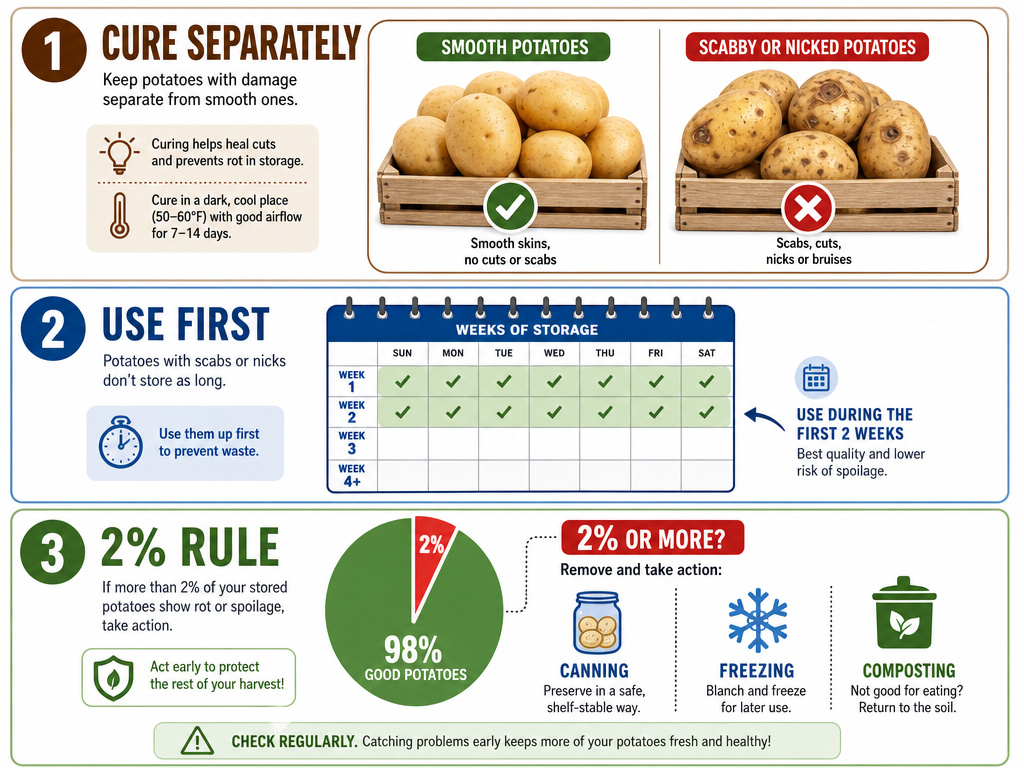
Not every potato comes out of the ground perfect. Some have scabs, some got nicked by the shovel, some might have early blight. The protocol for these is different.
- Cure them separately. Don’t mix wounded or diseased tubers with your clean, long-term storage stock. Cure them in their own box.
- Use them first. These potatoes have a compromised shelf life. Plan to eat them within weeks, not months.
- Know the 2% rule. If more than 2% of a batch shows active rot, don’t store it. The Michigan Fresh potato preservation guide is clear on this: it’s a salvage operation. Process them immediately for canning or freezing, or compost them.
For potatoes with minor damage, the curing process is even more critical. It’s their only chance to seal those wounds. This triage approach is a key part of advanced home potato storage, turning a potentially lost harvest into usable food.
Potatoes vs. Other Root Crops: A Storage Comparison
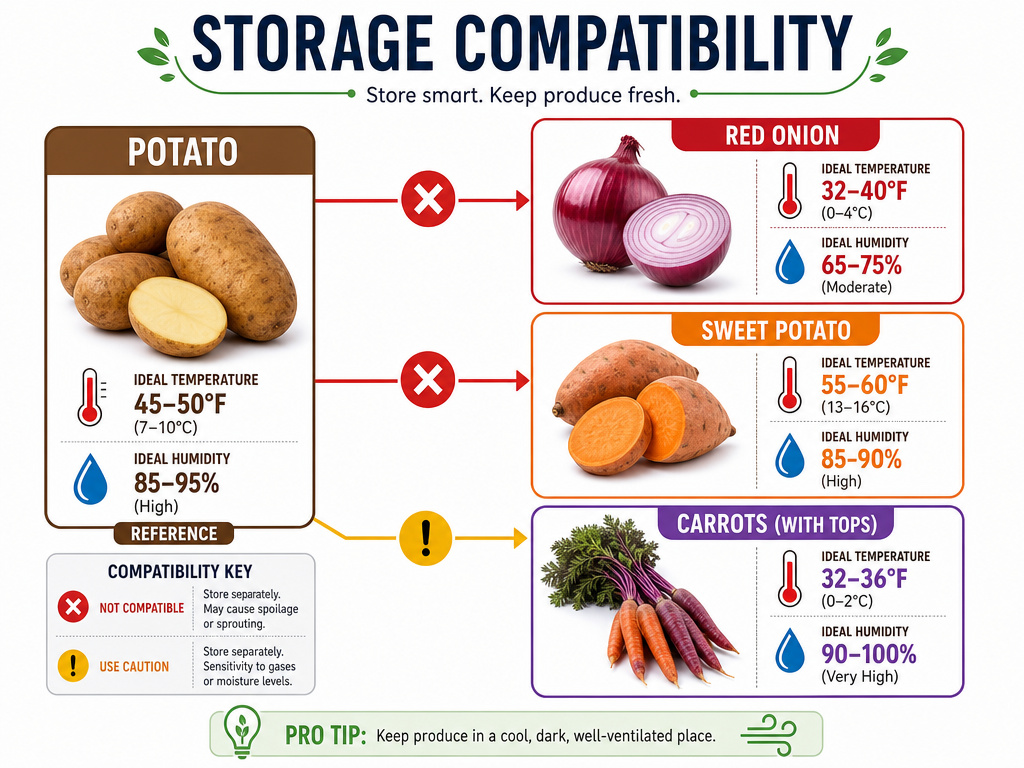
Potatoes aren’t solitary. They often share a storage space with onions, garlic, or sweet potatoes. This is a mistake waiting to happen.
| Crop | Ideal Temp | Ideal Humidity | Can store with Potatoes? | Reason |
|---|---|---|---|---|
| Potatoes | 45-50°F | 85-95% | — | Baseline for comparison. |
| Onions/Garlic | 32-40°F | 65-70% | No | Need cooler, drier air. Onions release gases that encourage potato sprouting. |
| Sweet Potatoes | 55-60°F | 85-90% | No | Need warmer temps. Cold damage below 50°F causes spoilage. |
| Carrots/Beets | 32-40°F | 90-95% | Maybe (same temp, diff bin) | Tolerate colder, like similar humidity, but keep physically separate. |
The table shows why the common advice to store onions and potatoes together is flawed. They require opposing humidity levels. The ethylene gas from onions accelerates potato sprouting. Keep them in separate, well-ventilated containers within the same cool space if you must, but never mixed. For dedicated guides, see best storage for potatoes and onions and how to store sweet potatoes long-term.
The Commercial Secret: Warming Before Removal
Here’s a step almost no home storage guide mentions, but every commercial packer does. If your potatoes have been stored at the recommended low temperatures for fresh market (38-45°F), you can’t just pull them out and start bagging them.
They need to be warmed.
The integrated pest management for stored potatoes from UC explicitly states: if holding temperatures were below 50°F, warm tubers to 50°F before removal from storage to reduce bruising. A cold potato is brittle. Its cell structure is rigid. Bumping it against another tuber or the side of a bin causes internal black spots that show up days later.
At home, this means if you’re taking a bag of potatoes from your 40°F cellar to a 68°F kitchen for use, don’t handle them roughly right away. Let the bag sit for a day in a cool spot (like a mudroom) to gradually come up closer to 50°F. That slight warming restores some flexibility and can save you from a batch of bruised, unappealing spuds.
Frequently Asked Questions
Can you store potatoes in the refrigerator?
No. Temperatures below 40°F cause a process called cold sweetening, where starches convert to sugars. This leads to overly sweet potatoes, and they will brown excessively and burn when fried. The only exception is if you plan to use them within a week and don’t mind the taste change.
How long do cured potatoes last in storage?
Under ideal conditions (45-50°F, 90-95% RH, dark, ventilated), properly cured mature potatoes can last 4 to 6 months. Early or “new” potatoes, which have thinner skins, last only 1 to 2 months even when cured. The countdown starts after the curing period ends.
Should you wash potatoes before storing them?
Never. Washing removes the protective natural coating and introduces free moisture, creating a direct path for rot organisms. Brush off loose, dry dirt after curing, but only wash potatoes immediately before you’re ready to cook them. This is a key rule for keeping potatoes from spoiling.
What causes potatoes to turn green, and are they safe?
Green skin is caused by exposure to light, which triggers chlorophyll and solanine production. Solanine is a toxin that can cause illness. Cut away all green parts thoroughly before cooking. The rest of the potato is safe. This is why the “dark” part of “cool, dark place” is non-negotiable.
Can you store cut potatoes?
For short-term storage of a day or two, submerge cut potatoes in cold water in the refrigerator. For long-term storage, cut potatoes must be processed, preserving potatoes by canning, freezing, or dehydrating. Raw cut potatoes will oxidize and deteriorate quickly.
What’s the best way to store a small amount of potatoes from the grocery store?
Remove them from the plastic produce bag immediately. Place them in a brown paper bag or a ventilated basket. Store in the darkest, coolest spot in your kitchen (often a bottom cabinet away from the oven). A cupboard that stays around 50-60°F is ideal for a 2-3 week supply.
The Bottom Line
Storing potatoes isn’t about finding a spot and forgetting them. It’s a two-phase active process: a warm, humid cure followed by a steady, cool hold. The difference between potatoes that last until spring and a bag of mushy sprouts comes down to managing the air, its temperature, its humidity, and its movement.
Skip the cure, and the rot sets in early. Ignore condensation physics, and you’re watering your own mold farm. Mix them with onions, and you’re asking for early sprouts. But follow the sequence, cure at 55°F, cool slowly to your target, monitor humidity, and warm before handling, and you’ll pull firm, usable potatoes from storage months later. It turns a humble harvest into a reliable pantry staple.
