The Best Way to Store Bananas to Avoid Fruit Flies at Home
This post contains affiliate links. As an Amazon Associate, we earn from qualifying purchases.
To store bananas and avoid fruit flies, you need to intercept the cycle before it starts in your kitchen. Wash the entire bunch under cool running water for 30 seconds immediately upon arriving home, focusing on scrubbing the stem area to dislodge any eggs. Then, store the dried bananas in a cool, dark spot, separated by at least 8-12 inches from other ethylene-producing fruits, and consider refrigerating them once they reach your preferred ripeness.
That 30-second rinse is the single most effective interruption you can make. Fruit flies don’t magically appear; they hatch from eggs laid on the fruit’s surface, often in the crevices of the stem, while the bananas are in transit or at the store. Bringing them inside without washing is an invitation.
What follows is the full breakdown: why that wash works, the exact storage specs that slow ripening (and fly attraction), and what to do when you already have a swarm. This isn’t about chasing flies with vinegar traps. It’s about never giving them a reason to show up in the first place.
Key Takeaways
- Wash bananas for 30 seconds under cool running water as soon as you get home, scrubbing the stem area. This removes fruit fly eggs and surface contaminants.
- Store bananas 8-12 inches away from other ethylene-producing fruits (apples, tomatoes, avocados) to prevent accelerated ripening, which attracts flies faster.
- Refrigerate bananas only once they are fully ripe. The cold halts ripening and fly activity, though the peel will darken.
- Use plastic wrap tightly around the stem of each banana to trap ethylene gas and slow the ripening process by several days.
- If fruit flies are already present, clean all surfaces and use a vinegar trap, but understand this is a reactive measure. Prevention is always more effective.
The First Line of Defense: Washing on Arrival
The most common mistake is assuming a banana’s thick peel is a sealed barrier. It’s not. The surface, especially the textured stem end, is where the problem begins.
Fruit flies are attracted to the yeasts and bacteria on ripe fruit, and they lay their microscopic eggs there. Entomologist Daniel Kiefer, Ph.D., of American Pest, confirms that eggs are often deposited during transport or supermarket storage. Bringing the bunch inside without washing is like carrying in a tiny nursery. The eggs hatch within days, and the cycle starts in your kitchen.
Where this goes sideways: Skipping the wash. The eggs hatch within 24-48 hours at room temperature, and you’ll see the first flies buzzing around your fruit bowl by day three.
The procedure is simple but specific. The USDA recommends rinsing under cool running tap water for 30 seconds. You don’t need soap. Use your fingers or a clean cloth to gently scrub the entire surface, paying extra attention to the stem area where the individual bananas meet. The goal is mechanical removal.
After rinsing, dry the bananas thoroughly with a clean towel. Excess moisture left on the skin can accelerate spoilage at the stem, creating a different attractant. A quick dry-off is the final step before storage.
This immediate wash is a non-negotiable habit. It transforms the banana from a potential pest vector into just fruit.
The Countertop Strategy: Airflow and Separation
Once your bananas are clean and dry, where you put them matters almost as much as how you cleaned them. The goal is to manage ripening, because overripe fruit is fly bait.
The ideal storage temperature for slowing ripening is 58°F with 90-95% humidity, according to the banana storage and handling guide from the USDA’s Intercollegiate Council. Your kitchen isn’t a commercial humidor, but you can approximate the cool, dark part. A pantry, a cupboard away from the oven, or a countertop spot out of direct sunlight works.
| Storage Factor | Goal | Wrong Move & Consequence |
|---|---|---|
| Temperature | Cool (58-70°F) | Placing near stove or sunny window. Ripening accelerates, fruit softens in 2 days, flies swarm. |
| Airflow | Ample circulation | Crowding in a sealed bowl or drawer. Trapped ethylene gas speeds ripening; moisture builds, molds. |
| Separation | 8-12 inches from other fruit | Tossing in a mixed fruit bowl. Ethylene from apples/avocados turns bananas mushy and fly-prone twice as fast. |
Separation is critical. Bananas both produce and are sensitive to ethylene gas, the natural plant hormone that triggers ripening. Sarah Brekke, M.S., former Better Homes & Gardens Test Kitchen brand manager, advises giving them at least 8 to 12 inches of space from other ethylene producers like apples, tomatoes, and avocados. This distance allows the gas to dissipate rather than concentrating.
Hanging bananas from a hook is a brilliant, simple hack. It improves airflow around the entire bunch, minimizes pressure points that cause bruising (another spoilage accelerator), and keeps them isolated. It also makes your kitchen look like a proper produce shop.
If your kitchen is particularly warm or you’re prone to flies, the calculus changes. Dr. Kiefer recommends moving to refrigerating bananas once they’ve reached the ripeness you desire. The cold stops ripening dead in its tracks, which also halts the processes that attract flies. This directly contradicts the USDA sheet’s “do not refrigerate” line, which is aimed at unripe, green fruit. For ripe fruit in a pest-prone home, the fridge is a valid tool.
The Ripeness Timeline and Your Refrigerator
Understanding the ripening clock is key to staying ahead of flies. A green banana at room temperature (60-70°F) will ripen to yellow in 5-7 days. Once it’s a uniform yellow with tiny brown flecks, its shelf life at room temp is only about 3 days before it becomes overripe and highly attractive to pests.
This is where your refrigerator becomes a strategic asset, not just for leftovers. Refrigeration at 40°F or below halts the enzymatic ripening process. As Brekke notes, the peel will darken due to the cold breaking down pigments in the skin, but the fruit inside remains unchanged in taste and texture for days longer.
Refrigerated bananas may experience some darkening of the skins but this should not affect the taste or texture of the banana once peeled.
The rule is simple: Only refrigerate bananas that have already reached your perfect ripeness. Putting green bananas in the cold can cause “chilling injury,” leading to a dull grayish-brown discoloration under the peel and a failure to ever ripen properly. If you want to eat a banana tomorrow, leave it out today. If it’s perfect today but you want it for smoothies in three days, put it in the fridge.
This approach to refrigerating bananas extends your window significantly. It buys you an extra 1 to 2 days of fly-free freshness after the room-temperature clock would have run out.
Advanced Tactics: Stem Wrapping and Freezing
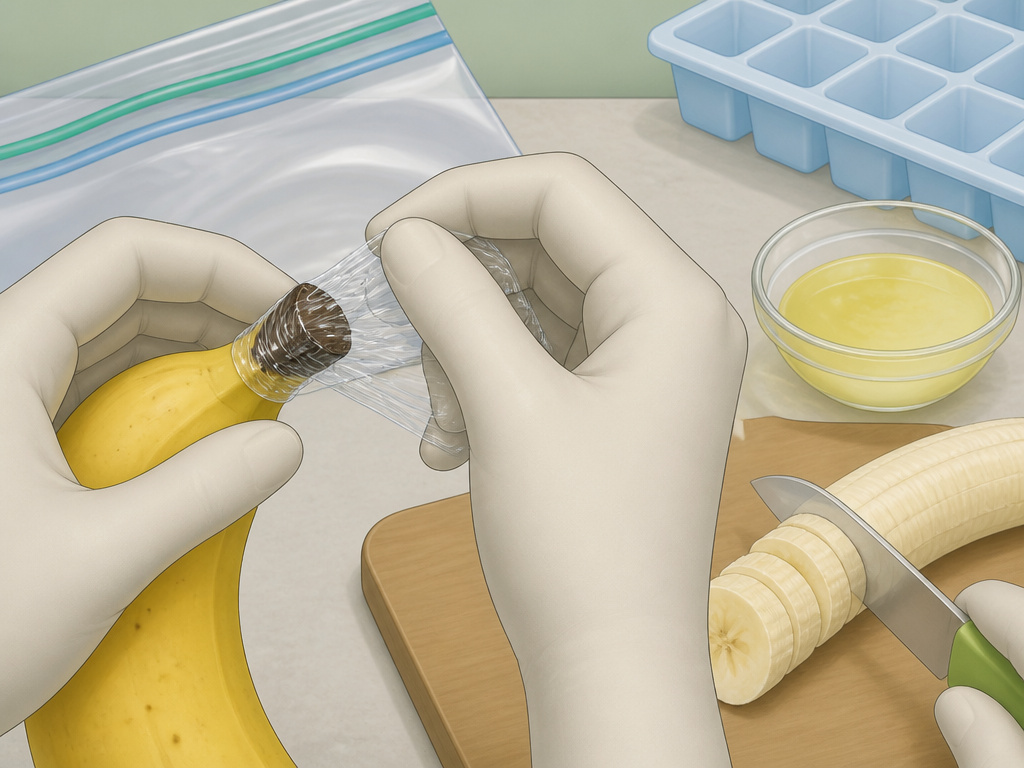
When you need to hit pause on ripening for more than a few days, or when you’ve lost the battle and have overripe fruit, you need the advanced plays.
Stem Wrapping: Ethylene gas is most concentrated where it’s produced: at the stem. By wrapping the stem of each banana tightly with a small piece of plastic wrap, you trap a significant portion of that gas. This localizes its effects and slows the ripening of the entire fruit. It’s a trick used by some grocery stores, and it’s easily replicated at home. It can add 2-3 days to your countertop timeline.
Freezing: This is the definitive endgame for bananas that have gone too far for fresh eating but are perfect for baking. Peel them first—freezing them with the peel on is a messy, irreversible mistake. For best results, purée the flesh with a small amount of lemon juice (or other acidic juice) to prevent browning, then freeze in airtight containers or bags for up to two months. Slicing and freezing on a tray before bagging works for smoothie chunks. This isn’t just storing banana bread ingredients; it’s terminating the fly-attraction cycle entirely by removing the fruit from the environment.
| Method | Best For | Key Step | Result Timeline |
|---|---|---|---|
| Stem Wrap | Slowing ripening of a bunch | Tight plastic wrap on each stem | Adds 2-3 days at room temp |
| Refrigeration | Holding ripe bananas | Chill only after peak ripeness | Adds 1-2 days post-ripe |
| Freezing | Salvaging overripe bananas | Peel, slice/purée, use lemon juice | Stores up to 2 months |
These methods shift your mindset from passive storage to active management. You’re not just putting fruit away; you’re controlling its biological timeline.
If Flies Are Already There: The Clean-Up Protocol
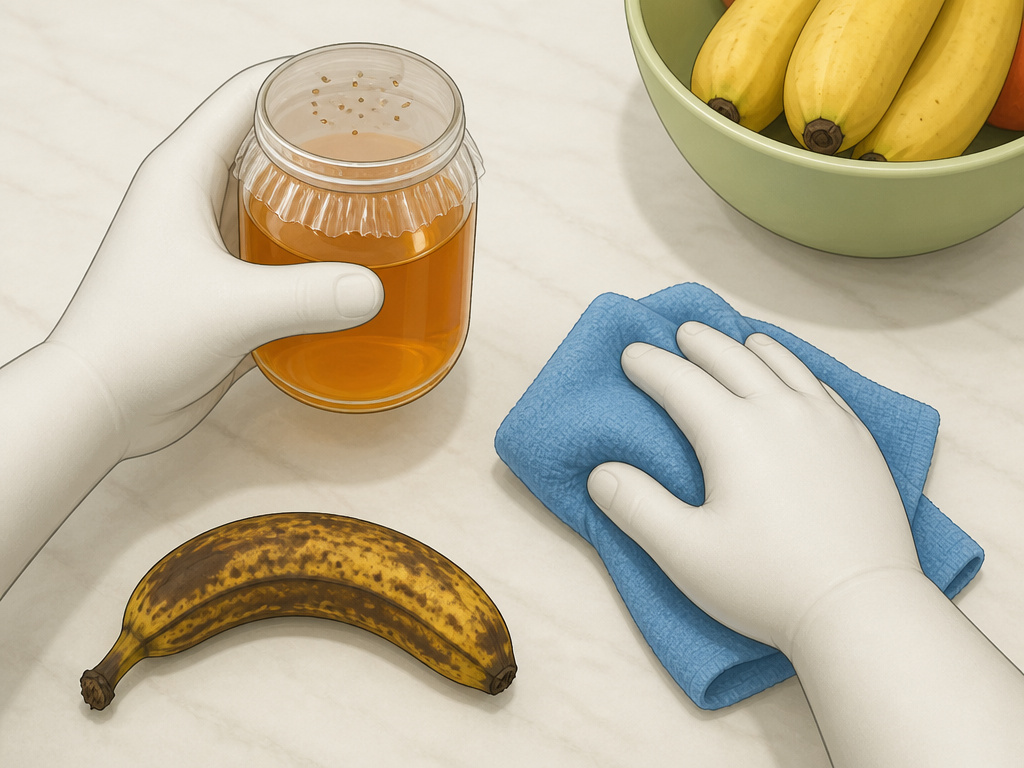
Sometimes, despite best efforts, you get flies. Maybe a banana was forgotten in a bag, or a piece of fruit fell behind the counter. Reaction is different from prevention, but it’s necessary.
First, find and remove the source. It’s often a soft banana at the bottom of the bowl, a discarded peel in the trash, or residue in a recycling bin. Get it out of the house immediately.
Second, clean thoroughly. Wipe down all counter surfaces, especially around the fruit bowl and trash can. Fruit flies feed and breed on the thin film of organic residue we often can’t even see.
Then, deploy a trap. The classic vinegar trap works: put a small amount of apple cider vinegar in a jar, cover the top with plastic wrap, and poke tiny holes in it. Flies go in, can’t get out. This deals with the adults.
Common mistake: Only setting traps without cleaning. You’ll keep catching flies from an endless breeding cycle. Eliminate the breeding site first.
This reactive phase underscores the importance of the proactive steps. A solid routine of washing, strategic storing fruit on the counter, and timely refrigeration means you’ll rarely need the vinegar jar.
Frequently Asked Questions
Should you wash bananas with soap?
No. The USDA and food safety experts recommend rinsing with cool running water only for 30 seconds. Soap is not designed for food consumption and can leave residues that are difficult to rinse off a porous peel. Mechanical scrubbing with water is sufficient to remove eggs and dirt.
Can you store bananas next to apples?
You should not, if you want the bananas to last. Apples are high ethylene producers. Storing them together will accelerate the ripening of the bananas, leading to a softer, sweeter fruit much faster. If you want to speed up ripening deliberately, this is a good trick. Otherwise, maintain the 8-12 inch separation.
Why do refrigerated banana peels turn black?
The blackening is a cosmetic reaction to the cold, not spoilage. Enzymes in the peel break down pigments when chilled. The fruit inside is perfectly protected and will remain firm and tasty. Peel it and you’d never know the skin was black.
How do you keep a half-eaten banana from attracting flies?
Wrap the exposed end tightly in plastic wrap or aluminum foil. This seals in the sweet aromas that attract flies. Even better, place the wrapped remainder in a sealed container in the refrigerator. It will keep for a day.
Does wrapping banana stems really work?
Yes, by containing ethylene gas. It’s a proven method to slow ripening by several days. It’s most effective when done as soon as you bring the bananas home, before they start producing large amounts of the gas.
The Bottom Line
Stopping fruit flies starts the moment you walk in the door. That 30-second rinse isn’t an extra step; it’s the most important one. Pair it with smart storage—keep bananas cool, give them space, and don’t be afraid to use the fridge for ripe fruit—and you’ll break the cycle.
The goal isn’t just to avoid flies. It’s to extend the usable life of your fruit, reduce waste, and keep your kitchen looking and smelling clean. It turns a common nuisance into a non-issue. Start with the wash. Everything else follows from there.
