
How to Get Rid of Ants in Pantry with a Simple, Proven Strategy
This post contains affiliate links. As an Amazon Associate, we earn from qualifying purchases.
To get rid of ants in your pantry, you must break their scent trail, eliminate their food source, bait the colony, and seal their entry points. The most common mistake is spraying repellents, which can cause the ants to scatter and create new satellite colonies, making the problem worse. Odorous house ants are a nuisance, while carpenter ants can damage damp wood.
That last sentence about spraying is the pivot. Most guides treat ants as a single problem with a universal spray-and-clean solution. The actual mechanism is species-specific, and your first move decides whether the invasion ends in a week or spreads for a month.
What follows: a four-step plan built on entomologist advice, the physical specs that kill pantry pests, and the one product that consistently works when others fail. You’ll also get the timeline, how long each step takes to see results, and what “done” actually looks like.
Key Takeaways
- Never spray ants or their trails with repellent sprays. This disrupts their pheromone communication and can cause “budding,” where the colony splits and establishes new nests.
- Identify the ant type if possible. Odorous house ants are smaller than 1/8 inch and a nuisance; carpenter ants are 1/4 to 1/2 inch and can damage damp wood.
- The most effective consumer product is a slow-acting liquid bait like Terro. Worker ants carry it back to the colony, eliminating the queen.
- Pantry pests (beetles, moths) hitchhike in dry goods. Freeze new purchases at 27°F or colder for 3-7 days to kill any eggs or larvae before storage.
- Scented soaps and cleaners can attract more ants. Use plain soap and warm water to clean trails.
The 4-Step Plan to Get Rid of Ants in Your Pantry
This isn’t about killing the ants you see. It’s about eliminating the colony they report to. The workers you spot are just the tip of the iceberg. The queen stays hidden, and she can lay thousands of eggs. Your goal is to send a poisoned gift back to her.
The part nobody mentions: Spraying an ant trail with a repellent cleaner doesn’t just wipe away the pheromones. It can signal danger, causing the colony to “bud”, fork off and establish new satellite nests in other walls. You trade one visible trail for three hidden ones.
Step 1: Find and Destroy the Food Source
Ants are in your pantry for one reason: food. They aren’t exploring. A scout found a reward and laid a chemical highway for its sisters. Your first job is to find that reward and remove it.
Empty every shelf. Check for open bags of sugar, flour, cereal, pet food, or honey bottles with sticky lids. Look for the trail’s end. Is it a spilled box of crackers behind the oatmeal? A nearly-empty jam jar? Once you find it, seal it in a plastic bag and take it outside immediately.
This step has a direct consequence. If you skip it and go straight to cleaning or baiting, the food source remains. New scouts will find it again within hours, and you’re back to square one.
Step 2: Erase the Chemical Highway
Now that the food is gone, you must destroy the trail itself. Ants navigate by pheromones, scent markers they leave on surfaces. If you don’t erase these, more ants will follow the old path even after the food is gone.
Vacuum the trail first. This picks up any straggler ants and food crumbs. Then, wipe down the entire path with a solution of plain dish soap and warm water. The soap breaks down the oily pheromones. Do not use scented or antibacterial cleaners. The fragrances in some cleaners can act as an attractant for certain ant species.
This cleaning must be thorough. Wipe baseboards, the backs of shelves, and the walls near the entry point. The pheromone trail can be invisible but potent for weeks.
Step 3: Bait Them Out, Don’t Spray Them Out
Here is where most well-intentioned efforts fail. You see ants, you grab a can of spray, you blast them. It feels effective. You won.
You just lost.
Common mistake: Spraying ants directly with a repellent insecticide. “On some species, ant infestations can be made worse by using repellent sprays,” states Jody Gangloff-Kaufmann, an entomologist cited by Consumer Reports. The spray kills the visible workers but often has a repellent effect that causes the colony to scatter and bud, creating multiple new problems.
Instead, use a bait. A slow-acting liquid bait is ideal for most common pantry ants. The worker ants are attracted to the sweet liquid, drink it, and carry it back to the nest. There, they share it with the queen and other ants through a process called trophallaxis. The poison works slowly enough that the worker makes it home before dying.
Place the bait stations directly on the trail you observed. Do not clean the area around the bait, you want the ants to find it. Popular and readily available brands include Terro, which uses borax as its active ingredient. Expect to see increased ant activity around the bait for 24-48 hours. That’s good. It means they’re taking the poison home. The colony should collapse within a week.
| Bait Type | Best For | How It Works | Timeline to See Results |
|---|---|---|---|
| Liquid Bait (Terro) | Sugar-loving ants (Odorous house ants) | Carried back to colony, shared, kills queen | 3-7 days for colony collapse |
| Gel Bait | Irregular trails, cracks & crevices | Applied precisely where ants travel | 5-10 days |
| Granular Bait | Outdoor perimeter treatment | Foragers take granules back to nest | 1-2 weeks |
Step 4: Seal the Entry Points
After the colony is gone, you need to make sure the next scout party can’t get in. Ants can enter through a crack the width of a credit card.
Inspect the perimeter of your pantry. Look for gaps around pipes under the sink, cracks in baseboards, or spaces around window frames. Use a quality silicone caulk to seal any cracks and crevices. For temporary gaps, even a dab of petroleum jelly can block the way while you get supplies.
This is a maintenance step, not a one-time fix. Periodically check these seals, especially after seasonal changes when your house may settle slightly.
Why Ants in the Pantry Are Different
A kitchen counter ant is after a drop of syrup. A pantry ant has found a gold mine, a concentrated, long-term food supply. The response must be more strategic.
Pantry ants often indicate a secondary issue: other pantry pests. Ants can be attracted to the frass (waste) or damaged goods left behind by beetles or moths. If you see ants but no obvious spill, inspect your dry goods for signs of other pantry pests. Look for small holes in packaging, fine webbing, or clumped grains.
The University of Maryland Extension notes that prevention is the best control, and their kitchen pest management resource emphasizes storing food in airtight containers. Glass jars with rubber gasket seals are best, as many pests can crawl under loose-fitting lids.
Odorous House Ants vs. Carpenter Ants: Know Your Enemy
Not all ants are created equal. Misidentifying them can lead you to use the wrong control method.
Odorous House Ants are the usual suspects. They’re tiny (less than 1/8 inch), dark brown to black, and emit a rotten coconut smell when crushed. They’re a nuisance but don’t cause structural damage. They’re highly attracted to sweets, making liquid baits extremely effective.
Carpenter Ants are a bigger problem. They’re large (1/4 to 1/2 inch), often black, and prefer damp, decaying wood. They don’t eat wood; they excavate it to build nests. If you see large ants in your pantry, especially if you have a moisture issue nearby, you might have a carpenter ant satellite colony. While baits can work, a carpenter ant infestation often requires locating the main nest, which could be in a wall, deck, or crawl space. This is a scenario where calling a pro is wise.
The core difference is damage. One contaminates food; the other can compromise a structural beam. Knowing which you have changes the stakes.
How to Prevent Future Ant Invasions
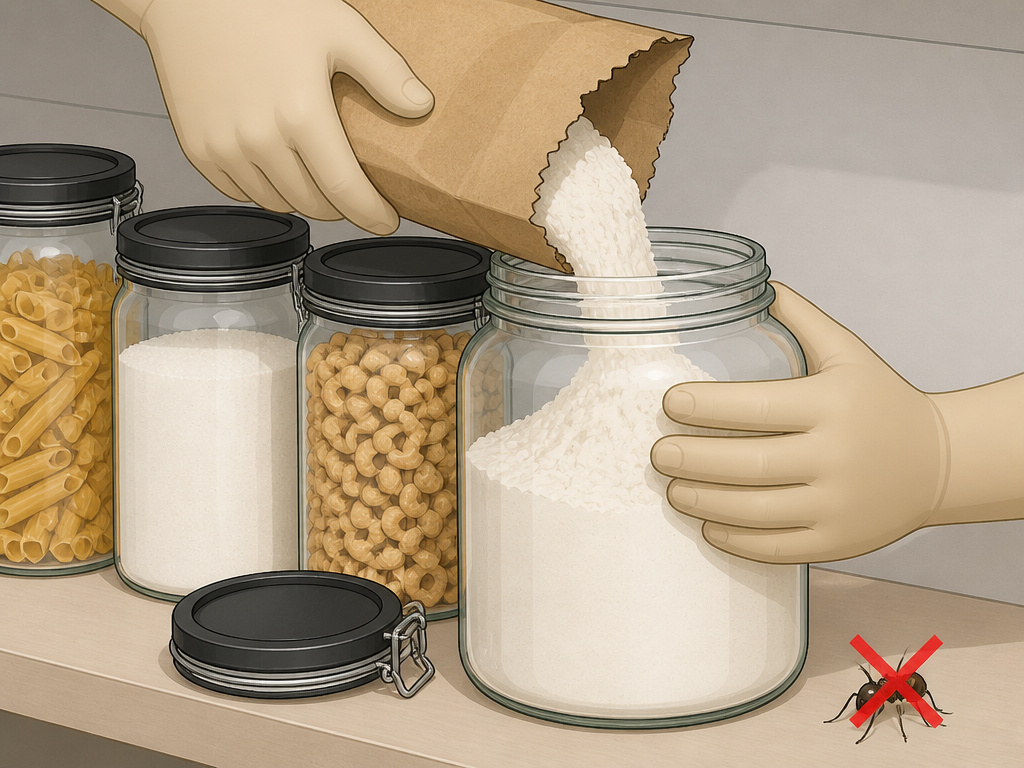 Eradication is only half the battle. Prevention is what keeps your pantry clean long-term. It revolves around making your home less attractive and less accessible.
- Store all dry goods in airtight containers. This is non-negotiable. Transfer flour, sugar, pasta, cereal, and pet food from their original bags into glass, metal, or thick plastic containers with locking lids. This not only blocks ants but also prevents infestations of pantry beetles and pantry moths.
- Freeze new dry goods. Pantry pests often hitchhike into your home from the store. When you buy flour, grains, or bird seed, seal it in a freezer bag and place it in a deep freeze for 3-7 days. The Illinois Extension states that freezing at 27°F or colder kills all life stages of pantry pests.
- Maintain a clean, dry pantry. Wipe shelves regularly with vinegar or plain soapy water. Fix any leaky pipes or condensation issues promptly, as moisture attracts both ants and the wood decay that carpenter ants love.
- Manage outdoor attractants. Keep mulch away from your home’s foundation, trim back branches touching the house, and ensure gutters are clear. An ant colony outside is just looking for a way inside.
Adopting these best practices for storing flour and other dry goods creates a hostile environment for all pests, not just ants.
When to Call a Professional Exterminator
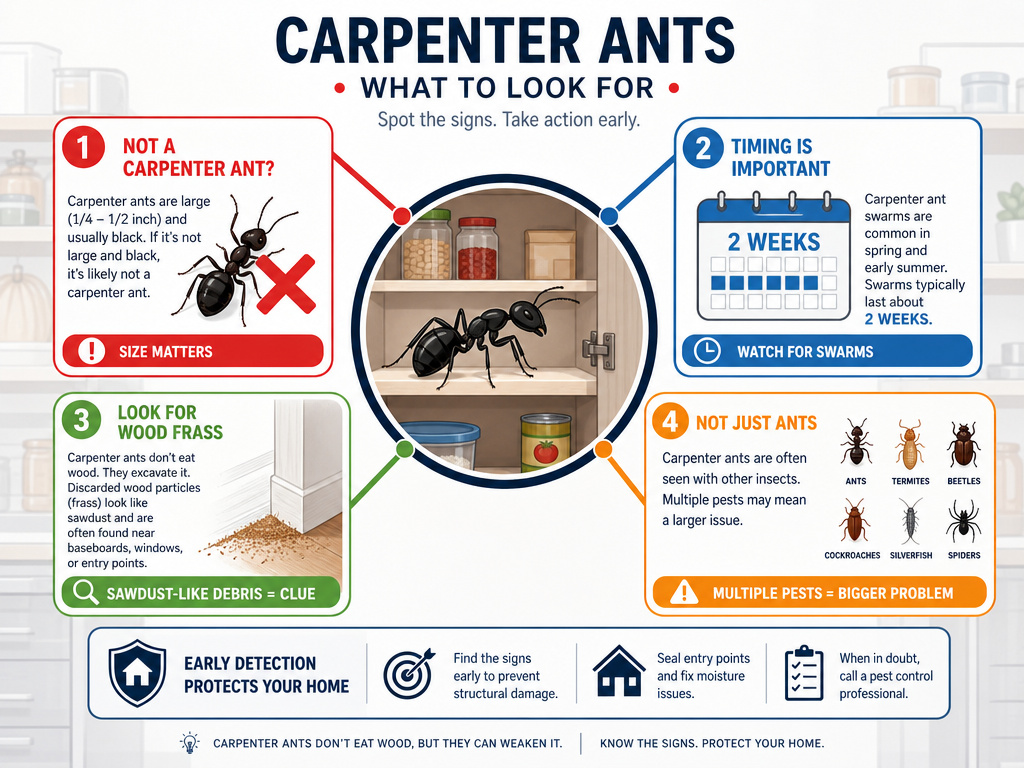 DIY methods are effective for most common odorous house ant infestations. Call a pro if:
* You see large carpenter ants indoors repeatedly.
* The bait-and-seal method shows no reduction in activity after two weeks.
* You find frass (sawdust-like debris) near woodwork, indicating a carpenter ant nest.
* The infestation is widespread or you’re dealing with multiple pest types simultaneously.
DIY methods are effective for most common odorous house ant infestations. Call a pro if:
* You see large carpenter ants indoors repeatedly.
* The bait-and-seal method shows no reduction in activity after two weeks.
* You find frass (sawdust-like debris) near woodwork, indicating a carpenter ant nest.
* The infestation is widespread or you’re dealing with multiple pest types simultaneously.
A professional can accurately identify the species, locate the nest, and use stronger, targeted treatments that aren’t available over the counter.
Frequently Asked Questions
What kills ants in the pantry instantly?
Nothing good. Instant-kill sprays only hit the workers you see, leaving the colony intact to send more. They can also cause the colony to bud and scatter. For a true solution, use a slow-acting bait that workers carry back to the nest.
Why won’t the ants go away even after I clean?
You’re likely missing one of three things: the primary food source (a hidden spill), the entry point they’re using, or you’re using a repellent product that’s scattering them. Go back through the four-step plan methodically. Ensure you’ve used a bait product, not just a spray.
Are ants in the pantry a sign of dirtiness?
Not necessarily. Even the cleanest home can get ants if a scout finds a single dropped calorie and reports back. It’s more a sign of accessibility than hygiene. However, consistent cleanliness removes the incentive for them to stay.
Can I use natural remedies like cinnamon or vinegar?
Vinegar and water can help erase pheromone trails when cleaning. Cinnamon powder is a mild repellent but won’t eliminate a colony. The Cornell IPM pantry pest guide emphasizes non-pesticide methods like sanitation and exclusion as primary controls. For colony elimination, a targeted bait is more reliable than most natural repellents.
How do I keep ants out of my pet’s food bowl?
Place the bowl inside a slightly larger shallow tray filled with water, creating a moat ants can’t cross. Alternatively, feed your pet at specific times and remove the bowl immediately after, storing the food in an airtight container.
The Bottom Line
Getting rid of ants in the pantry is a process, not an event. Skip the spray bottle. Follow the four steps: remove the food, erase the trail, bait the colony, and seal the entries. Your most powerful tool is patience, let the bait work over days, not minutes.
Invest in a set of glass or heavy-duty plastic airtight containers. They are your first and best defense not just against ants, but against the entire ecosystem of pantry pests that want your food. The goal isn’t a single victory; it’s a pantry that’s permanently fortified.
