How to Store Sugar Long Term: Essential Tips You Need Now
This post contains affiliate links. As an Amazon Associate, we earn from qualifying purchases.
Store sugar long term by controlling three things: an airtight container, a stable climate under 70% relative humidity, and protection from odors and pests. Granulated and powdered sugars have an indefinite shelf life under these conditions, while brown sugar lasts about 2 years before hardening becomes likely. Refrigeration and vacuum sealing introduce moisture and clumping, so skip them.
That 70% humidity ceiling comes straight from the Michigan Sugar Company’s storage guidelines. It’s not a suggestion; it’s the physical threshold where sugar starts pulling water from the air, turning from free-flowing crystals into a solid brick. Your container’s job is to defend that line.
What follows is a breakdown of the manufacturer specs most home guides skip, the one storage method YouTube preppers get wrong, and a direct comparison of what works for 25-pound bags versus your kitchen canister. By the end, you’ll be able to look at your pantry and name the single biggest threat to your sugar stash.
Key Takeaways
- Humidity beats the calendar. Sugar doesn’t spoil; it absorbs ambient moisture and hardens. Keep relative humidity under 70% (ideally 40-50%) and it lasts indefinitely.
- Never refrigerate sugar. The temperature change between a cold fridge and a warm kitchen draws moisture directly into the container, guaranteeing lumps.
- Brown sugar is the exception. Its natural molasses moisture evaporates in very dry conditions, hardening it within a couple of years. An airtight container with a terra cotta brown sugar saver is the only fix.
- Bay leaves beat moths. A handful of dried bay leaves in the storage container repels pantry moths and weevils without any chemical scent transferring to the sugar.
- Glass and food-grade plastic buckets are the winners. Opaque, airtight containers like gallon glass jars or buckets with Gamma Seal lids block light, seal out humidity, and stack neatly.
The 3 Pillars of Sugar Storage: Container, Climate, Contamination
Forget “cool, dry place.” That’s too vague. Long-term sugar storage succeeds or fails on three specific, measurable fronts.
The Right Container is a Humidity Lock
The package sugar comes in is for shipping, not storage. Paper bags breathe, cardboard boxes are porous, and thin plastic sacks are not a moisture barrier.
Common mistake: Using the original bag, folded over, as storage. Humidity seeps in through the paper and the folded crease, and the sugar at the bottom hardens into a single mass within six months in a humid climate.
You need a container that seals and seals easily. A container you struggle to open is one you won’t use, which defeats the point of rotation.
For kitchen-counter daily use: A Cambro 8-quart round container or an OXO Pop container. The snap-lock lid keeps a consistent seal through hundreds of openings.
For bulk storage (25lb+ bags): A 5-gallon food-grade plastic bucket with a Gamma Seal lid. The screw-top lid creates a true airtight seal and is easy to open. A standard paint bucket lid is not airtight, it’s a dust cover.
Climate Means Specific Numbers, Not Feelings
“Cool and dry” translates to hard numbers from the people who make sugar. The Michigan Sugar Company states granulated sugar lasts 2 years at 60 to 75°F and 70% RH max. Domino Foods recommends storing products in a region different from manufacture at <80°F and <70% RH.
All Granulated Sugar (except Industrial Bakers Special) has a 3-year shelf life with respect to caking properties when stored under normal conditions of less than 80°F and less than 70% relative humidity.
This 70% relative humidity (RH) is your red line. Above it, sugar acts like a sponge. Your goal is to get well below it. A simple digital hygrometer placed in your pantry tells you the truth. If you’re consistently above 60% RH, you need a dehumidifier in the storage room, not just a better container.
Contamination Isn’t Just Bugs
Pantry moths and weevils love sugar. A single infected bag can ruin a whole stash. But contamination also includes strong odors. Powdered sugar, with its vast surface area, will absorb smells through even sealed plastic.
The fix is twofold. First, bay leaves. Scatter 5-6 whole dried bay leaves on top of the sugar in your bulk bucket. They’re a natural insect repellent and impart no flavor. Second, store sugar away from cleaning supplies, onions, or anything pungent. A basement shelf away from the furnace room is better than under the kitchen sink.
Granulated vs. Brown vs. Powdered Sugar: A Storage Face-Off
They’re all “sugar,” but their storage needs diverge because of their physical structure and moisture content. Treating them the same is how you end up with a brick of brown sugar and a dust cloud of powdered sugar.
| Sugar Type | Core Challenge | Best Container | Realistic Shelf Life (Home Storage) |
|---|---|---|---|
| Granulated (White) | Humidity absorption leading to clumping. | Airtight plastic or glass. Opaque is best. | Indefinite if RH <70%. Quality good for 2+ years. |
| Brown Sugar | Molasses moisture loss leading to hardening. | Airtight container + moisture source (terra cotta disc, apple slice). | 1-2 years before hardening likely. |
| Powdered (Confectioners) | Humidity absorption + odor absorption. | Absolutely airtight glass or thick plastic. | 1-2 years before clumping and potential odor transfer. |
Why the differences? Granulated sugar is pure, dry sucrose crystals. Brown sugar is granulated sugar coated in molasses syrup, which slowly dries out. Powdered sugar is finely ground granulated sugar mixed with 3% cornstarch to prevent caking, but that starch makes it even more hygroscopic (water-attracting) and prone to picking up smells.
For brown sugar, the shelf life of brown sugar is a race against dryness. Once it turns into a solid lump, you can grate it or microwave it with a damp paper towel, but you’ve lost the light, packable texture essential for baking. Prevention is everything.
Step-by-Step: Storing a 25-Pound Bag for the Long Haul
This is the process for moving sugar from a vulnerable commodity bag into a long-term storage system. It takes 20 minutes and needs four tools.
You’ll need: A 5-gallon food-grade bucket, a Gamma Seal lid, a large funnel, a cup for scooping, and a handful of bay leaves.
- Inspect the bag. Before opening, check for any tiny holes, tears, or signs of dampness. If the bag feels damp or has hardened sugar in one corner, use that sugar first, it’s already begun to degrade.
- Prepare the bucket. Place 3-4 bay leaves in the bottom of the clean, dry bucket. This creates a first line of defense against any insects that might be in the bag itself.
- Transfer the sugar. Use the funnel and cup to pour the sugar into the bucket. Do not just dump the bag, you’ll create a massive cloud of sugar dust and likely spill. If you’re storing multiple bags, layer bay leaves between every 10 pounds or so.
- Top with more bay leaves. Place another 2-3 bay leaves on the very surface of the sugar.
- Seal and label. Screw the Gamma Seal lid on firmly. Use a permanent marker to write “Granulated Sugar” and the date on the bucket. Skip this, and you’ll forget what’s inside or when it went in. Stack the bucket off the floor on another container or pallet to deter crawling pests.
Where this goes sideways: Vacuum sealing sugar in bags. It creates a rock-hard brick because any residual moisture in the sugar has nowhere to go. The Utah State University Extension guide confirms commercial sugars have an indefinite shelf life without oxygen removal, the enemy is moisture coming in, not air being present.
What Not to Do: The Quickest Ways to Ruin Your Sugar
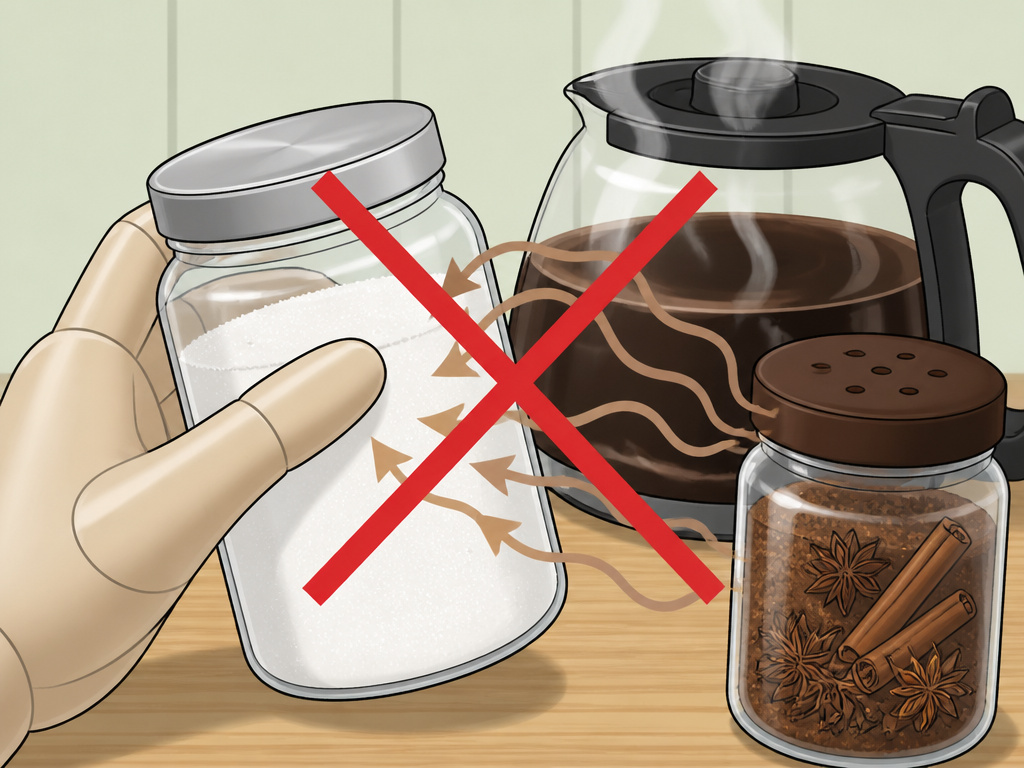 Some common storage ideas are actively harmful. Here’s the short list of banned methods.
- The Refrigerator. This is the worst place for sugar. Every time you take it out, condensation forms on the cold crystals, introducing liquid water. The sugar will turn into a concrete-like lump.
- The Freezer. Same principle as the fridge, but with more extreme temperature shifts. Domino Foods explicitly states dry products should never be stored in frozen conditions unless specified (brown sugar can be frozen in very dry climates as a last resort).
- Next to the Coffee or Spices. Your sugar will taste like coffee or cumin within a few months. Powdered sugar is especially vulnerable.
- In a Sunlit Window. Heat accelerates moisture migration and can cause unwanted temperature fluctuations. Light also degrades any natural color in raw or brown sugars.
- In a Basement Without a Dehumidifier. Many basements naturally have high humidity. Without a dehumidifier keeping RH below 70%, even the best container is fighting a losing battle.
How to Tell If Your Stored Sugar is Still Good
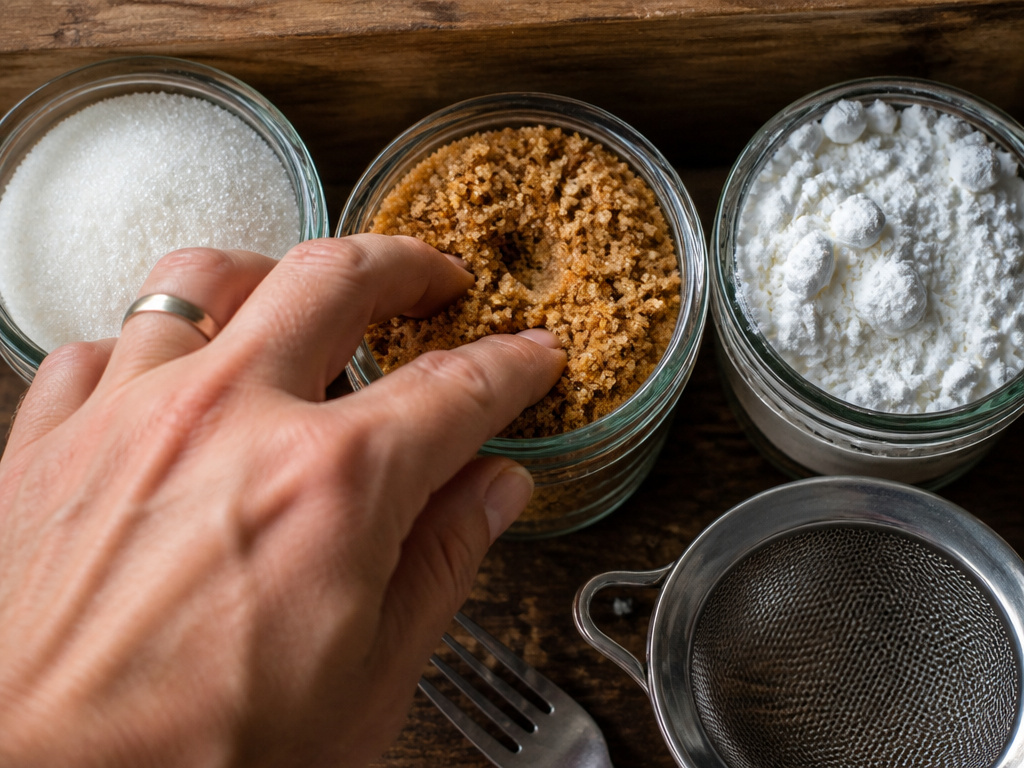 Sugar doesn’t grow mold or smell bad when it spoils. Its failure modes are physical.
Granulated Sugar: If it’s free-flowing, it’s good. If it has small, soft lumps, you can break them up with a fork or run the sugar through a sieve. If it’s one solid, hard mass, it’s probably not worth salvaging for most baking.
Brown Sugar: If it’s soft and packable, it’s perfect. If it’s hard, you can try revival methods, but its performance in recipes may be off. This is why the best containers for sugar for brown sugar include a humidity-control element.
Powdered Sugar: If it’s powdery, it’s fine. If it’s clumped, sieve it. If it smells like anything other than sweet neutrality, discard it.
The science behind sugar’s stability is its resistance to microbial growth. It doesn’t rot. So “still good” almost always means “still usable,” even if the texture isn’t perfect.
Frequently Asked Questions
Can you store sugar in Mylar bags with oxygen absorbers?
You can, but you shouldn’t. Oxygen absorbers are designed to create a nitrogen-rich, oxygen-free environment to prevent oxidation and insect growth. Sugar doesn’t oxidize in a way that affects food safety, and insects can’t live in an oxygen-free bag anyway. The real risk is that the absorber might pull a slight vacuum, compressing the sugar. More critically, if there’s any trace moisture in the sugar, sealing it in with no way out guarantees clumping. A hard, food-grade bucket is simpler and more effective.
Does sugar ever really go bad?
No, not in the sense of becoming unsafe to eat. According to the USU Extension sugar storage guide, commercial sugars have an indefinite shelf life due to microbial resistance. It can become organoleptically “bad”, too hard to use, or flavored with off-odors. But it won’t make you sick.
Is it better to store sugar in glass or plastic?
It depends on your priority. Glass is impermeable, completely odor-proof, and easy to clean. It’s the best choice for powdered sugar or if you’re storing sugar near strong smells. Food-grade plastic (like HDPE or PET) is lighter, shatterproof, and better for large, heavy quantities. For a 25-pound bag in a 5-gallon bucket, plastic is the only practical choice. For countertop daily use, airtight glass containers are excellent.
How do you keep brown sugar soft for years?
You fight its natural tendency to dry out. In an absolutely airtight container, add a moisture source that can’t mold or spill. A terra cotta brown sugar saver (soaked in water and dried) is the best tool. A slice of apple or bread works but must be replaced every few weeks to prevent mold. The goal is to maintain a mini-environment at around 65% RH inside the container, moist enough to keep the molasses soft, but not so wet it causes clumping.
Can I mix old sugar with new sugar?
Yes, absolutely. This is called “rotating your stock” and it’s a best practice. When you open a new bag, pour it into your storage container on top of the old sugar. Then use from the container as needed. This ensures you’re always using the oldest sugar first and keeps the stock fresh. Just make sure the old sugar is still free-flowing and hasn’t hardened.
The Bottom Line
Long-term sugar storage isn’t about finding a magic container. It’s about managing moisture. Hit the manufacturer specs of under 70% relative humidity and under 80°F with an airtight seal, and your granulated sugar will outlast your interest in storing it.
For most home storage, the default pick is a 5-gallon bucket with a Gamma Seal lid for bulk, and a sturdy, snap-lock airtight container for the kitchen. Add bay leaves, skip the fridge, and write the date on everything. That’s the whole system. The sugar will be fine.
