How to Store Eggs: The Right Way to Maximize Shelf Life
This post contains affiliate links. As an Amazon Associate, we earn from qualifying purchases.
Store eggs in their original carton on a back shelf of the refrigerator set at 40°F or below. The carton insulates against temperature swings and blocks odor absorption. Refrigerated raw shell eggs last 3 to 5 weeks, but storing them in the warmer door compartment can cut that shelf life in half.
That 40°F threshold is a hard stop for Salmonella growth. The bacteria on or inside an egg multiply quickly above that line, which is why the entire US supply chain, from processor to your kitchen, runs refrigerated. The door breaks that chain every time you open it.
What follows: the science behind the carton, the exact shelf-life numbers for raw, cooked, and separated eggs, and the one storage rule that overrides every refrigerator manufacturer’s design.
Key Takeaways
- The refrigerator door is the warmest, most variable spot. Storing eggs there risks faster spoilage and can damage the yolk’s anchoring structure.
- An egg carton isn’t just packaging. It’s a necessary insulator against temperature fluctuation and a barrier against absorbing odors from onions or fish.
- Raw shell eggs keep for 3 to 5 weeks refrigerated, but hard-boiled eggs last only 1 week because cooking removes the protective bloom and alters the protein structure.
- If an egg cracks on the way home, break it into a clean container, cover it, and use it within two days. Never freeze eggs in their shell.
- For US-bought eggs, room temperature is a danger zone. Never leave them out for more than two hours, or one hour if the room is above 90°F.
Why Refrigeration is Non-Negotiable (Especially in the US)
In the United States, every egg you buy has been washed. Federal regulations require a spray-wash, sanitizing rinse, and a coating of tasteless mineral oil. This process removes dirt and bacteria but also strips the egg’s natural protective coating, called the bloom.
Without that bloom, the egg’s porous shell is vulnerable. Refrigeration at 40°F or below is the only thing that slows bacteria, primarily Salmonella, from entering through those pores and multiplying.
The entire system is built on this cold chain. Processors chill eggs to 45°F immediately after washing. Stores must keep them refrigerated. Breaking that chain at home, by leaving eggs on the counter, invites trouble. The University of Minnesota Extension guide states this explicitly: eggs purchased in the US will be refrigerated, and they must stay that way.
This is different from some European countries where eggs are often sold unrefrigerated. Their hens may be vaccinated against Salmonella, and the eggs are not washed, leaving the bloom intact. That’s a different system. In the US, refrigeration isn’t a suggestion; it’s a required step in a food safety protocol.
The Refrigerator Door Is the Wrong Place
Your refrigerator’s built-in egg tray is a design flaw. It’s convenient, but it contradicts every food safety guideline from the USDA to university extensions.
Common mistake: Using the door’s egg cups. The temperature there fluctuates wildly, every time you open the door, warm air rushes in. This area can be 5-10 degrees warmer than the back shelf.
That fluctuation does two things. First, it creates a mini “danger zone” that encourages bacterial growth. Second, the constant jarring from opening and closing the door can physically damage the egg’s interior. The UC Davis egg basics PDF notes this can break the chalazae, those twisted strands of protein that anchor the yolk. When those break, the yolk drifts and touches the shell, increasing the risk of contamination and degrading quality faster.
The right spot is the back of a middle or lower shelf. This is the coldest, most stable part of the refrigerator. The carton provides an extra layer of insulation against minor temperature swings. This simple relocation is the single most effective move for extending an egg’s shelf life.
The Egg Carton is a Tool, Not Just Trash
You might be tempted to transfer eggs to a prettier ceramic holder. Don’t.
The original cardboard or foam carton serves three critical functions that a naked rack cannot. It buffers against physical jolts. It provides thermal insulation against the chill of the refrigerator wall and the warm air from door openings. Most importantly, it blocks odors.
Eggshells are covered in thousands of microscopic pores. They are designed for gas exchange, but they don’t discriminate. A strong-smelling neighbor like cut onions, fish, or ripe cheese will slowly perfume your eggs through those pores. The carton acts as a barrier. This is why the USDA food safety inspection service explicitly recommends keeping eggs in their grocery carton.
If you need to store cracked or separated eggs, the principle is the same. Use an airtight container. For long-term egg storage methods like freezing, transferring to an airtight container is mandatory.
Shelf Life: Raw, Cooked, and Everything Between
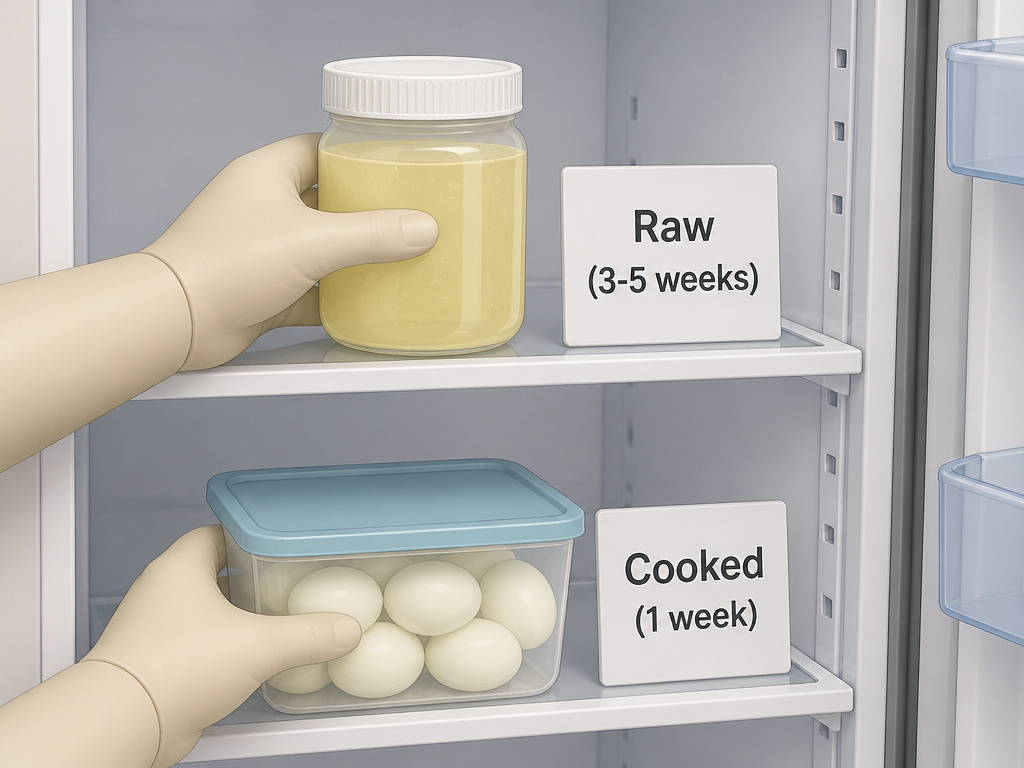
Not all eggs age at the same rate. Cooking changes the game entirely by removing natural barriers and altering proteins. Here’s the breakdown from primary sources.
| Egg Product | Refrigerator Shelf Life (40°F or below) | Critical Note |
|---|---|---|
| Raw Shell Eggs (in carton) | 3 to 5 weeks | Date on carton is a pack date, not an expiration. The 5-week mark is for optimal quality. |
| Raw Egg Whites | 2 to 4 days | Store in airtight container. Separated yolks dry out and gel quickly. |
| Raw Egg Yolks | Use within 4 days | Cover with a little cold water or cling film directly on surface to prevent drying. |
| Hard-Boiled Eggs (in shell) | 1 week | Cooking removes protective coating, making shells porous. Peel just before eating. |
| Peeled Hard-Boiled Eggs | Use within 1 week | Store in airtight container with a damp paper towel to prevent rubberiness. |
| Leftover Cooked Dishes (quiche, frittata) | 3 to 4 days | Cool quickly in shallow container before refrigerating. |
The drastic drop for hard-boiled eggs, from 5 weeks to just 1, always surprises people. Boiling washes away any remaining mineral oil coating and causes microscopic cracks in the shell. Moisture escapes, air (and bacteria) can enter more easily, and the egg stales rapidly. For peeled boiled eggs, the surface area exposed to air accelerates moisture loss, leading to that familiar rubbery texture.
Freezing is an option for specific forms. Raw whole eggs (beaten together) and whites freeze well for up to a year. Yolks need to be mixed with salt or sugar before freezing to prevent gumminess. Never freeze eggs in the shell or hard-boiled eggs, the expansion will crack shells and turn the whites to a tough, watery mess.
Handling and Food Safety Protocols
Egg safety is about minimizing time in the temperature danger zone (40°F to 140°F) and preventing cross-contamination.
The Two-Hour Rule (One Hour When Hot)
Never leave eggs out of refrigeration for more than two hours. If the room temperature is 90°F or higher, like a summer kitchen or picnic, that window shrinks to one hour. This includes eggs used for baking or breakfast prep. Crack them, use them, and get the carton back in the fridge.
The Crack Test
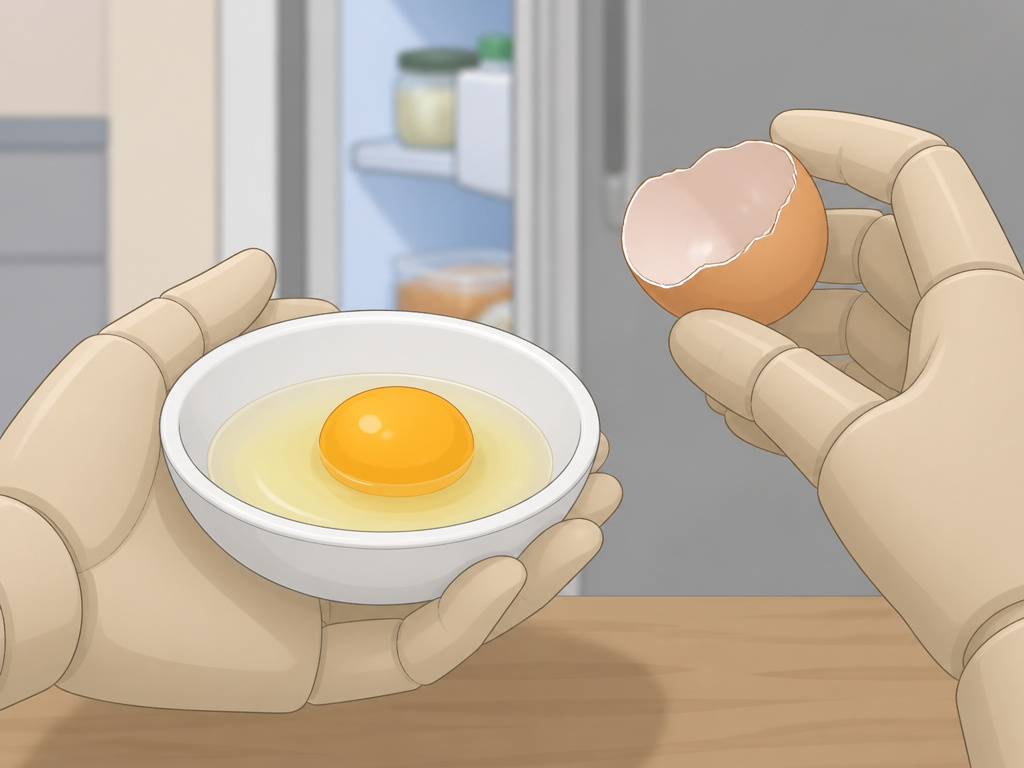
If you’re unsure about an egg’s age, the float test is less reliable than a simple visual and smell check. Crack the egg into a small bowl first. A fresh egg has a firm, high yolk and thick, gel-like white. Discard any egg with a pink, green, or iridescent color, or any off odor. This “crack into a separate container” step is the official recommendation from the USDA ARS to assess quality before committing the egg to a recipe.
Cook to Temperature
Dishes containing eggs, like casseroles or quiches, are safe when cooked to an internal temperature of 160°F. Use a food thermometer. For simple fried or scrambled eggs, cook until the yolks and whites are firm, not runny.
This level of care is part of general food storage hygiene, similar to how you’d handle raw chicken. Wash hands, utensils, and surfaces with warm, soapy water after contact with raw eggs.
Frequently Asked Questions
Can you store eggs at room temperature?
If you bought them refrigerated in the US, no. The washing process they undergo removes their natural protective coating, making refrigeration mandatory for safety. Unwashed eggs from a backyard flock in some regions can be stored at cool room temperature for a short period, but refrigeration still maximizes shelf life.
How long do eggs last past the date on the carton?
The date is usually a “best by” or pack date, not an expiration. Refrigerated eggs in their carton are often of good quality for 3 to 5 weeks from the pack date. Always use the crack-and-sniff test if you’re near or past the date.
Why do hard-boiled eggs spoil faster?
Boiling strips away the protective coating and creates tiny cracks in the shell, making it more permeable to air and bacteria. The altered protein structure also dries out faster. They need to be refrigerated and eaten within a week.
Can you freeze eggs?
Yes, but not in the shell. To freeze whole eggs, beat yolks and whites together until just blended, pour into an airtight container, and freeze for up to a year. Egg whites freeze beautifully on their own. For more on preserving eggs through freezing and other methods, we have a dedicated guide.
Do brown eggs or organic eggs last longer?
No. Shell color and farming method have no impact on shelf life or nutritional value. Storage temperature and handling are the only factors that matter.
The Bottom Line
Forget the door. Keep US-bought eggs in their carton on a back refrigerator shelf at 40°F. That carton is your first defense against spoilage and stale flavors. Raw eggs will give you a 5-week window, but the clock starts ticking fast once they’re cooked or left on the counter.
The goal isn’t just safety, it’s preserving the quality of a perfect fried egg with a tall yolk and tight white. Proper storage delivers that. Treat eggs with the same respect you’d give cheese storage or flour storage: control the environment, use the right container, and follow the timeline. Everything else is a gamble with breakfast.
