How to Store Cut Sweet Potatoes in the Fridge to Avoid Spoilage
This post contains affiliate links. As an Amazon Associate, we earn from qualifying purchases.
Store cut sweet potatoes in an airtight container in the fridge. For the longest shelf life and least browning, first soak the pieces in a 1% citric acid solution for 10 minutes, pat them dry, then seal them. This method, backed by a 2024 study, reduces browning by over 8% and keeps them fresh for 8 days at 4°C (39°F). Never store them below 55°F (13°C) to avoid chilling injury.
That 1% citric acid figure isn’t a guess. It’s the exact concentration used in peer-reviewed research that measured the biochemical slowdown in browning enzymes. The difference between a generic “splash of lemon juice” and a measured acid bath shows up in the color of your fries three days later.
What follows: the three proven storage methods ranked, the science behind why sweet potatoes turn color, the single temperature mistake that ruins texture, and how to prep whole roots so your future cuts last longer.
Key Takeaways
- Soaking cut pieces in a 1% citric acid solution for 10 minutes before storing reduces enzymatic browning by over 8% and extends freshness to 8 days.
- The only safe fridge temperature for cut sweet potatoes is above 55°F (13°C); storing them in the colder main chamber (around 37°F) triggers chilling injury within days.
- An airtight container is mandatory. A loose wrap or open bowl accelerates moisture loss and off-flavors.
- How you treat the whole root before cutting matters. A properly cured sweet potato has a healed skin that resists mold far better than an uncured one.
- For long-term storage of uncooked cuts, vacuum sealing is the only method that prevents freezer burn and texture loss over months.
Why Cut Sweet Potatoes Turn Color So Fast
A sliced sweet potato is a biochemical emergency. The moment you cut through the skin, you rupture cells that have been kept separate for months.
Two enzymes, polyphenol oxidase (PPO) and peroxidase, suddenly mix with phenolic compounds and oxygen. This reaction produces melanin, the same pigment in human skin. It’s not rot, but it’s a visual marker of decay and flavor change starting.
The 2024 study in the Journal of Food Measurement and Characterization found that a 1% citric acid treatment for 10 minutes significantly inhibited PPO and peroxidase activity. Treated samples had a browning index 8.15% lower than untreated controls after 8 days at 4°C.
Acid denatures the enzymes. It changes their shape so they can’t catalyze the browning reaction. Cold temperature slows them down, but it’s a fragile balance.
The chilling injury threshold for sweet potatoes is 55°F (12.8°C). Your refrigerator’s main compartment usually runs at 37-40°F (3-4°C). That’s a problem.
Storing cut pieces at that temperature for even a couple of days causes internal damage. The starches break down differently. You might not see it until you cook them, when sections stay hard and taste bitter. This post-harvest curing process is designed to protect the whole root, but the cut surface is defenseless.
The Best Container for Cut Sweet Potatoes
Your container choice decides the race between drying out and molding. The goal is to minimize air exchange without trapping too much moisture.
A rigid, lidded plastic or glass container wins. The seal is consistent, and the walls protect the pieces from getting crushed. A Ziploc or Stasher bag works if you press out all the air before sealing. A bowl with plastic wrap stretched over the top is the weakest option—it still allows moisture to escape over 48 hours.
Where this goes sideways: Using a container that’s too large. The excess air space inside accelerates moisture loss. The pieces shrivel at the edges within two days.
The container is a short-term solution. For anything beyond 5 days, you need a pretreatment. That’s where the acid bath comes in.
Pretreatment: The Citric Acid Bath (Not Just Lemon Juice)
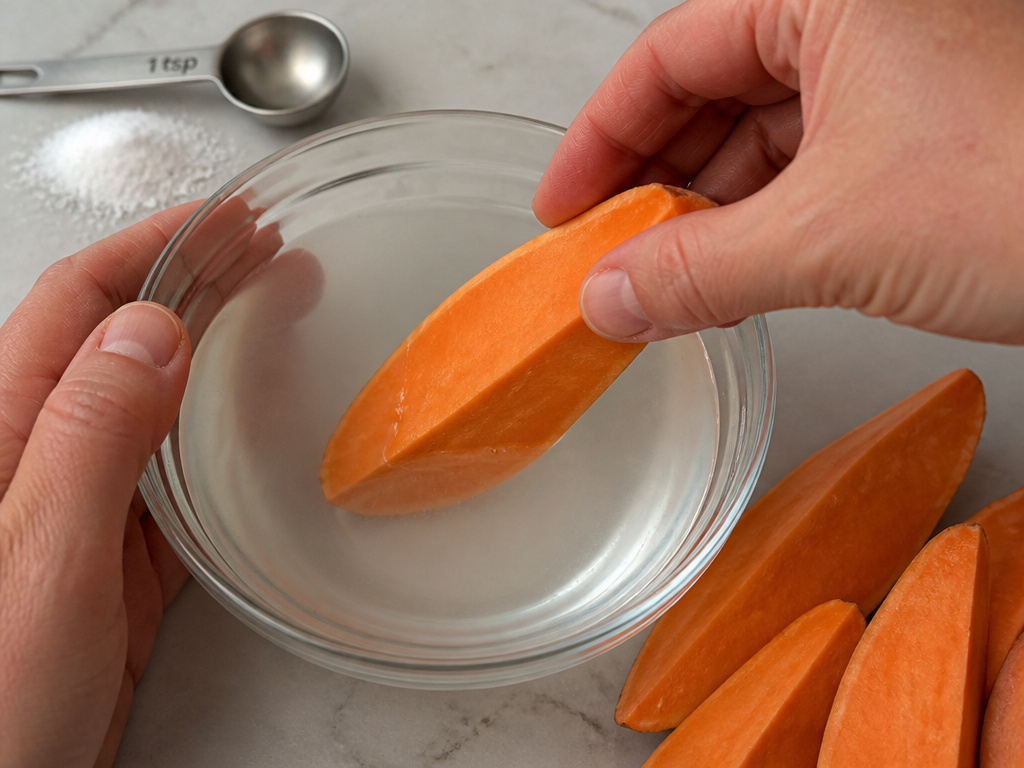 The research is specific. A 1% (weight/volume) citric acid solution means 1 gram of food-grade citric acid powder dissolved in 100 milliliters of cool water. For a home cook, that’s roughly 1/4 teaspoon of powder per cup of water.
Soak the cut pieces for 10 minutes. Drain them. Pat them completely dry with a clean towel or paper towels. Any surface water left will pool in the container and speed up slime formation.
Why not just lemon juice? Lemon juice is about 5-6% citric acid, but it also contains sugars and other compounds that can promote microbial growth. The pure powder gives you control without introducing new variables.
This pretreatment is your best defense if you’re prepping for meal prep days in advance. It’s the difference between bright orange wedges and greyish slabs by Thursday.
Water vs. Air vs. Vacuum: A Storage Method Showdown
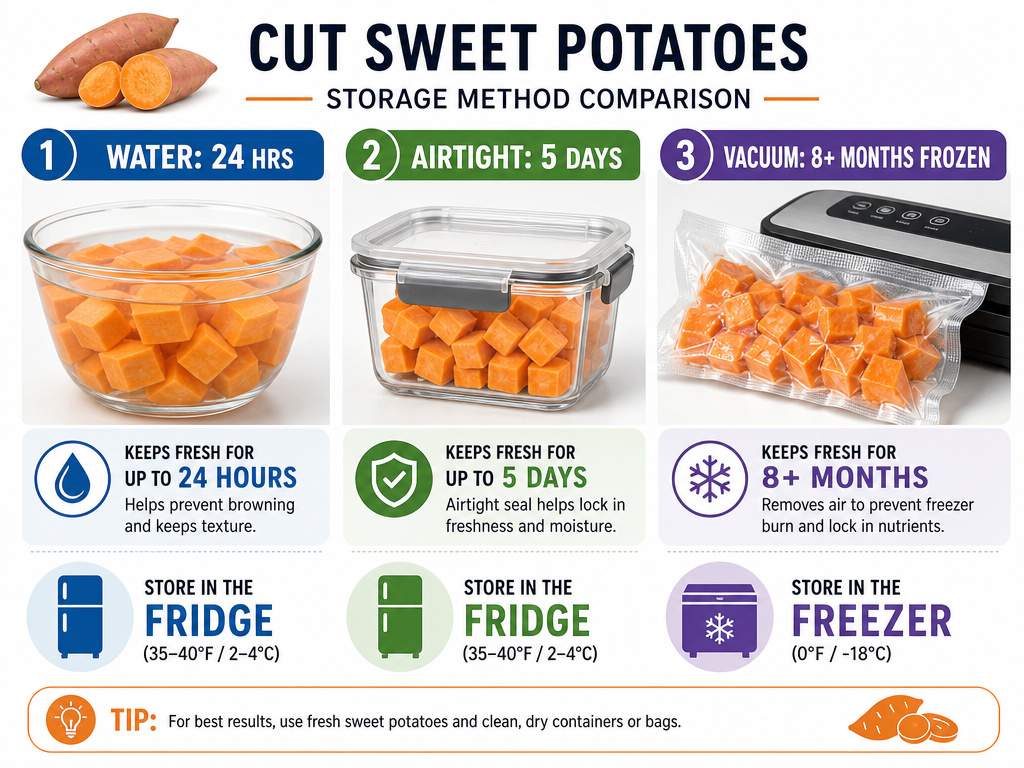 Each common method trades one risk for another. Submergence in water prevents browning by blocking oxygen but waterlogs the tissue. Airtight storage is convenient but doesn’t stop enzyme activity. Vacuum sealing is the gold standard for the freezer but requires equipment.
| Method | Best For | Max Fridge Life | The Catch |
|---|---|---|---|
| Submerged in Water | Next-day use, preventing immediate browning | 24 hours | Pieces become waterlogged and mushy after a day; nutrients leach into the water. |
| Airtight Container (Dry) | 3-5 day storage, meal prep | 5 days | Without acid pretreatment, browning begins at the edges by day 3. |
| Vacuum Sealed | Long-term freezer storage, max freshness | 8+ months (frozen) | Requires a FoodSaver vacuum sealer; improper sealing leads to freezer burn. |
The short version: For the fridge, an airtight container with pretreated pieces. For the freezer, vacuum seal. Drop the water bowl method unless you’re cooking the potatoes tomorrow.
Step-by-Step: How to Store Cut Sweet Potatoes in the Fridge
This sequence assumes you’re starting with a whole, cured sweet potato. If your roots are fresh from the market and uncured, your storage window shortens.
- Wash and dry the whole root. Scrub off any dirt under cool running water. Dry it thoroughly. Damp skin invites mold during storage, which can spread to your cut pieces.
- Cut with a sharp knife. A dull blade crushes cells instead of slicing cleanly, releasing more enzymes and accelerating browning. Cut to your desired size—cubes, wedges, or fries.
- Prepare the acid bath (optional but recommended). Dissolve 1/4 tsp citric acid powder in 1 cup of cool water. Stir until clear.
- Soak for 10 minutes. Submerge all pieces. Agitate once or twice to ensure even coverage.
- Drain and dry thoroughly. This is the step people rush. Use a salad spinner for cubes, or lay pieces in a single layer on a clean kitchen towel and pat the tops. Any remaining water is the enemy.
- Transfer to an airtight container. Place the dry pieces in your container. Do not overfill. Leave a little space.
- Label and date. Use masking tape and a marker. Write “SP” and the date.
- Store in the warmest part of your fridge. This is often the door or a top shelf. If you have a drawer that is less cold, use it. The goal is to stay above 55°F (13°C), but realistically, your fridge is colder. The pretreatment buys you time.
Common mistake: Skipping the drying step after the bath. Wet pieces in a sealed container create a humid microclimate perfect for bacteria. You’ll smell a faint sour odor before you see slime.
Can You Freeze Cut Sweet Potatoes?
Yes, but texture changes. Frozen raw sweet potatoes become mushy upon thawing because freezing ruptures the cell walls. They are best frozen after a blanching step or when destined for soups, mashes, or roasted applications where perfect firmness isn’t critical.
For freezing: 1. Blanch cut pieces in boiling water for 3-5 minutes, depending on size. 2. Shock immediately in an ice bath to stop cooking. 3. Dry completely (same critical step as before). 4. Spread in a single layer on a parchment-lined baking sheet. Freeze for 2 hours (flash freeze). 5. Transfer the frozen pieces to a vacuum-seal bag, remove all air, and seal. Or, use a heavy-duty Ziploc freezer bag, pressing out as much air as possible.
Frozen this way, they keep for 8-12 months. Without blanching and with poor packaging, they develop freezer burn in under two months.
How Whole Root Care Affects Cut Storage
A cut is only as good as the root it came from. The sweet potato storage guidelines from UMass Amherst stress curing: holding whole roots at 82-86°F and 90-97% humidity for 4-7 days.
Curing forms a periderm layer—a corky, healed skin that locks in moisture and keeps pathogens out. A cured sweet potato has a tougher, drier end when you cut it. An uncured one oozes starchy moisture and spoils faster.
If you grow your own or buy from a farmer, cure them. If you buy from a supermarket, assume they are already cured. This foundational step is why whole sweet potatoes can last months, while cuts last days.
Frequently Asked Questions
How long do cut sweet potatoes last in the fridge?
Cut sweet potatoes last 3-5 days in a sealed container. With a 1% citric acid pretreatment, they can last up to 8 days before significant quality loss. Always check for off smells, slimy texture, or deep discoloration before use.
Can you store cut sweet potatoes in water?
You can store them submerged in water in the fridge for up to 24 hours to prevent immediate browning. After that, they absorb water, become mushy, and lose flavor. It’s a short-term fix, not a storage solution.
Why did my cut sweet potatoes turn white?
White, milky substance oozing from cut surfaces is sap, primarily starch and latex. It’s harmless and can be rinsed off. It occurs more in uncured or freshly harvested roots and does not indicate spoilage.
Is it safe to eat cut sweet potatoes that have turned brown?
Light browning from oxidation is safe but indicates declining freshness and flavor. Dark brown or black spots, especially if mushy, signal decay. If the pieces are slimy or smell fermented, discard them.
What’s the best way to store half a sweet potato?
Wrap the uncut half tightly in plastic wrap, pressing the wrap directly onto the exposed flesh to minimize air contact. Place this wrapped half in an airtight container or sealed bag. Use within 3-4 days.
Can I store cut sweet potatoes at room temperature?
No. At room temperature, cut sweet potatoes will begin to brown and dry out within a few hours. Bacterial growth accelerates rapidly. Always refrigerate cut pieces promptly.
Before You Go
Storing cut sweet potatoes boils down to three non-negotiable rules: block oxygen with an airtight seal, use acid to pause the browning enzymes, and never let them get too cold. The citric acid trick is the game-changer—it turns a 5-day ingredient into an 8-day one.
Your next step is to look at your other prepped vegetables. The same principles of air removal and moisture control apply to storing cut onions and carrots. Get the container right, and you waste less food every week.
