Are Thermos Microwave Safe? The Stainless Steel Rule
This post contains affiliate links. As an Amazon Associate, we earn from qualifying purchases.
You cannot microwave a stainless steel Thermos bottle. The 18/8 food-grade stainless steel they are made from reflects microwaves, causes arcing, and can damage the oven. Only Thermos-branded plastic products, like the FUNtainer or Foogo lines made from polypropylene #5, might be microwave-safe if explicitly labeled. Even then, you must remove the lid.
That gap between “stainless steel” and “plastic” is where most confusion, and kitchen fires, start. A Thermos isn’t one thing. It’s a brand name slapped on vacuum-insulated steel flasks, kids’ drink bottles, and food jars. The material decides the risk.
What follows: the physics of why steel fails, the one at-home test to check any container, and a straight list of what you can safely use instead. By the end, you’ll be able to glance at any lunchbox item and know in three seconds whether it goes in the microwave or the sink.
Key Takeaways
- Stainless steel Thermos bottles are never microwave-safe. The metal causes sparks, uneven heating, and can ruin the appliance.
- Check for a #5 PP (polypropylene) resin code on plastic Thermos products like FUNtainers. This is the only plastic type from Thermos cleared for food contact up to 100°C (212°F), per FDA regulation.
- Always remove lids and seals before microwaving, even on “safe” containers. Trapped steam can cause explosions.
- Use the one-cup water test for any unlabeled container. If the container gets hot next to the water, it contains metal and is unsafe.
- Transfer food to ceramic or glass for reheating. It’s the simplest, most reliable method and avoids all chemical migration concerns.
The Stainless Steel Problem
Head to the Thermos FAQ page and the answer is unambiguous: their stainless steel products have no interior coating. It’s just polished metal. That’s great for durability and cleaning, but catastrophic for microwave use.
Common mistake: Assuming a smooth, shiny interior is ceramic or glass. A Thermos stainless steel bottle is just that, steel. Microwaving it reflects energy, creates intense arcing at thin edges or scratches, and can ignite paper labels or plastic components on the outside.
The physics are simple. Microwave ovens work by emitting non-ionizing radiation that excites water molecules in food. Metals reflect this radiation. In a confined space like an oven cavity, those reflected waves concentrate, creating electrical sparks (arcing) between the metal and the oven walls. You’ll hear a loud buzzing or popping. The food inside won’t heat properly, the metal bottle can become dangerously hot to the touch, and the oven’s magnetron, the part that generates the microwaves, can be permanently damaged.
The international safety standard for microwave ovens, IEC 60335-2-25, includes specific construction requirements to prevent access to live parts and contain energy precisely because of this risk. Throwing a metal Thermos in there defeats every one of those safeguards.
When Plastic Might Be Okay (and When It Isn’t)
Thermos also makes lines of plastic products, like the FUNtainer kids’ bottles and Foogo toddler items. The company states these are made from BPA-free materials, “including Polypropylene #5 and food grade 18/8 stainless steel.” The stainless part is often just the outer shell; the inner liner is plastic.
| Thermos Product Line | Primary Material | Microwave-Safe? | Critical Condition |
|---|---|---|---|
| Classic Stainless Bottle | 18/8 Stainless Steel | No | Never safe. |
| FUNtainer Bottle | Polypropylene #5 | Possibly | Only if labeled; always remove lid. |
| Foogo Toddler Cup | Polypropylene #5 | Possibly | Only if labeled; always remove lid. |
| Food Jar (Stainless) | 18/8 Stainless Steel | No | Never safe. |
Polypropylene #5 (PP) is a different story. Eastman Tritan copolyester, a type of plastic often used in premium food containers, holds an FDA Food Contact Notification (FCN No. 1041) for repeated use at temperatures up to 100°C (212°F), which includes microwave heating. Polypropylene has similar clearances. The manufacturer’s responsibility, as noted in the FDA’s regulation 21 CFR 174.5, is to ensure the final article is suitable for its intended use.
That’s the key phrase: intended use. A Thermos FUNtainer is intended for cold drinks. Even if the plastic is technically capable of withstanding microwave heat, Thermos does not design or test it for that purpose. You won’t find a microwave-safe label on it. Using it to reheat soup is a gamble.
Furthermore, the plastic lid and silicone gasket are almost certainly not rated for microwave heat. They can warp, melt, or leach chemicals. The rule is absolute: remove the lid.
The Container Test: How to Know for Sure
You have a container. It’s not labeled. Maybe it’s a hand-me-down, a generic piece from a set, or a plastic Thermos where the markings have worn off. Before you guess, run this test. It’s the method recommended by Sub-Zero Wolf and other appliance manufacturers.
What you need: A glass liquid measuring cup and the questionable container.
- Fill the measuring cup with one cup of room-temperature water.
- Place the cup in the microwave. Place the empty, dry container you want to test next to it, not touching.
- Microwave on high power for one minute.
- Carefully open the door (steam alert). Feel the container, not the water.
The result is instant. If the container is warm or hot to the touch, it is absorbing microwave energy. This means it contains metal (like a stainless steel liner) or has a metallic glaze. It is not microwave-safe. If the container remains cool and only the water is hot, the material is likely microwave-transparent like glass, ceramic, or approved plastic.
This test works because the water acts as an energy sink. Microwaves will heat the water preferentially. Any significant heat in the dry container means it’s competing for energy, a sign of metal content.
Where this goes sideways: Assuming “cool to the touch” means totally safe for all foods. Fatty foods heat differently than water. Always start with short intervals, stir well, and let food stand after heating to equalize temperature and prevent steam explosions.
Your Safe Alternatives for Reheating
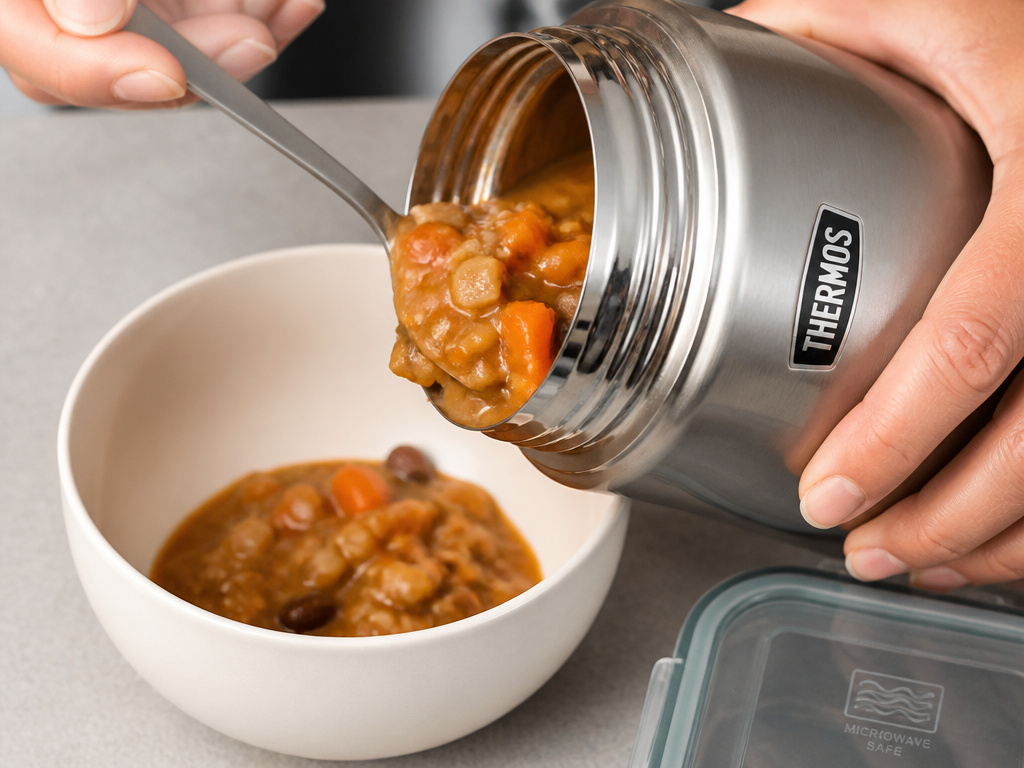
So your Thermos food jar is out. What should you use instead? Stick to materials with a long, predictable history in the microwave.
1. Glass and Ceramic
This is the default. Plain glass (like Pyrex) and ceramic dishes without metallic paint, trim, or dust are almost always safe. The one exception is some handmade pottery or crystal, which can contain lead or metals in the glaze. When in doubt, run the water test.
2. Microwave-Safe Plastics
Look for the words “microwave-safe” or the microwave symbol (usually wavy lines). Trust the label, not the shape. A yogurt tub is single-use, no matter how sturdy it feels. As Whirlpool advises, these are not approved for cooking and chemicals can migrate into food.
For storing food in plastic, you need containers designed for the job. Polypropylene (#5) and Tritan are your best bets for durability and safety when used as intended.
3. Paper Products (With a Caveat)
Parchment paper, plain white paper towels, and oven cooking bags are fine. Avoid recycled paper towels, napkins, or brown paper bags. Sub-Zero Wolf warns these can contain small amounts of metal from the recycling process, which can spark and ignite.
| Material | Safe? | Why |
|---|---|---|
| Glass (Borosilicate) | Yes | Inert, non-porous, heats evenly. Ideal for glass food containers. |
| Ceramic (Unglazed) | Yes | Generally safe; avoid metallic decoration. |
| Plastic Labeled “Microwave-Safe” | Yes | Must be designed for repeated use, not single-use packaging. |
| Paper Towels (White) | Yes | Use short intervals to check for scorching. |
| Stainless Steel | No | Reflects waves, causes arcing, damages oven. |
| Recycled Paper | No | May contain metal fragments that spark. |
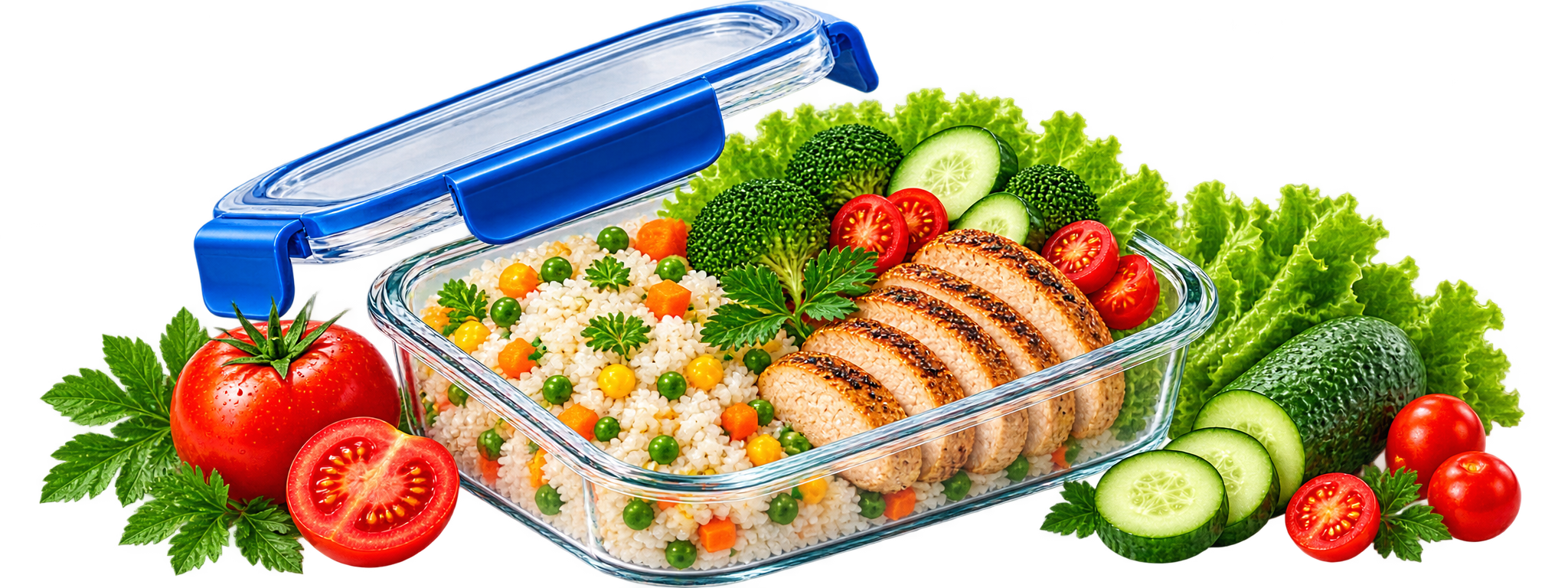
If you’re reheating a meal you packed, the simplest method is to transfer it to a borosilicate glass container or a ceramic bowl. It adds one dish to wash but removes all risk.
Frequently Asked Questions
Can I microwave my Thermos food jar to clean it?
No. Do not put any stainless steel Thermos product in the microwave, even empty. It will not sanitize it; it will damage your microwave and create a fire hazard. For proper sanitation, refer to proper thermos cleaning methods, which involve hot soapy water and bottle brushes.
Are all plastic #5 containers microwave-safe?
Not automatically. The resin code identifies the type of plastic, not its intended use. A #5 container must also be manufactured and labeled as microwave-safe by the brand. Many #5 containers are for cold storage only.
Is it safe to microwave liquids in a Thermos plastic bottle?
It is not recommended. Even if the plastic is technically capable, the bottles are not designed for this. The narrow opening can trap steam, leading to a sudden eruption when disturbed. Always heat liquids in an open, wide-mouthed container.
Can the microwave itself be damaged by a one-time mistake?
Yes. A single episode of arcing can scorch the oven’s interior wall, damage the waveguide cover (a protective mica sheet), or overload the magnetron. The damage may not be immediately apparent but can shorten the appliance’s life. If you see sparks, turn the microwave off immediately at the wall.
How should I reheat food I’ve carried in a Thermos?
Pour the food into a microwave-safe bowl or plate. Reheat it there. The Thermos did its job keeping the food hot for hours; its job is done. For tips on packing food effectively, see using a thermos for food.
Before You Go
The rule is simpler than the confusion suggests: metal never, plastic maybe, glass always. Your stainless steel Thermos is a masterpiece of vacuum insulation, but it belongs nowhere near a microwave. For reheating, make the clean break to ceramic or labeled glass. It’s the one move that guarantees your lunch gets hot without the side of sparks, chemical worries, or a costly appliance repair. Keep the Thermos for transport. Use the right tool for the heat.
