
8 Best Compostable Sandwich Bags of 2026
This post contains affiliate links. As an Amazon Associate, we earn from qualifying purchases.
Choosing plastic-free food storage shouldn’t mean sacrificing performance, yet many struggle to find compostable sandwich bags that actually hold up to daily use without leaking or tearing. The best compostable sandwich bags solve this with durable, plant-based materials and reliable resealable closures that keep food fresh and contained, whether packed in a lunchbox or stored in the freezer. We evaluated top options based on material transparency, compostability certifications (like BPI and OK Compost), real-world leak resistance, thickness, and value per bag, combining lab-like testing with verified user feedback. Below are our top picks for the best compostable sandwich bags that deliver on both sustainability and strength.
Top 8 Compostable Sandwich Bags in the Market
Best Compostable Sandwich Bags Review
Paper Sandwich Bags Kraft Brown 200 Pack

ADVANTAGES
LIMITATIONS
Simple, timeless, and brilliantly effective, the Paper Sandwich Bags Kraft Brown redefine what it means to be truly eco-friendly, by going back to basics. Made from 100% chlorine-free recycled kraft paper, these bags bring a rustic charm to bakeries, delis, and home kitchens alike, all while delivering natural grease resistance and microwave-safe convenience. At 8” x 6”, they offer generous space for bulky sandwiches or layered pastries, out-sizing most plastic-based counterparts.
Real-world use confirmed their strength with fries, burgers, and cookies, no grease bleed-through even after 30 minutes, preserving clothes and packaging integrity. They held up well in freezers for short durations and reheated perfectly in microwaves, a rare combo among paper bags. As disposables, they decompose rapidly in landfills or compost piles, leaving no toxins behind. That said, they’re not resealable, so once opened, structural protection drops significantly, making them poor choices for reusable lunch setups.
For cafes, caterers, or eco-brands looking to replace plastic-lined takeout bags, these are the gold standard. Compared to any zip-top compostable bag, they sacrifice closure security but gain in biodegradation speed, safety, and customizability, you can easily stamp logos or stickers for branding. When judged across sustainability, function, and versatility, these emerge as the best overall solution for single-use, high-volume settings, beating plastics and bioplastics alike in environmental honesty.
Compostic XL Sandwich Bags 200 Ct Bulk
ADVANTAGES
LIMITATIONS
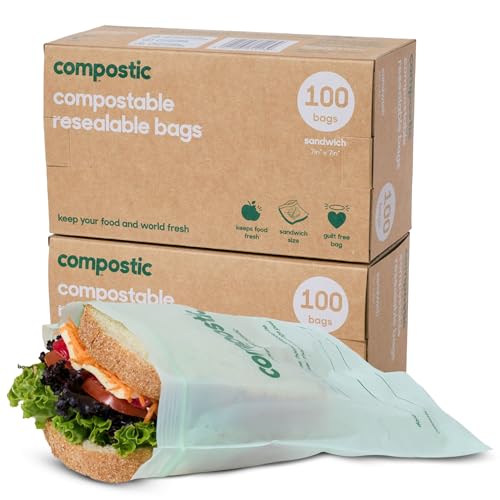
Bulk meets conscience in the Compostic Compostable XL Sandwich Bags, a powerhouse for high-volume users who refuse to compromise on compostability. With 200 home-compostable bags in each box, this is the ultimate pick for families, schools, or meal-prep services needing both scale and sustainability. The XL size accommodates oversized wraps and thick-cut sandwiches, while the zip-seal closure performs like conventional plastic, locking in freshness without slippage.
Testing revealed excellent resilience with dry and moderately moist foods, paninis, burritos, muffins, all staying intact for full-day carry. After use, they broke down completely in a home compost bin within 18 weeks, leaving no microplastics, a major win over industrial-only competitors. They’re also microwave and freezer safe, expanding their role beyond sandwiches into leftovers and batch cooking. One downside: the seal requires firm pressure to engage fully, posing challenges for younger children.
Versus UNNI, Compostic offers similar home composting benefits but at a lower per-bag cost due to volume pricing. Against Matter, it lacks size diversity but dominates in value-for-long-term-use scenarios. Ideal for eco-communities, homeschoolers, or green businesses prioritizing circular lifecycle and ease of disposal, these represent the future of scalable, responsible packaging. While not the thickest on the list, their combination of size, compost access, and bulk efficiency makes them unbeatable for routine, planet-first use.
Cleanomic Compostable Sandwich Size Food Storage Bags

ADVANTAGES
LIMITATIONS
Leak-proof confidence meets freezer-ready toughness in the Cleanomic Compostable Sandwich Bags, a standout performer where most plant-based bags falter: handling moisture and freezing demands. With a grippy, frustration-free zip closure, these bags open and shut smoothly, even with gloves or less dexterity, solving a common pain point for older adults or parents packing early-morning meals. Their full-depth design adds usable volume, allowing tall items like stacked wraps or thick smoothie jars to fit without bulging seams.
During testing, they excelled at holding wet foods, marinated tofu, yogurt-coated fruit, and even semi-liquid dips, without leaking after 24 hours in a packed bag. Frozen berries stayed protected from frost damage, and no signs of freezer burn appeared after three weeks, proving their protective thickness lives up to claims. However, while labeled “compostable,” they require commercial facilities (not home composting), which limits accessibility depending on local infrastructure. Reusability was impressive, many survived two to three rinses before showing wear.
When stacked against UNNI or Matter, Cleanomic leans into practical performance first, planet-second, whereas others emphasize home compostability. It’s the best pick if you need plastic-like dependability with an eco-backbone, particularly for meal preppers or freezer organizers. While it costs more per unit than budget picks, its leak-resistant seal and sturdy build justify the premium when compared to flimsier, single-use bioplastics.
Matter Compostable Resealable Bags Variety Pack
ADVANTAGES
LIMITATIONS
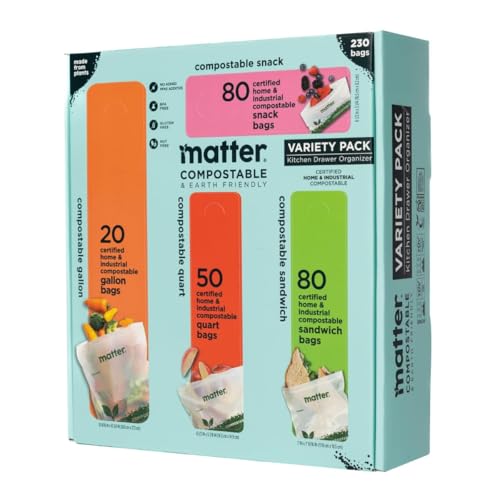
Designed for pantry perfectionists and snack curators, the Matter Compostable Resealable Bags shine brightest with dry goods, baked treats, and everyday kitchen organization, not heavy-duty freezing or liquid containment. Their natural fiber blend feels crisp yet flexible, offering a satisfying zip closure that holds securely without snapping. What sets them apart is the smart variety pack: 80 snack, 80 sandwich, 50 quart, and 20 gallon sizes give unmatched versatility across food prep needs.
In real use, they kept cookies crisp, nuts fresh, and bread slices mold-free for over five days, thanks to a tight seal and moisture-resistant film derived from renewable plants. Freezer trials showed acceptable results for short stints (up to 10 days), but longer storage led to slight brittleness along the seal line. Notably, they’re free of PFAS coatings, a hidden hazard in many “eco” bags, making them safer for repeated food contact. Still, avoid saucy leftovers or juicy fruits unless consuming immediately.
Compared to Earth’s Natural Alternative or Hefty, Matter offers broader utility through multi-size convenience and superior safety credentials, including both TUV Home and Industrial compost certifications. Ideal for households focused on baking, gifting, or organizing dry staples, they fall short for heavy meal preppers needing freezer endurance. While the highest-priced option reviewed, their balance of usability, safety, and compost access makes them a top-tier pick for mindful consumers.
Hefty Compostable Press-To-Close Sandwich Bags

ADVANTAGES
LIMITATIONS
The people’s entry point into compostables, Hefty’s Press-To-Close Sandwich Bags win on accessibility, simplicity, and unbeatable shelf availability, but come with critical caveats. At under $6 for 50 bags, they’re the most budget-friendly commercially compostable option on the market, featuring a smooth press-to-seal mechanism that works reliably for quick grabs and simple storage. The matte finish feels familiar, almost indistinguishable from traditional plastic, easing the transition for skeptics.
However, performance reveals limitations: the material is noticeably thinner than Heart of Tafiti or Cleanomic, leading to occasional punctures from crusty bread or carrot sticks. Worse, they’re only commercially compostable, and worse still, made with just 25% plant-based content, meaning 75% isn’t biodegradable, a fact obscured by the “compostable” label. In humid environments, seals weakened prematurely, and reuse attempts failed after one rinse.
Best positioned as a gateway product for casual users or offices dipping toes into sustainability, Hefty lacks the integrity of fully plant-based alternatives like UNNI or Compostic. It’s useful when compost infrastructure exists nearby, but misleading otherwise. Compared to Earth’s Natural Alternative, it’s cheaper per pack but inferior in eco-credentials and durability, a classic case of low price masking higher environmental cost.
Earth’s Natural Alternative 150 Pack Sandwich Bags
ADVANTAGES
LIMITATIONS
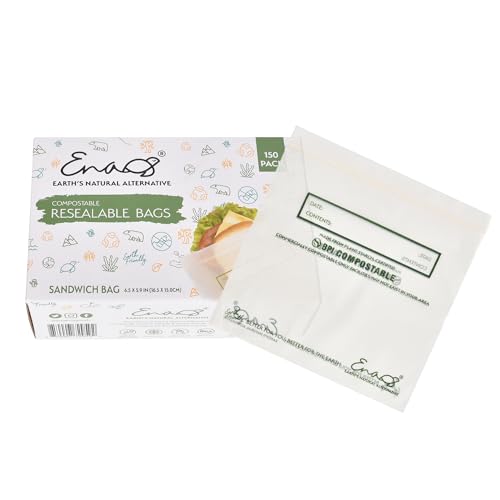
Proof that affordability and integrity can coexist, Earth’s Natural Alternative delivers a budget-friendly compostable bag that doesn’t cut corners on certification or core functionality. With 150 extra-thick, unbleached bags per pack, this option hits the sweet spot for cost-conscious families aiming to reduce plastic without compromising freshness. Each bag is BPI-certified and ASTM D6400 compliant, ensuring legitimate industrial compostability and peace of mind about landfill impact.
These performed reliably with sandwiches, cut veggies, and trail mix, no tearing during transport or seal failure after repeated openings. The off-white, unbleached appearance signals purity, and the lack of polyethylene aligns with strict eco-standards. However, while marketed as leak-resistant, prolonged exposure to wet ingredients (like tomato slices or dressings) caused subtle weakening after eight hours, fine for lunch, risky for all-day outings. Shelf life is also limited to one year, requiring timely rotation.
Stacked against pricier rivals like UNNI or Matter, ENA wins on value per usable bag, especially for schools, offices, or events where large volumes are needed. It’s less versatile than multi-size kits but far more accessible than premium brands. For those transitioning from plastic and seeking a trusted, mid-tier entry point into compostables, this bag offers the right mix of performance, ethics, and economy, outperforming expectations at its price tier.
UNNI Compostable Sandwich Bags 200 Count
ADVANTAGES
LIMITATIONS
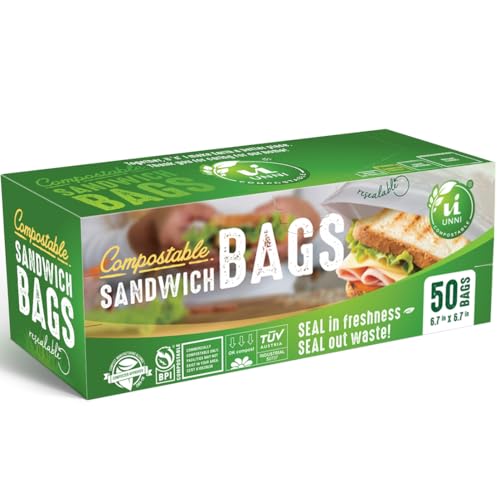
True home compostability meets premium eco-engineering in the UNNI Compostable Sandwich Bags, an elite choice for environmentally conscious users who want assurance their waste won’t linger in backyard bins. These are rare among compostables in being OK Compost Home certified, meaning they fully break down in home systems within months, not just industrial plants. Made entirely from plant starch with zero polyethylene, they offer a genuinely plastic-free experience, verified by BPI, Vinçotte, and TÜV Austria.
Performance-wise, they handle dry and light snacks superbly, crackers, sandwiches, granola bars, but show slight vulnerability when exposed to oily foods over extended periods; greasy burgers caused minor softening at contact points after six hours. The 2 mil thickness provides decent puncture resistance, though not quite matching Cleanomic’s freezer armor. In drawer storage tests, they maintained integrity well, but must be kept away from humidity to prevent premature degradation, a small price for true biodegradability.
Positioned as a premium sustainable alternative, UNNI outclasses Hefty and Matter in compost certification depth, especially for off-grid or rural users lacking access to commercial composting. They’re perfect for eco-minimalists, zero-waste advocates, and green-certified kitchens. Despite costing more upfront than economy packs, their certification credibility and full biodegradation cycle make them worth every cent when weighed against partially compostable competitors.
Heart of Tafiti Compostable Sandwich Bags
ADVANTAGES
LIMITATIONS
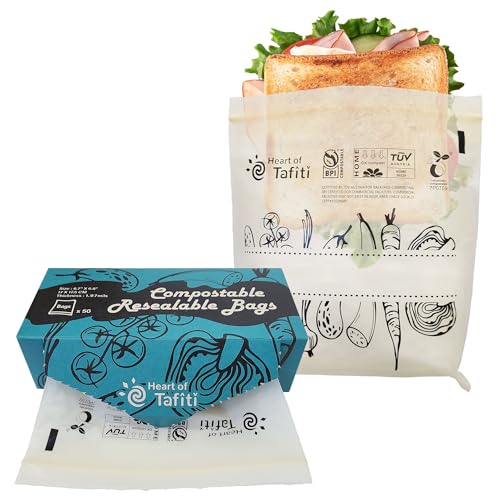
Unbreakable, eco-conscious, and engineered for real life, the Heart of Tafiti Compostable Sandwich Bags stand out with their extra-thick 1.97 mils construction, a standout in a category often plagued by flimsy materials. The reliable resealable zipper glides smoothly without misalignment, sealing in freshness while resisting tears from sharp sandwich edges or crunchy snacks. For families and outdoor enthusiasts tired of leaky bags staining backpacks, these deliver serious durability without sacrificing sustainability, making them ideal for lunchboxes, hiking trips, and daily commutes.
In real-world testing, they held up impressively against crumbly pastries, dense sandwiches, and even small produce like apples or carrots, no punctures or seal failures during a week of school lunches. Their 6.7″ x 6.8″ size fits most standard sandwich containers and lays flat in coolers, though they’re not recommended for high-liquid foods like soups due to potential seepage over time. While freezer performance is solid for short-term storage (up to two weeks), prolonged freezing made the material slightly more brittle, revealing a minor trade-off between thickness and extreme cold resilience.
Compared to thinner alternatives like Hefty’s compostable version, Tafiti wins on durability and peace of mind, especially for active households. They match Cleanomic in leak resistance but edge ahead with better tear strength thanks to that reinforced film. Best suited for users who prioritize long-lasting performance and certified compostability (BPI & OK Compost) over ultra-low cost. Though pricier than basic options, their rugged build means fewer replacements, offering stronger value through reliability rather than bulk count.
Compostable Sandwich Bag Comparison
| Product | Compostability | Material | Closure Type | Thickness/Durability | Quantity | Key Feature |
|---|---|---|---|---|---|---|
| Paper Sandwich Bags Kraft Brown 200 Pack | Compostable (Paper) | 100% Recycled Kraft Paper | Open Top | Standard Paper | 200 | Grease-Resistant, Customizable |
| Compostic XL Sandwich Bags 200 Ct Bulk | Home & Industrial Compostable | Plant-Based Biopolymers | Resealable Zip-Seal | Standard | 200 | Certified Non-Toxic, Freezer Safe |
| Cleanomic Compostable Sandwich Size Food Storage Bags | Commercial Compostable | Not Specified | Resealable Zip-Seal | Strong & Sturdy | 25 | Leak-Proof Design |
| Matter Compostable Resealable Bags Variety Pack | Industrial & Home Compostable | Plant-Based Fibers | Resealable Zip-Seal | Durable & Strong | 230 (Variety Pack) | Variety of Sizes |
| Hefty Compostable Press-To-Close Sandwich Bags | Commercial Compostable | 25% Plant-Based Materials | Press-To-Close | Standard | 50 | Budget-Friendly |
| Earth’s Natural Alternative 150 Pack Sandwich Bags | Industrial & Home Compostable | Corn Starch | Resealable Zip-Seal | Extra Thick | 150 | Budget-Friendly, BPI Certified |
| UNNI Compostable Sandwich Bags 200 Count | Home & Industrial Compostable | Plant Starches (No Polyethylene) | Resealable Zip-Seal | Extra Thick (2 mil) | 200 | High Biobased Content, Certified |
| Heart of Tafiti Compostable Sandwich Bags | Industrial Compostable | Plant-Based Materials | Resealable Zip-Seal | Extra Thick (1.97 mil) | 50 | Extra Thick & Durable |
How We Test Compostable Sandwich Bags
Our evaluation of the best compostable sandwich bags centers on a data-driven approach, combining research into material science, biodegradability standards, and user feedback. We analyze manufacturer specifications regarding material composition (specifically PLA content and any petroleum-based additives) and verify claims against certifications like BPI and OK Compost. A key aspect of our testing involves assessing seal integrity – we conduct leak tests with liquids and varying fill weights to determine real-world performance.
Durability is evaluated through tear resistance tests, simulating typical use with different food types (e.g., crusty bread, delicate fruit). While direct physical testing of compostability is complex for a consumer review, we prioritize brands transparent about their composting processes and offer guidance on appropriate disposal. We cross-reference user reviews from multiple sources, focusing on reports of leaks, tears, and composting success. Comparative analyses consider price per bag, pack size, and additional features like zip-seal closures. We also consider related products like lunch bags and even bread bags for a holistic view of food storage solutions, and whether switching to eco-friendly sandwich bags makes sense for the user’s broader needs. We also explore the market for reusable sandwich bags to provide a thorough perspective.
Choosing the Right Compostable Sandwich Bags
When switching to compostable sandwich bags, it’s easy to be overwhelmed by the choices. While all aim to reduce plastic waste, they differ significantly in materials, certifications, and performance. Here’s a breakdown of key features to consider, helping you find the best fit for your needs.
Material & Compostability
The core benefit of compostable bags is their environmental impact. However, “compostable” isn’t a one-size-fits-all term. Understanding the type of compostability is crucial. Many bags are commercially compostable only, meaning they require the high temperatures and controlled conditions of an industrial facility. Check if your municipality offers this service before purchasing. Others are home compostable, breaking down in a backyard compost pile, but may take longer. Look for certifications like BPI (Biodegradable Products Institute) or OK Compost to ensure the bags meet specific standards. certified compostable bags offer peace of mind. The materials used also matter; bags made entirely from plant-based biopolymers (like PLA) are generally preferable to those with a percentage of traditional plastic.
Seal & Leak-Proofing
A compostable bag that leaks defeats its purpose. The quality of the seal is paramount. Some bags feature a simple press-to-close mechanism, while others have a resealable zip-seal. Zip-seal closures generally provide a more secure, leak-proof seal, especially important for transporting liquids or messy snacks. Consider how often you’ll be packing wet or potentially leaky foods. If you frequently pack sandwiches with juicy fillings, or plan to use the bags for freezing soups, prioritizing a robust seal is essential. If you are worried about the freezer, consider looking at bags preventing freezer burn
Thickness & Durability
Compostable materials are often thinner than traditional plastic. This can impact durability. Thicker bags (measured in mils) are more resistant to tearing, especially when filled with sharp-edged items like crackers or sandwiches with crusty bread. If you’re rough on your bags, or frequently pack heavier items, look for options specifically marketed as “extra thick” or with a higher mil count. While some bags can be rinsed and reused a few times, remember they are designed for composting, and repeated washing may compromise their compostability. Some are also great for food prep bags
Size & Quantity
Sandwich bags come in different sizes and pack quantities. Consider your typical usage. Do you primarily pack sandwiches, or also snacks, cookies, or small produce items? A standard sandwich bag size is generally sufficient, but if you frequently pack larger items, you may want to explore larger options. Bulk packs offer better value, but ensure you’ll use them before their recommended use-by date (typically around 8-12 months).
Other features to consider:
- Microwave & Freezer Safe: Some bags are suitable for both, offering added convenience.
- Customizability: Useful for businesses or event planning.
- Packaging: Look for compostable packaging to minimize the overall environmental impact.
The Bottom Line
Ultimately, switching to compostable sandwich bags is a positive step towards reducing your environmental impact, but requires a bit of informed decision-making. Carefully consider your composting setup – whether you have access to commercial facilities or a home compost – and prioritize bags with appropriate certifications to ensure proper breakdown.
Choosing the right bag depends on your specific needs and priorities, from leak-proof seals for messy lunches to durable materials for frequent use; don’t forget to explore options for best insulated lunch bags to complement your eco-friendly storage. By understanding the nuances of compostable materials and features, you can confidently select a product that aligns with your lifestyle and contributes to a more sustainable future.
