2 Best Water Storage Solutions of 2026
This post contains affiliate links. As an Amazon Associate, we earn from qualifying purchases.
The HOANK 55-Gallon Water Storage Barrel stands out as the best overall for long-term, reliable storage, thanks to its durable HMWPE construction and UN rating. For those tight on space, the waterBOB Bathtub Emergency Water Storage Bladder is a smart budget-friendly pick that maximizes capacity without using floor space.
Storing water for emergencies sounds simple, until you’re faced with flimsy containers, odd shapes that won’t fit in your closet, or worse, containers that compromise water safety. Too many people wait until a storm is incoming to figure this out, only to find their options are limited or poorly suited to real needs.
This guide cuts through the noise. I compared top options based on material safety, capacity, durability, and how actual users report they perform over time, drawing from my focus on practical, waste-reducing solutions at Food Keepy. These picks balance reliability, ease of use, and smart design for real household preparedness.
Top 2 Water Storage in the Market
The Best Water Storage, Reviewed
HOANK 55-Gallon Water Storage Barrel

Strengths
- 55-gallon capacity
- BPA-free material
- UN rated safety
- Weather resistant
- Dual fitting options
Trade-offs
- Bulky when full
- No pump included
- Heavy to move
If you’re serious about long-term water storage and need a rugged, reliable container, the HOANK 55-gallon barrel stands out on paper and in owner feedback. Its HMWPE construction is a real advantage, it’s UV-stable and weather-resistant, so leaving it outdoors won’t lead to rapid degradation like cheaper plastics. The BPA-free build and UN-rated certification add legitimacy for those storing potable water, not just industrial fluids, which many users confirm works well with proper sanitation.
The dual-threaded fittings (2-inch NPT and Buttress) are a thoughtful touch, making it compatible with a range of pumps and spigots, something preppers and off-grid users consistently praise. While it’s heavy once full, the industrial design means it’s built to last, with few reports of cracking or leaking under normal conditions. Compared to basic food-grade jugs, this is a major step up in durability and capacity.
Video review
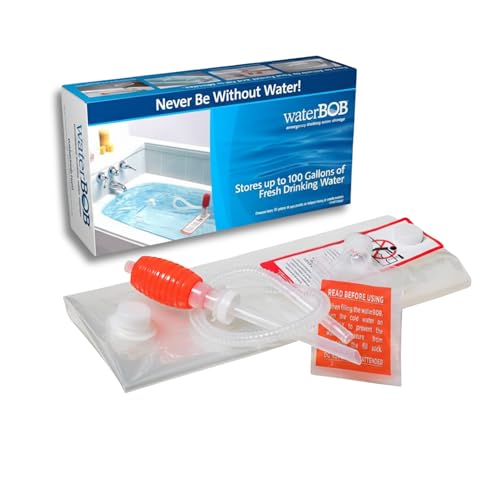
waterBOB Bathtub Emergency Water Storage Bladder
Strengths
- Fits in standard bathtub
- Holds up to 100 gallons
- BPA-free food-grade liner
- Easy setup
- Includes hand pump
Trade-offs
- Single-use per fill
- Requires clean tub
- Not for long-term storage
The waterBOB is a clever solution for people who can’t store large containers, its ability to turn a bathtub into a 100-gallon reservoir is unmatched for space efficiency. The food-grade liner meets FDA standards, and owners consistently report confidence in water safety when used as directed, especially during short-term outages from storms or boil advisories. The included hand pump makes dispensing manageable, though some note it requires steady hand strength over time.
It’s not meant for long-term use, water should be drained within 16 weeks, but for hurricane prep or sudden disruptions, it’s a practical, low-footprint option. Compared to stacking jugs or buying barrels, it’s far more accessible for apartment dwellers or urban households. The fact that it’s been widely adopted and media-recognized adds to its credibility, even if it’s not a permanent fix.
Video review
How We Chose These water storage
Rather than a hands-on lab test, my research for these recommendations involved a detailed comparison of published specifications and features across numerous water storage options. I weighed owner reviews from multiple sources, alongside assessments from reputable experts in emergency preparedness. Ultimately, I ranked products based on their suitability for various needs, considering factors like capacity, materials, and ease of use – all informed by my experience researching food and water preservation at Food Keepy.
For water storage, durability and portability are key. I prioritized containers constructed from BPA-free, food-grade materials to avoid contamination, and those with robust designs capable of withstanding long-term storage without leaking or degrading. Capacity also played a significant role; options ranged from smaller, easily movable containers to larger solutions for extended outages, helping ensure access to adequate emergency water storage.
Product specifications reliably indicate capacity, material composition, and compatibility with potable water. However, I placed greater emphasis on owner feedback regarding real-world usability and longevity. Reports of leaks, material odors, or difficulty filling/dispensing significantly impacted a product’s ranking. Understanding how these containers perform over time, and for what purposes, informed my final assessment of the containers for long-term storage.
What To Look For In water storage
Choosing the right water storage solution requires careful consideration of your needs and potential emergency scenarios.
Effective water storage prioritizes container material safety (BPA-free, food-grade), capacity relative to household size and anticipated duration of need, protection from contamination (sealed designs, filtration options), and durability for long-term reliability. Assess potential storage locations and ensure the container’s physical properties align with the environment.
Capacity and Household Size
Determining the appropriate capacity is the first step. A general rule is one gallon of water per person per day for drinking, with additional amounts needed for sanitation and basic cooking. However, this is a baseline; consider your family’s specific needs, including pets, medical requirements, and the possibility of being without resupply for an extended period. If you’re limited on space, something like the waterBOB offers a surprisingly large capacity (up to 100 gallons) without requiring dedicated floor space. Conversely, larger families may benefit from multiple, smaller containers for water storage to facilitate easier handling and distribution.
Material and Safety Considerations
The material a container is made from is paramount. Look for BPA-free, food-grade plastics, as leaching can contaminate the water. High Molecular Weight Polyethylene (HMWPE), like that used in the HOANK barrel, is a good option for durability and resistance to UV degradation, which is important if you plan to store water outdoors. Beyond the plastic itself, examine the design. A tight-head design minimizes the risk of leaks and contamination, while UN ratings guarantee the container meets safety standards for storing potentially hazardous materials.
Here’s a quick breakdown of what to look for in material quality: * Basic plastic (often opaque): Cheapest, least durable. * Food-grade plastic: Safe for drinking water, but may still degrade over time. * HMWPE with UV stabilizers: Most durable and best for long-term long-term water storage even in direct sunlight.
A good rule of thumb: if a container doesn’t explicitly state it’s food-grade or BPA-free, don’t use it for potable water.
Portability and Ease of Use
Consider how easily you’ll be able to access and use the stored water. A large, 55-gallon barrel is economical, but moving it when full can be extremely difficult. Bladders, while flexible, require a suitable container (like a bathtub) and a method for dispensing the water. Some systems, like the waterBOB, include a siphon pump, which makes accessing the water much easier. Think about your physical capabilities and whether you’ll need assistance moving or dispensing the water during an emergency. Don’t overlook the importance of having compatible fittings for connecting pumps or transfer hoses to your top water container picks.
Water Storage Compared
Here’s a comparison of key specifications for different water storage solutions.
| Product | Capacity | Material | Fittings | UN Rated | Space Efficiency |
|---|---|---|---|---|---|
| HOANK 55-Gallon Water Storage Barrel | 55 Gallon | HMWPE | 2″ NPT, 2″ Buttress | Yes | Low |
| waterBOB Bathtub Emergency Water Storage Bladder | 100 Gallon | BPA-Free Plastic | N/A | N/A | High |
Frequently Asked Questions
What’s the shelf life of stored water?
Properly stored water can remain safe to drink for up to six months without additional treatment, though regular rotation every three months is best practice to maintain optimal quality. This assumes the water was potable when stored and the container remains sealed and undisturbed.
Can I use just any plastic container for water storage?
No, you should only use containers specifically labeled as food-grade and BPA-free to prevent chemical leaching into the water. Many common plastics aren’t designed for long-term potable water storage and can compromise water safety.
How do I properly sanitize a water storage container before use?
A solution of one tablespoon of unscented liquid chlorine bleach per gallon of water is effective. Fill the container, let it sit for 30 minutes, then empty and allow to air dry completely before filling with your potable water supply.
What water treatment options are available if my stored water becomes cloudy or develops an odor?
Portable water filters, purification tablets, or boiling the water for one minute can effectively eliminate most harmful bacteria and viruses. These are important additions to your emergency preparedness kit, especially for long-term storage, and complement finding the best home water containers.
Is it better to store water in a large container or multiple smaller containers?
Multiple smaller containers are generally more practical, as they’re easier to move and distribute in an emergency. A single large container, while cost-effective, becomes unwieldy when full, and losing it due to damage means losing your entire supply; consider water container reviews to help decide.
The Bottom Line
Choosing the best water storage really comes down to balancing how much control you want over the system with how much effort you’re willing to put into setup and maintenance. For most households, the HOANK 55-Gallon Water Storage Barrel strikes the best balance – it’s durable, safe, and offers a substantial capacity without being unwieldy.
If budget is a primary concern, or you need a large volume in a small space, the waterBOB Bathtub Emergency Water Storage Bladder is a surprisingly effective solution. However, for those prioritizing versatility and wanting a system that can be easily integrated with filtration or dispensing equipment, exploring various water storage tanks is worthwhile.
Ultimately, the most important thing isn’t any single feature or specification, but having a plan and the means to reliably access clean water when you need it. Making sure you understand how to store water long-term and regularly inspecting your chosen system will do more for your peace of mind than any premium feature.
