Freezing Cheese: Can You Put Cheese in the Freezer Safely?
This post contains affiliate links. As an Amazon Associate, we earn from qualifying purchases.
You can put cheese in the freezer, but the result depends entirely on the cheese type, its moisture content, and how you plan to use it after thawing. Hard and semi-hard cheeses like cheddar, Parmesan, and low-moisture mozzarella freeze well for 6-12 months but become crumbly. Soft, high-moisture cheeses like cream cheese or brie suffer texture damage, turning watery or grainy, and are best used in cooked dishes if frozen at all.
That crumble isn’t a flaw; it’s physics. Ice crystals puncture the cheese’s structure. The good news is flavor stays intact, and a crumbly cheddar still melts perfectly in a sauce. The real question isn’t safety, it’s whether the thawed cheese still works for your purpose.
What follows: the exact storage times from university extension guides, a step-by-step method to minimize texture loss, and the one type of cheese that freezes surprisingly well against all advice.
Key Takeaways
- Freezing halts the aging process in natural cheeses, so flavor development stops the day you freeze it.
- Grated Parmesan and Romano can last a full year in the freezer, per Kansas State University guidelines, while cottage or ricotta cheese should be used within a month.
- Vacuum sealing or double-wrapping is non-negotiable for blocks; shredded cheese freezes faster and suffers less texture damage.
- Thaw frozen cheese slowly in the refrigerator, a full week for an 8-ounce bag is the professional recommendation, though a couple of days often works in practice.
- Never freeze cheese you plan to serve on a board. Always freeze with a cooked application in mind, like baked ziti, pizza, or a cheese sauce.
The Hard Cheese Rule (and the Soft Cheese Exception)
The line between success and a runny mess is moisture. Hard and semi-hard cheeses have less water, so there’s less liquid to expand into destructive ice crystals. The NDSU food freezing basics guide notes these cheeses become crumbly and dry but retain their flavor. That’s the trade-off.
According to the North Dakota State University Agriculture Extension, hard or semi-hard cheeses should be frozen in pieces no larger than ½ pound per chunk. Frozen cheese will be crumbly and a little dry but the flavor remains just as good as fresh cheese.
Soft cheeses are a different story. Their high water content turns against them. A cheese like cream cheese or a fresh chèvre is an emulsion of fat, protein, and water. Freezing breaks that emulsion. The result is often separation, a grainy, watery texture that’s fine for stirring into a cooked dip but ruined for spreading on a bagel.
The .095 vs .105 Trade-Off That Burns Out Electric Motors
Processed cheeses, with their added stabilizers, often freeze better than their artisan counterparts. They’re designed for consistency. This is why some larger-production, soft-ripened cheeses like Fromager d’Affinois can survive the freezer while a delicate, small-batch Camembert cannot. The stabilizers act as a buffer against the ice.
| Cheese Type | Freezes Well? | Best Use After Thawing | Max Freezer Time (Source) |
|---|---|---|---|
| Hard (Parmesan, Romano) | Yes, especially grated | Cooking, grating | 12 months (K-State) |
| Semi-Hard (Cheddar, Gouda) | Yes, becomes crumbly | Cooking, shredding | 6-8 months (K-State) |
| Soft, High-Moisture (Cream Cheese, Ricotta) | Poor, may separate | Cooking, baking | 1 month (NDSU) |
| Soft-Ripened (Brie, Camembert) | Not recommended | Cooked applications only | Not recommended |
| Processed (American, Cheese Sauce) | Yes | As intended | 6-8 months (NDSU) |
The Kansas State University storage publication provides a clear hierarchy: grated hard cheeses last the longest, while fresh soft cheeses have the shortest freezer life. Treat these times as ceilings, not guarantees.
How Freezing Changes Cheese (It’s All About the Ice)
Freezing isn’t a pause button; it’s a structural remodel. Water molecules inside the cheese form ice crystals. These crystals expand, puncturing the delicate matrix of fat and protein that gives cheese its texture. Faster freezing creates smaller, less damaging crystals. This is why a small, pre-shredded pile freezes better than a giant block.
The aging process stops dead. Live cultures and enzymes responsible for flavor development go dormant. A two-year aged cheddar frozen at month eighteen will taste like an eighteen-month-old cheddar when you thaw it a year later, it won’t continue aging. This is why purists like Jill Allen from Tillamook advise against freezing natural cheddars.
Common mistake: Freezing a fancy cheese for a future cheese board. The textural change from smooth and sliceable to crumbly or weepy is irreversible. Freeze only what you’ll cook.
For unpasteurized cheeses, freezing does not kill potentially harmful bacteria. The safety profile remains the same. If you couldn’t eat it raw before freezing, you still can’t after thawing, unless you cook it thoroughly.
The Step-by-Step Guide to Freezing Cheese Right
This process prioritizes speed and airtightness to limit ice crystal size and prevent freezer burn.
1. Portion and Prepare. Cut hard cheeses into blocks under half a pound. For soft cheeses, consider if it’s worth it. Shredding is the best pre-freeze prep for cooking cheeses, as it maximizes surface area for quick freezing.
2. Wrap for War. Use a two-layer barrier. First, wrap the cheese tightly in plastic cling film, pressing out all air pockets. Then, seal it in a heavy-duty freezer bag, pushing out the air before zipping, or use a vacuum sealer. For shredded cheese, portion into recipe-sized amounts in small bags.
3. Label Relentlessly. Write the cheese type and date on the package with a permanent marker. Your future self will not remember if that’s cheddar or Gouda, or if it’s been two months or eight.
4. Freeze Fast. Place the wrapped packages flat in the coldest part of your freezer, away from the door. Don’t stack them until they’re solid.
5. Thaw Slowly. Move the cheese to the refrigerator. The professional thaw for an 8-ounce bag of shredded cheese is a full week. Realistically, after 48 hours, most shredded or small-block cheese is thawed enough for cooking. Never thaw at room temperature, it invites condensation and sogginess.
Skipping the tight wrap introduces freezer burn, which tastes like cardboard and ruins flavor. Rushing the thaw causes moisture to pool on the cheese’s surface, making it wet and accelerating mold growth once back in the fridge.
How to Freeze Cheese Without Sacrificing Quality
Quality loss is inevitable, but these three tactics minimize it.
First, match the cheese to the method. Are you freezing for future grating or melting? Pre-shred hard cheeses like cheddar or Parmesan before freezing. The freezing shredded cheese method locks in usability. For a block you might want to slice, freeze it whole but know it will crumble.
Second, invest in a vacuum sealer. It’s the single most effective tool for long-term freezer storage. It removes the air that causes freezer burn and oxidation. As one expert cited in the research notes, “Air is the thing that latches onto food and gives you freezer burn.” A vacuum-sealed bag of shredded mozzarella will outperform a loosely wrapped block every time.
Third, embrace the crumble. Plan your recipes around the texture change. That crumbly cheddar won’t slice for sandwiches, but it’s perfect for storing hard-boiled eggs in a cheesy egg salad, or for a baked mac and cheese where it will melt evenly.
The principles of good flour storage apply here too: keep it dry, keep it airtight, and keep it cold. Your freezer is just a colder, more intense version of your pantry.
Which Cheeses Should You Never Freeze?
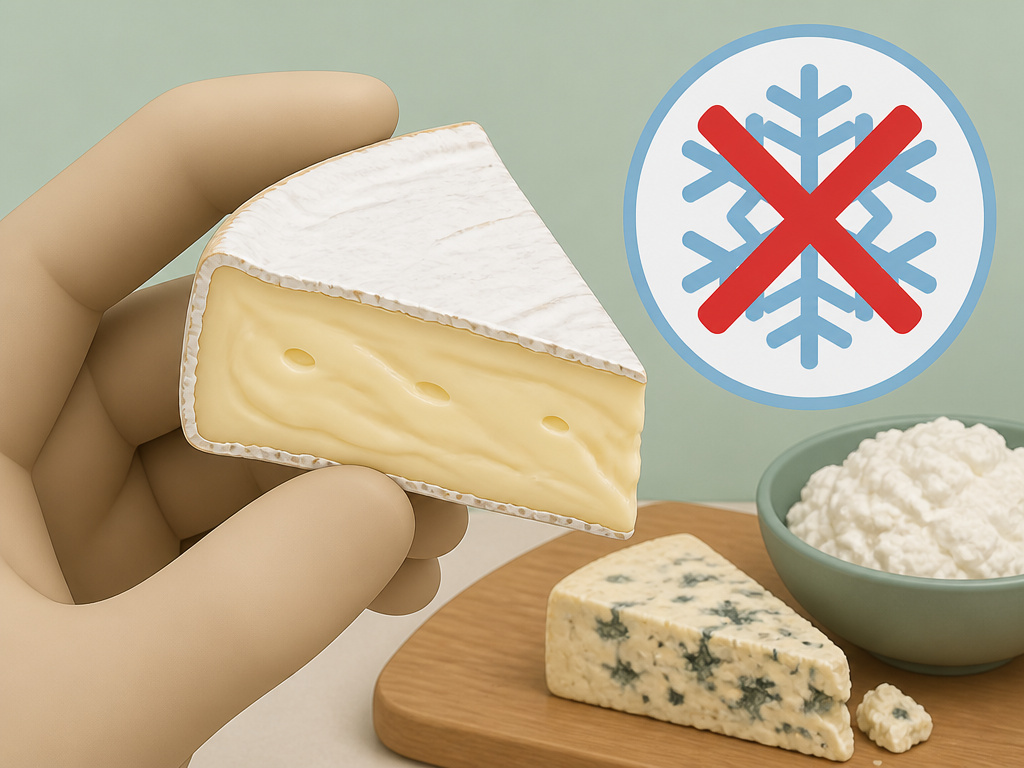
Some cheeses are hostages to their own delicacy. Their quality is their texture, and freezing destroys it.
- Delicate, Bloomy-Rind Cheeses: A ripe Camembert or a small-producer brie relies on a creamy, flowing paste. Freezing turns that paste grainy and can cause the rind to separate.
- Fresh, High-Moisture Cheeses: Ricotta, cottage cheese, and fresh mozzarella (the kind packed in water) have very high water content. They will separate and become watery, though they can still be used in lasagna or baked dishes where texture is less critical.
- Blue Cheeses with Complex Mold Veins: Freezing can disrupt the delicate balance of molds and moisture, altering the flavor profile in unpredictable ways.
- Any Cheese for a Cheese Board: This is the golden rule. If you plan to eat it raw, don’t freeze it. The textural degradation will be immediately apparent.
There’s a practical hierarchy. An industrial cream cheese might freeze okay for a cheesecake. A local, small-batch chèvre will not. When in doubt, freeze a tiny test portion first and thaw it after 24 hours. If the texture is acceptable for your planned use, freeze the rest.
Frequently Asked Questions
Can you freeze cheese in its original packaging?
No, the original packaging is rarely airtight enough for the freezer. It’s designed for refrigerator shelf life. Always overwrap it with plastic wrap and a freezer bag, or vacuum seal it.
Does freezing cheese kill bacteria?
Freezing does not kill bacteria or mold; it merely puts them in a dormant state. An unpasteurized cheese remains unsafe for at-risk individuals after thawing. Always cook previously frozen soft cheeses thoroughly if there are safety concerns.
How long can you keep cheese in the freezer?
It varies by type. Refer to the K-State refrigerator freezer storage times chart: grated hard cheeses (12 months), blocks of hard/semi-hard cheese (6-8 months), soft cheeses like cottage or cream cheese (1 month). These are maximums; quality declines over time.
Why did my frozen cream cheese turn watery?
This is separation. The high water content in cream cheese froze, expanded, and broke the emulsion of fat and water. You can often beat it back together once thawed, but it will be grainier. It’s still usable in cooked dips or frostings.
Can you refreeze cheese after thawing?
It’s not recommended. Each freeze-thaw cycle further damages the cellular structure, leading to greater moisture loss, more crumbliness, and a higher chance of off-flavors. Thaw only what you plan to use.
The Bottom Line
Freezing cheese is a tool for preventing waste, not for preserving perfection. It turns a block of cheddar into a dedicated cooking ingredient. Follow the university extension guidelines for timing, wrap it like you’re protecting it from a storm, and always thaw it slowly in the fridge.
For everyday cheese storage, your refrigerator and proper cheese containers are the best tools. The freezer is your backup plan for surplus, sales, or prepping ingredients for future meals like lasagna. Keep a bag of pre-shredded, frozen mozzarella for pizza nights and a block of vacuum-sealed cheddar for emergency grilled cheeses. That’s the practical, non-wasteful way to use your freezer.
