Freezing Shredded Cheese in a Bag: A Complete How-To Guide
This post contains affiliate links. As an Amazon Associate, we earn from qualifying purchases.
You can freeze shredded cheese in a bag. Use a heavy-duty freezer bag, press out all the air, and seal it tightly. Thaw it in the refrigerator for 24 to 48 hours before use. Hard cheeses like cheddar and mozzarella freeze well for 3-6 months, while softer cheeses can turn crumbly or grainy.
That 24-48 hour thaw window isn’t a suggestion. It’s the time needed for ice crystals to dissolve and moisture to migrate back into the protein matrix of the cheese. Skip it, and you get dry, brittle shreds that clump in the bag and don’t melt evenly.
What follows: the step-by-step method that prevents freezer burn, a breakdown of which cheeses actually survive the deep freeze, and the one common mistake that turns a bag of mozzarella into a solid, unusable brick.
Key Takeaways
- Thaw frozen shredded cheese in the fridge for a full 24 to 48 hours; rushing this step guarantees clumpy, dry results.
- Hard and semi-hard cheeses like cheddar, mozzarella, and Parmesan freeze best for 3-6 months; aged cheddar and soft cheeses like Brie become crumbly or watery.
- Press every bit of air out of the freezer bag before sealing—trapped air is the direct cause of freezer burn and off-flavors.
- For long-term storage beyond three months, a vacuum sealer outperforms any freezer bag by removing nearly all oxygen.
- Label every bag with the cheese type and date; frozen cheese looks identical after a month, and guessing leads to waste.
How Freezing Changes Shredded Cheese
Freezing works by turning the water inside food into ice. In cheese, that water is trapped within a network of milk proteins and fat. When it freezes, the ice crystals expand. This expansion physically pushes against the protein structure.
If you freeze slowly—like in a home freezer—the crystals grow large. Large crystals puncture more cell walls. That’s why thawed cheese can weep moisture and feel dry. The structural damage is already done.
A freezer temperature at or below 0°F (-18°C) is non-negotiable. Warmer temperatures cause larger, more destructive ice crystals to form, accelerating texture loss. This spec comes straight from university food science extensions.
The fat content matters too. High-fat cheeses have some protection; the fat surrounds the protein strands like a cushion. Lower-moisture, harder cheeses have less free water to crystallize. This is the mechanical reason a block of Parmesan survives freezing better than a log of fresh goat cheese.
The goal isn’t to prevent change. It’s to manage it. You’re trading a perfect fresh texture for a shelf life extension of several months. For cooking applications like casseroles, pizzas, or sauces, where melt and flavor are the priorities, that’s a winning trade. For a cheese board, it’s a loss.
Which Cheeses Freeze Best (And Which Don’t)
Not all cheeses are built for the cold. The rule is simple: the harder the cheese and the lower its moisture content, the better it freezes.
| Cheese Type | Freezes Well? | Best Use After Thawing | Texture Change |
|---|---|---|---|
| Cheddar (young, block) | Yes | Cooking, melting | Slightly crumbly, may not slice cleanly |
| Mozzarella (low-moisture, shredded) | Yes | Pizza, pasta bake, casseroles | Minimal if properly thawed |
| Parmesan / Romano (grated) | Excellent | Topping, cooking, baking | Almost none |
| Swiss, Gouda, Provolone | Yes | Sandwiches, cooking | Can become rubbery if overheated |
| Aged Cheddar | Fair | Cooking only | Becomes very crumbly |
| Brie, Camembert | Poor | Cooked dishes only | Becomes watery and grainy |
| Cream Cheese, Cottage Cheese | No | Not recommended | Separates, becomes grainy |
The UCANR Preserve It Freezing guide is blunt: “Cheeses generally retain their flavor after freezing, but they can become crumbly and mealy.” They note that shredded mozzarella and young cheddar can be frozen for 3-4 months, while block hard cheeses can go 6 months.
Aged cheddar is the tricky one. It’s already low in moisture, but its crystalline protein structure shatters under ice expansion. You’ll get a cheese that’s perfect for sprinkling into a soup or sauce, but you can’t slice it for a cracker.
Where this goes sideways: Freezing soft, high-moisture cheese like fresh mozzarella or ricotta. The high water content forms large ice crystals that destroy the delicate curd structure. Thawed, it collapses into a watery, grainy pool. Use it within a month or don’t freeze it at all.
For cheeses you plan to eat as-is, stick to the fridge. The freezer is a tool for your cooking arsenal, not your cheese drawer.
How to Freeze Shredded Cheese in a Bag: A Step-by-Step Guide
This process focuses on preventing the two big enemies: freezer burn and giant ice clumps.
What you’ll need:
- Shredded cheese (store-bought or freshly shredded from a block)
- Heavy-duty freezer bags (not standard sandwich bags)
- A permanent marker
- A straw (optional, for the “straw method” of air removal)
- A baking sheet (optional, for flash-freezing)
The Steps:
- Portion it. Divide your cheese into amounts you’ll typically use—one or two cups for a pizza, half a cup for topping tacos. This avoids thawing and refreezing the whole batch.
- Bag it. Place the portion into a freezer bag. Do not overfill; leave enough room to press the bag flat.
- Remove the air. This is the critical step. Press the bag gently to push air toward the opening. Seal the bag almost completely, leaving a one-inch gap. Insert a straw into the gap, suck out the remaining air, and quickly remove the straw and seal the last inch. No straw? Press the bag flat against the counter, squeezing air toward the top before sealing.
- Label it. Write the type of cheese and the date on the bag with a permanent marker. “Shredded Cheddar, 3/15” is perfect. In three months, you won’t remember.
- Freeze it flat. Lay the sealed, flat bag on a level surface in your freezer. A flat bag freezes faster (smaller ice crystals) and stacks neatly.
If you’re freezing freshly shredded cheese, consider a five-minute flash-freeze. Spread the shreds on a baking sheet and place it in the freezer. This pre-freezes the individual strands so they won’t stick together into a block when bagged. After five minutes, bag them as above.
Common mistake: Throwing a half-used bag of store-bought shredded cheese directly into the freezer. The bag is flimsy and full of air. Transfer the cheese to a proper freezer bag, press out the air, and seal it. The extra two minutes prevent a freezer-burned brick.
Freezer Bag vs. Vacuum Sealer vs. Container
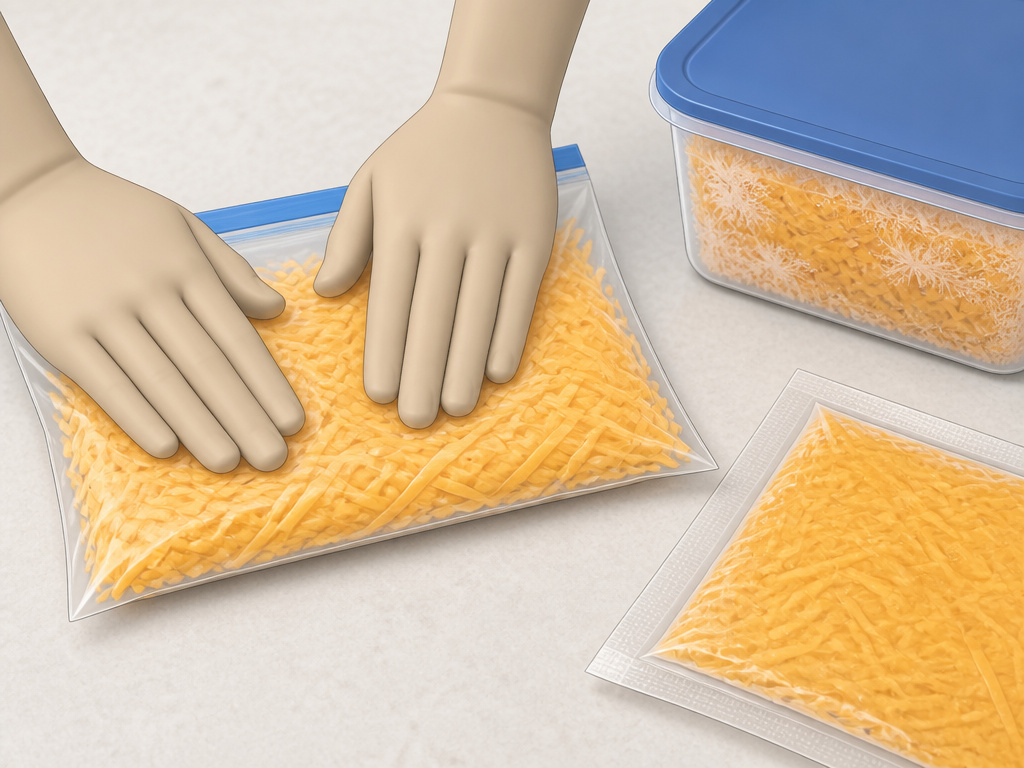 Your choice of vessel directly impacts how long the cheese retains quality.
| Method | Best For | Max Quality Shelf Life | Key Advantage | Key Drawback |
|---|---|---|---|---|
| Freezer Bag (heavy-duty) | Short-term storage, 1-3 months | Good | Cheap, space-efficient, blocks moisture | Air removal is imperfect; some oxidation occurs |
| Vacuum Sealer | Long-term storage, 3-6+ months | Excellent | Removes almost all air, prevents freezer burn completely | Higher cost, requires equipment, bags are more expensive |
| Rigid Freezer Container | Small portions, frequent access | Good | Reusable, sturdy, protects from crushing | Takes up more space, often leaves more headspace (air) |
A freezer bag is the default most people should use. It’s effective if you’re diligent about air removal. For a serious upgrade, a vacuum sealer removes nearly all oxygen, dramatically slowing oxidation and freezer burn. It’s the method recommended in the NDSU Food Freezing Basics PDF for long-term preservation of dairy products.
Rigid freezer-safe containers are fine for a month, but the empty space inside allows frost to form. If you use them, fill them as completely as possible.
The freezing soup in bags method on this site uses the same air-evacuation principle. The goal is identical: eliminate the air gap between the food and the seal.
Thawing and Using Your Frozen Shredded Cheese
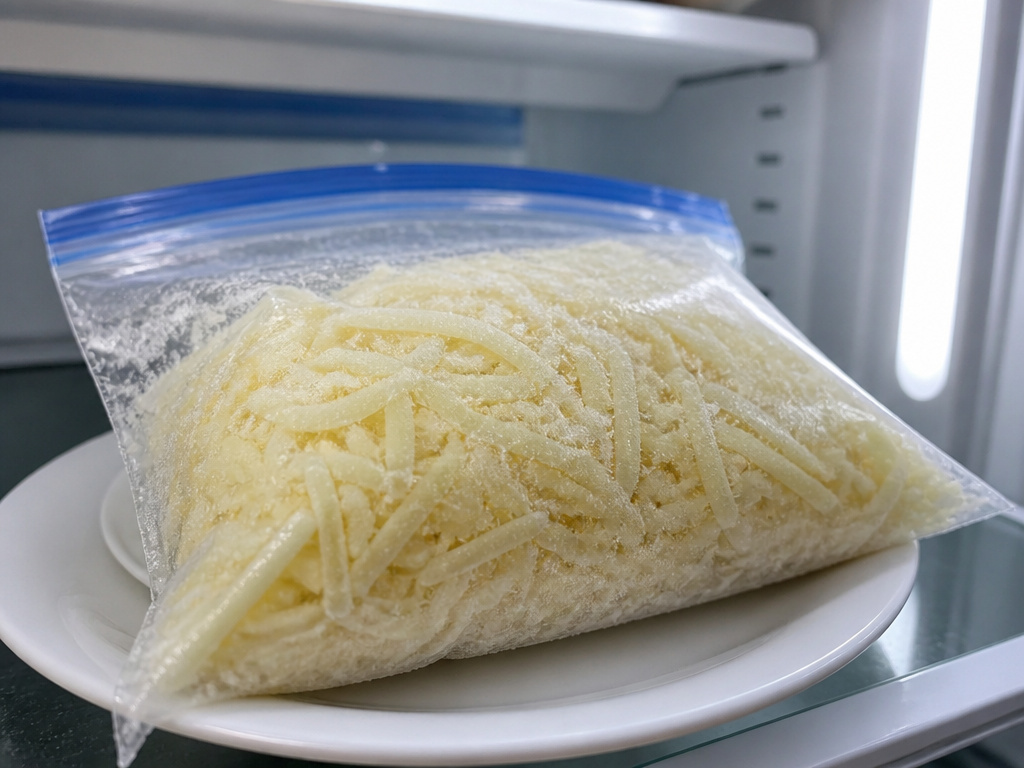 This is where patience pays. Do not thaw shredded cheese at room temperature. Do not run it under warm water.
Thaw it in the refrigerator for 24 to 48 hours. Place the sealed bag on a plate (in case of leaks) in the fridge. The slow, cold thaw gives moisture time to re-absorb evenly. The UF/IFAS dairy freezing guide explicitly states this timeline for shredded cheese.
What if you need cheese now and forgot to thaw it? You can cook with it directly from frozen. Sprinkle frozen shreds straight onto a pizza or into a casserole. They’ll thaw and melt during cooking. The texture won’t be perfect for a fresh topping, but it works in a pinch.
After thawing, use the cheese within 3 to 4 days. Do not refreeze it. Refreezing enlarges existing ice crystal damage, and the texture degrades rapidly.
Pro Tips and Problem Solvers
 A little extra knowledge solves the common headaches.
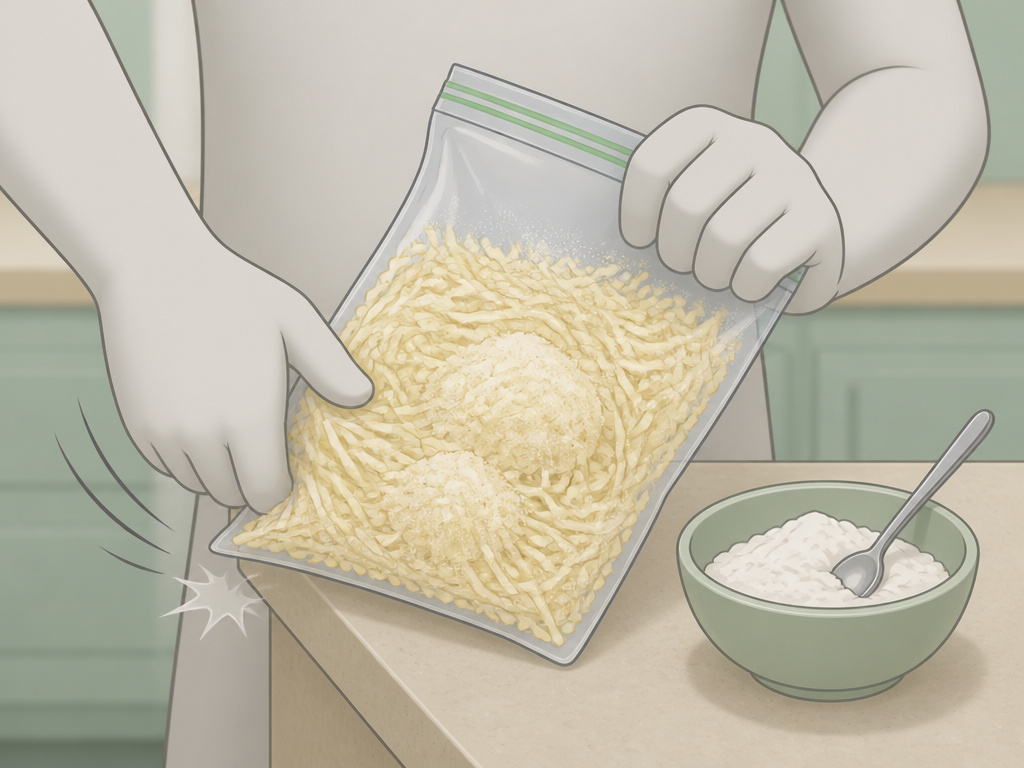
Preventing a Solid Block: If your frozen shreds are stuck together in one lump, you didn’t remove enough air or you skipped the flash-freeze step. Whack the bag against the counter edge to break it up, or use a grater on the frozen block to re-shred it.
The Flour Trick: Some cooks toss freshly shredded cheese with a teaspoon of cornstarch or flour before bagging. The powder coats the strands, absorbing minute moisture and preventing them from freezing together. It’s a useful hack for cheeses you plan to use as a loose topping.
Freezer Burn Is Not a Death Sentence: See white, frosty patches? That’s freezer burn—dehydration and oxidation from air exposure. Cut away the affected areas. The cheese underneath is safe to eat but will be drier. Use it in cooked dishes where moisture is added back.
Label Everything. You think you’ll remember. You won’t. After six weeks, a bag of frozen white shreds could be mozzarella, Monterey Jack, or a white cheddar. Guessing wrong can ruin a recipe.
For bulk cheese buyers, the economics are clear. Buying a large block of cheddar and shredding it yourself for the freezer beats purchasing multiple small bags of pre-shredded cheese. You avoid anti-caking additives and save money. The initial effort of shredding and proper techniques for freezing cheese pays off for months.
Frequently Asked Questions
Does freezing shredded cheese change the taste?
Freezing doesn’t significantly alter the core flavor of hard cheeses like cheddar or Parmesan. The main risk is off-flavors from freezer burn if the cheese isn’t packaged airtight. The primary change is texture, not taste.
Can I freeze shredded cheese in its original bag?
You can, but you shouldn’t. The plastic on pre-shredded cheese bags is thin and not designed for long-term freezing. It tears easily and doesn’t seal out air well. For best results, transfer the cheese to a dedicated freezer bag or vacuum-sealer bag.
How long does frozen shredded cheese last?
For best quality, use frozen shredded cheese within 3 to 4 months. University extensions note that hard cheeses can technically last 6 months, but flavor and texture slowly decline after the 3-month mark. Always label with the date.
Why is my thawed shredded cheese soggy?
Sogginess means excess moisture wasn’t locked in during freezing or thawing was too rapid. Large ice crystals damaged the cheese’s structure, and the water leaked out. Next time, ensure your freezer is at 0°F or below, remove all air from the bag, and thaw slowly in the fridge.
Can you freeze shredded cheese for pizza?
Yes, and it’s one of the best uses. Low-moisture, part-skim mozzarella freezes particularly well. Sprinkle it directly from the freezer onto your pizza before baking. The cheese will thaw and melt perfectly in the oven.
The Bottom Line
Freezing shredded cheese in a bag is a straightforward way to cut waste and save money. Success hinges on three actions: picking the right cheeses (hard over soft), removing every molecule of air from the bag, and committing to a slow, 48-hour fridge thaw.
It’s a technique for the kitchen pragmatist. You accept a slight texture compromise for the convenience of having grated cheddar for Tuesday’s tacos or mozzarella for a Friday-night pizza, months after you bought it. Skip the flimsy store packaging. Grab a heavy-duty freezer bag, press out the air, label it, and stack it flat. Your future self, digging for a quick dinner, will be grateful.
