How Can You Preserve a Pumpkin: The Essential Curing Step
This post contains affiliate links. As an Amazon Associate, we earn from qualifying purchases.
You can preserve a pumpkin by storing it whole in cool, dry conditions or by processing it via freezing, pressure canning, or dehydrating. Whole storage requires a specific 10-day curing period at 80–85°F with 80–85% humidity before moving it to a 50–55°F spot. Processed pumpkin must be pressure canned, not water-bath canned, to eliminate botulism risk.
That curing step isn’t optional. It heals surface wounds and forms a protective layer over the stem cut. Skip it, and any small scratch becomes an entry point for rot fungi. The pumpkin might look fine for a month, then collapse into a wet mess overnight.
What follows is the full decision tree: cure and store whole for up to six months, freeze for a year, pressure can for shelf-stable puree, or dehydrate for compact cubes. Each method has a single point of failure. Hit it, and the pumpkin is trash.
Key Takeaways
- Cure whole pumpkins for 10 days at 80–85°F and 80–85% humidity before long-term storage. This step seals the stem and skin.
- Never store pumpkins below 50°F. Chilling injury causes sunken pits and rapid decay, often appearing only after you bring the fruit back to room temperature.
- You must pressure can pumpkin puree. Water-bath canning cannot reach the temperature needed to destroy C. Botulinum spores.
- Frozen pumpkin puree lasts a year but suffers texture loss; it’s best for soups and pies where smoothness matters.
- Keep stored pumpkins away from apples and pears. Their ethylene gas yellows the rind and cuts storage life in half.
The Non-Negotiable First Step: Curing
Look at the stem. If it’s cut cleanly two to four inches from the fruit, you have a candidate for whole storage. If it’s broken off flush, use it now or process it. A missing stem is a direct port for mold.
Curing is holding the pumpkin at a temperature favorable for healing cuts and forming a protective corky layer over injuries. The Oregon State University Extension publication Storing Pumpkin and Winter Squash at Home specifies the numbers: 80 to 85°F with 80 to 85% relative humidity for 10 days.
Cure squash and pumpkin for 10 days at temperatures of 80 to 85°F and a relative humidity of 80 to 85%. This process helps heal cuts and scratches and forms a protective layer over the stem cut.
You don’t need a special room. A corner of a garage partitioned with plastic sheeting, warmed by a small space heater with a fan for air circulation, works. The fan is critical. Still, humid air encourages surface mold on the rind.
Why does this matter for a fruit you’ll eventually cook? An uncured pumpkin loses moisture twice as fast in storage. It shrivels. The flesh underneath dries out and turns stringy, even before visible rot sets in. Acorn squash shows this first, the skin yellows and the texture goes mealy within weeks.
How to Store a Whole Pumpkin for Months
After curing, move the pumpkin to its long-term home. The ideal climate is a narrow band: 50 to 55°F with 50 to 70% relative humidity. A cool basement, cellar, or unheated spare room often hits this range.
This table shows how long different types last under good conditions, drawn from the same OSU guide.
| Variety | Storage Life |
|---|---|
| Acorn (Table Queen) | 1 to 2 months |
| Butternut | 2 to 3 months |
| Hubbard types | 3 to 6 months |
| Pumpkin (Jack O’Lantern) | 2 to 3 months |
These timelines assume perfect fruit and perfect conditions. Your results will be shorter.
The two storage destroyers are temperature and humidity. Go below 50°F, and you trigger chilling injury. The UC Davis Postharvest Research Center states pumpkins are very chilling sensitive below 50°F. Symptoms, sunken pits, increased decay, can appear after just one month at 41°F. The damage might not show until the pumpkin warms up on your counter.
Humidity above 70% promotes fungal growth. Below 50% causes shrinkage; a mature Kabocha squash loses 1.5% of its fresh weight per week at 68°F in dry air. Provide shelves and keep fruit off cold concrete floors. Air circulation prevents moisture from condensing on the rind.
Common mistake: Storing pumpkins with apples or pears in a root cellar. Ethylene gas from the ripening fruit causes yellowing of the squash rind and can shorten its storage life by weeks.
Check stored fruit every two weeks. Rot spreads from one pumpkin to its neighbors in close quarters. Discard any with soft spots immediately.
Freezing: The Fastest Path to Puree
When you have more pumpkin than basement space, freezing is the default. It’s straightforward, but it locks you into a specific texture: thawed pumpkin puree is watery.
Start with a sugar or pie pumpkin. The large carving varieties are stringy and less flavorful. Wash the exterior, cut it in half, and scoop out the seeds and stringy pulp. You can roast the seeds later.
You have two paths: cook then freeze, or freeze raw.
Cook then freeze (recommended): Roast halves cut-side down at 375°F until the flesh is fork-tender, about 45-60 minutes. Let it cool, scoop the flesh from the skin, and puree it in a food processor or with an immersion blender. Portion the puree into freezer-safe containers, leaving ½-inch headspace. This method gives you a product ready for pie filling or soup base.
Freeze raw cubes: Peel the raw pumpkin, this is a workout, a sharp chef’s knife is mandatory, and cut the flesh into 1-inch cubes. Blanch the cubes in boiling water for 3 minutes, then plunge them into an ice bath. Drain thoroughly, spread on a parchment-lined baking sheet to freeze solid, then transfer to freezer bags. This is better for stews where you want distinct pieces, but the texture still softens.
Frozen puree lasts 10-12 months. Thaw it in the refrigerator overnight. Pour off any separated liquid before using it; that liquid carries flavor compounds away. You can use the same basic methods for preserving tomatoes by freezing, roast, puree, and freeze in batches.
Pressure Canning: The Only Safe Jar Method
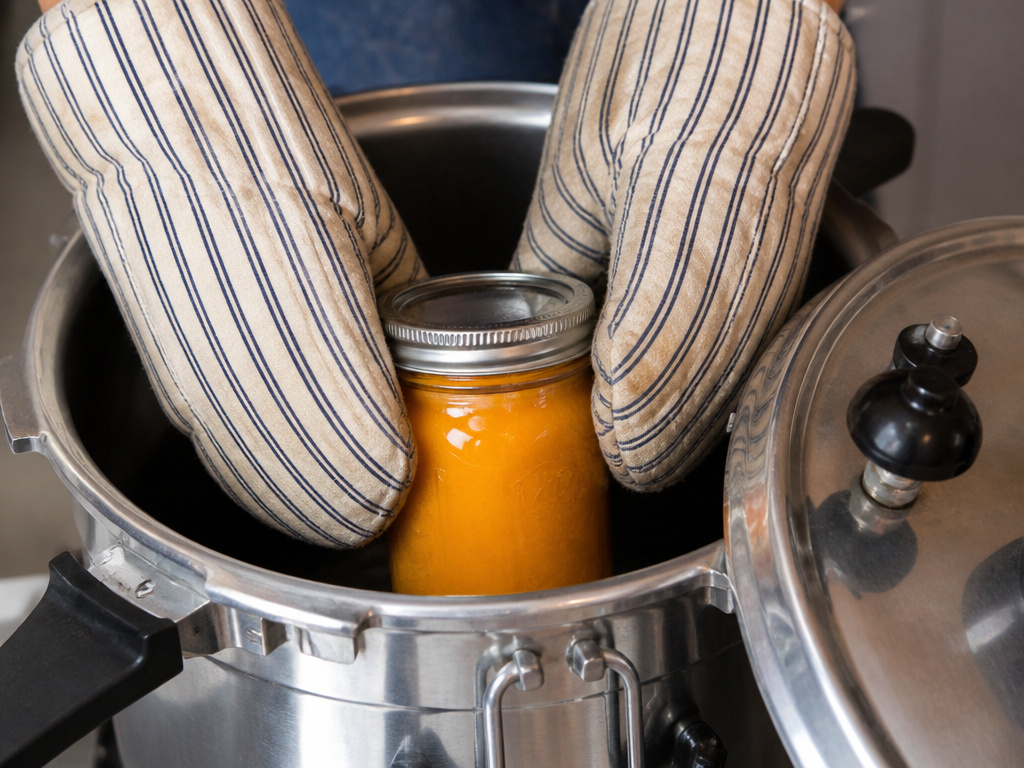
You cannot water-bath can pumpkin. It is a low-acid vegetable, with a pH above 4.6. Clostridium botulinum spores survive boiling water temperatures. They thrive in the oxygen-free environment of a sealed jar, producing a toxin that is odorless, tasteless, and lethal.
A pressure canner reaches 240°F at 10 pounds of pressure (11 psi with a dial gauge). That temperature, sustained for the correct time, destroys the spores. The Washington State University Extension guide Preserving Pumpkin and Winter Squash is unequivocal on this point.
The safe method is to can only puree. Do not can cubed pumpkin. The dense cubes trap air pockets, creating a heat-transfer barrier. The center might never reach 240°F.
- Prepare the puree as for freezing (roast, scoop, puree).
- Heat the puree to a simmer, stirring constantly to prevent sticking.
- Ladle the hot puree into clean, hot pint or quart jars, leaving 1-inch headspace. Remove air bubbles with a tool.
- Wipe the rims, apply lids and bands fingertip-tight.
- Process in a pressure canner: 55 minutes for pints, 90 minutes for quarts, adjusting for altitude as per your canner’s manual.
After processing, let the pressure return to zero naturally. Wait 10 minutes before opening the lid. Remove the jars and let them cool for 24 hours. Check that seals are concave and don’t flex when pressed.
Where this goes sideways: Using a water bath canner or an oven for pumpkin. Neither reaches 240°F. Home-canned pumpkin that wasn’t pressure processed is a documented botulism risk. The Michigan Fresh pumpkin preservation guide states this clearly.
Canned puree is shelf-stable for over a year. Store jars in a cool, dark place. Once opened, refrigerate and use within a week.
Dehydrating: For Compact, Long-Term Storage
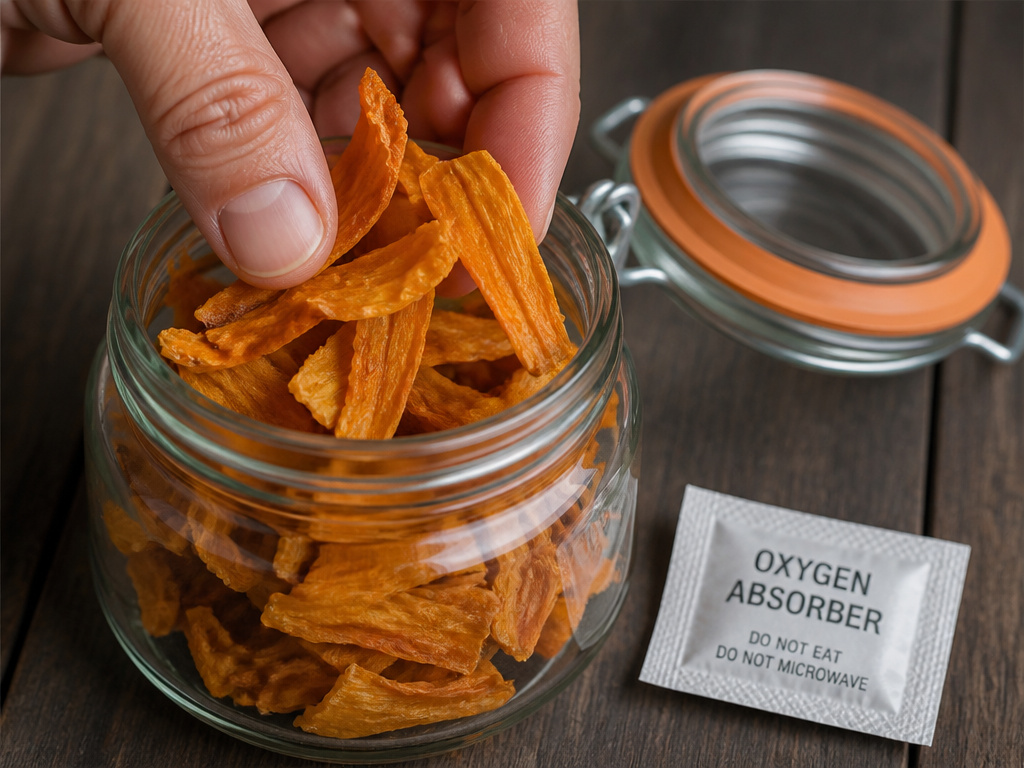
Dehydrating is the space-saver. It turns pumpkin into lightweight, shelf-stable cubes or leather, perfect for backpacking meals or long-term pantry storage. The process is simple but slow.
Follow the method from the WSU Extension guide. Peel the pumpkin and cut the flesh into ¼-inch thick strips. Steam the strips for 2-3 minutes until almost tender, this step, called blanching, stops enzyme action that causes off-flavors during storage.
Arrange the strips on dehydrator trays without overlapping. Dry at 140°F for 2-3 hours, then reduce the temperature to 130°F. Continue drying until the pieces are brittle and crisp. A properly dried piece will shatter if hit with a hammer, indicating a moisture content around 10%.
| Stage | Temperature | Time | Doneness Test |
|---|---|---|---|
| Initial Drying | 140°F | 2–3 hours | Surface dry, leathery |
| Final Drying | 130°F | 4–8 hours more | Hard, snaps when bent |
Store the cooled pieces in airtight containers like mason jars with oxygen absorbers. Keep them in a cool, dark pantry. Dried pumpkin stored longer than 1–2 months at room temperature can develop a stale flavor. For longer storage, use the same principles you would for how to store dehydrated fruit.
To use, rehydrate the pieces by covering them with boiling water and soaking for 20-30 minutes. Drain and use in soups or stews. You can also grind dried pieces into pumpkin powder for baking.
What Not to Do: The Quick Rot Triggers
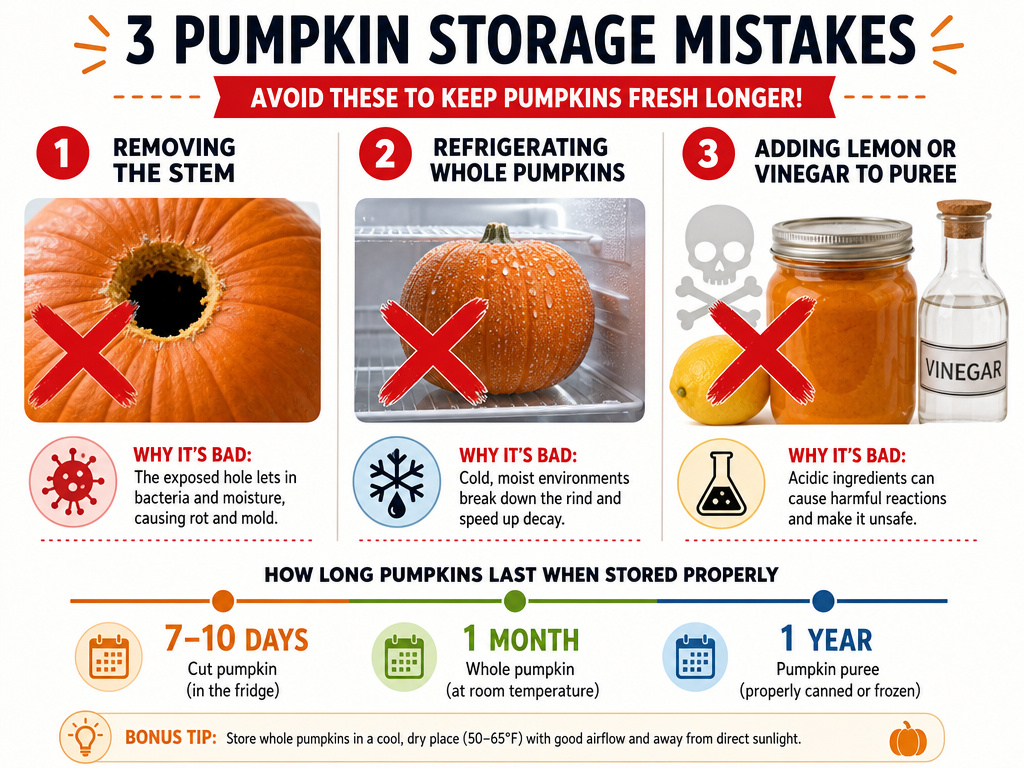
Preservation fails at specific, predictable points. Here are the top three.
1. Ignoring the stem. A pumpkin without a stem has an open wound. Even if you cure it, the unprotected vascular bundle wicks moisture and microbes into the core. Use stemless pumpkins immediately.
2. Refrigerating whole pumpkins. The fridge is a cold, humid box, exactly the wrong environment. Condensation forms on the rind, leading to mold spots within a week. The only pumpkin that belongs in the fridge is cooked puree, and even then, only for up to five days.
3. Canning with lemon juice or vinegar. Adding acid to pumpkin puree to try and water-bath can it is a dangerous gamble. The dense puree buffers the acid, creating uneven pH pockets. The UC Davis Postharvest Center factsheet doesn’t list any safe acidification process for home canners. Pressure canning is the only verified safe method.
These mistakes have a timeline. A refrigerated whole pumpkin rots in 7-10 days. A stemless, uncured pumpkin might last a month in a cool room before collapsing. A water-bath canned jar could sit for a year without visible change, while the toxin inside reaches lethal concentration.
Frequently Asked Questions
Can you preserve pumpkin seeds?
Yes. Wash seeds thoroughly to remove all stringy pulp. Pat them dry. You can dehydrate them at 115–120°F until crisp (4-6 hours) for eating raw, or toss dried seeds with a little oil and salt and roast at 250°F for 10-15 minutes. Store roasted seeds in an airtight container for a few weeks. They don’t keep as long as the flesh.
How long does frozen pumpkin puree last?
Frozen pumpkin puree maintains best quality for 10 to 12 months at 0°F. After a year, it develops freezer burn and off-flavors. Thawed puree should be used within 3 days. This is similar to the shelf life of other frozen vegetable purees, like when you preserve basil in oil or puree for freezing.
What’s the difference between a pie pumpkin and a carving pumpkin?
Pie pumpkins (Sugar Pie, Baby Pam) are smaller, denser, and have sweeter, less stringy flesh. Carving pumpkins (Howden, Jack O’Lantern) are bred for size and a sturdy stem, not flavor. You can preserve both, but pie varieties yield better-tasting puree. Carving types are acceptable for savory soups where other spices dominate.
Can I store pumpkins in a garage?
Maybe. A garage must stay consistently between 50–55°F. If it regularly dips below freezing at night or gets hot during the day, it’s a bad choice. The SDSU Extension harvesting and storing guide notes fruit can withstand brief cold snaps down to 35°F if warmed soon after, but repeated cycles cause damage.
Is it safe to can pumpkin butter?
Pumpkin butter is a spiced, sweetened spread. Its thick consistency and low-acid pumpkin base make it unsafe for water-bath canning, even with added acid. No USDA or Extension guide provides a tested recipe for canning pumpkin butter. Freeze it instead. For a shelf-stable sweet spread, consider preserving lemon zest in sugar for a different kind of condiment.
The Bottom Line
Your pumpkin’s future depends on the first decision: whole or processed. For whole storage, cure religiously, 10 days warm and humid, then move to a cool 50–55°F spot. Check it bi-weekly and keep it away from ethylene-producing fruit.
To process, freeze for convenience or pressure can for shelf stability. Never water-bath can. Dehydrate if space is your main constraint.
Each method has a single point of failure. For whole storage, it’s temperature. For freezing, it’s texture loss. For canning, it’s the pressure gauge. For dehydrating, it’s residual moisture. Control that one variable, and the pumpkin will last until next season.
