Learn How to Freeze Tomatoes in Freezer Bags the Right Way
This post contains affiliate links. As an Amazon Associate, we earn from qualifying purchases.
To freeze tomatoes in freezer bags, you need firm, ripe tomatoes, a sharp knife, a baking sheet, and quality freezer bags. The core process is tray-freezing: wash, core if desired, cut, spread pieces on a tray, freeze solid, then transfer to labeled bags, pressing out all air before sealing. This method prevents clumping and preserves texture for up to eight months.
That tray-freezing step is the difference between a bag of usable tomato pieces and a solid, icy brick. It works because it flash-freezes each piece individually, so ice crystals stay small and cell walls don’t rupture as much. Skip it, and the tomatoes freeze together, thaw into a single mushy mass, and lose flavor faster.
What follows: the three main prep methods (whole, chopped, sauced), the exact headspace numbers that prevent bag burst, the one seasoning rule everyone gets wrong, and the simple trick to peel a frozen tomato in five seconds.
Key Takeaways
- Freeze tomatoes plain, never add salt, garlic, or herbs before freezing. Seasonings intensify or fade unpredictably during freezing.
- Use the tray-freeze method every time. Spread pieces on a baking sheet, freeze solid, then bag. This prevents a solid block and preserves texture.
- Maintain your freezer at 0°F (-18°C). Warmer temperatures accelerate quality loss and freezer burn.
- Frozen tomatoes are best used within eight months for peak flavor and texture, though they remain safe indefinitely.
- Thawed tomatoes are only for cooked applications like sauce, soup, or stew. They turn limp and watery.
Why Freeze Tomatoes (And When Not To)
Freezing is the fastest, lowest-equipment way to preserve a tomato glut. Unlike canning, it requires no special jars, no acidification, and no precise processing times. The trade-off is texture. Freezing turns a tomato’s cellular water into ice, which expands and ruptures the cell walls.
Technical Snippet: When tomato tissue freezes, intracellular water forms ice crystals. Rapid freezing (tray-freezing) produces numerous small crystals that cause minimal structural damage. Slow freezing (bagging unfrozen pieces) allows larger crystals to form, which puncture cell membranes, leading to significant fluid loss and mushiness upon thawing. This is why thawed tomatoes are unsuitable for fresh eating.
That’s why you never serve a thawed tomato on a salad. But for any recipe where the tomato will be cooked down, marinara, chili, braised dishes, that broken-down texture is an advantage. It means less simmering time to achieve a saucy consistency.
The one time freezing is a poor choice is if you’re aiming for canned, whole-peeled tomatoes. For that, you’re better off canning. Freezing is for the cook who wants summer flavor in a winter stew, fast.
The Tools You Actually Need
You don’t need specialized gear. A sharp knife, a cutting board, a rimmed baking sheet (a “sided cookie sheet” as the MSU guide calls it), and your freezer bags are the core kit. The baking sheet is non-negotiable for the tray-freeze step.
For the bags, skip the flimsy sandwich kind. You need bags rated for freezing, which are thicker and less permeable to air. Brands like Ziploc Freezer Bags or Glad Freezer Bags are the default picks; their plastic is formulated to stay flexible at zero degrees and resist punctures from frozen tomato edges.
If you’re freezing a large batch of sauce or juice, consider rigid freezer-safe containers as an alternative. They stack better and are less prone to leaking, but they take up more space.
The Step-by-Step Freezing Process
Follow this sequence regardless of whether you’re freezing whole, halved, chopped, or puréed tomatoes. The principle is universal: freeze fast, bag airtight.
Step 1: Select and Wash
Choose firm, ripe tomatoes without soft spots or cracks. Under-ripe tomatoes lack flavor; over-ripe ones will turn to soup upon thawing. Gently wash them under cool running water and pat dry with a clean towel. Moisture on the surface leads to ice buildup in the bag.
Step 2: Prep According to Final Use
This is where you decide the tomato’s future. Each prep has a best-use case. * Whole: Core if you like (it’s easier now than later), but leave the skin on. This is the ultimate lazy method, perfect for when you’ll cook and purée them later. * Halved or Quartered: Cut out the core, then slice. This is the sweet spot for most cooks, the pieces are a manageable size for bagging and will thaw more evenly than a whole tomato. * Chopped: Dice to the size you’d want in a chili or sauce. More surface area means faster freezing and easier portioning later. * Puréed or Sauced: Blend cooked or raw tomatoes, then cool completely. This method is ready-to-use but occupies the most bag volume.
Common mistake: Adding seasonings before freezing. The UNL Food guide notes that freezing may cause garlic, onion, and herbs to either strengthen or weaken unpredictably. Season your sauce or stew when you cook it, not before it hits the freezer.
Step 3: Tray-Freeze (The Critical Step)
Spread your prepped tomatoes in a single layer on a rimmed baking sheet. They must not touch. Place the sheet flat in the freezer for 1–2 hours, or until each piece is solid. This “open freeze” step is what prevents you from chiseling apart a tomato iceberg later.
Step 4: Bag and Seal
Transfer the frozen tomato pieces into your quality freezer bags. Use a straw or a vacuum sealer to suck out as much air as possible before sealing the final inch. Air is the enemy, it causes freezer burn, which dries out the tomato surface and gives it off-flavors.
Label the bag with the contents and date. “Tomato Halves – Sept 2024” is perfect. Without a date, you’ll be guessing six months from now.
Step 5: Store at 0°F
Return the bag to the freezer immediately. For best quality, store it in the coldest part, usually the back, and ensure your freezer thermometer reads a steady 0°F (-18°C).
| Prep Method | Best For | Headspace in Bag | Quality Timeline |
|---|---|---|---|
| Whole (skin on) | Cooking down into sauce, soup | 1 inch | 8 months |
| Halved/Chopped | Stews, chili, casseroles | 1 inch | 8 months |
| Purée or Sauce | Ready-to-use pasta sauce, pizza sauce | 1.5 inches | 8 months |
| Juice | Drinking, cooking liquid | 1.5 inches | 8 months |
Freezing Specific Tomato Products
 Not all tomatoes are destined to be frozen raw. Some are better cooked first.
Freezing Tomato Sauce or Purée
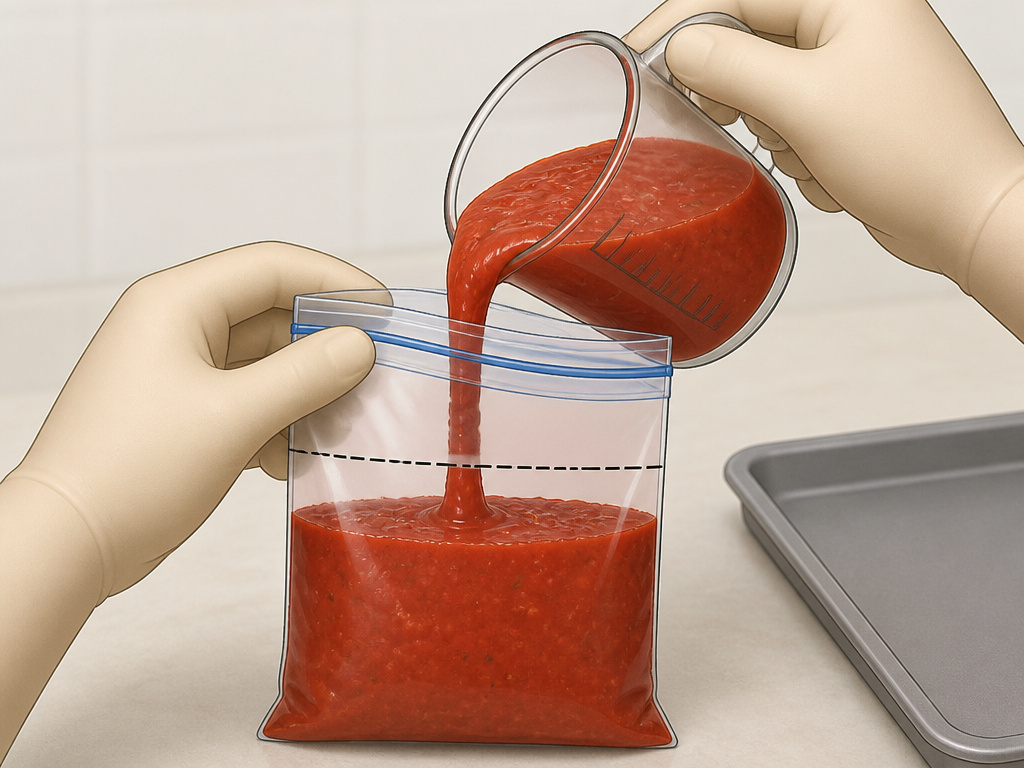
Cook your sauce to your desired thickness, remember, flavors concentrate during freezing, so undersalt. Let it cool completely to room temperature, then transfer to bags. Leave 1.5 inches of headspace at the top, as the NDSU Extension guide specifies for “juice and mixtures.” This allows for expansion without bursting the seal. Lay the bags flat on a tray to freeze, creating space-saving bricks.
Freezing Cherry or Grape Tomatoes
These little guys freeze beautifully whole. Wash, dry, and tray-freeze them just like larger pieces. Once frozen, bag them up. They’ll pop into soups or sauces straight from the freezer, no thawing needed. For a dedicated guide, our article on freezing cherry tomatoes covers the specifics for these small varieties.
Freezing Green Tomatoes
Don’t let the frost get them. Slice firm green tomatoes about 1/4-inch thick for frying later. Tray-freeze the slices with a piece of parchment paper between layers, then bag. They’ll go straight from freezer to frying pan.
How to Use Frozen Tomatoes
 The thawing method depends on your recipe.
For sauces or soups, you can often add frozen tomato pieces directly to the pot. The heat will thaw them as they cook, and their released water becomes part of the cooking liquid.
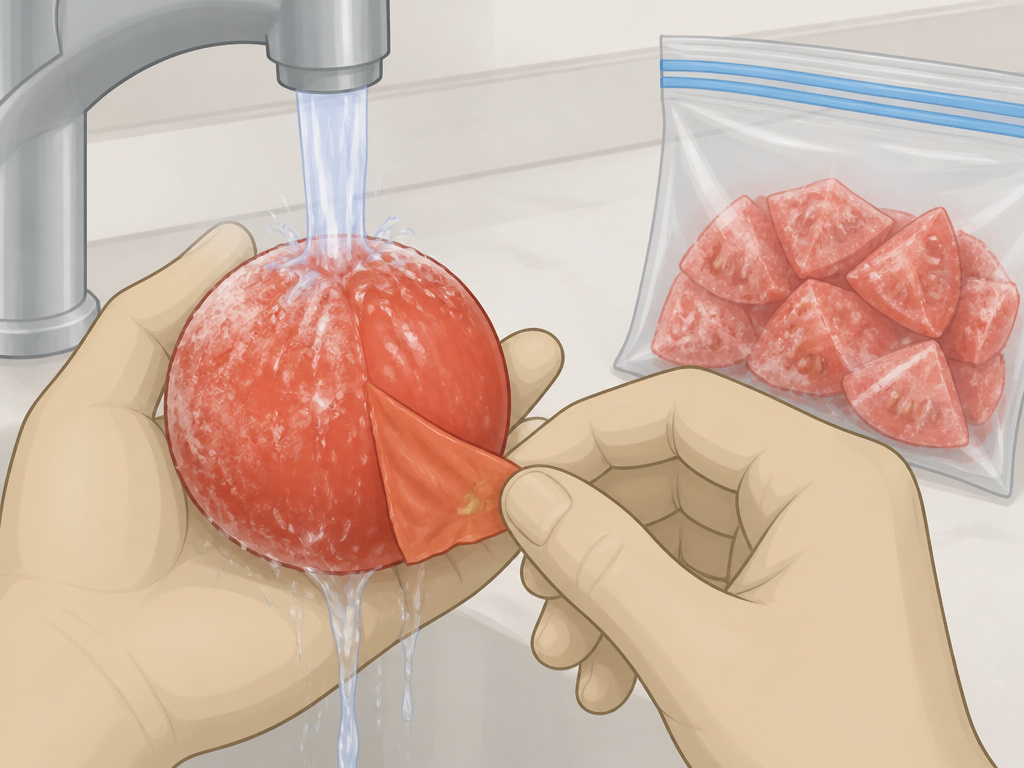
If a recipe calls for peeled tomatoes, here’s the trick: run a frozen whole tomato under warm water for 15 seconds. The skin will slip right off with a gentle tug. It’s infinitely easier than blanching fresh ones.
Where this goes sideways: Trying to use a thawed tomato like a fresh one. A thawed tomato will release a pool of liquid and have the structural integrity of a wet sponge. That’s normal. Embrace it for cooking.
Always use your frozen tomatoes within eight months for the best flavor and color. They’re safe beyond that, but quality declines.
Avoiding Freezer Burn and Preserving Quality
 Freezer burn happens when air reaches the food’s surface, causing dehydration and oxidation. It shows up as white, leathery patches. It won’t make you sick, but it tastes off.
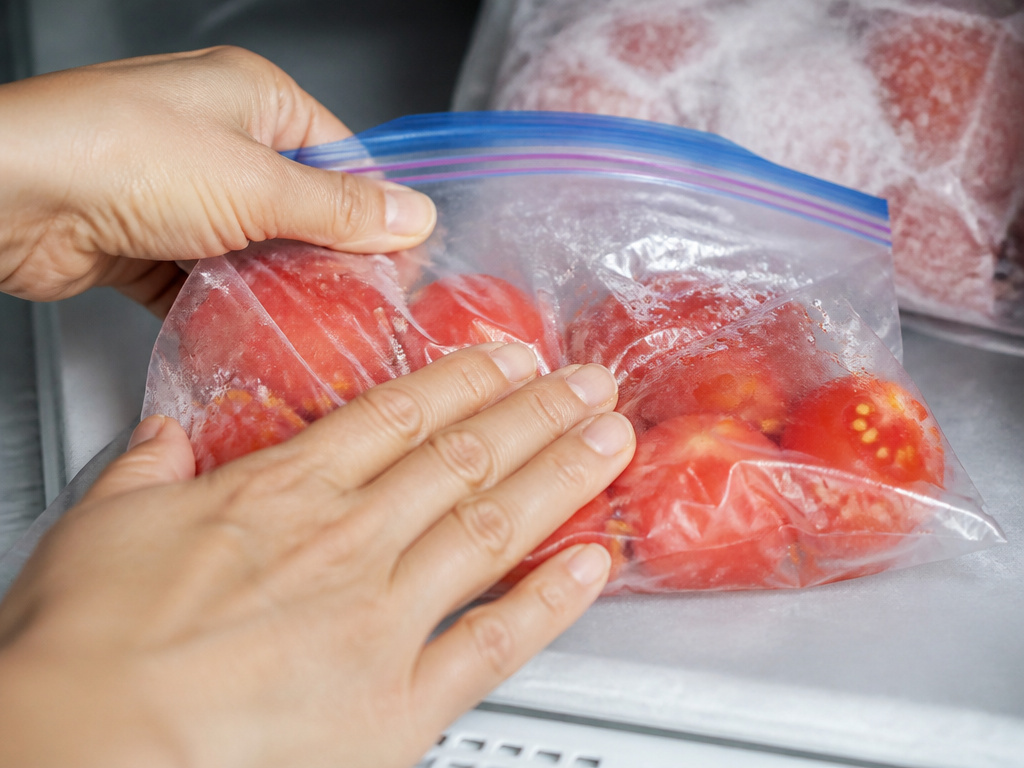
Your two main defenses are eliminating air and maintaining temperature. That’s why the bags preventing freezer burn are worth the extra cost, their thicker plastic and better seals are your first line of defense. After filling a bag, press out all the air manually before sealing, or use a vacuum sealer for the best results.
Also, don’t freeze more than your freezer can handle at once. Adding a large batch of room-temperature tomatoes can raise the freezer’s internal temperature, slowing the freeze for everything else and promoting larger ice crystals.
Frequently Asked Questions
Do I need to blanch tomatoes before freezing?
No. Unlike many vegetables, tomatoes do not require blanching before freezing. Blanching is used to deactivate enzymes that cause loss of flavor and color; tomatoes have lower levels of these particular enzymes. You can freeze them raw.
Do I have to peel tomatoes before freezing?
No, and it’s often easier not to. The skin provides a protective layer during freezing. As the UC ANR guide notes, you can peel a frozen tomato by running it under warm water, the skin slips off effortlessly. Peeling before freezing is an unnecessary extra step.
Can I freeze tomatoes in glass jars?
It’s risky. Liquid expands when frozen. If you use a rigid container like a glass jar, you must leave ample headspace (at least 1.5 inches for juice/sauce) to allow for expansion. Even then, the stress on the glass can cause cracks. Freezer bags are safer and more space-efficient.
Why did my frozen tomatoes turn out watery?
All frozen tomatoes will be watery upon thawing, that’s the released cellular fluid from broken cell walls. It’s a feature, not a bug. For sauces, simply simmer longer to reduce the liquid. For salsas or fresh applications, drain the thawed tomatoes in a colander before using.
Can I freeze cooked dishes with tomatoes, like salsa or soup?
Yes, but follow the seasoning rule: freeze the base plain, then add fresh herbs and seasonings when you reheat. The flavors in a long-term tomato storage method like freezing can shift. Salsa is especially tricky, freeze a basic tomato-onion-pepper mix, then add cilantro, lime, and salt after thawing.
Before You Go
Freezing tomatoes is less about perfect technique and more about matching the method to the meal. Tray-freeze everything. Bag it airtight. Keep the seasoning for later.
For a large batch of Romas you’ll turn into February pasta sauce, freeze them whole. For cherry tomatoes destined for minestrone, freeze them whole on a tray. For a ready-made pizza sauce, cook, cool, and freeze your purée flat in bags.
The goal is to lock in that August sun. With a roll of good bags and a cold freezer, you can.
