Can You Freeze Jar Pasta Sauce? The 0°F Rule & Safe Jars
This post contains affiliate links. As an Amazon Associate, we earn from qualifying purchases.
Yes, you can freeze jar pasta sauce, but the jar it comes in will almost certainly break. You need to transfer the sauce to a wide-mouth, dual-purpose canning jar or a rigid plastic container, leave an inch of headspace, and store it at 0°F or below. Frozen sauce lasts 2-3 months before quality declines.
That headspace rule isn’t a suggestion. Liquid expands by about 9% when it freezes. A full jar has nowhere for that expansion to go, so the glass cracks along the stress lines. You find out when you open the freezer door and see a red, icy spiderweb.
What follows is the difference between saving a meal and cleaning up a mess. We’ll cover the one jar type that works, the exact freezer temperature that matters, and the step that prevents freezer burn every time.
Key Takeaways
- The original jar breaks. Transfer sauce to a wide-mouth, dual-purpose canning jar (Ball or Kerr) or a rigid plastic container. Regular glass shatters.
- Freeze at 0°F or below. This is the temperature that pauses quality loss. Check your freezer’s thermostat.
- Sauce lasts 2-3 months. After that, it’s safe but the flavor and texture degrade. Cream-based sauces decline faster.
- Leave one inch of headspace. Liquid expands when frozen. Skip this, and you’ll have a cracked container or a popped lid.
- Spices change. For long storage, add bold spices like basil or red pepper flakes after thawing, not before freezing.
The Right Jar (And the Jars That Shatter)
Look at the jar your sauce came in. It’s likely narrow-mouthed with tapered sides. That design is for shelf storage, not the freezer.
Regular glass jars, especially narrow-mouth canning jars, break easily at freezer temperatures due to liquid expansion. Wide mouths and straight sides allow for easier removal of partially thawed foods. . University of Illinois Extension, Easy Steps to Freezing Foods
The physics are simple. Water-based liquids expand when they freeze. In a confined space, that expansion creates immense pressure. Glass, being inflexible, fractures. The failure usually happens along the weakest point, often the shoulder of a narrow jar.
Your safe options are purpose-built.
Wide-mouth, dual-purpose canning jars from Ball or Kerr are the gold standard. “Dual-purpose” means they’re tempered for both canning and freezing. Their straight sides and wide openings let you spoon out frozen sauce easily and handle expansion stress evenly. This isn’t a marketing guess; it’s a manufacturing spec.
Rigid plastic containers with tight-fitting lids are the convenient choice. Look for the snowflake symbol or “freezer safe” stamped on the bottom. They flex slightly under expansion pressure, which is why they don’t crack.
Freezer bags work for flat, space-saving storage. Use heavy-duty bags rated for freezing. Squeeze out all the air before sealing to minimize freezer burn.
| Container Type | Best For | Risk If You Skip Headspace |
|---|---|---|
| Wide-mouth dual-purpose jar (Ball, Kerr) | Long-term storage, easy scooping | Jar cracks at the shoulder within 24 hours |
| Rigid plastic container | Stacking, reheating in microwave | Lid pops off, sauce develops ice crystals |
| Freezer bag | Saving space, freezing flat | Bag leaks, sauce gets freezer-burned in weeks |
The original sauce jar is not on this list. It belongs in the recycling bin before you freeze.
How to Freeze Jar Pasta Sauce Step-by-Step
This process is about removing heat and managing water. Rush the first part and you risk bacterial growth; botch the second and you get a container failure.
1. Cool the sauce rapidly. Do not let it sit on the counter for hours. Pour leftovers into a shallow, wide dish (like a baking pan) to maximize surface area. Stir it occasionally. Your goal is to drop the temperature from piping hot to below 40°F as fast as possible, well under the two-hour safety window.
2. Portion it out. Freeze in meal-sized amounts. Thawing a quart for a single-serving pasta bowl is wasteful. Ice cube trays are perfect for single-serving portions to add to soups or casseroles.
3. Pack with headspace. This is the non-negotiable step. Whether using a jar or container, fill it only ¾ full. Leave a full inch of empty space at the top for expansion. If using a bag, lay it flat to push the air out.
4. Seal, label, and freeze. Wipe the rim clean before sealing. Write the contents and date on the lid or bag with a permanent marker. Place containers in the coldest part of your freezer, not crammed against the wall, so air can circulate and freeze them faster.
Where this goes sideways: Freezing sauce while it’s still warm. The center stays in the bacterial “danger zone” for hours even as the outside freezes, and the temperature gradient creates large ice crystals that turn the sauce grainy.
If you’re unsure about a new recipe, freeze a small test portion first. Thaw it in a week and taste it. It’s cheaper than ruining a whole batch.
Storage Timeline and Thawing the Right Way
How long does it last? The NDSU Food Freezing Guide puts the storage time for meat sauces and combination dishes at 2-3 months at 0°F. For plain tomato sauce, you might get 4-6 months before noticeable quality loss.
That 0°F number isn’t arbitrary. It’s the temperature at which molecular activity and enzyme breakdown slow to a near halt. If your freezer runs warmer, say at 10°F, that storage clock ticks faster. Ice crystals grow larger, and the sauce separates more.
| Sauce Type | Ideal Freezer Life (at 0°F) | First Sign of Quality Loss |
|---|---|---|
| Tomato-based (marinara) | 4-6 months | Color darkens, acidity tastes sharper |
| Meat sauce (Bolognese) | 2-3 months | Fat separates, meat texture turns grainy |
| Cream-based (Alfredo) | 1-2 months | Sauce separates, becomes oily or grainy upon reheating |
Thawing is not the time for shortcuts. The safest method is to move the container from the freezer to the refrigerator 24 hours before you need it. This keeps the sauce out of the danger zone as it defrosts.
For a quicker method, place the sealed container or bag in a bowl of cold water, changing the water every 30 minutes. You can also use the microwave’s defrost setting, but you must cook the sauce immediately afterward, partial heating creates warm pockets where bacteria can thrive.
Once thawed, reheating is mandatory. Bring the sauce to a full simmer (165°F internal temperature) before serving. Stir it frequently, especially cream-based sauces, to help re-emulsify any separated oils.
What Doesn’t Freeze Well (And How to Adapt)
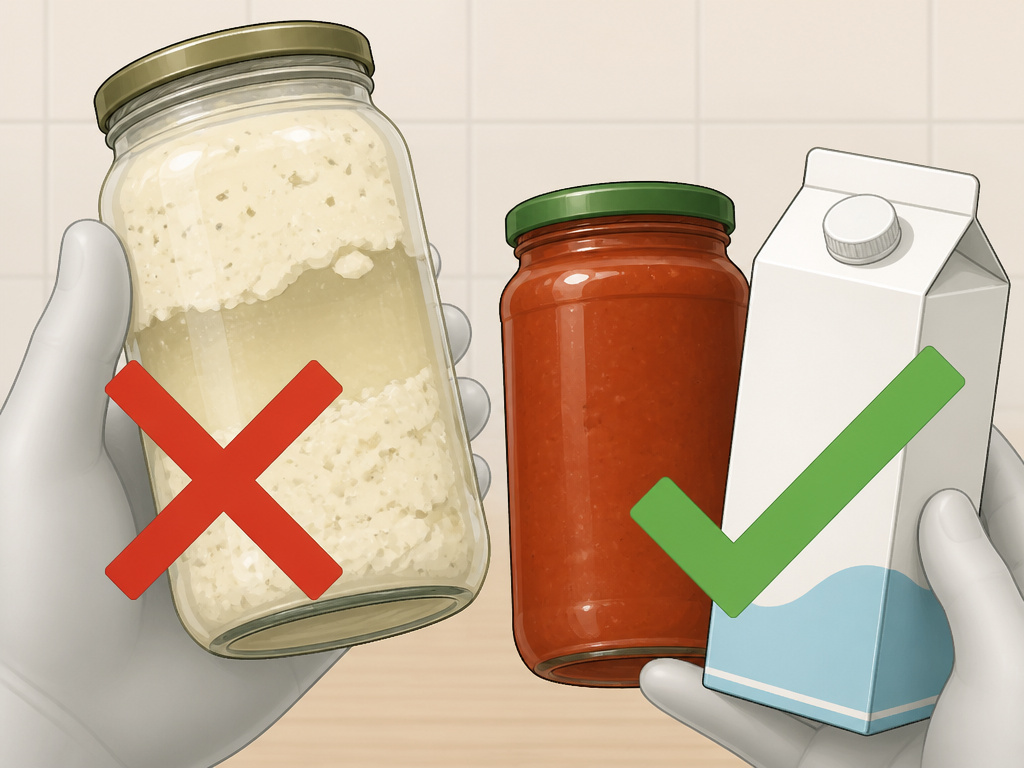
Freezing is a blunt tool. It treats everything with cold, but some ingredients fight back. Knowing what fails lets you adapt your sauce or your expectations.
Dairy and cream. This is the biggest limitation. Cream, milk, ricotta, and fresh cheeses like mozzarella tend to separate and become grainy when frozen and thawed. A jarred Alfredo sauce will likely break. If you must freeze it, reheat it over very low heat and whisk vigorously. A better strategy is to freeze a plain tomato base and add fresh cream after thawing.
Fresh herbs and delicate spices. The volatile oils in basil, parsley, and cilantro degrade, leaving a muted, sometimes grassy flavor. Add these fresh after reheating. Ground spices like oregano and garlic powder are more stable, but their flavor can still dull over months.
Cooked pasta. Avoid freezing sauce with pasta already mixed in. The pasta absorbs liquid, becomes mushy upon thawing, and turns the whole dish into a starchy brick. Freeze the sauce and pasta separately, then combine when reheating.
High-water vegetables. If your jarred sauce has big chunks of zucchini, mushrooms, or bell peppers, they will become soft and watery. For better texture, consider blending the sauce smooth before freezing or accepting the softer vegetable texture.
This is where the MU Extension freezing guide advice on testing a small portion first proves invaluable. The principles for freezing soup or freezing tomatoes are similar, manage water content and protect texture.
Frequently Asked Questions
Does freezing kill bacteria in pasta sauce?
No. Freezing pauses bacterial growth but does not kill pathogens. Always cool sauce quickly before freezing and reheat it to 165°F after thawing to ensure safety.
Can I freeze sauce in a Mason jar?
Only if it’s a wide-mouth, dual-purpose jar labeled for freezing. Standard narrow-mouth Ball Mason jars are for canning and are likely to shatter in the freezer. Always check the jar’s specifications.
Why did my frozen sauce separate?
Separation is normal, especially for sauces with oil, dairy, or tomatoes. The water and other components freeze at different rates. A vigorous stir or whisk during reheating will usually recombine it. Using techniques like vacuum sealing can minimize air exposure and reduce separation.
Can I refreeze thawed pasta sauce?
It is not recommended. Each freeze-thaw cycle damages texture and increases the risk of bacterial growth as the sauce passes through the danger zone multiple times. Thaw only what you plan to use.
Are all plastic containers freezer-safe?
No. Look for the snowflake symbol or “freezer safe” text. Thin plastic deli containers or yogurt tubs can become brittle and crack. Using proper freezer-safe containers prevents leaks and breakage.
How can I prevent freezer burn?
Freezer burn is caused by air exposure. Use airtight containers, remove as much air as possible from bags, and ensure lids are sealed tightly. For the best protection, consider a method that prevents freezer burn like vacuum sealing.
Before You Go
Freezing jarred pasta sauce turns a short-term ingredient into a long-term staple. The rules are few but firm: ditch the original glass, embrace wide-mouth jars or solid plastic, and always leave room for expansion. Keep your freezer at 0°F, mark your containers with a date, and use meat sauces within three months.
The goal isn’t just preservation, it’s having a foundation for a quick meal on a busy night. A frozen block of marinara is faster than ordering pizza. Thaw it, simmer it, and you’re eating in fifteen minutes. That’s the real win.
