How to Preserve Lemon for a Long Time With Salt or Vinegar
This post contains affiliate links. As an Amazon Associate, we earn from qualifying purchases.
To preserve lemon for a long time, match the method to the part: whole lemons last a month sealed in a plastic bag in the fridge, zest and juice freeze for 3-6 months, and salt-cured lemons ferment for 2 weeks and keep refrigerated for half a year. The critical step most guides skip is a vinegar wash before any long-term storage, it kills surface mold spores that otherwise bloom inside a sealed bag by day ten.
That gap between “store in the fridge” and “lasts for months” is where fruit is lost. The methods below aren’t just about placement; they’re about creating a micro-environment that halts decay without cooking the flavor out of the fruit. Each one targets a different failure point: moisture loss, mold growth, or enzymatic browning.
What follows: the cold-storage trick that actually works, a freezer prep that prevents lemon pulp from turning to bitter mush, and the exact salt ratio for a stable ferment. You’ll also get the timeline for each, when a method stops working and why.
Key Takeaways
- Whole lemons stored loose in the fridge dry out in a week. Sealing them in a zipper-lock plastic bag extends freshness to four weeks by maintaining 90-95% humidity.
- A one-minute vinegar-water bath before bagging kills surface mold. Skipping this leads to fuzzy blue spots inside the bag within ten days.
- Freezing whole lemons raw causes the cell walls to rupture, creating a mushy, bitter thaw. Pre-freeze slices or juice in dedicated portions instead.
- Salt-preserved lemons rely on a 1:4 lemon-to-salt ratio by volume. Under-salting risks a cloudy, unsafe brine and spoilage within the first week.
- Chilling injury, rind pitting and internal dryness, starts after 4 weeks at fridge temperatures below 10°C (50°F) for some varieties. Not all lemons handle cold the same way.
The Cold Storage Method That Keeps Lemons Juicy for a Month
Refrigerator storage seems simple until you pull out a shrunken, hard lemon after seven days. The problem isn’t cold; it’s dry air stealing moisture straight through the porous peel.
Whole, unwashed lemons lose 5% of their weight per week in an open refrigerator drawer. Sealing them in a plastic bag cuts that loss to under 1%, extending firmness and juice content for a full month.
The goal is to mimic the 90-95% relative humidity recommended for commercial citrus storage without a produce cooler. A standard fridge runs at about 30-40% humidity. A sealed plastic bag creates a microclimate.
Use a zipper-lock bag, not a loose produce bag. The seal is non-negotiable. Before you bag them, wash the lemons in a solution of one part white vinegar to three parts water for one minute. Rinse and dry them thoroughly. The vinegar kills mold spores present on the peel from the store; if you skip this, those spores proliferate in the humid bag.
Place the dry lemons in the bag, press out excess air, and seal. Put the bag in the high-humidity drawer of your fridge, if you have one, or toward the back where temperature fluctuates less.
What happens if you skip the bag? The lemon’s skin acts as a natural wick. Dry fridge air pulls moisture from the pulp through the peel. You’ll see the skin start to wrinkle and harden within four days. By day seven, the lemon will feel light and yield little juice.
What happens if you don’t dry them? Water left on the skin encourages rot at the stem scar. You’ll find a soft, brown spot there within a week, which will spread and ruin the fruit.
| Step | Action | Why It Matters |
|---|---|---|
| 1. Select | Choose firm, unblemished lemons with bright yellow skin. | Bruises or soft spots harbor decay organisms that spread in storage. |
| 2. Wash | Soak 1 min in 1:3 vinegar:water solution, then rinse. | Eliminates surface mold and bacteria that thrive in the sealed bag. |
| 3. Dry | Pat completely dry with a clean kitchen towel. | Prevents rot at the stem scar and stops ice crystals if freezing later. |
| 4. Bag | Place in a zipper-lock bag, remove air, seal. | Creates a 90-95% humidity microclimate, preventing moisture loss. |
| 5. Store | Place bag in the refrigerator’s crisper drawer. | Provides the coldest, most stable temperature (2-4°C or 35-40°F). |
This method is your baseline for preserving fruit in general, controlling humidity and cleanliness applies to apples, oranges, and limes too. It’s the cornerstone of long-term food storage for fresh produce.
Freezing Lemons: Zest, Juice, and Slices Without the Mush
Freezing is the most reliable long-term method, but it’s also where texture goes to die if done wrong. A whole frozen lemon thaws into a waterlogged, cellularly damaged mess. The pulp turns translucent and bitter.
You freeze lemons in parts, not whole.
For zest: Use a microplane to remove the yellow zest only, avoiding the bitter white pith. Spread the zest in a thin layer on a small plate or baking sheet and flash-freeze for one hour. Then transfer the frozen zest to a small, labeled zipper-lock bag or airtight container. This prevents clumping. Frozen zest keeps its aromatic oils for 3 months, though the color will fade. It’s perfect for baking, dressings, or finishing dishes.
For juice: Fresh-squeeze your lemons and strain the juice to remove pulp and seeds. Pour the juice into an ice cube tray, standard trays hold about 30ml (1 oz) per cube. Freeze solid, then pop the cubes out and transfer them to a labeled freezer bag. One cube equals the juice of half a lemon. Use frozen juice cubes within 6 months for best flavor; after that, they develop a faint stale taste.
For slices or wedges: This is for cocktails or garnish. Cut the lemon into uniform slices or wedges. Lay them in a single layer on a parchment-lined baking sheet and freeze until solid (about 2 hours). Then pack the frozen pieces into a container. They’ll keep for 4 months. When thawed, they’ll be soft and only suitable for infused water or cooking, not fresh presentation.
Common mistake: Freezing whole lemons to grate later. The frozen rind gums up the microplane, the zest shreds unevenly, and the thawed fruit is unusable for anything else. Always process before freezing.
Freezing is a key technique for preserving lemon zest and juice separately, allowing you to use exactly what you need without thawing a whole fruit. It’s a fundamental food preservation method for managing surplus.
Salt-Preserved Lemons: The 2-Week Ferment That Lasts 6 Months
Salt-preserved lemons are a pantry staple, not just a fridge project. The process uses salt to draw moisture from the lemons, creating a brine that ferments and preserves them. The result is a soft, intensely flavored lemon used in tagines, dressings, and sauces.
The ratio is everything: for every cup of coarse sea salt or kosher salt, you need about four medium lemons, quartered. The salt should be non-iodized, as iodine can inhibit fermentation.
Here’s the step-by-step process:
- Sterilize a jar. Use a 1-quart (1-liter) Ball jar or similar glass container. Wash it in hot, soapy water and rinse thoroughly.
- Prep the lemons. Scrub them clean. Cut each lemon lengthwise into quarters, stopping about 1/2 inch from the base so the quarters remain attached at the stem end.
- Pack with salt. Open each lemon and pack a tablespoon of salt into the cuts. Place a layer of salt at the bottom of the jar. Press the salted lemons into the jar, squeezing them to release some juice. Add more salt between layers.
- Weight and seal. The lemons must be completely submerged. Use a fermentation weight or a small, clean zip-top bag filled with extra brine (2 tbsp salt dissolved in 1 cup water) to press them down. Seal the jar.
- Ferment. Leave the jar at cool room temperature (around <21°C or 70°F) for 2 weeks. Burp the jar daily for the first week to release gas. The lemons will soften and the brine will become cloudy, this is normal.
- Store. After 2 weeks, move the jar to the refrigerator. They are ready to use and will keep for at least 6 months chilled.
What goes wrong if you under-salt? The brine won’t reach a high enough salinity to prevent undesirable bacteria. The lemons may develop a foul smell, a slimy surface, or even mold. If you see any of these signs, discard the batch.
This technique is a form of preserving food through lacto-fermentation, similar to making sauerkraut or kimchi. It’s a powerful food preservation technique that creates a whole new ingredient from a raw fruit.
How Long Does Each Preservation Method Actually Last?
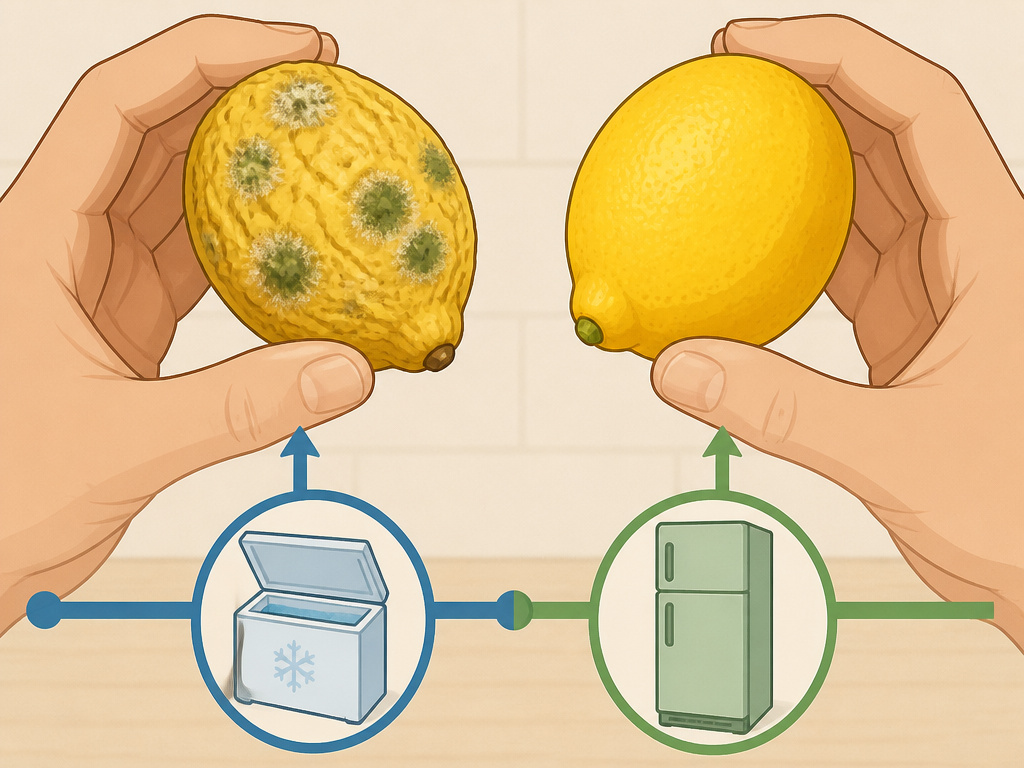 Every method has a shelf life, and a clear point of failure. Knowing these timelines stops you from using spoiled product.
| Method | Optimal Storage Location | Shelf Life | Signs It’s Gone Bad |
|---|---|---|---|
| Cold Storage (bagged) | Refrigerator | 3-4 weeks | Deep wrinkles, hard feel, mold spots (fuzzy blue/green). |
| Frozen Zest | Freezer | 3 months | Loss of vibrant color and citrus aroma. |
| Frozen Juice Cubes | Freezer | 6 months | Off, stale flavor even when used in cooked dishes. |
| Frozen Slices | Freezer | 4 months | Extreme mushiness, brown edges, freezer burn (white dry patches). |
| Salt-Preserved | Refrigerator (after ferment) | 6+ months | Foul, rotten odor; mushy disintegration; visible mold on surface. |
Chilling injury is a specific risk for cold-stored lemons held below 10°C (50°F) for extended periods. Symptoms include sunken pits on the rind, a leathery texture, and internal dryness (the fruit feels light). It’s more common in thinner-skinned varieties. If you see this, the fruit is still safe to juice but the zest is compromised.
The peer-reviewed preservation study on citrus treatments confirms that controlling temperature and humidity is the single biggest factor for shelf life, more than any fancy coating. The UC Davis Postharvest Center factsheet underscores that the 90-95% humidity target is what separates a one-week lemon from a one-month lemon.
Which Parts of the Lemon Should You Preserve?
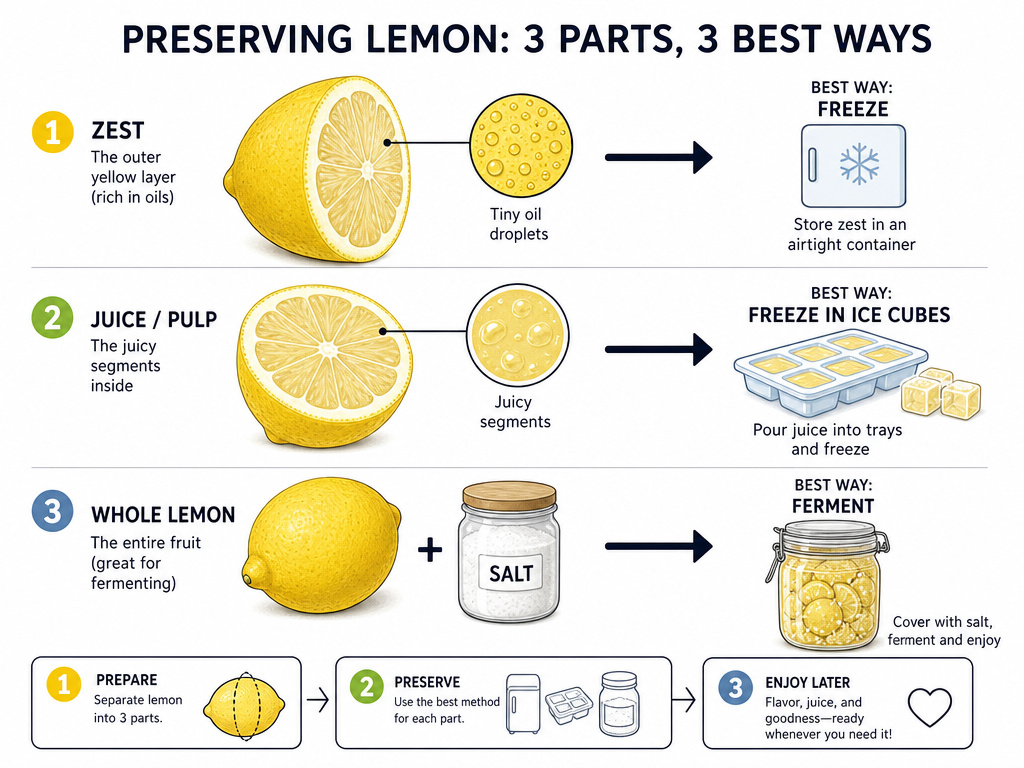 A lemon isn’t a single ingredient. Treating it as one wastes potential. You preserve the zest, juice, and flesh differently because their water content and oil composition differ.
Zest is all about the volatile oils in the yellow skin. Heat and long-term air exposure degrade these. That’s why freezing is superior to drying. Dried zest loses about 60% of its aromatic punch within a month. Frozen zest holds closer to 80% for three months.
Juice is mostly water and citric acid. Freezing is straightforward, but the enemy is oxidation. Juice frozen in a large container turns brownish and tastes flat because every time you thaw it, you expose the entire batch to air. The ice-cube method locks flavor in single-use portions.
The whole fruit (for preserving) is about the interplay of peel, pith, and pulp in salt or oil. The pith (white part) is bitter, but during salt preservation, the long ferment mellows that bitterness into complexity.
Think of a lemon as a kit. Before you choose a method for preserving lemon zest or juice, decide which part you use most. If you bake, zest is gold. If you cook savory dishes or drink lemon water, juice and slices are the target. This mindset applies to preserving tomatoes or preserving basil, you match the method to the component.
Where this goes sideways: Trying to preserve a whole lemon for “whatever use.” You end up with a method that’s mediocre for all uses. Pick a primary use case and preserve for that.
The Tools You Actually Need (It’s a Short List)
You don’t need special equipment. The right common tool beats the wrong specialty gadget.
- Microplane grater/zester: For removing zest in fine ribbons without the pith. A blunt zester tears the peel and pulls bitter white pith with it.
- Zipper-lock freezer bags (quart and sandwich size): For cold storage and freezing. The name-brand versions have a more reliable seal than generic ones.
- 1-quart (1-liter) wide-mouth glass jar with lid: For salt-preserving. Glass is non-reactive and you can see the fermentation process. A Ball jar is the standard.
- Coarse sea salt or kosher salt: For preserving. Fine table salt contains anti-caking agents that can cloud the brine and contains iodine, which can hinder fermentation.
- Citrus juicer (handheld reamer or countertop press): Efficiently extracts juice with minimal effort. A countertop press gets more juice from each lemon but is a single-tasker.
Skip the “lemon keeper” specialty containers. They are just expensive plastic tubs with a vent. A zipper-lock bag performs the same humidity-trapping function for pennies. The basic food preservation techniques that work are often the simplest.
Frequently Asked Questions
Can you preserve lemons in olive oil?
Yes, but with a critical safety caveat. Lemon slices or zest can be covered in olive oil and stored in the refrigerator for up to 2 weeks. The oil solidifies in the cold but softens at room temperature. Never store oil-preserved lemons at room temperature. The low-acid, anaerobic environment created by the oil is a potential risk for botulism toxin growth. Always refrigerate and use within two weeks.
How do you know if a preserved lemon has gone bad?
Trust your senses. Smell it first. Properly preserved lemons should smell clean, intensely lemony, and salty. Any foul, cheesy, or rotten egg odor means spoilage. Look at the brine. In salt preservation, a cloudy brine is normal from the fermentation. But any visible mold (fuzzy, colored spots) on the surface of the lemons or brine means discard everything. Feel the texture. If the lemon flesh has turned into a disintegrated, slimy mush, it’s gone.
Does freezing lemon destroy vitamin C?
Freezing preserves vitamin C quite well. The vitamin is degraded by heat, light, and oxygen, not by cold. Fresh lemon juice loses about 20% of its vitamin C after a week in the fridge. Frozen juice cubes, protected from air, retain over 90% of their vitamin C for 6 months. Freezing is one of the best long-term fruit storage methods for nutrient retention.
Can you preserve lemon with sugar instead of salt?
Yes, but the product and purpose are different. Lemon slices preserved in a heavy sugar syrup (like for cocktails) are essentially candied. The high sugar concentration acts as a preservative. They will keep in the refrigerator for several months. However, this method does not create the fermented, savory flavor profile of salt-preserved lemons. It’s a sweet preservation, like making jam, and falls under different fruit preservation principles.
What’s the best way to preserve a large harvest of lemons?
Combine methods based on future use. For immediate use over the next month, use the cold storage bag method. For long-term baking and cooking, freeze the zest and juice in separate, portioned batches. For a pantry staple to use in savory cooking over the next 6-12 months, make a large batch of salt-preserved lemons. This mixed approach is the core of a long-term food storage guide for any seasonal abundance, similar to strategies for preserving cherry tomatoes or preserving garlic.
Before You Go
Preserving lemons isn’t about a single trick. It’s about pairing the part of the fruit with the physics that protect it: humidity for whole fruit, cold isolation for zest and juice, and salinity for a fermented pantry staple.
The vinegar wash is the step that turns a good method into a reliable one. The exact salt ratio is what keeps a ferment safe. Portioning before freezing is what saves texture. These specifics bridge the gap between “it might work” and “it works every time.”
So pick your target, next week’s lemon, next month’s zest, or next year’s preserved jar, and match the mechanics. Your fruit will wait for you.
