How to Store Ginger Root Long Term & Keep It Fresh For Months
This post contains affiliate links. As an Amazon Associate, we earn from qualifying purchases.
Store ginger root long term by holding it at 55°F (12.8°C) and 65% relative humidity. University of Hawaii research shows this combination inhibits shriveling, decay, and sprouting for up to 188 days. Rhizomes lose only 16.5% of their weight over that period, staying marketable for about six months.
That number, 188 days, isn’t a guess. It’s the result from a controlled storage trial, and it defines the ceiling for commercial-grade freshness. Most home kitchens can’t hit 55°F and 65% RH precisely, but that’s the target you’re approximating with every method.
What follows: the science behind those numbers, a step-by-step traditional curing method, a comparison of popular home techniques (freezing, pickling, cool chambers), and the exact mistakes that turn ginger into a moldy or shriveled mess within weeks.
Key Takeaways
- Target 55°F and 65% humidity for maximum shelf life. Straying outside this window accelerates weight loss or mold.
- Cure ginger before long-term storage by letting it air-dry for several days. This thickens the skin and seals cut ends, reducing post-harvest decay.
- Shriveling starts after 10% weight loss. You’ll see it first as fine wrinkles on the skin.
- Freezing is the most reliable home method for retaining flavor and preventing sprouting, but it changes the texture to a soft, mashable state.
- Never store ginger wet. Surface moisture invites Fusarium and Pythium rot, which can destroy a rhizome in a week.
The 188-Day Spec That Keeps Ginger Fresh
The University of Hawaii study is the non-negotiable starting point. Their researchers stored ginger rhizomes at 55°F (12.8°C) and 65% relative humidity. The result was a marketable condition for 188 days, just over six months.
The best storage condition for ginger rhizomes among those tested was 55°F (12.8°C) and 65% relative humidity, allowing safe storage for at least 6 months. Under these conditions, rhizomes remained in marketable condition for 188 days, inhibiting surface shriveling, storage decay, physiological breakdown, sprouting, and surface discoloration.
Why does this specific combo work? Low temperature (55°F) drastically slows down the rhizome’s respiration rate and sprouting impulse. The 65% humidity is the balancing act: it’s high enough to prevent catastrophic water loss, but low enough to discourage surface mold. At this humidity, weight loss was measured at 16.5% over the full period.
Deviate from this sweet spot, and the consequences are predictable and documented. The same research notes that storage at 13°C (55°F) with only 65% RH, wait, that’s the same? No, look closer. The problematic condition is 13°C (55°F) with 65% RH, which the University of Hawaii ginger postharvest guidelines cite as leading to “extensive dehydration and a wilted appearance.” The contradiction is in the humidity reading; one study’s 65% RH is optimal, another’s leads to dehydration. The takeaway is that the margin is thin. A few percentage points in humidity decide between a plump rhizome and a wrinkled one.
For home storage, this means your goal is to create a stable, cool, and moderately dry environment. A basement, a cool closet, or a dedicated root cellar often gets you close. Chasing the perfect number is less important than avoiding the extremes that cause the two biggest failures: shriveling and mold.
| Condition | Temperature | Relative Humidity | Result | Timeline |
|---|---|---|---|---|
| Optimal | 55°F (12.8°C) | 65% | Marketable, minimal shrivel/sprout | ~188 days |
| Too Dry | 55°F (13°C) | 65% (inconsistent) | Extensive dehydration, wilted | Weeks |
| Too Humid | >60°F (16°C) | >90% | Surface mold, stimulated sprouting | Days to weeks |
| Room Temp | 77°F (25°C) | 40% | Rapid water loss, shriveling | Few days |
Step-by-Step: The Traditional Curing & Storage Method
This is the method recommended in the FAO post-harvest compendium for ginger and other agricultural guides. It’s designed for quantity, mimicking what farmers do to hold seed rhizomes for the next planting season. If you’ve bought a large hand of ginger from a market, this is your process.
1. Select and Clean
Choose firm, heavy rhizomes with tight skin. Avoid any with soft spots, deep wrinkles, or visible mold. Brush off loose soil under running water. Do not soak them. The goal is to remove dirt, not hydrate the skin.
2. Cure in a Breeze
This is the step most home cooks skip, and it’s why their ginger molds. Lay the rhizomes in a single layer on a rack or screen. Place them in a shaded, well-ventilated spot, a covered porch, a garage with airflow, near a fan. Leave them for 3 to 7 days. The air flow at ambient temperature (70–79°F) and moderate humidity (70–75% RH) allows the skin to thicken and any cut or broken ends to suberize, forming a natural seal.
3. Prepare the Storage Medium
You need a breathable container. A wooden crate, a cardboard box, or a basket works. Line the bottom with a moisture-wicking material like clean, dry sand, sawdust, or crumpled newspaper. Some guides recommend mixing in water-absorbent polymers if you’re storing in a very humid climate.
4. Pack and Store
Nestle the cured ginger rhizomes into the medium, ensuring they aren’t touching each other. Cover them lightly with more of your dry medium. Store the container in the coolest, darkest place you have, ideally between 55°F and 60°F. A basement shelf or a root cellar is perfect.
5. Check Monthly
Every 4-6 weeks, gently inspect the rhizomes. Remove any that show signs of softening or mold immediately to prevent spread. If the storage medium feels damp, replace it with fresh, dry material.
This method aligns with the principles of long-term food storage for other root vegetables like potatoes and onions. It prioritizes breathability and a stable, cool environment over an airtight seal.
Where this goes sideways: Skipping the cure and packing ginger damp. The trapped moisture against the skin is a direct invitation for Pythium rot, a water mold that turns the rhizome soft and foul-smelling within a week.
Freezing Ginger: A Modern Shortcut
Freezing is the most effective method for retaining ginger’s pungent flavor and preventing nutrient loss due to sprouting. It completely bypasses the humidity control problem. However, it permanently alters the rhizome’s cellular structure, turning it soft and mushy upon thawing. This makes frozen ginger useless for recipes where a crisp, julienned texture is needed, but perfect for grating, blending, or cooking where it will dissolve into a dish.
The Right Way to Freeze Ginger
Peel the ginger (a spoon works well). Then, choose your form factor based on how you cook: – Grated: Grate the ginger onto a parchment-lined sheet, freeze solid, then transfer the shreds to a freezer bag. – Sliced: Cut into coins or matchsticks for easy grabbing. – Puréed: Blend peeled ginger with a splash of water or oil, then freeze in an ice cube tray.
The critical step for all methods is to use airtight containers or heavy-duty freezer bags. Squeeze out all excess air to prevent freezer burn, which manifests as dry, white, leathery patches and a dulled flavor.
Why It Works
Freezing halts all enzymatic and microbial activity. Sprouting is impossible. The peer-reviewed ginger storage behavior study in PLOS One notes that sprouting leads to a higher respiration rate and accelerated weight loss at room temperature. Freezing stops that process dead. You can keep frozen ginger for over a year without significant quality loss, though flavor potency will very slowly diminish after about 18 months.
How Do Popular Home Methods Compare?
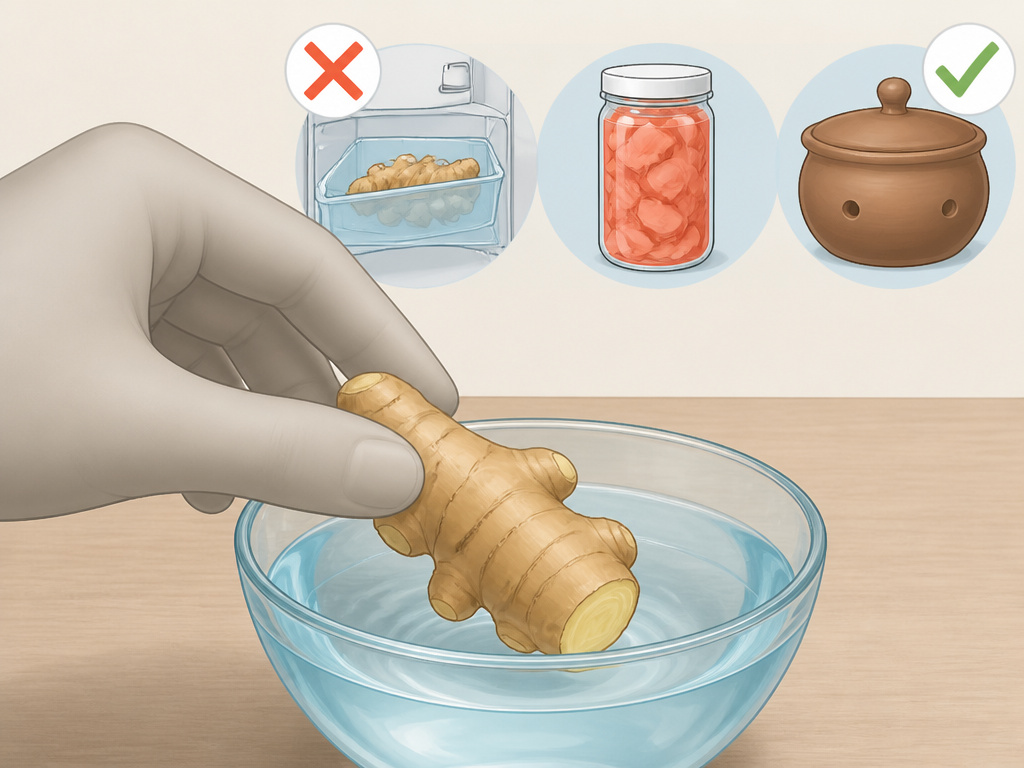
Every kitchen hack for ginger storage is trying to solve one part of the temperature-humidity-sprouting triangle. Let’s see how they stack up against the research.
The Alcohol Bath Method
Some videos recommend giving ginger a quick bath in high-proof alcohol (like vodka) before wrapping and storing. The theory is sound: alcohol kills surface bacteria and fungi, potentially delaying mold. It may also dehydrate the very outer layer, mimicking a cure. However, no primary agricultural source recommends this. It’s a sterilization step, not a preservation environment. If you then store the ginger at room temperature, it will still shrivel or sprout.
The Fridge Drawer
The vegetable crisper of a modern fridge typically runs at around 35–40°F and very high humidity (often over 90%). This is terrible for ginger. The FAO ginger preservation publication is clear: humidity above 90% stimulates mold and sprouting, especially if the temperature is above 16°C (60°F). Your fridge is colder, but the wet environment is a mold incubator. Uncut ginger might last a few weeks, but it’s a race against time.
Pickling in Vinegar
Submerging peeled ginger chunks in vinegar (rice, white, or apple cider) and refrigerating it is a form of fermentation and acidification. The vinegar creates an environment hostile to spoilage microbes. This method, shown in many tutorials, keeps ginger “fresh” in the sense of being edible and crunchy for months. However, it fundamentally changes the flavor profile. The ginger is now pickled ginger, suitable for garnishes or specific recipes, not a neutral fresh ginger substitute.
The Zero-Energy Cool Chamber (ZECC)
This is a traditional technology highlighted in the PLOS One study. A ZECC uses evaporative cooling, often with a clay pot inside another pot, separated by wet sand, to maintain a temperature several degrees below ambient. The study found ginger lost only 23% weight after four months in a ZECC. For home gardeners in suitable climates, building a small ZECC can be a brilliant, zero-electricity way to approximate the 55°F target. It’s more effective for storing root vegetables like carrots and potatoes in bulk than for a single hand of ginger.
| Method | Best For | Preserves Texture? | Max Shelf Life | Biggest Risk |
|---|---|---|---|---|
| Traditional Cure & Cool Storage | Large quantities, seed stock | Yes | 6–7 months | Mold if humidity too high |
| Freezing | Retaining flavor for cooking | No (becomes soft) | 12+ months | Freezer burn if poorly sealed |
| Refrigeration (Crisper) | Short-term, a few weeks | Yes | 3–4 weeks | Mold development |
| Pickling in Vinegar | Creating a condiment | Yes (crunchy) | 6+ months | Flavor change (it’s pickled) |
| ZECC | Off-grid, bulk storage in warm climates | Yes | 4+ months | Requires maintenance, climate-dependent |
What Goes Wrong: Spotting and Preventing Common Issues
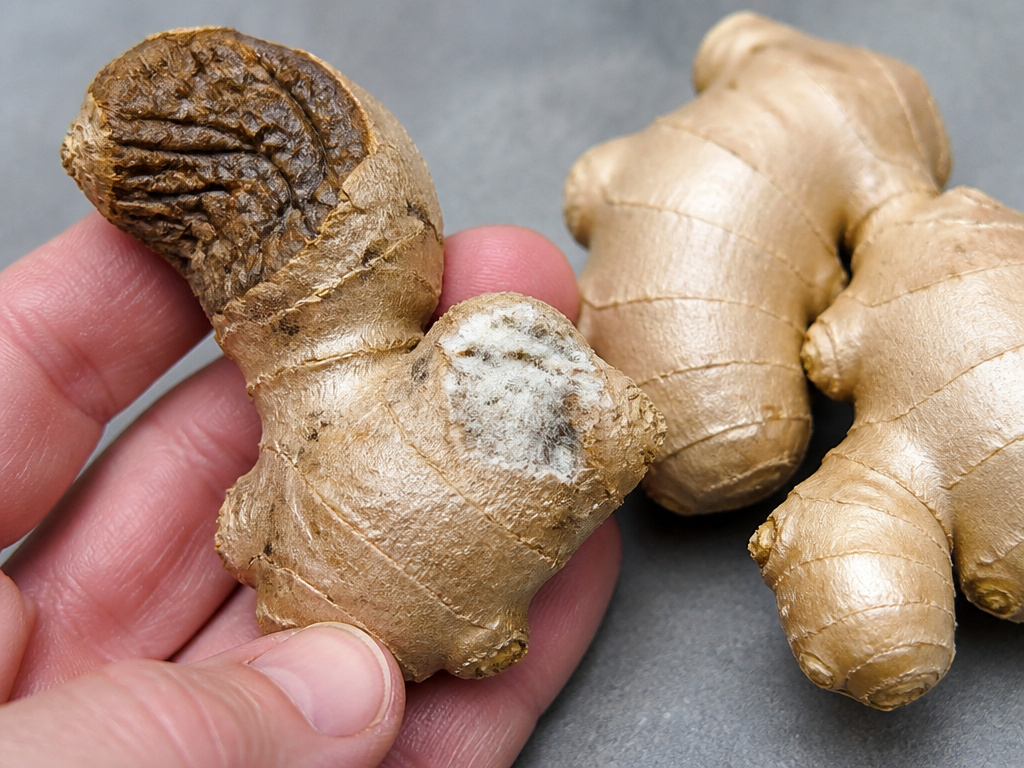
Ginger tells you what’s wrong with it. You just have to know the language.
Shriveling and Wrinkles
This is simple dehydration. The ginger storage compendium from FAO notes that shriveling becomes noticeable after a loss of more than 10% of the rhizome’s initial weight. Fine wrinkles are the first sign. Deeper grooves mean it’s too far gone for most uses, though the interior might still be grated. Fix: Your storage environment is too dry and/or too warm. Increase humidity or lower temperature.
White or Blue-Green Surface Mold
Fuzzy patches mean humidity is too high and air circulation is poor. This is often a penicillium species, a saprophyte that feeds on dead tissue. It’s not usually deeply invasive, but it makes the ginger unappealing and can impart off-flavors. Fix: Immediately remove affected rhizomes. Improve ventilation and reduce humidity. Ensure ginger is completely dry before storage.
Soft, Watery Rot
A rhizome that feels mushy, especially around a cut or break, and smells foul is likely a victim of bacterial soft rot (Erwinia) or Pythium rot. This spreads quickly in warm, wet conditions. Fix: There is no fix. Discard it immediately and check neighboring rhizomes. Prevent it by curing properly, avoiding physical damage, and never storing ginger wet.
Sprouting
A green shoot emerging from a bud means the rhizome is too warm and has broken dormancy. Once it sprouts, the rhizome redirects nutrients and moisture to the shoot, causing itself to shrivel and lose pungency. Fix: Store at a lower temperature. If you catch a small sprout early, you can break it off and still use the ginger, but its shelf life is now shortened.
Managing these issues uses the same vigilance required for storing garlic or storing dried beans. Regular inspection is non-negotiable.
Frequently Asked Questions
Can you store ginger in a plastic bag?
You can, but it’s risky. A sealed plastic bag traps moisture and ethylene gas, creating a humid, stagnant environment perfect for mold. If you must use a bag, ensure the ginger is bone dry, punch several holes in the bag for ventilation, and don’t seal it tightly. A paper bag is always a safer choice for short-term storage.
Does ginger last longer peeled or unpeeled?
Always store ginger unpeeled. The skin is a natural barrier against moisture loss and microbial invasion. Peeling removes this protection and creates moist, exposed flesh that deteriorates rapidly. Peel it right before you use it.
How do you know if ginger has gone bad?
Use your senses. Sight: Deep wrinkles, dark sunken spots, fuzzy mold. Touch: Soft, mushy, or slimy texture. Smell: A sour, fermented, or foul odor instead of a sharp, spicy aroma. When in doubt, cut off a small piece. If the interior is brown, stringy, or dry, it’s past its prime.
Can you store ginger at room temperature?
You can, but not for long. At a typical room temperature of 77°F (25°C), ginger rapidly loses water and will wilt in a few days. It’s only a viable option if you plan to use it within a week. For any longer timeline, you must provide cooler conditions.
What’s the best way to store ginger for 6 months?
The gold standard is the cured, cool-storage method targeting 55°F and 65% RH. For most homes without a root cellar, freezing is the most practical and foolproof method to reliably hit the six-month mark while retaining flavor.
The Bottom Line
Forget vague advice about “a cool, dark place.” The goal is 55°F and 65% relative humidity. Hit that, and you get 188 days of fresh ginger.
If your home can’t manage that, and most can’t, freezing is your default. It locks in the flavor and kills the sprouting impulse dead. For smaller quantities you’ll use quickly, a simple cure and storage in a ventilated box in a cool closet works well.
The one rule that overrides all others: never let moisture sit on the skin. That single mistake is the fastest path to a soft, rotten mess. Dry it, cool it, and check on it. Ginger isn’t fragile, but it has a very specific comfort zone. Stay inside it, and you’ll always have that spicy punch ready when you need it.
