How to Store Dry Dog Food | The One Rule 90% Miss
This post contains affiliate links. As an Amazon Associate, we earn from qualifying purchases.
To store dry dog food correctly, keep it in a cool, dry place below 80°F (26.7°C) and, critically, leave it sealed inside its original bag, even if that bag is placed inside another container. This preserves the food’s nutritional value, prevents fat oxidation, and keeps vital recall information like the lot number attached.
That temperature ceiling is the FDA’s line in the sand for nutrient preservation. Go above it, and the fats and oils in the kibble start breaking down.The result isn’t just stale food; it’s rancid food that can make your dog sick.
What follows: the FDA’s 80°F rule explained, why the bag itself is a functional barrier, the three container types that actually work, and the single most common mistake that ruins a month’s worth of food in a weekend.
Key Takeaways
- The FDA’s 80°F (26.7°C) storage limit is non-negotiable for preserving nutrients; a garage in summer can hit 120°F and degrade vitamins within 48 hours.
- Never pour kibble directly into a plastic container. Chemicals from the plastic can migrate into the fatty food, and scratches harbor bacteria.
- The original bag is a designed barrier. Store the whole bag inside an airtight container like a metal bin or glass jar.
- Opened dry food has a practical shelf life of 2-3 months before fats oxidize and the food loses palatability and nutrients.
- Less than half of pet food complaints to the FDA include the lot number, which delays recall responses. Keep that bag.
The 80°F Rule That Changes Everything
Most kitchen pantries hover around 70°F. That’s fine. The problem starts when you cross 80°F (26.7°C). At that point, according to the FDA pet food storage guide, heat and moisture begin to degrade nutrients. This is about the fats oxidizing and turning rancid, not just the food getting a little stale.
Store dry pet food and unopened canned food in a cool and dry place. The temperature should be less than 80 F. Excess heat or moisture may cause the nutrients to break down.
Hill’s Pet Nutrition sets its own threshold at 100°F for its Science Diet and Prescription Diet lines, but they note a critical escalation: storage at 120°F (48°C) for more than 48 hours can accelerate vitamin degradation. Think about a garage or shed in July. It easily hits 120°F. Leave a bag out there over a weekend, and you’ve actively started breaking down the vitamins you’re paying for.
Where this goes sideways: Using a garage that isn’t climate-controlled. Even if it’s dry, summer heat turns it into a food-degradation oven. The Whole Dog Journal explicitly warns against it unless the space is as cool and clean as your kitchen.
Your first decision concerns real estate. Find a spot in your home that stays consistently below 80°F, away from direct sunlight, the oven, or heating vents.A closet, a kitchen cupboard, or a basement shelf works. If the only option is a warm spot, buy smaller bags and use them faster.
The Original Bag vs. Container Debate
Here is where nearly every well-intentioned owner gets it wrong. You buy a shiny, airtight plastic tub, pour in the 30-pound bag of kibble, and toss the bag. This feels efficient. It is also the standard way to introduce contamination and accelerate spoilage.
The FDA, Purina, and Hill’s all state the same rule: keep the food in its original bag. The bag is a functional, food-safe barrier designed by the manufacturer’s packaging engineers. Hill’s notes their studies show various external plastic containers can impart odor and taste to the food.
The Whole Dog Journal is blunter: “Don’t transfer food from its original bag into a plastic bin or storage container. Chemicals in different types of plastic ‘migrate’ into foods that contain fat.” They add that food bags use plastics with the lowest rate of this chemical migration.
Common mistake: Dumping kibble straight into a plastic container. Scratches inside the container hold residual fats and bacteria, contaminating the next batch. The plastic itself can leach chemicals into the fatty food.
The solution is simple but non-negotiable: place the entire, sealed bag inside another container. This gives you a double barrier, the original bag’s fat-resistant lining and the external container’s seal against pests and humidity. It also keeps the lot number, best-by date, and UPC code physically attached to the food. Why does that matter? The FDA notes that less than half of pet food complaints they receive include the lot number, which cripples their ability to trace and resolve problems quickly.
If you absolutely must pour the food out, say, the bag is torn, your only safe options are inert materials. Use a glass jar, a stainless steel bin, or a food-grade, BPA-free plastic container marked with the international “food safe” symbol (a wine glass and fork). And you must wash and dry that container thoroughly every single time you refill it.
Choosing the Right Outer Container
Once you commit to the bag-inside-container method, your choice of outer container matters. It needs to be airtight, durable, and the right size. The goal is to protect the bag from pests, humidity, and light, not to replace it.
| Container Type | Best For | Risk If You Skip This |
|---|---|---|
| Metal Bin with Seal | Any size bag, high-humidity areas, homes with pests | Plastic can be chewed by rodents; non-airtight lids let in humidity that molds the bag. |
| Glass Jar with Lid | Small bags, frequent refills, visible storage | Breakage risk; rarely large enough for a full 25lb bag. |
| Food-Grade Plastic Tub | Budget option, light use | Must be BPA-free and impeccably cleaned; can impart tastes over time. |
A metal storage bin with a rubber-gasketed lid is the gold standard. It’s rodent-proof, blocks light, and maintains a stable micro-environment. For most families using dry food containers for a large dog, this is the one to beat. Glass jars are perfect for small dogs or for creating a weekly “feeding station” portion kept in the kitchen. If you opt for plastic, scrutinize it for the food-safe symbol and choose a design from a list of recommended containers for dry storage.
Never “top off” the container by pouring new food onto old. This mixes fresh fats with potentially oxidized old fats, speeding up rancidity for the entire batch. Always finish all the food in the bag, wash the container, and start fresh.
How Long Does Opened Dry Food Actually Last?
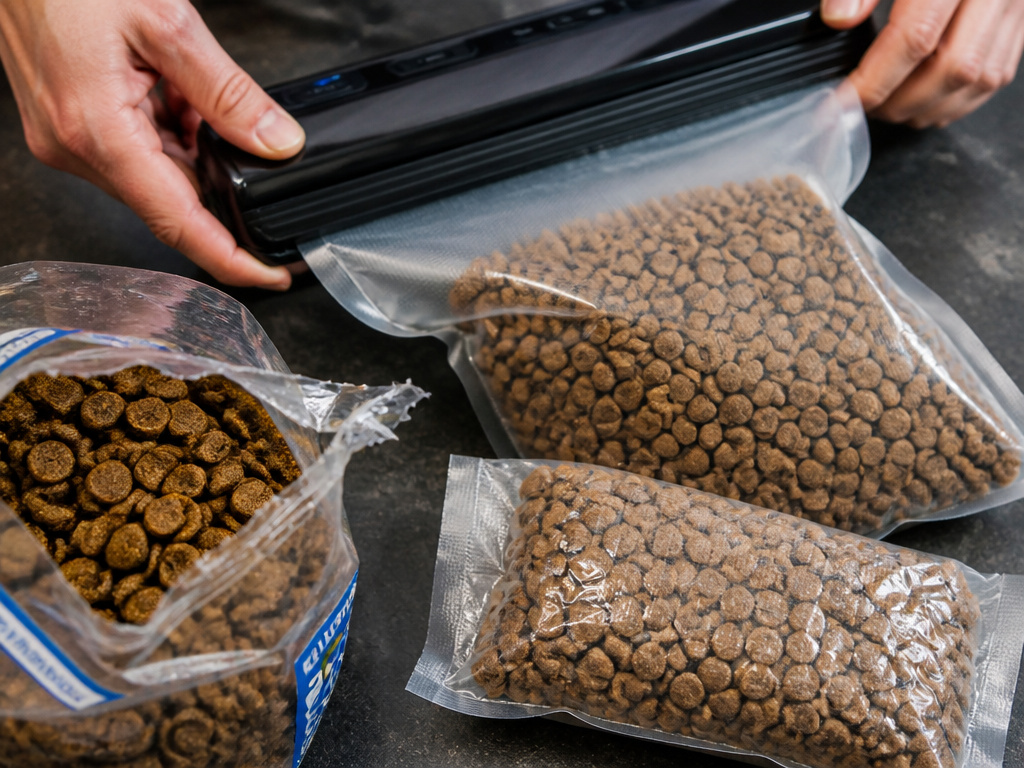
An unopened bag, stored correctly, is good until its printed best-by date. The clock starts ticking the moment you break the seal. Oxygen is the enemy. Once opened, the FDA and brands like Purina advise using the food within two to three months for optimal freshness and nutrient integrity.
This timeline is the window before fat oxidation, rancidity, becomes noticeable in smell, taste, and nutritional loss. A pet food storage survey study found that most pets take a month or more to finish a bag, with over 70% of dogs in the study taking over four weeks.That fits comfortably within the 2-3 month window, but it highlights a risk: buying a massive bag for a tiny dog.
Do you actually know how long it takes your dog to finish a bag? If it’s longer than three months, you’re feeding stale, nutritionally diminished food by the end. The fix is simple: buy a bag size that your dog will consume within 6-8 weeks. The small premium for buying two smaller bags a year beats feeding rancid kibble.
Here is a quick reference to match bag size to consumption rate:
| Dog Size | Typical Bag Size | Max Time to Use (Opened) | Action if Slower |
|---|---|---|---|
| Small (e.g., Chihuahua) | 5-6 lbs | 3 months | Split bag, vacuum-seal half |
| Medium (e.g., Beagle) | 15-18 lbs | 2.5 months | Use oxygen absorbers in storage |
| Large (e.g., Labrador) | 30+ lbs | 1.5 months | Store in a sealed container |
For those who feed raw or mix in wet food, the dry kibble consumption rate slows down. In those cases, applying principles from long-term food storage, like using oxygen absorbers in a vacuum-sealed portion, can extend the window.
The Step-by-Step Storage System
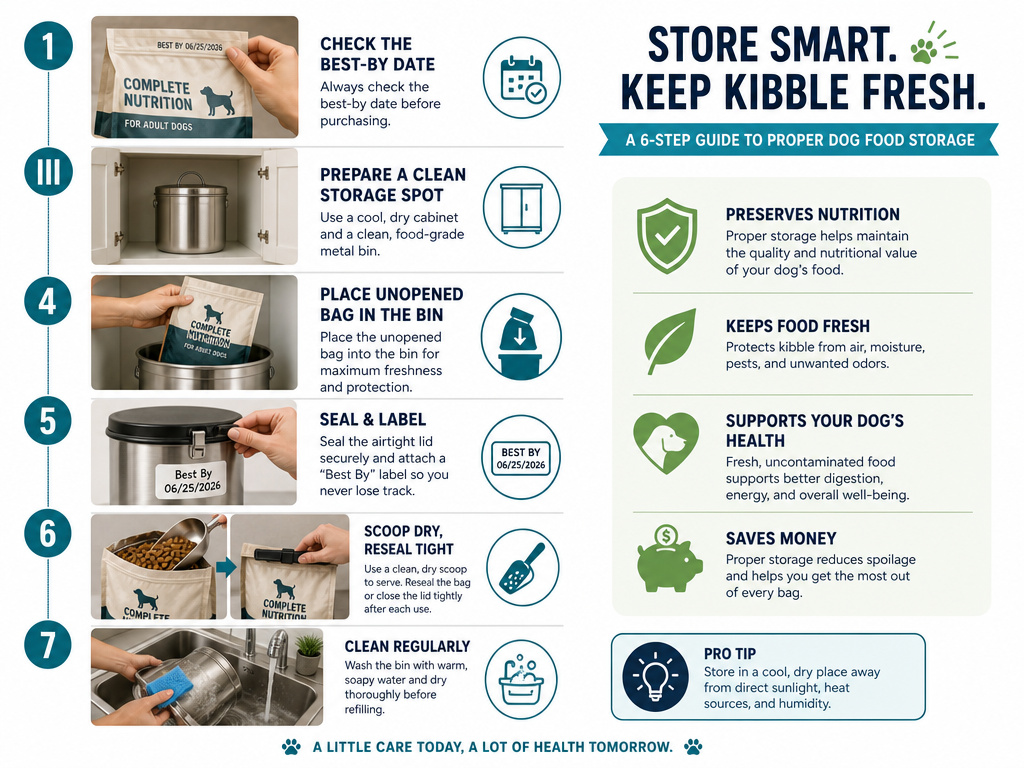
Follow this sequence every time you open a new bag. Missing one step cuts the food’s shelf life.
- Inspect the Bag. Before buying, check the best-by date. Don’t buy a bag within six months of expiration. At home, look for any tears, holes, or signs of moisture damage.
- Designate a Storage Spot. Choose a cool, dry place under 80°F. A kitchen cupboard or pantry shelf away from the stove is ideal. Clear the space.
- Prepare Your Outer Container. If you’re using a metal bin or plastic tub, wash it with warm, soapy water and dry it thoroughly. This removes dust and any residual oils.
- Place the Whole Bag Inside. Set the unopened bag into the container. If the bag is too tall, you can gently fold the top, but do not cut or tear it to make it fit. For very large bags, consider a container designed for long-term food storage.
- Seal and Label. Close the container’s airtight lid. If you had to open the food bag, clip it shut with a strong bag clip. You can tape a note to the container with the best-by date for quick reference.
- Serve and Reseal. Use a clean, dry scoop dedicated only to pet food. After each use, immediately reseal the bag’s inner liner and close the container lid. Never leave the bag open inside the container.
- Wash on Rotation. When the bag is empty, wash the container and scoop with soap and hot water before starting with a new bag. This breaks the cycle of bacterial buildup.
This system mirrors the best practices for storing other dry goods like flour or dry beans. Consistency is what keeps pests out and nutrients in.
What About Special Situations?
The standard system works for 90% of homes. But some scenarios need a tweak.
High-Humidity Climates: Moisture is a catalyst for mold. In these areas, the outer container’s airtight seal is non-negotiable. Consider adding a desiccant packet (like those found in new electronics) to the container, but keep it separate from the food bag. The techniques for storing dehydrated food apply here.
Households with Pests: This includes insects or rodents. A metal bin is your first and best defense. Ensure there are no gaps in the lid’s seal. Regularly inspect the area for signs of pests.
Suspected Food Sensitivity: If you’re troubleshooting a potential food allergy, storage integrity is even more critical. Cross-contamination from old, residual fats in a poorly washed container could skew your results. Use a brand-new, inert glass container for the trial food.
The “I Already Poured It” Scenario: If the food is already in a plastic tub, all is not lost. Verify the tub is food-grade and BPA-free. Then, commit to a rigorous cleaning regimen with hot, soapy water and complete drying before every refill. Be aware of the ongoing safety considerations for plastic food containers, especially with fatty foods.
Frequently Asked Questions
Can I store dry dog food in the refrigerator or freezer?
You can, but it’s usually overkill and introduces moisture risk. Freezing can extend shelf life for unopened bags if you need to store them for many months. For opened food, the constant temperature cycling of a refrigerator can cause condensation inside the bag, leading to mold. A cool pantry is simpler and safer.
How can I tell if dry dog food has gone bad?
Use your senses. Look for any visible mold, discoloration, or clumping. Smell it, rancid fat has a sharp, bitter, or paint-like odor, distinct from the normal kibble smell. Feel it; excessive moisture or oiliness is a bad sign. If in doubt, throw it out.
Are transparent containers okay for dog food storage?
Only if you store them in a dark cupboard. Light, especially sunlight, accelerates nutrient degradation and fat oxidation. If the container will be exposed to any light, choose an opaque material like metal or colored plastic.
My dog food bag doesn’t have a resealable zipper. What should I do?
This is common. Use a strong, sliding plastic bag clip to seal the inner liner after each use. Then, place the entire clipped bag inside your airtight outer container. The clip keeps the food fresh, and the container keeps pests away.
Is it safe to store dog food in a bucket with a gamma seal lid?
Yes, if you keep the food in its original bag inside the bucket. Gamma seal lids provide an excellent airtight closure. Just ensure the bucket itself is made of food-grade plastic. The bucket protects the bag, and the bag protects the food.
The Bottom Line
Storing dry dog food isn’t complicated, but it is specific. Hit the 80°F ceiling, and the nutrients break down. Dump the kibble into a plastic tub, and you risk chemical migration and bacterial contamination. Toss the bag, and you lose your lifeline in a recall.
The winning combo is straightforward: the original bag inside an airtight, opaque container, kept in a cool pantry. That’s it. That system preserves the food, protects your pet, and turns a daily chore into a non-issue. Spend your energy on the walk, not worrying about the bowl.
