How to Preserve Dry Beans for Maximum Shelf Life & Quality
This post contains affiliate links. As an Amazon Associate, we earn from qualifying purchases.
To preserve dry beans, control three variables: moisture (keep below 14% for long-term storage), temperature (store below 60°F), and light (block UV completely). Beans stored in Mylar bags with oxygen absorbers in a cool, dark place can remain edible for 30 years, but vitamin degradation begins after 2-3 years.
That 14% moisture figure is the line between a pantry staple and a bin of hardened seeds. It comes from the same agricultural research that tracks how beans darken under ultraviolet light in two weeks and why handling them below 10% moisture cracks the seed coat. This isn’t about putting beans in a jar. It’s about stopping the chemical and physical reactions that happen while they sit.
What follows: the exact moisture and temperature numbers that prevent hardening, the two packaging systems that block oxygen for a decade, and the single handling mistake that turns a 30-year supply into a 1-year problem.
Key Takeaways
/ * Long-term storage requires beans at 14% moisture or lower. At 18% moisture, fungal spoilage starts. / * Store beans below 60°F (15°C). Every 10-degree rise cuts safe storage time in half. / * Ultraviolet light darkens beans within two weeks. Use opaque containers or store in total darkness. / * For storage beyond one year, use Mylar bags with oxygen absorbers or #10 cans. Standard plastic bags allow oxidation. / * Vitamin degradation begins after 2-3 years at room temperature. Protein and calories remain stable far longer.
The Three Storage Killers: Moisture, Heat, and Light
Moisture content is the single biggest predictor of shelf life. The research is precise. For long-term home storage, the target is 14% moisture. The maximum safe ceiling is 18%. Cross that line and you’re storing mold, not food.
Utah State University bean storage guide states that beans in normal polyethylene bags have a shelf life of one year or more, but in oxygen-free packaging like #10 cans or Mylar bags, shelf life extends to 10 or more years.
Why does 18% matter? Fungal spores are everywhere. Given enough water activity in the bean itself, they germinate. The spoilage isn’t always visible at first. You might not see the webbing until you pour the beans out, and by then the entire batch is contaminated. The USU Extension storage recommendations frame this as a binary condition: dry enough to store, or not.
Temperature works with moisture. A bean at 16% moisture might last 20 weeks at 60°F. At 80°F, that safe window drops to about 7 weeks. The relationship isn’t linear; it’s exponential. Warmth accelerates every degradation process, mold growth, oxidation, and the “hard-to-cook” defect where the bean’s cellular structure changes and it never softens no matter how long you boil it.
Then there’s light. This is the silent killer most pantry guides miss.
NDSU dry bean storage research found that ultraviolet light dramatically darkened pinto beans within two weeks. This isn’t about a sunny windowsill. It’s about the ambient UV in a room with fluorescent lighting or near a window.
The North Dakota State University agronomy report showed that even without direct sun, UV exposure causes rapid color loss and likely degrades oils. Your beans won’t go bad, but they’ll look old and unappetizing. The fix is simple: opaque containers. Use a Mylar bag, a #10 can, or a solid-colored plastic bucket. Never use clear glass jars on an open shelf for long-term dry food storage.
| Storage Factor | Safe Threshold | Consequence If Exceeded |
|---|---|---|
| Moisture Content | ≤14% (long-term) ≤18% (absolute max) |
>18%: Fungal spoilage begins. 14-18%: “Hard-to-cook” defect accelerates. |
| Temperature | ≤60°F (15°C) ideal | >80°F: Safe storage time halves. Vitamin loss accelerates. |
| Light Exposure | Zero UV exposure | UV light: Beans darken in 2 weeks. Color and grade loss. |
Packaging for the Long Haul: Your Three Options
Your container is a barrier. It needs to block oxygen, light, and pests. You have three effective choices, and one common mistake.
Mylar Bags with Oxygen Absorbers are the standard for serious long-term bean storage. The metallized layer blocks all light and gas exchange. You add an oxygen absorber packet (300cc for a gallon-sized bag), seal it with a heat sealer or a flat iron, and the inside atmosphere becomes inert within hours. Beans packaged this way in the 1990s are still edible today. This method is core to any general guide to food preservation.
#10 Cans are the commercial equivalent. These are enamel-lined steel cans sealed under vacuum or with nitrogen flush. They’re bombproof against light, oxygen, and crushing. They’re also more expensive and less flexible for portioning. For a family building a storing dried beans pantry, Mylar bags usually win.
Food-Grade Plastic Buckets with Mylar Bag Liners are the bulk solution. The bucket provides structural protection from rodents and crushing. The inner Mylar bag handles the oxygen and light barrier. Never store beans directly in a plastic bucket, the plastic is slightly permeable to oxygen over years, leading to staleness.
Common mistake: Using any container without an oxygen barrier for storage over one year. Standard plastic bags, glass jars with loose lids, or airtight containers not designed for long-term food storage will let oxidation occur. The beans won’t mold, but they’ll go rancid and taste flat.
The fourth option, regular kitchen containers, is for short-term use only. A glass jar or a storage containers for dry goods is perfect for the beans you’ll eat within the next 12 months. For the beans you’re storing for 2035, that’s not enough.
The 30-Year Shelf Life: What Actually Degrades?
A BYU study is the landmark here. It found pinto beans stored for 30 years still had over 80% acceptance by a taste panel for emergency use. The beans were harder and required longer cooking, but they provided calories and protein.
That’s the critical distinction. Nutritional components degrade at different rates. * Calories (Carbohydrates, Protein, Fat): Stable for decades. The energy content remains. * Vitamins: Begin degrading after 2-3 years at room temperature. After approximately five years, most vitamins are no longer present. Cool storage slows this dramatically. * Texture & Cookability: Gradual hardening occurs over years. Older beans always take longer to soak and cook. At some point, they may only be usable as bean flour.
This timeline makes the case for rotation. Store beans for the long haul as a calorie insurance policy, but plan to eat and replace your stock within 5-10 years to retain vitamin content and easier cooking. It’s the same principle behind preserving fruit or drying tomatoes, the method gives you a long window, but quality is best early.
| Nutrient / Quality | Stability Timeline | Note |
|---|---|---|
| Protein & Carbohydrates | 30+ years | Caloric content remains intact. |
| Vitamins (B Complex, etc.) | 2-5 years | Degradation begins at 2-3 years; most gone by ~5 years at 70°F. |
| Cookability (Texture) | 10-30 years | Gradual hardening increases soak/cook time annually. |
| Color & Appearance | 2+ weeks (if light-exposed) | UV darkening is rapid. In darkness, color holds for years. |
Handling and Harvest: The Hidden Source of Damage
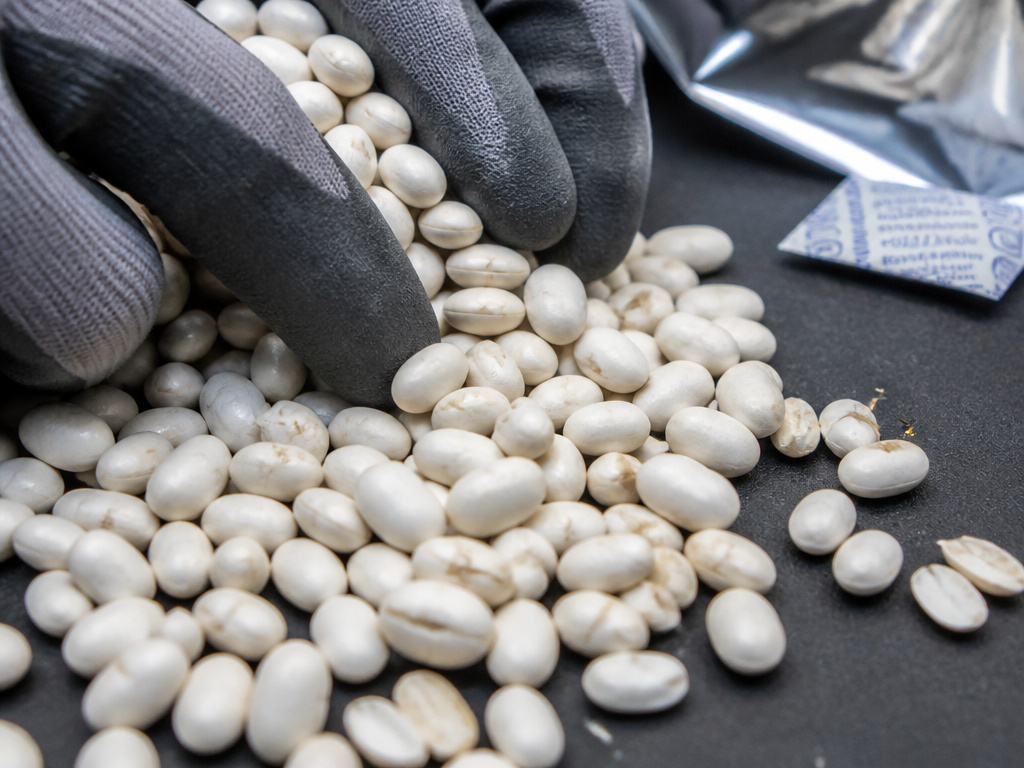 Long-term storage starts before the beans are in your pantry. If beans are handled with low moisture or in freezing temperatures, the seed coat cracks. Those micro-fractures are entry points for moisture and faster oxidation later.
Agricultural guides are explicit. Beans should not be handled at temperatures below 20°F (-7°C) or when moisture content is below 10%. At those points, the seed is brittle. Think of it like trying to bend a cold, dry cracker, it snaps. For the home preserver buying bulk beans, this means asking your supplier about their handling. Were the beans transferred with gentle belt conveyors or aggressive augers? Augers, especially when run fast and empty, cause chipping.
This mechanical damage is why bulk beans sometimes have a lot of “halves” and broken pieces in the bottom of the bag. Those broken beans have more surface area exposed to air. They’ll go rancid faster in your storage container. It’s worth picking them out before you seal your Mylar bags. This attention to pre-storage quality mirrors the care needed for storing coffee beans to maintain freshness.
Step-by-Step: Preserving a 25-Pound Bag of Pinto Beans
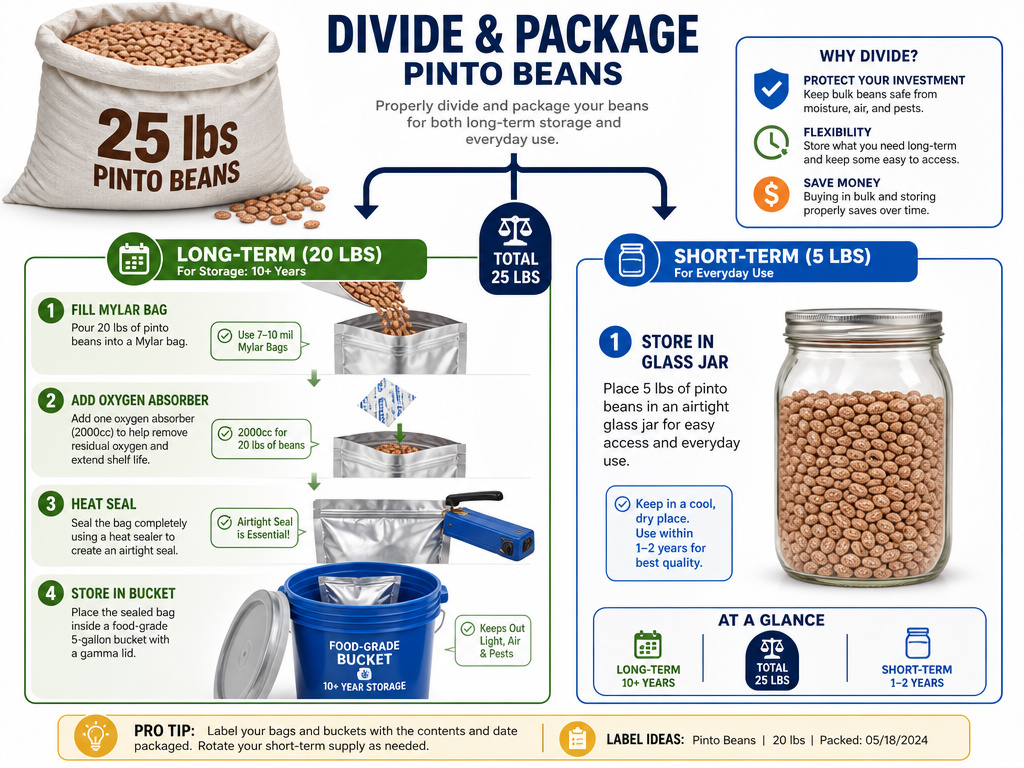 This is the practical application. You’ve bought a bulk bag. Now you need to divide it for long-term storage and short-term kitchen use.
- Inspect and Sort. Spread beans on a sheet pan. Remove any small stones, dirt clods, or severely damaged beans. This is your one chance to ensure purity before sealing for decades.
- Divide the Batch. Decide what portion you want for long-term storage (e.g., 20 lbs) and what portion for kitchen use in the next year (e.g., 5 lbs). Use a kitchen scale.
- Package for Long-Term. For the 20-pound portion:
- Get gallon-sized Mylar bags and 300cc oxygen absorbers.
- Fill each bag with 5-6 pounds of beans, leaving enough headroom to seal.
- Drop in one oxygen absorber per bag.
- Seal the top with a hair straightener or a dedicated bag sealer, ensuring a complete, airtight seal. Label each bag with the bean type and date.
- Package for Short-Term. For the 5-pound kitchen portion, use a large best containers for dry food, a glass jar or a dedicated airtight plastic container. Store it in your pantry.
- Final Storage. Place the sealed Mylar bags inside a food-grade plastic bucket for crush and pest protection, or simply place them on a shelf in a cool, dark, dry place. A basement closet is ideal. An uninsulated garage that swings from freezing to 90°F is not.
Where this goes sideways: Sealing a Mylar bag without an oxygen absorber. You’ve blocked light, but the trapped air will still oxidize the beans’ oils. The bag will puff up over time as off-gassing occurs, and the beans will taste stale within a few years.
If you have a vacuum sealer, note that vacuum sealing alone is not a substitute for an oxygen absorber with dry beans. Vacuum sealing removes most air, but an O2 absorber chemically scavenges the remaining oxygen molecules, creating a true inert atmosphere.
Rehydrating and Cooking Older Beans
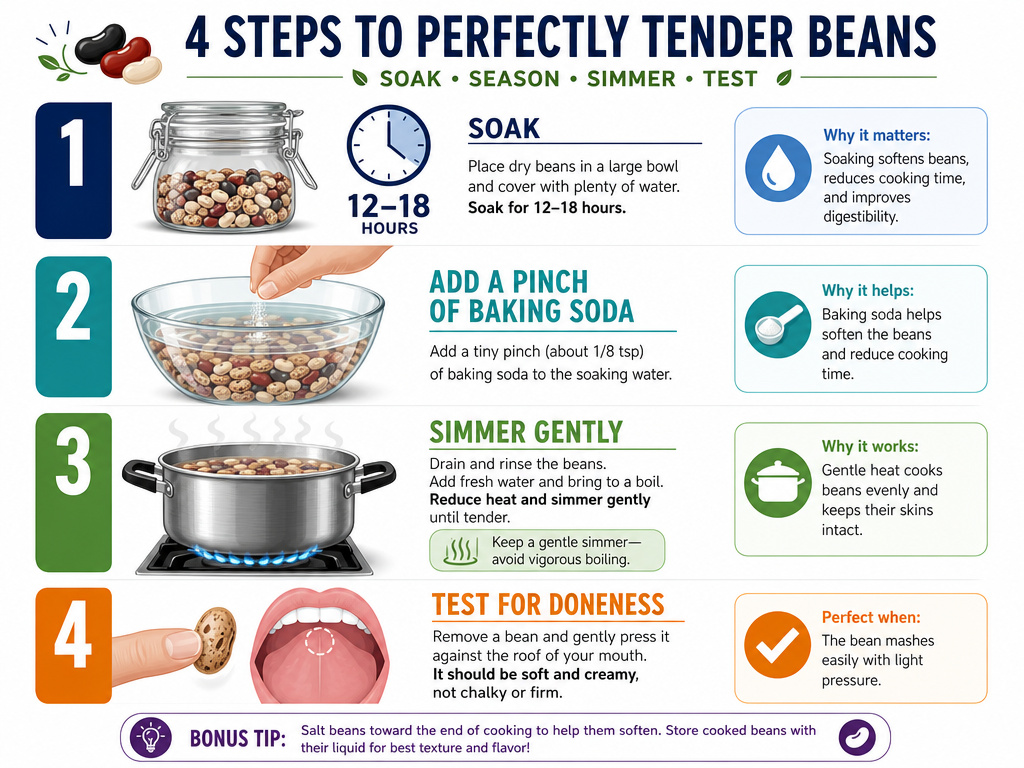 The older the bean, the harder the seed. A 10-year-old bean isn’t defective; it’s just dense. The University of Maine Extension guide provides the standard cooking method, but you need to adapt the timeline.
For beans stored 5+ years:
- Soak Longer. Use the overnight soak method, not the quick-soak. Allow a full 12-18 hours in the refrigerator.
- Consider Baking Soda. A tiny pinch (1/8 teaspoon) of baking soda in the soaking water can help soften the seed coat by altering the pH. Don’t overdo it, too much will make the beans mushy and taste metallic.
- Simmer, Don’t Boil. After soaking and rinsing, cook at a gentle simmer. A rolling boil can cause the already-fragile older beans to split their skins.
- Taste for Doneness. Start checking tenderness after 2 hours. It may take 3 or 4. They are done when you can smash one easily against the roof of your mouth with your tongue.
This extra patience is the final step in the preservation cycle. You’ve stored them correctly to maintain safety and calories; now you cook them correctly to unlock that stored nutrition. It’s the same logic applied to drying and storing herbs, the method saves the food, but proper preparation brings it back to life.
Frequently Asked Questions
Can dry beans really last 30 years?
Yes, for caloric and protein content. A BYU study on pinto beans stored up to 30 years found over 80% acceptance for emergency use. Vitamin content degrades much sooner, after 2-5 years. The beans also become harder and require significantly longer cooking times.
What is the “hard-to-cook” defect?
It’s a permanent physical change in the bean’s cellular structure, often accelerated by storage at high moisture (over 14%) and warm temperatures. The beans refuse to soften fully, no matter how long you soak or cook them. Proper storage at low moisture and cool temps prevents it.
Are oxygen absorbers necessary?
For storage beyond one year, yes. Standard containers allow slow oxidation, which leads to rancidity and off-flavors. An oxygen absorber inside a sealed Mylar bag or #10 can creates an inert atmosphere that stops this process for a decade or more.
Can I use my vacuum sealer for dry beans?
You can, but it’s not optimal for very long-term storage. Vacuum sealing removes most air, but an oxygen absorber removes the last traces. For the best 10+ year results, use a Mylar bag with an O2 absorber. The vacuum sealer is great for shorter-term preserving dry food.
Do different bean varieties store differently?
All common dry beans (pinto, black, navy, kidney) follow the same storage rules. The main difference is size and initial moisture. Larger beans like limas may have slightly different optimal drying temperatures post-harvest, but once dried to 14% moisture, their storage requirements are identical.
How do I know if my stored beans have gone bad?
Visible mold, a musty or rancid smell, or the presence of insects are clear signs. Beans that are excessively brittle and full of cracks or that have darkened unevenly likely had poor initial handling or were stored with light exposure. When in doubt, cook a small test batch, bad beans will have an off taste and may not soften at all.
The Bottom Line
Preserving dry beans is a battle against three enemies: water, warmth, and light. Win it by hitting the numbers: 14% moisture, under 60°F, and zero UV. Package the victory in a Mylar bag with an oxygen absorber.
The goal isn’t just to store food. It’s to store food that will still be usable food when you need it. That means respecting the agricultural science that gives us the 18% mold line and the 2-week UV darkening rule. It means rotating your stock so you eat the older beans while the vitamins still remain. Do that, and a 25-pound bag of pinto beans becomes a 30-year asset, not a next-year regret.
