The Right Way to Store Sweet Potatoes: Avoid Common Mistakes
This post contains affiliate links. As an Amazon Associate, we earn from qualifying purchases.
Store sweet potatoes in a two-stage process: cure them immediately at 85°F (29°C) and 85-90% relative humidity for 3-7 days to heal wounds and convert starch to sugar, then move them to long-term storage at 55-60°F (13-16°C) and 85-90% humidity. This sequence, validated by research dating to the 1920s and still current, keeps roots marketable for up to 13 months. Skip the curing step, or let storage temperatures dip below 50°F (10°C), and you trigger irreversible chilling injury, a hard, inedible core that only shows up after cooking.
That gap between curing and storing is where most home losses happen. You can’t just toss them in a cool basement. The roots need that initial heat and humidity to lay down a protective cork layer over every scrape and nick. Without it, wounds stay open, moisture escapes, and rot spores walk right in. The storage specs that follow aren’t just nice-to-haves; they’re the documented ceiling between a year of perfect sweet potatoes and a box of sprouted, shriveled, or rock-hard failures.
What follows: the exact temperatures and timelines from extension service manuals, the four mistakes that end storage early, and how to adapt commercial-grade rules to a home kitchen or basement.
Key Takeaways
- Cure first, store second. Never skip curing. Roots need 85°F and high humidity for 3-7 days to heal wounds and sweeten.
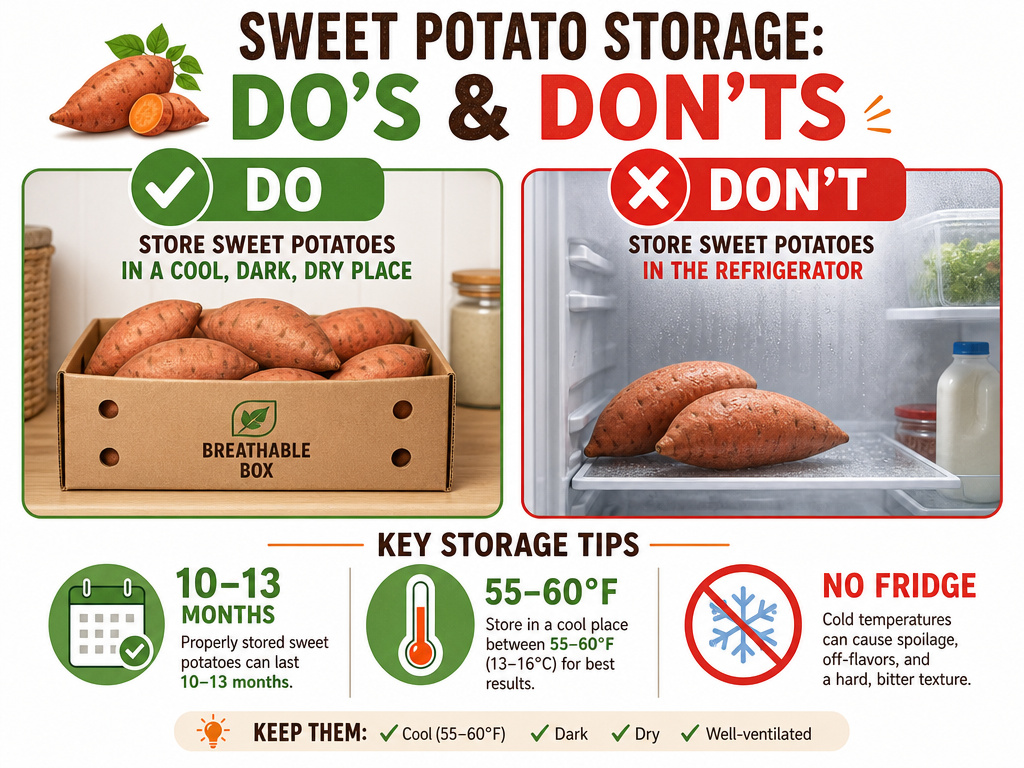
- 55°F is the magic number. Long-term storage must stay between 55-60°F. Below 50°F causes chilling injury; above 60°F prompts sprouting.
- Chilling injury is silent and permanent. Roots stored below 50°F for several weeks can develop “hardcore”, a rock-hard center that only appears after cooking. The damage is done long before you see it.
- Keep them dry and dark. Do not wash before storage. Brush off dirt, handle gently, and store in a single layer in a breathable box.
- They hate the fridge. Refrigerator temperatures (around 35°F) will cause severe chilling injury in just 1-2 days.
The Two-Step Process: Cure First, Then Store
You don’t store sweet potatoes. You cure them, then you store them. Treating them like regular potatoes is the first and fastest way to lose the crop.
Curing is a biological repair job. When you dig them up, the thin skins are covered in microscopic scratches. Left open, these wounds leak moisture and let decay in. The cure chamber’s warm, moist air signals the root to grow a suberin layer, a corky seal, over every injury. This also kicks off the enzymatic conversion of starch to sugar, which is why a cured sweet potato tastes sweeter.
The curing environment: 85°F (29°C), 85-90% relative humidity, for 3-7 days. Provide gentle air movement to prevent stagnant, wet pockets. Roots should be in a single layer, not piled deep.
The timeline depends on the root’s starting temperature. If they come from warm soil, 3-4 days may suffice. If harvested on a cold fall day, aim for the full week. The NC State guide notes that rushing the warm-up, trying to heat roots 40°F in 24 hours, can cause localized drying and hurt quality. A 48-hour warm-up to target temperature is safe.
After curing, the game changes completely. Now the goal is to slow metabolism to a near-stop. This is the long-term storage phase.
| Phase | Temperature | Relative Humidity | Duration | Purpose |
|---|---|---|---|---|
| Curing | 85°F (29°C) | 85-90% | 3-7 days | Heal wounds, convert starch to sugar, toughen skin. |
| Long-Term Storage | 55-60°F (13-16°C) | 85-90% | Up to 13 months | Suppress sprouting, minimize weight loss, preserve flavor & texture. |
The storage temperature is non-negotiable. The NC State postharvest handling guide identifies 55°F (13°C) as the ideal for maintaining marketability for over a year. This is warmer than you think. A cool basement might hit it in winter, but by spring it’s too warm. An unheated garage will drop below it on the first cold night.
Where to Create These Conditions at Home
You don’t need a commercial curing room. A small space heater and a humidifier in a closet, insulated shed, or even a large cooler can work. Monitor with a basic thermometer-hygrometer. For long-term storage, identify the warmest cool spot you have, perhaps a closet on an interior wall, away from exterior drafts. A root cellar, if you have one, is perfect, as it naturally moderates temperature and holds humidity. For other long-term options, our guide on building a root cellar covers the basics.
A cardboard box is a better home than a plastic bin. It breathes, preventing condensation. Line it with newspaper or plain brown paper, place cured roots in a single layer, and close the lid. Check monthly for any soft spots.
What Not to Do: The Four Storage Killers
Most spoiled sweet potatoes don’t rot from bad luck. They die from one of four specific environmental mistakes.
1. Chilling Injury (Temperatures Below 50°F)
This is the silent killer. Unlike a rot you can smell, chilling injury works inside the root, damaging cell membranes. The GCCA/WFLO commodity manual states that several weeks at 50°F (10°C) can cause the same damage as 1-2 days at 35°F (2°C). The symptoms often don’t appear until the root is brought back to room temperature or cooked.
Where this goes sideways: Storing roots in an unheated garage or porch in fall. The nightly dip below 50°F accumulates damage week after week. By Thanksgiving, every potato has a hard core.
You’ll see sunken, dark patches on the skin after a while. But the hallmark is “hardcore.” When you bake or boil the root, parts of the interior, usually near the center, stay stubbornly hard and inedible. It’s irreversible. The only fix is prevention: keep them above 55°F.
2. Warm Storage (Temperatures Above 60°F)
Heat wakes the root up. Metabolism speeds up, consuming stored sugars and moisture. The result is sprouting and rapid weight loss. A root stored at 65°F will shrivel and send out vines months before one held at 55°F. This is why a warm kitchen cupboard is a terrible long-term home.
3. Skipping the Cure
Putting freshly dug, unscraped roots straight into cool storage is like sending a patient with open wounds into a cold, damp room. The wounds don’t heal. The UMass Amherst harvest and storage guide notes that curing creates the corky periderm layer that locks out pathogens and locks in moisture. Without it, you get weight loss and rot, not long-term storage.
4. Washing Before Storage
Water on the skin is an invitation for rot. Always brush off dry soil, don’t wash. The thin skin needs to stay dry and intact. If you need clean potatoes for immediate use, wash only what you’ll cook that week. For long-term keeping, treat them like eggs.
How to Handle Harvest for Maximum Shelf Life
Storage starts in the field. Rough handling creates the wounds that curing must fix. The more damage, the harder the cure has to work.
- Cut vines first. Mow or remove vines 7-10 days before harvest. This allows the skin to “set” and toughen slightly, reducing skinning during digging.
- Dig carefully. Use a fork or spade to loosen soil, then lift roots by hand. Don’t yank or throw them into a bucket.
- Sort gently. Separate any badly gashed or punctured roots for immediate use. Only intact, firm roots should go into cure.
- Get them inside fast. Don’t leave harvested roots in the sun or on a cold field. Move them to the curing environment within hours.
This careful harvest philosophy applies to other roots, too. The process for storing potatoes shares the same gentle-handling rule, though their temperature needs are different.
Sweet Potatoes vs. Regular Potatoes: Why Their Rules Diverge
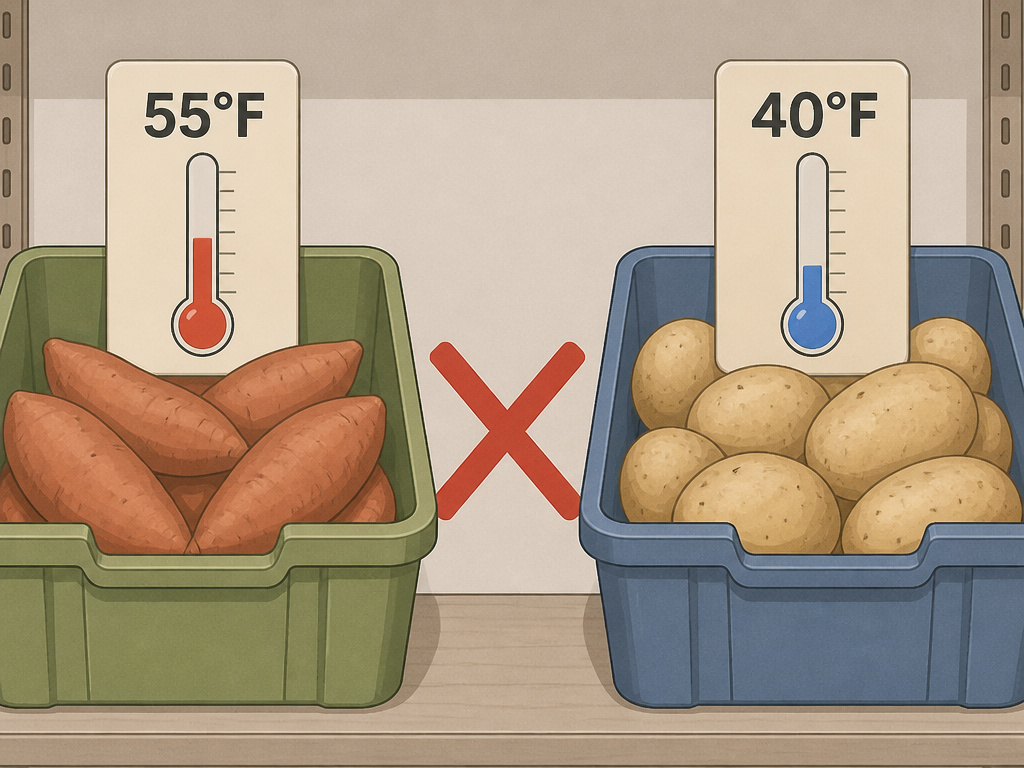 This is the most common point of confusion. White potatoes and sweet potatoes are not the same organism. They have opposite temperature needs.
| Factor | Sweet Potatoes | Regular Potatoes |
|---|---|---|
| Ideal Storage Temp | 55-60°F (13-16°C) | 38-40°F (3-4°C) |
| Chilling Injury | Below 50°F (10°C) | Not applicable (they prefer cold) |
| Curing Required | Yes, always. | Optional; “curing” for them is just skin toughening at room temp for 1-2 weeks. |
| Result of Warm Storage | Sprouts, shriveling. | Sprouts, conversion of starch to sugar (sweet taste). |
| Can be stored together? | No. Different temperatures and humidity needs. |
Storing them together forces a compromise that hurts one or both. The cold that keeps white potatoes happy will give sweet potatoes hardcore. The warmth sweet potatoes need will make white potatoes sprout wildly. For a dedicated space that works for both, see our analysis of the best storage for onions and potatoes, which addresses compatible temperature ranges.
Answering Your Sweet Potato Storage Questions
How long can you store sweet potatoes?
With proper curing and strict temperature control at 55-60°F, sweet potatoes can remain in excellent condition for 10 to 13 months. The NC State extension cites 13 months of marketability. Home storage often yields 6-10 months due to temperature fluctuations.
Can you store sweet potatoes in the refrigerator?
No. The refrigerator averages 35-38°F, well into the chilling injury zone. According to the GCCA/WFLO manual, just 1-2 days at that temperature can cause significant damage. The fridge is for short-term holding of cut sweet potatoes only, and even then, they should be submerged in water in a sealed container.
What about storing cut or cooked sweet potatoes?
Once cut, the rules change completely. The exposed flesh oxidizes and dries out rapidly. Refrigerate raw cut pieces in a container covered with water for 2-3 days. For cooked sweet potato, cool completely and refrigerate in an airtight container for 3-5 days. For longer preservation of cooked mash, freezing is the only reliable method.
Do sweet potatoes need ventilation in storage?
Yes. Stagnant, humid air encourages mold. During curing, ventilation exchanges CO2 for oxygen. In long-term storage, passive airflow prevents moisture buildup. A cardboard box provides this naturally; a plastic bin does not. This is a key principle in commercial potato storage as well, where forced-air systems are standard.
Why did my sweet potatoes get hard after cooking?
You almost certainly have “hardcore” from chilling injury. The damage occurred during storage when temperatures dropped below 50°F for a cumulative period. The affected tissue lignifies (becomes woody) and will not soften with cooking. There is no fix. Use any remaining roots quickly and audit your storage location’s temperature.
Frequently Asked Questions
Why is the curing step so critical and can’t I just store them right away?
Curing is a vital healing process that cannot be replicated in long-term storage. Freshly harvested roots have microscopic abrasions that, if left unsealed, become direct pathways for moisture loss and rot organisms. The specific warm, humid cure environment triggers the root to form a natural protective cork layer over these wounds, which permanently reduces spoilage and also enhances sweetness.
What are the best containers and locations for long-term storage at home?
Use breathable containers like cardboard boxes, wooden crates, or mesh bags that allow for air circulation. A cool, dark basement, insulated garage, or unheated closet that maintains the 55-60°F range is ideal. Avoid sealed plastic bags or airtight bins, as these trap moisture and promote condensation, which leads to rapid mold growth.
Can I store sweet potatoes near other fruits and vegetables?
It is not recommended. Sweet potatoes should be stored alone, away from produce like onions, bananas, or apples that release ethylene gas. This gas can accelerate sprouting and spoilage in your sweet potatoes. Keeping them separate in their own controlled environment extends their shelf life significantly.
How can I tell if my stored sweet potatoes have gone bad or are unsafe to eat?
Discard any roots that have become soft, mushy, or show visible mold. Shriveled skin indicates severe moisture loss, while extensive sprouting means storage was too warm and nutrients have degraded. If cooked flesh has an off-odor, unusual texture, or bitter taste, do not consume it.
Before You Go
Sweet potato storage isn’t mysterious. It’s mechanical. Hit two temperature windows, 85°F to cure, 55°F to store, and guard the humidity. The moment your storage spot wavers out of that 55-60°F band, the clock starts ticking on decay or hardcore.
For most home growers, the challenge is finding that 55°F spot. It’s not the fridge, and it’s not the counter. It’s a cool interior closet, a properly managed root cellar, or an insulated corner of the basement. Monitor it. That’s the difference between eating your harvest all winter and wondering why last year’s crop turned to wood.
If you’re also putting up other staples, the same disciplined approach applies. The methods for preserving potatoes or storing onions for months all hinge on matching the vegetable to its specific, non-negotiable climate.
