Can You Keep Bananas in the Fridge? The Essential Storage Rules
This post contains affiliate links. As an Amazon Associate, we earn from qualifying purchases.
You can keep bananas in the fridge only after they reach your desired ripeness. Refrigerating green or yellow bananas below 58°F causes chilling injury, a permanent internal breakdown that robs flavor, aroma, and vitamin C while turning the flesh under the peel a grayish brown. Once ripe, refrigeration at 40°F halts ripening and can extend shelf life by 1-2 days, though the peel will darken.
The 58°F line is the biological threshold where tropical fruit cells start to rupture, not a suggestion. Your refrigerator runs at 38-41°F.Put a green banana inside for even a few hours and the vascular traces in the peel discolor. The damage is done before the skin turns black.
What follows: the exact mechanism of chilling injury, the safe window for refrigerating ripe fruit, and the step-by-step salvage plan for freezing. You’ll know which dark peel is harmless and which one means the banana is ruined.
Key Takeaways
- Never refrigerate green or yellow bananas. Temperatures below 58°F cause irreversible chilling injury, leading to bitter flavor, aroma loss, and a grayish-brown discoloration under the peel.
- Refrigerate only at peak ripeness. Once bananas are exactly as ripe as you want them, move them to the fridge. The cold (around 40°F) stops further ripening and can add 1-2 days of shelf life.
- Dark skin on a refrigerated ripe banana is usually safe. The peel darkens due to pigment oxidation, but the fruit inside is often still good. Peek under the skin at the stem end to check for grayish flesh.
- Freezing is for baking, not fresh eating. Peel, mash, and mix with a little lemon juice before freezing in an airtight bag. This prevents browning and preserves the pulp for smoothies or banana bread for up to two months.
The 58°F Chilling Injury Threshold
Your refrigerator is a danger zone for unripe bananas. The science is specific.
Before you start: Refrigerating a green banana isn’t just ineffective, it’s destructive. Chilling injury is a cellular breakdown that happens within hours below 58°F, well before any visual change on the outside peel. You’ll only discover the damage when you peel it.
The University of Florida’s postharvest physiologist, Dr. Jeffrey Brecht, states bananas are “very chilling sensitive.” Most home refrigerators sit between 38 and 41°F. That’s 20 degrees colder than the fruit can tolerate.
| Banana State | Safe Minimum Temp | What Happens Below It | Visible Sign (Timeline) |
|---|---|---|---|
| Green / Yellow | 58°F (14°C) | Chilling injury begins | Smoky under-peel discoloration (within 24-48 hrs) |
| Ripe (Yellow with flecks) | 40°F (4°C) | Ripening process halts | Peel darkens (1-2 days) |
The injury is a breakdown of the vascular bundles, the tiny threads that run through the peel, rather than a cosmetic issue. They turn a smoky gray-brown.More critically, chilling causes aroma loss and loss of vitamin C. The banana might look okay from the outside, but it will taste flat and offer less nutrition.
The Institute of Child Nutrition banana PDF from the USDA calls this defect “grayish brown discoloration affecting the area under the peel” and notes it makes the fruit “unusable and unappealing.This is a quality standard for food service, not a subjective preference.
Where this goes sideways: Assuming a black peel means a bad banana. The skin darkens from oxidation and is often fine. Chilling injury hides underneath a possibly normal-looking skin. Break the stem tip and peek. Grayish flesh means toss it.
This is why grocery stores never keep bananas in refrigerated cases. They hold them at room temperature to avoid this exact damage. Your kitchen should do the same until the fruit crosses the ripeness finish line.
When Refrigeration Actually Helps (The Right Window)
Refrigeration has one job for bananas: push pause. Once the fruit reaches the perfect spot, fully yellow, maybe with a few brown speckles, the cold can hold it there.
The mechanism is straightforward. Ripening is driven by ethylene gas and enzyme activity. Both slow to a near-stop at temperatures of 40°F or below. Sarah Brekke, M.S., of the Better Homes & Gardens Test Kitchen, confirms that “refrigeration temperatures of 40°F or below halts the ripening process in bananas.”
This is a tactical move, not a storage solution. You gain maybe a day or two. The peel will darken quickly because the cold accelerates pigment oxidation in the skin, but the flesh inside is protected. This is the critical distinction: dark skin from refrigeration is usually just ugly; the gray under-peel from chilling injury is rotten.
Here’s how to execute it: 1. Let the bananas ripen fully on the counter away from heat and sun. 2. The moment they hit your ideal eat-now ripeness, transfer the whole bunch to the fridge. 3. Expect the peels to turn brown or black within a day. Don’t panic. 4. Use them within the next 48 hours for best quality.
This short extension is why many people swear by refrigerating bananas. It works when timed perfectly. It fails when applied to fruit that hasn’t finished its natural ripening cycle.
The Right Way to Freeze Bananas
Freezing is the real long-term play, but it transforms the fruit. You freeze banana pulp for future recipes, not whole bananas for fresh eating.
Common mistake: Tossing whole, unpeeled bananas into the freezer. The peel turns black and becomes a rock-solid, impossible-to-remove barrier. Thawed, the inside is a mushy, oxidized brown mess.
The authoritative method comes from the same sources that warn against refrigeration. Both Dr. Brecht and the ICN guide specify: peel, mash, add lemon juice.
Why the lemon juice? Enzymatic browning. When you break the fruit cells, an enzyme called polyphenol oxidase reacts with oxygen, turning the pulp brown. An acid like lemon juice (citric acid) lowers the pH and inhibits that enzyme. The ICN sheet recommends an acidic solution of “1 part lemon juice to 3 parts water” for cut bananas; for freezing, a small amount mixed directly into the mash does the trick.
Step-by-Step Freezing for Baking:
- Peel ripe bananas. Use overripe ones if you have them, they’re sweeter.
- Mash the pulp in a bowl until mostly smooth. Lumps are fine for bread.
- Add a teaspoon of lemon juice per two bananas and stir thoroughly.
- Portion into airtight containers or freezer bags. Squeeze out excess air.
- Label with the date. Frozen banana pulp maintains quality for up to two months, per the ICN guide.
Frozen this way, the pulp is ready for banana bread storage or smoothies. It won’t have that bright yellow color, but it won’t taste oxidized either. This is the correct endgame for bananas that ripen faster than you can eat them, not a last-ditch rescue for chilled, injured fruit.
Diagnosing Banana Problems: Dark Peel vs. Internal Damage
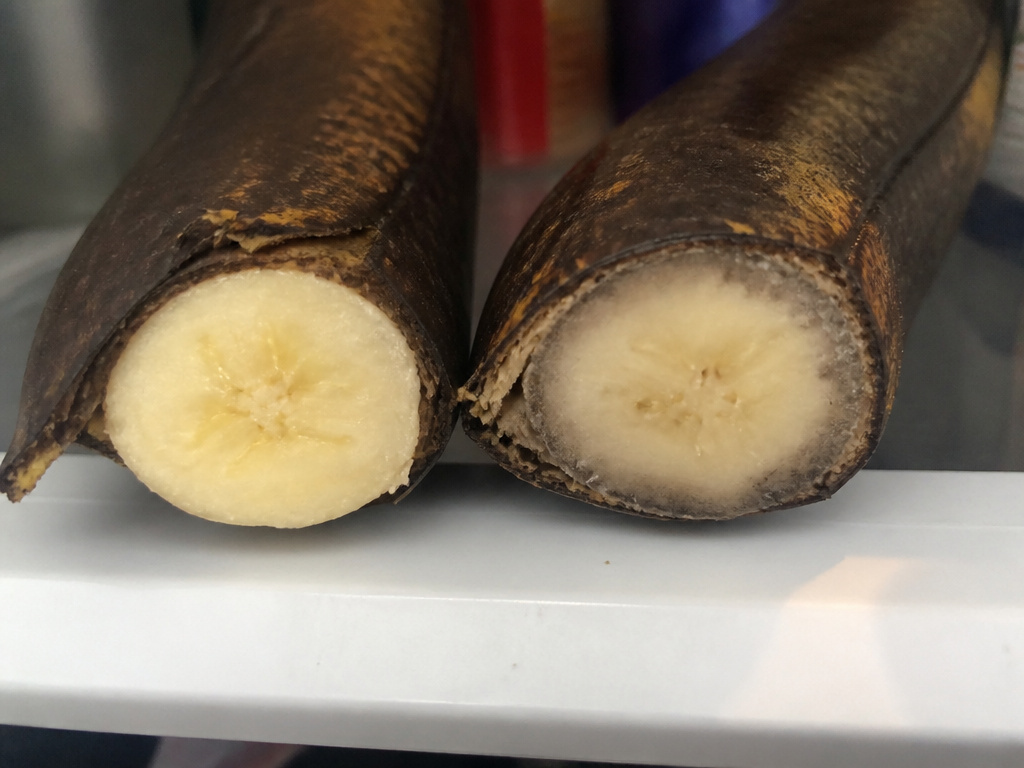
You have two bananas with dark skins. One is fine, the other is garbage. Telling the difference takes three seconds.
A refrigerated ripe banana with a black peel is typically safe. The cold darkens the skin pigments, but the flesh remains light yellow. A banana that suffered chilling injury while still green has a different signature. The damage is underneath.
How to check:
- Snap the stem tip back, don’t pull it.
- Look at the exposed flesh where the stem connected.
- See light yellow or cream color? Good. Eat it.
- See a distinct grayish or smoky brown discoloration spreading from the edges? That’s chilling injury. Toss it.
This gray-brown color is the telltale sign cited in the National Food Service Management Institute banana sheet. It’s the visual marker of cellular breakdown. The fruit inside will also have a muted, sometimes bitter flavor and a mealy texture.
Other storage issues have different fixes. If your bananas are ripening too fast on the counter, separate the bunch. Each banana emits ethylene gas; keeping them together creates a ripening feedback loop. Wrapping the stem crown tightly with plastic wrap can also slow ethylene release from that main point.
For other produce, the principles are similar but the thresholds differ. Learning the specific rules for items like raspberries in the fridge or zucchini in the fridge prevents similar waste.
How Ethylene Gas Controls Your Banana’s Timeline
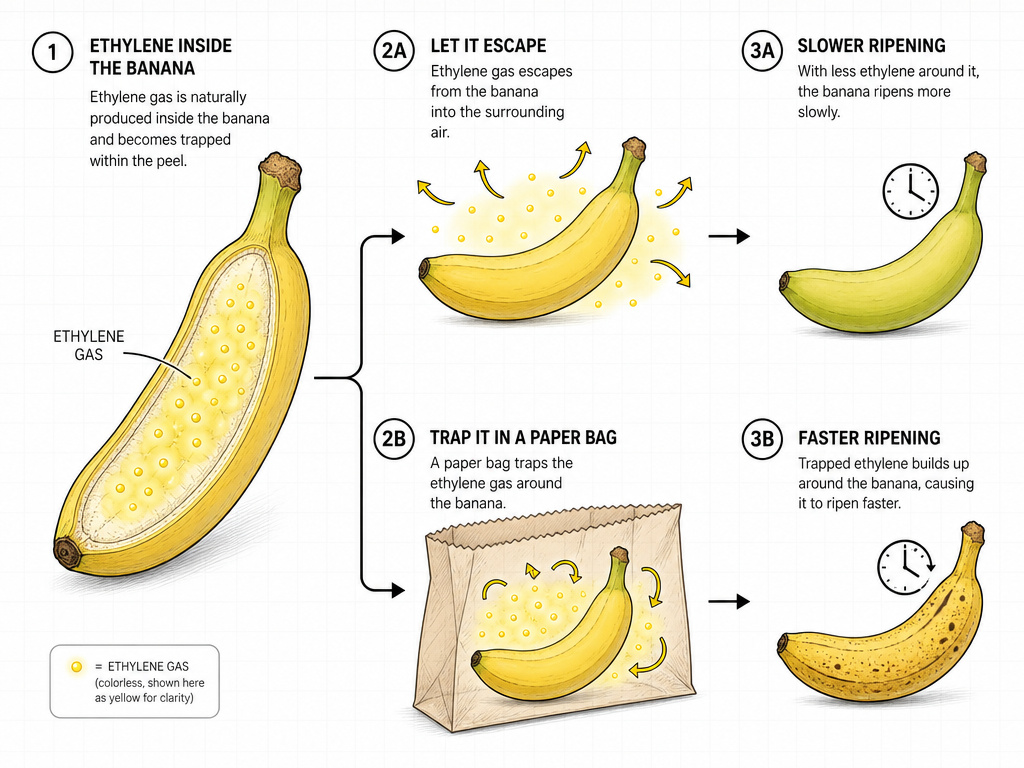
Bananas are both ethylene producers and ethylene sensitive. This gas is their internal ripening clock.
Ethylene is a natural plant hormone. A banana produces it, and that very gas signals its own cells to soften, sweeten, and change color. Trap the gas around the fruit, and you speed the clock up. Let it dissipate, and you slow the clock down.
Practical controls:
- To speed ripening: Keep bananas in a closed paper bag, or leave them in the cardboard box and plastic overwrap they came in from the store. This traps ethylene.
- To slow ripening: Separate the bananas on your counter and remove any plastic wrapping. This lets ethylene escape.
The ICN fact sheet notes that with the box top and plastic cover on, the ripeness “index number will increase every 24 to 48 hours.” That’s ethylene at work. This is the same principle used when storing other ethylene-sensitive items like fresh greens, keep them away from bananas and apples.
You can’t stop ethylene production, but you can manage its concentration. This is the low-tech lever you have between bringing home green fruit and the moment you decide to refrigerate or freeze.
Organizing Your Fridge for Better Produce Storage
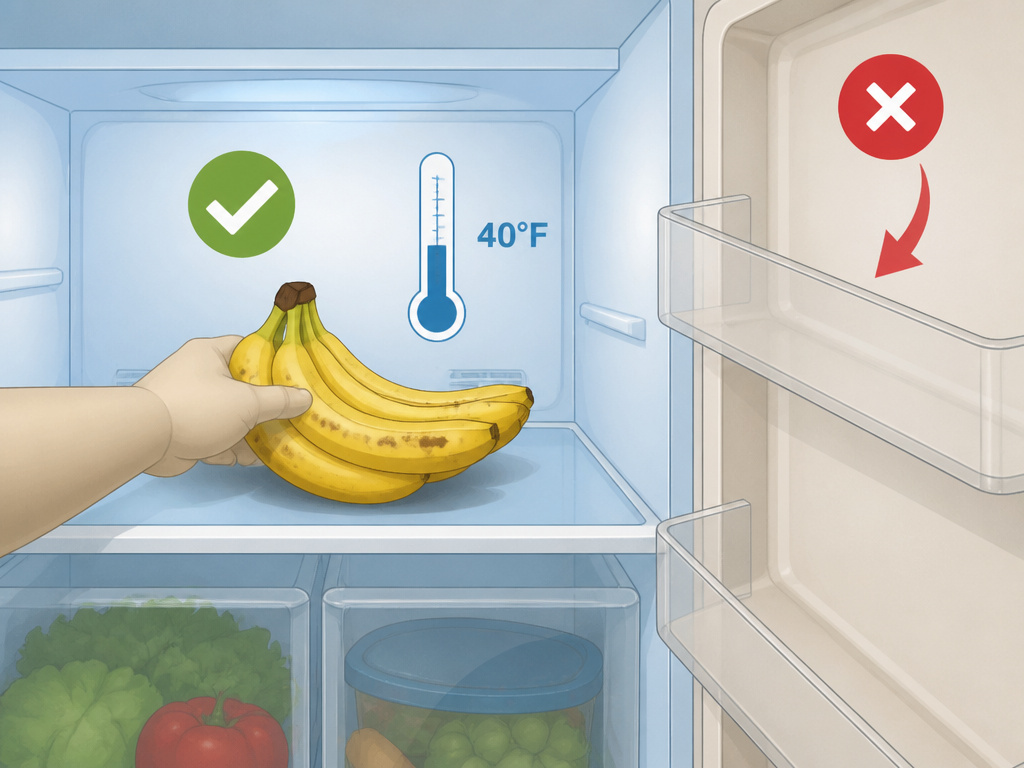
Where you place bananas in the fridge matters. The door shelves are warmer and subject to temperature fluctuations every time you open it. The main body, towards the back, is colder and more stable.
For that short 1-2 day refrigeration window, put the ripe bunch on a middle shelf towards the back. Don’t cram them in the door. This keeps them closer to that target 40°F. A well-organized fridge with clear zones helps you remember what’s where and use things before they’re forgotten.
Easy to miss: Fridge odors can transfer to banana peels. The porous skin can pick up smells from strong leftovers. For best flavor, store bananas in a clean fridge, and consider remove fridge smells if you notice off-notes.
Remember, refrigeration is a brief pause button. If you won’t use the bananas within two days, the freezer is the next step. Don’t let them languish and become another science experiment in the back of the crisper.
Frequently Asked Questions
Can you put green bananas in the fridge?
No. Never. Green bananas require temperatures above 58°F to ripen properly. Putting them in a standard fridge (38-41°F) causes immediate chilling injury, damaging the cells, destroying aroma and vitamin C, and turning the flesh under the peel a grayish-brown.
How long do bananas last in the fridge?
Ripe bananas refrigerated at 40°F will last 1-2 days longer than they would on the counter. Their total shelf life depends on how ripe they were when refrigerated. Plan to use them within 48 hours of moving them to the cold.
Why do banana peels turn black in the fridge?
The cold temperature accelerates the oxidation of pigments in the peel, causing it to darken rapidly. This is a surface-level change and does not necessarily mean the fruit inside is bad. Check the flesh at the stem end for graying to diagnose actual chilling injury.
Can you freeze bananas whole with the peel on?
You can, but you shouldn’t. The peel becomes extremely difficult to remove when frozen, and the flesh inside oxidizes and turns brown. For usable frozen bananas, always peel, mash, and mix with a little lemon juice before freezing in an airtight container.
Is the brown part of a banana bad for you?
The brown spots or streaks inside a banana are usually just sugars that have concentrated as the fruit ripened. They are safe to eat and often taste sweeter. Only discard the fruit if you see widespread grayish discoloration (chilling injury) or obvious mold.
Before You Go
Keep bananas on the counter until they’re perfectly ripe. Then, and only then, move them to the fridge for a short 1-2 day extension. If you see a black peel, check for gray flesh underneath, that’s the real sign of spoilage. For long-term storage, freeze mashed pulp with lemon juice. This is about respecting a simple biological threshold of 58°F, not complex rules. Cross it with green fruit, and you lose flavor, nutrition, and the fruit itself.
