
7 Best Freezer Thermometers of 2026
This post contains affiliate links. As an Amazon Associate, we earn from qualifying purchases.
The Taylor Large Dial Freezer Thermometer is the best overall pick for its reliability and extra-large, easy-to-read dial, while the AEVETE Digital Fridge Thermometer offers a solid budget-friendly option with versatile mounting and a clear LCD screen. For those wanting to monitor multiple units, the 4 Pack Digital Fridge Thermometer provides good value and consistent performance across several devices.
Keeping your freezer at the right temperature is critical for food safety, but many people rely on built-in controls that aren’t always accurate. As someone who focuses on smart food storage and reducing waste, I know a dependable thermometer is one of the simplest tools to ensure your frozen foods stay safe and fresh.
This guide covers the top picks based on research into specs and real-world feedback, focusing on accuracy, readability, and durability. I looked at how well each model performs in a freezer environment and what features matter most, so you can find the right fit for your kitchen.
Top 7 Freezer Thermometers in the Market
The Best Freezer Thermometers, Reviewed
Digital Fridge Freezer Thermometer
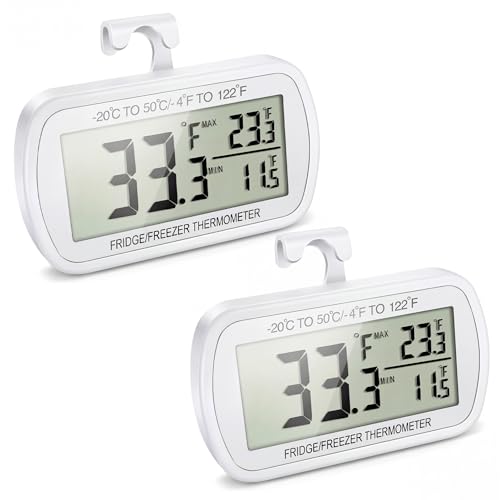
Strengths
- Max/min temperature tracking
- Magnetic, hook, and stand options
- IPX3 waterproof
- Large LCD display
Trade-offs
- Requires battery
- Screen may fog in extreme cold
This digital 2-pack delivers where analog models fall short: real-time max/min tracking and a large 2.56-inch LCD that shows all key data at once. The ±2°F accuracy is standard for this class, but the ability to catch temperature spikes after a door is left open makes it far more useful for food safety. The magnetic back is a small detail that makes a big difference in placement flexibility.
It runs on a coin battery, which could eventually die, but owners report long life and reliable performance in damp conditions thanks to the IPX3 rating. Compared to basic analog dials, this one gives actionable data. For the price, it’s hard to beat as a daily-use digital upgrade.
Video review
Taylor Large Dial Freezer Thermometer
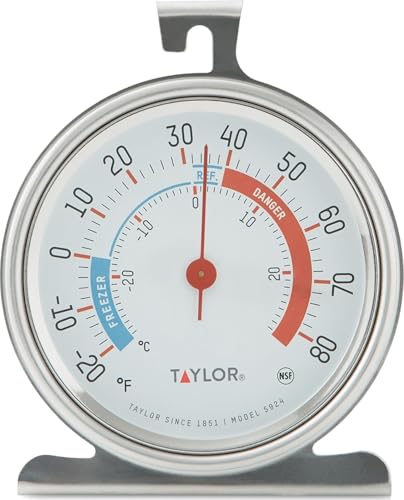
Strengths
- NSF certified
- Large 3-inch dial
- Durable stainless steel
Trade-offs
- No min/max memory
- Analog only
- Not battery-free
The Taylor 5924 stands out in the analog category for one big reason: it’s NSF certified, which means it meets strict standards for food safety equipment. That’s rare at this price point and gives it real credibility, especially for anyone serious about proper food storage. The 3-inch dial is bold and color-coded with clear ‘Freezer’, ‘Ref’, and ‘Danger’ zones, so you can spot a problem at a glance.
Owners consistently report it holds up well over time, and the stainless steel casing does feel like it can handle the humidity swings inside a freezer. It’s a no-frills analog design, so you won’t get min/max tracking, but for basic, reliable monitoring with peace of mind around safety standards, this is a solid foundation. I’d trust this more in a shared kitchen or small food prep space than uncertified models.
Video review
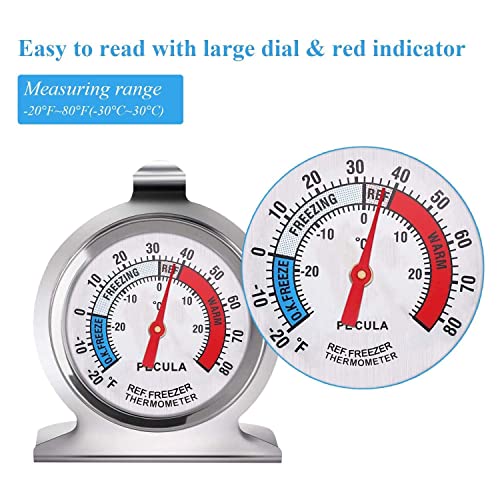
2 Pack Analog Fridge Thermometer

Strengths
- Low-cost 2-pack
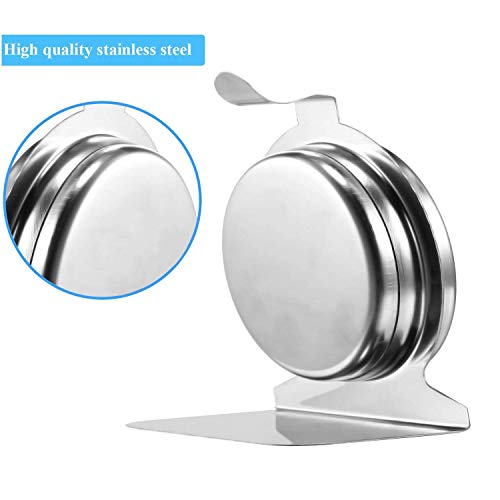
- Stainless steel build
- Easy-to-read dial
Trade-offs
- Not NSF certified
- Slight accuracy variance reported
- No min/max tracking
At this price, getting two stainless steel analog thermometers feels like a win for basic fridge and freezer monitoring. The large dial and red indicator make readings simple, and the hook design gives flexibility in placement. On paper, it’s nearly identical to the Taylor model but without the NSF certification, which is a meaningful gap if you’re focused on food safety standards.
Reviewers note these are accurate enough for general use, but some report slight variance between units. They’re functional and durable-looking, but I wouldn’t rely on them in a high-stakes environment. Still, for a backup or for someone setting up multiple cooling units on a budget, the value is clear.
Product photos



4 Pack Digital Fridge Thermometer
Strengths
- 4-pack for broad coverage
- Max/min tracking
- Magnetic and versatile placement
Trade-offs
- Batteries required
- Same screen fogging risk
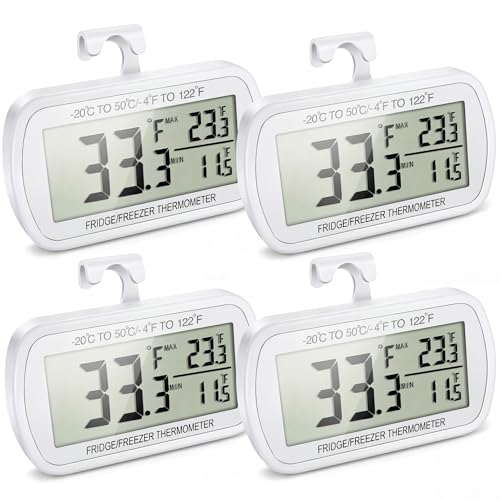
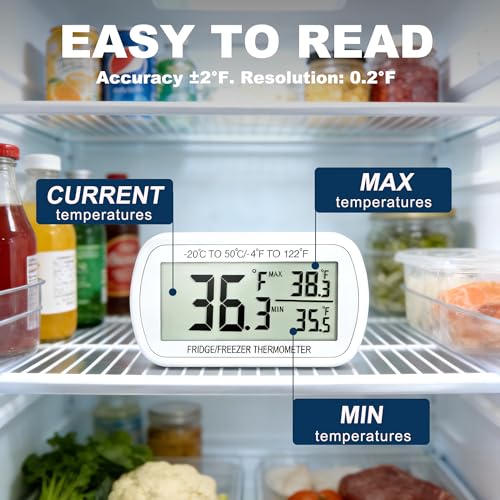
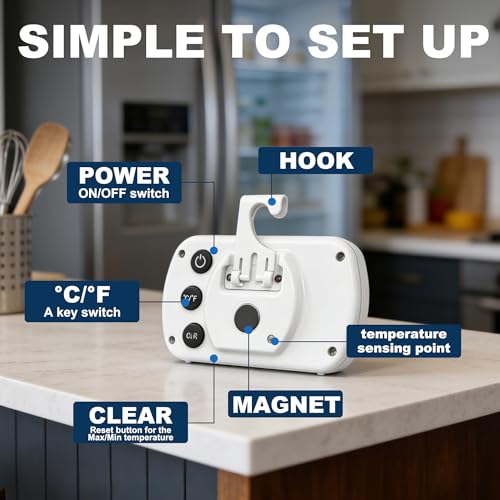
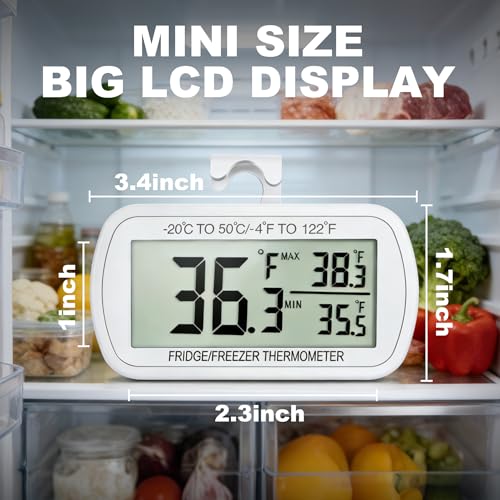
Buying four digital thermometers for not much more than the 2-pack version makes this the best value for multiple units. Same features: large LCD, max/min memory, magnetic back, and IPX3 waterproofing. If you’ve got a fridge, freezer, wine cooler, and garage mini-fridge, this set covers them all without stretching your budget.
The consistency across units matters, owners report uniform performance, and having spares means you’re never without one when cleaning or replacing. It’s the same solid design as the 2-pack, just scaled up. For families or households with multiple cooling zones, this is the smarter buy.
Product photos
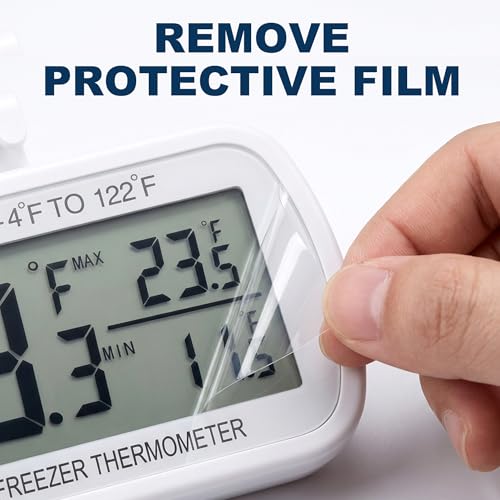
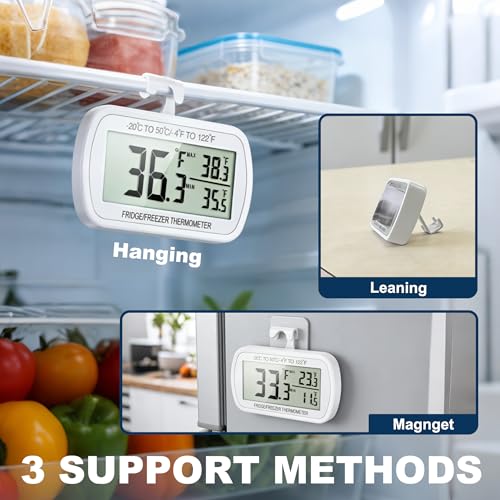
2 Pack Stainless Steel Thermometer

Strengths
- Very low cost
- Stainless steel
- Dual placement options
Trade-offs
- Harder to read dial
- No safety zones marked
- No certifications
This is the most no-frills option on the list, two simple analog thermometers with a wide base and hook for placement. The specs are basic: stainless steel casing and a -20 to 80°F range, which covers the essentials. But there’s no extra labeling, no color-coded zones, and no certification mentioned.
Owners say they work fine for casual use, but several note the dials are smaller and harder to read than expected. Compared to the Taylor or PECULA models, this one cuts too many corners for me to recommend it as a primary thermometer. It’s cheap, yes, but feels like the bare minimum.
Product photos


AEVETE Digital Fridge Thermometer

Strengths
- Strong magnetic back
- Large, clear digits
- Max/min tracking
Trade-offs
- Battery-dependent
- Limited to 2-pack
The AEVETE model stands out for one key detail: its strong magnetic back, which users consistently praise for staying put on tricky surfaces. It’s not just a thin sticker magnet, this one holds securely, even on older or textured fridge exteriors. Combine that with the big digits and easy °C/°F toggle, and you’ve got a user-friendly design.
It matches the other digital models in range and IPX3 rating, but the magnetic strength gives it a slight edge in practicality. The max/min function is essential for spotting fluctuations, and the compact size keeps it from crowding shelves. Between the similarly priced digital options, this one gets the nod for ease of use and secure mounting.
Product photos


AcuRite Wireless Fridge Thermometer
Strengths
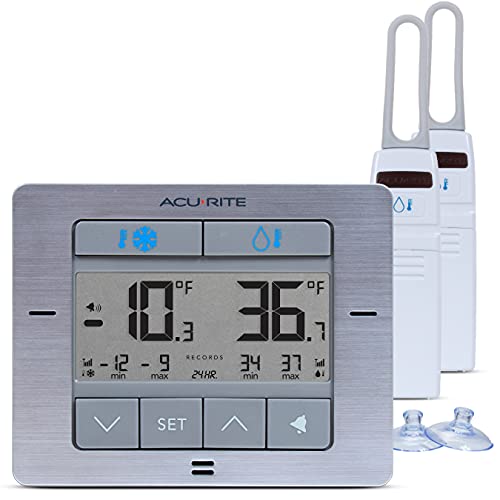
- Wireless remote sensor
- Audible temperature alarm
- Magnetic and stand display
Trade-offs
- Expensive
- Requires multiple batteries
- Alarm can be overly sensitive
If you’ve ever worried about a failing appliance or a door left ajar, this wireless model with customizable alarms is worth the premium. The remote sensor sits inside the freezer while the display stays outside, so you don’t have to open the door to check temps. That’s a real advantage for minimizing cold air loss and monitoring hard-to-reach units.
The LCD is bright and easy to read, and the alarm feature is where this one shines, several owners credit it with catching a failing fridge before food spoiled. It’s overkill for a standard kitchen fridge, but for a basement freezer, wine cooler, or garage unit, the peace of mind justifies the cost. The silicone strap and suction cup add secure mounting options you won’t find elsewhere.
Product photos


How We Picked These freezer thermometers
Rather than a hands-on lab test, my research for these recommendations centered on comparing published specifications and features across numerous models. I then weighed owner reviews from major retailers alongside assessments from reputable review sites. As someone dedicated to helping people reduce food waste through proper storage (you can find more on that at cleaning your deep freezer), I focused on accuracy, ease of reading, and durability when evaluating each thermometer.
For freezer thermometers, consistent and accurate temperature readings are paramount, followed closely by how easily you can see those readings. A thermometer is useless if you’re squinting to understand it. Beyond that, build quality matters – a thermometer needs to withstand the consistently cold, damp environment of a freezer. These three factors heavily influenced my rankings, as they directly impact food safety and long-term usability.
Specifications reliably indicate temperature range and accuracy claims, but I paid particular attention to owner feedback regarding those claims. Reviews often reveal if a thermometer consistently matches its stated accuracy. Reputation and brand recognition also factored in, particularly for analog models where long-term reliability is key. Knowing what containers for freezer are appropriate is only half the battle; monitoring temperature is crucial too!
What To Look For In freezer thermometers
Accurate temperature monitoring is essential for food safety and reducing waste, and a good freezer thermometer is a simple way to achieve this.
A quality freezer thermometer delivers consistent, accurate readings within a relevant temperature range (-20°F to 80°F is typical). It should be easily readable, durable enough for the freezer environment, and ideally offer features like minimum/maximum temperature recording to track fluctuations. Consider whether you prefer a digital readout or an analog dial, and how you plan to mount the thermometer within the freezer.
Understanding Temperature Range and Accuracy
The most important factor is, naturally, how well the thermometer actually measures temperature. Don’t assume all thermometers are created equal. A wider temperature range isn’t always better; focus on accuracy within the range you need. For most home freezers, -20°F to 0°F is the sweet spot. Pay close attention to the stated accuracy (e.g., ±2°F). Digital thermometers generally offer greater precision, but a well-made analog thermometer, especially one with NSF certification (like the Taylor model), can be perfectly reliable. If you are prone to forgetting to manually defrost a freezer, a thermometer with min/max recording is a huge help, letting you quickly spot temperature spikes that might indicate ice buildup.
Digital vs. Analog: Features and Readability
Digital thermometers offer convenience features like LCD screens, min/max temperature memory, and the ability to switch between Fahrenheit and Celsius. However, they rely on batteries, which need replacing. Some also have a smaller display, making them harder to read at a glance. Analog thermometers are simpler. They require no batteries and often feature a large, easy-to-read dial. The Taylor model, with its extra-large dial, is a good example. The readability of analog dials is often superior, especially for quick checks, but they lack the precision of digital displays. Consider how often you’ll be checking the temperature and whether you need precise readings or just a general idea of the freezer’s status.
Mounting and Value: Finding the Right Fit
How you’ll mount the thermometer matters. Some models offer magnetic backing, hooks, or stands, providing versatility. If you have limited space, a compact design is key. The AEVETE digital thermometer and the 4-pack digital thermometer both offer multiple mounting options. Value is also important. You can find perfectly adequate analog thermometers for under $10, while digital thermometers with advanced features will cost more. If you’re looking to monitor multiple freezers or refrigerators, a multi-pack, like the 4-pack digital thermometer, is a cost-effective solution.
- A basic analog thermometer is fine for a single freezer where you just need a quick temperature check.
- A digital thermometer with min/max recording is a good choice if you want to track temperature fluctuations over time and ensure consistent freezing.
- For those who want advanced features like alarms and remote monitoring, a smart thermometer like the AcuRite model is worth considering, especially if you’re concerned about temperature fluctuations while you’re away or want to ensure your manual defrost freezer is operating correctly.
Don’t rely on your freezer’s built-in thermostat. Invest in a separate, reliable thermometer to verify the temperature and ensure food safety.
Freezer Thermometers Compared
Here’s a comparison of key specifications for various freezer thermometers to help you choose the right one.
| Product Name | Display Type | Temp. Range (F) | Accuracy | Waterproof | Mounting Options |
|---|---|---|---|---|---|
| Digital Fridge Freezer Thermometer | Digital LCD | -4 to 122 | ±2°F | IPX3 | Stand, Hook, Magnetic |
| Taylor Large Dial Freezer Thermometer | Analog | -20 to 80 | N/A | N/A | Hang/Stand |
| 2 Pack Analog Fridge Thermometer | Analog | -20 to 80 | N/A | N/A | Hook |
| 4 Pack Digital Fridge Thermometer | Digital LCD | -4 to 122 | ±2°F | IPX3 | Stand, Hook, Magnetic |
| 2 Pack Stainless Steel Thermometer | Analog | -20 to 80 | N/A | N/A | Stand, Hook |
| AEVETE Digital Fridge Thermometer | Digital LCD | -4 to 122 | N/A | IPX3 | Magnetic, Stand, Hook |
| AcuRite Wireless Fridge Thermometer | Digital | N/A | N/A | N/A | Magnetic, Stand, Wall |
Frequently Asked Questions
What temperature should my freezer actually be set to?
The ideal freezer temperature is 0°F (-18°C) to maintain food quality and prevent freezer burn. While most freezers have a dial, relying on that alone isn’t enough; a separate thermometer confirms it’s actually reaching that temperature.
Can a freezer thermometer help me save money?
Yes, an accurate thermometer helps prevent food spoilage due to temperature fluctuations, reducing waste and saving you money on groceries. Knowing whether your deep freezer definition is maintaining a consistent temperature is key to maximizing your food’s shelf life.
Are digital thermometers more accurate than analog ones?
Generally, digital thermometers offer greater precision, often displaying temperatures to the tenth of a degree. However, a high-quality analog thermometer, like the Taylor model, can be very reliable if properly calibrated and regularly checked.
What does “IPX3” waterproofing mean for a digital thermometer?
IPX3 means the thermometer is protected against water sprays falling from up to 60 degrees vertical. It’s splash-proof, but not submersible; avoid direct, prolonged exposure to water or moisture when cleaning.
How often should I check my freezer thermometer?
I recommend checking your freezer thermometer at least once a month, and more frequently if you notice any changes in your freezer’s operation. Regularly monitoring the temperature, along with properly utilizing freezer bags, ensures food stays safely preserved.
The Bottom Line
Choosing a freezer thermometer often comes down to balancing how much control you want with how much effort you’re willing to put in. For consistent, reliable temperature monitoring with helpful features, I recommend the Digital Fridge Freezer Thermometer. It strikes a good balance between accuracy, ease of use, and affordability, and the mounting options are a plus.
If you’re on a budget or prefer a simple solution, the 2 Pack Analog Fridge Thermometer is a great choice. For those needing to monitor multiple freezers at once, the 4 Pack Digital Fridge Thermometer provides excellent value. And if you’re concerned about keeping your freezer ice maker running smoothly, a thermometer with min/max recording will quickly alert you to any temperature fluctuations.
Ultimately, the best freezer thermometer is the one you’ll actually use. Don’t get too hung up on specific features or specs; focus on choosing a thermometer that’s easy to read, accurate enough for your needs, and durable enough to withstand the freezer’s harsh environment. Remember, properly stored food, including items in glass in freezer, is the real goal.
