
Solve Fridge Odors: Why It Smells & 6 Key Sources to Check
This post contains affiliate links. As an Amazon Associate, we earn from qualifying purchases.
Your fridge smells because something organic is decomposing somewhere you can’t see. The six actual sources are spoiled food, dried spills, a dirty drip pan, clogged evaporator coils, a spent air filter, or odor molecules that have absorbed into the insulation.
That decomposition follows a timeline. Spilled milk sours in hours. A forgotten onion rots in a crisper drawer over a week. Mold grows in the hidden drip pan in a month. Each source has a distinct smell and a specific fix.
What follows: the six sources mapped to their locations, the one cleaning tool that beats baking soda, the manufacturer spec that explains why some smells never leave, and the step-by-step reset that works when the internet’s advice has already failed.
Key Takeaways
- The drip pan under or behind the fridge is the most common missed source; it grows mold from condensation and smells like damp basement.
- Odors can absorb into the foam insulation behind the interior plastic liner; this requires weeks of airing or, in severe cases, replacement.
- Evaporator coils at the back of the freezer compartment clog with dust and mold, causing a musty smell even after cleaning the fridge interior.
- Manufacturer air filters like the Frigidaire PureAir Ultra II have a hard 6-month lifespan; the “replace filter” light is a timer, not a suggestion.
- Food odor transfer is a documented chemical process; strong-smelling foods like onions can flavor neutral items like butter within 24 hours.
- Baking soda is a weak absorber for strong, active odors; for persistent smells, you need an oxidizer like diluted hydrogen peroxide.
The 6 Actual Sources of Refrigerator Odors (and Where to Look)
Most cleaning guides start with the interior shelves. That’s the third place you should look. The first is the drip pan, and the second is behind the freezer back panel.
A smell is a gas. It travels from where the rot is happening to your nose. Find the rot.
Common mistake: Cleaning only the visible surfaces. The source is usually in the dark, wet places where condensation collects and never evaporates.
1. Spoiled Food and Spills (The Obvious One)
Liquid dairy, meat juices, and rotting produce are the classic culprits. They smell sour, rancid, or sulfurous. The fix is straightforward: remove the spoiled item and clean the surface.
The why-layer matters. Spills acidify. As milk sours, its bacteria produce lactic acid and other volatile compounds that bond to plastic surfaces. Wiping with just water spreads the acids. You need a mild alkali to neutralize them.
That’s why baking soda paste works here. It’s a base that neutralizes acidic odors on contact. For a fresh spill, mix baking soda with a little water into a paste, scrub, then rinse.
The part nobody mentions: If you don’t clean a spill immediately, it seeps into the microscopic scratches on plastic shelving. The smell seems to come from the shelf itself, not from any visible residue. Soak the shelf in hot water with a cup of white vinegar for 30 minutes to lift the bonded acids.
2. The Drip Pan (The Most Missed Source)
Every refrigerator has a drip pan. It’s a shallow plastic tray located under the fridge (behind the kickplate) or on the back near the compressor. Its job is to catch condensation from the defrost cycle. That water is warm and stagnant. It’s a perfect breeding ground for mold.
The smell is unmistakable: damp, earthy, and mildewy. You might notice it more when the compressor kicks on, as the warm air from under the fridge circulates.
| Drip Pan Location | How to Access | Typical Odor |
|---|---|---|
| Under front kickplate | Remove the grille or panel at the bottom front of the fridge. | Damp basement, mildew |
| Rear, near compressor | Pull the fridge out from the wall (unplug first). | Musty, earthy |
To fix it: pull the pan, wash it with hot soapy water, scrub off any mold with a brush, then disinfect with a solution of one part bleach to ten parts water. Dry it completely before sliding it back. Do this every six months as part of routine maintenance.
3. Dirty Evaporator Coils
These are the coils at the back of the freezer compartment. In many models, they’re hidden behind a rear panel. When dust, pet hair, and food particles clog them, two things happen. First, the fridge works harder, raising your energy bill. Second, the damp, dusty environment grows mold on the coils themselves.
The smell is a cold, persistent mustiness that seems to come from the freezer air. You can clean the interior all you want, but if the coils are dirty, the smell returns.
Not all coils are user-accessible. Consult your manual. If you can reach them, unplug the fridge, remove the back panel, and use a soft brush or a vacuum with a crevice tool to gently clean the coils. A can of coil cleaning spray can help dissolve greasy dust.
4. A Spent Air Filter
Many modern refrigerators have built-in air filtration systems, like the Frigidaire PureAir Ultra II. These use activated carbon to adsorb odor molecules from the circulating air. They are not permanent.
Per the Frigidaire owner’s manual, the PureAir Ultra II Air Filter has a maximum effective life of 6 months. After that, the carbon pores are full. The filter stops working and can even begin re-releasing captured odors.
The “REPLACE AIR FILTER” indicator on your display is a timer based on that 6-month interval. It is not measuring actual odor levels. Replace it on schedule, even if you don’t notice a smell.
5. Food Odor Transfer (The Chemical Process)
Sometimes, nothing is spoiled, but your butter tastes like onions. This is odor transfer, and it’s a documented chemical process. The VDE SPEC 90034 standard for measuring refrigerator odor performance calls the strong-smelling item the “food source” and the absorbing item the “target food.”
Odor molecules are volatile. They travel through the air and can be absorbed by fats and porous foods in the same compartment. Butter, milk, cheese, and even water can pick up these flavors.
The standard notes that frozen food storage is not the focus of its tests, implying the freezer may slow but not stop this process.
Where this goes sideways: Storing an open container of strong cheese next to an open carton of milk. The milk will taste cheesy within a day. Always use sealed food storage containers for aromatic items.
6. Odors Absorbed into Insulation
This is the worst-case scenario and the hardest to fix. If a major spill (like a large container of fish sauce) isn’t cleaned and soaks through a crack or seam in the interior plastic liner, it can reach the foam insulation behind it. The insulation is porous and traps the odor molecules.
Whirlpool’s guidance states that odors absorbed into insulation may take weeks or months to dissipate on their own, or may require appliance replacement.
You’ll know this is the issue if a thorough cleaning of every other source leaves a pervasive smell that seems to emanate from the walls themselves. The only DIY fix is to leave the fridge unplugged and open in a well-ventilated area for several days. If that fails, you’re looking at a professional liner repair or replacement.
The One Tool You Need (It’s Not Baking Soda)
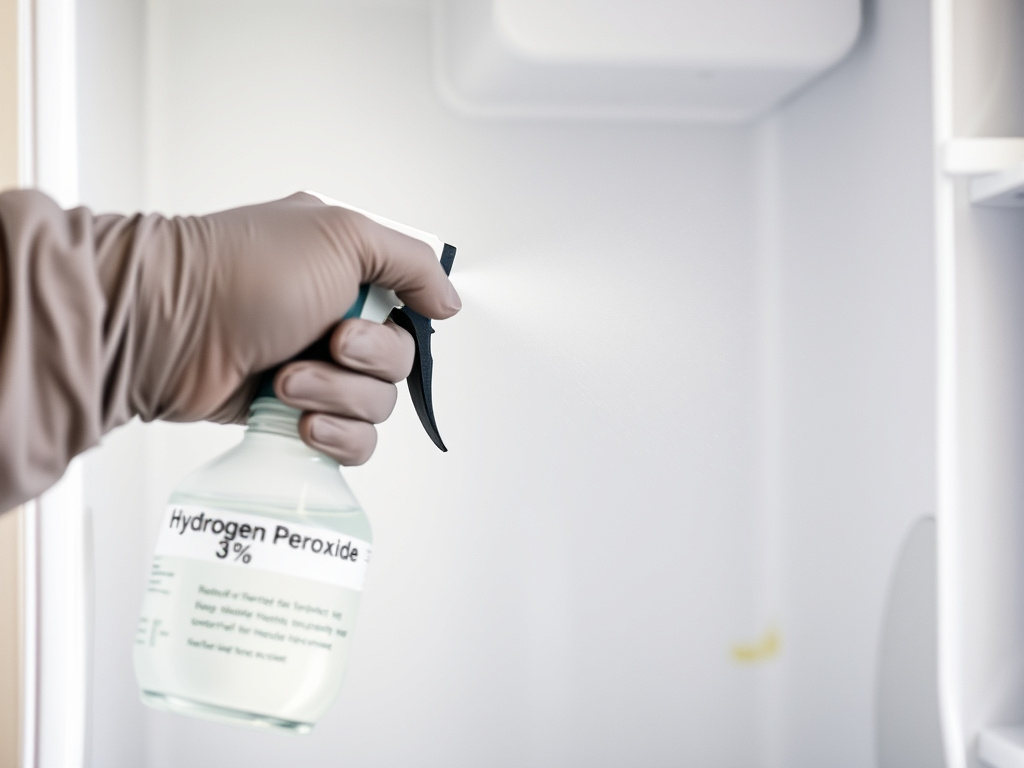
Baking soda is a passive absorber. It sits and waits for odor molecules to bump into it. For active, ongoing decomposition, you need an active oxidizer.
Hydrogen peroxide (3%) is that tool. It breaks down odor-causing organic compounds at a chemical level. It’s also a disinfectant. For most fridge cleaning jobs, a 1:1 mix with water in a spray bottle is safe for plastics and effective.
Use it to: * Spray and wipe down shelves and drawers after removing food. * Soak removable parts like crisper drawers or shelf supports. * Clean the drip pan and door gaskets.
For really tough, set-in smells on non-porous surfaces, a paste of baking soda and hydrogen peroxide can be used as a scrub. It fizzes as it works, breaking up the organic mess.
Baking soda still has its place—as a long-term, maintenance odor absorber in an open box. But for cleaning, peroxide is your workhorse.
Step-by-Step: The Full Fridge Odor Reset (When Everything Else Failed)
This is the nuclear option. It assumes you’ve already thrown out bad food and want to tackle the underlying smell. Set aside 2-3 hours.
Before you start: Unplug the refrigerator. Empty it completely, placing perishables in a cooler. Have trash bags, cleaning supplies, and a fan ready.
- Remove every single item. This includes all food, shelves, drawers, door bins, and even the light cover. Take the ice maker bucket out if possible.
- Let it warm up. Prop the door open and let the interior come to room temperature. This makes cleaning easier and helps odors volatilize. Place a fan blowing into the cavity to move air.
- Clean the interior cavity. Using your hydrogen peroxide solution, spray and wipe every surface—walls, ceiling, floor, and the door gasket grooves. For stubborn stains or sticky residues, use the baking soda-peroxide paste as a scrub.
- Soak the removable parts. Fill a bathtub or large sink with warm water, a cup of vinegar, and a squirt of dish soap. Submerge all shelves, drawers, and bins. Let them soak for 30 minutes, then scrub and rinse.
- Address the hidden sources. Pull the fridge out. Remove the kickplate and clean the drip pan as described earlier. Vacuum the condenser coils on the back. If you’re comfortable, check the evaporator coils.
- Dry everything completely. Use towels to dry the interior cavity and all parts. Any leftover moisture is an invitation for mold. Let the parts air-dry fully before reassembling.
- Reassemble and reactivate. Put all clean, dry parts back. Plug in the fridge. Before restocking, place an open box of baking soda on a shelf and consider replacing the air filter if your model has one.
Now you can restock using good fridge organization principles to prevent future issues.
Why Your Freezer Smells Too (And It’s Different)
Freezer smells are often sharper and more chemical-like. The cold temperature slows decomposition but doesn’t stop chemical reactions or odor transfer.
The main sources are: * Freezer-burned meat: This creates off-flavors that can smell rancid or metallic. * Leaking ice cream or fruit juices: Spills freeze instantly and are forgotten, but their sugars can still produce odors over months. * A faulty defrost system: If the defrost drain is clogged, water can freeze around the evaporator coils, trapping food particles and creating a foul smell when it eventually thaws.
The cleaning process is similar, but use a plastic scraper to remove any ice buildup before applying cleaner. For persistent freezer smell, leaving an open container of dry coffee grounds or unused cat litter (in a cheesecloth bag) inside for a week can help absorb odors.
Frequently Asked Questions
Can a smelly fridge make you sick?
Yes, indirectly. The smells themselves are usually not toxic, but they indicate the presence of bacteria and mold. These microorganisms can contaminate food and cause foodborne illness. A clean fridge is a core part of official refrigerator odor removal guide protocols for food safety.
How often should I replace my refrigerator’s air filter?
Follow your manufacturer’s manual. For the Frigidaire PureAir Ultra II and similar carbon filters, the interval is every 6 months. The indicator light is a timer, not a sensor. Replace it on schedule even if you don’t notice odors.
Will leaving baking soda in the fridge remove all smells?
No. Baking soda is excellent for maintaining a neutral smell and absorbing mild, everyday odors. It is ineffective against strong, active sources like a large spill, mold in the drip pan, or odors trapped in insulation. Think of it as a maintenance tool, not a cure.
What’s the best way to store strong-smelling foods?
Always use airtight containers for the fridge. Glass containers with locking lids are ideal for cheeses, fish, and leftovers like curry. For cut onions or garlic, a sealed glass jar works. This physically contains the odor molecules and prevents transfer.
Why does the smell come back after I clean?
You missed a source. The most likely candidates are the drip pan, the evaporator coils, or the insulation. Go through the list of six sources again, paying special attention to the hidden areas. If the smell is truly pervasive and comes from the walls, the insulation may be contaminated.
Before You Go
A smelly fridge has a cause, not a mystery. The drip pan, the evaporator coils, and a full air filter are the three sources most people never check. Baking soda is for upkeep, not for cleaning an active mess—reach for hydrogen peroxide instead.
If you’ve cleaned every visible and hidden surface and the odor remains, it’s likely in the insulation. At that point, the cost-benefit analysis shifts. Weigh the time and expense of a professional repair against replacing the appliance. For most households, a thorough reset targeting the six sources will clear the air for good. Keep strong smells sealed, change your filters on schedule, and pull that drip pan out twice a year. Your nose will thank you.
