How to Get Rid of Freezer Smell: A 3-Step Cleaning Method
This post contains affiliate links. As an Amazon Associate, we earn from qualifying purchases.
To get rid of freezer smell, you need a three-step process: clean with a baking soda solution, sanitize with a vinegar rinse or a diluted bleach solution per USDA guidelines, and then deodorize with an open box of baking soda or activated charcoal left inside for at least 72 hours. Baking soda alone is a temporary absorber, not a cleaner, persistent odors mean you missed the sanitizing step.
That sanitizing step is the one most people skip. They scrub, they rinse, they put in a fresh box of baking soda, and two days later the ghost of last month’s fish dinner is back. The reason is simple. Odor molecules bind to plastic and seals. A surface wipe removes the source but not the chemical residue. You need a sanitizer that breaks those bonds.
What follows is the exact method pulled from owner’s manuals and federal food safety documents, plus the edge cases that break it. You’ll get the official ratios, the timeline that matters, and the point where cleaning is a waste of time.
Key Takeaways
- Baking soda cleans but doesn’t sanitize. The official GE and Frigidaire manual formula is 2 tablespoons (25g) baking soda in 1 quart (1 liter) of warm water.
- For true odor removal, you must follow cleaning with a sanitizing rinse. The USDA recommends 1 tablespoon of unscented liquid chlorine bleach per gallon of water.
- Activated charcoal is more effective than baking soda for absorption, but it’s a final step, not a substitute for cleaning.
- Vanilla extract works only in the fresh food compartment of a fridge for about three weeks; it freezes solid and does nothing in a freezer.
- If a freezer door doesn’t seat properly, no amount of cleaning will stop the smell, the cold air seal is broken and mold grows in the gap.
The 3-Step Odor Removal Process (Guaranteed)
Most freezer smell guides are lists of home remedies. That’s the problem. They treat symptoms, not the cause. A smell is a chemical signal. You need to remove the source, break down the residue, and then absorb the lingering volatiles. That’s three distinct jobs. Skip one, and the smell returns.
Common mistake: Cleaning with baking soda and calling it done. Baking soda is a mild abrasive and deodorizer, but it doesn’t kill mold spores or break down fatty acids baked into plastic. The smell molecules remain bonded to the surface.
Step 1: Clean with the Official Baking Soda Solution
Unplug the freezer. Remove all food, shelves, baskets, and ice maker trays (if present). Let the unit come to room temperature. This is not optional. Cleaning a cold surface spreads the odor and leaves moisture that turns to ice.
Mix the cleaning solution exactly as specified in multiple OEM manuals: 2 tablespoons (25g) of baking soda into 1 quart (1 liter) of warm water. Dip a soft cloth or sponge, wring it well, and wipe every interior surface, walls, ceiling, floor, door gaskets, and the tracks where shelves sit. Pay close attention to seams and crevices. Rinse the cloth frequently in clean water.
Wash removable parts in the same solution or with mild dish soap. Never use a dishwasher for freezer parts unless the manual explicitly allows it; the heat warps plastic.
Why this works: Baking soda is alkaline. It neutralizes acidic odor compounds from spoiled food. The gentle abrasion lifts dried spills without scratching the plastic liner. Using the correct concentration matters, too weak and it’s just water, too strong and it leaves a gritty film.
Step 2: Sanitize to Break Odor Bonds
After the baking soda wash, you have a clean surface that may still hold odor molecules. This is where most DIY methods fail. You need a sanitizer.
The USDA’s emergency guidance for odor removal includes a sanitizing step: a solution of 1 tablespoon of unscented liquid chlorine bleach per gallon of water. Wipe the interior with this solution, let it sit for a minute, then rinse thoroughly with a cloth dampened with clean water. Wipe dry.
If you prefer to avoid bleach, white distilled vinegar is an effective alternative. Its acetic acid breaks down alkaline residues and kills some surface mold. Use equal parts vinegar and water. The smell of vinegar will dissipate as the freezer cools.
Technical Snippet: The USDA’s refrigerator and freezer odor removal protocol specifies a sanitizing rinse after cleaning to eliminate microbial sources of smell. This step addresses odor-causing bacteria and mold that survive a simple wash, preventing recurrence.
Step 3: Deodorize with a High-Absorption Agent
Now you have a clean, sanitized, and dry interior. Plug the freezer back in and let it run for an hour to get cold. Then place your deodorizer inside.
An open box of baking soda is the standard choice. Change it every 30 days. For stronger smells, activated charcoal is superior. Electrolux notes in its owner’s guide that activated carbon filters are more effective than baking soda for filtering odors. You can buy loose activated charcoal (often sold for aquariums) and place it in a shallow pan.
Leave the deodorizer in the freezer for a minimum of 72 hours before storing food. This gives it time to capture any final volatile compounds off-gassing from the plastic.
The short version: Clean (baking soda), sanitize (bleach or vinegar), absorb (charcoal). All three.
What Causes Freezer Smell? (It’s Not Just Old Food)
You can clean perfectly and still get smells back if you don’t fix the origin point. Freezer odors come from three main sources, and each requires a different fix.
| Odor Source | What Happens | How to Identify & Fix |
|---|---|---|
| Spoiled Food Spills | Liquids from thawed meat or berries seep into seams and dry, leaving concentrated odor compounds. | Look for stained areas in shelf tracks or on the floor. Requires the full 3-step clean. |
| Mechanical Failure | A door seal (gasket) that doesn’t close tightly lets in warm, moist air, leading to mold growth in the gap. | Close the door on a dollar bill. If you can pull it out easily, the seal is weak. The gasket needs replacement. |
| Long-Term Storage | Plastic interiors absorb odors over years. New freezers have a “plastic smell” that fades. | Persistent “background” smell even when empty points to plastic absorption. Only long-term absorption (activated charcoal) works. |
A door that doesn’t seat properly is a common culprit missed in cleaning guides. The Homery.com owner’s manual for model FFFU16F2VV-83803 states directly: a door not seating properly can cause odors. No amount of baking soda will solve a mechanical problem.
The Science of Smell Absorption
Why does activated charcoal beat baking soda? Surface area. A gram of activated charcoal has a surface area of over 500 square meters. Odor molecules get trapped in its microscopic pores. Baking soda works by chemical neutralization, which is effective but limited to acidic or basic odors. Charcoal is non-selective, it traps nearly any organic vapor.
This is why you use charcoal after cleaning and sanitizing. It mops up whatever’s left.
When Baking Soda Alone Fails (And What to Use Instead)
The open box of baking soda in your freezer right now is a maintenance deodorizer. It’s not a cleaner. It’s not a cure. For active, stubborn smells, you need to escalate.
Activated Charcoal: As mentioned, this is the upgrade. Place it in a shallow container. It doesn’t need replacing as often as baking soda; you can “recharge” it by spreading it on a baking sheet and heating it in a 200°F oven for a couple of hours to drive off captured odors.
Vanilla Extract – The Limited Trick: GE Appliances support documents mention vanilla extract to freshen the fresh food compartment of a refrigerator for about three weeks. They explicitly warn: do not use it in the freezer because it will freeze. This is a perfect example of a tip that works in one specific context and fails utterly in another. Don’t waste your vanilla.
Coffee Grounds: Fresh, dry coffee grounds in a bowl can absorb odors. They work on the same principle as charcoal, though less effectively. They’re a good stopgap if you have nothing else.
Where this goes sideways: Pouring coffee grounds or vanilla extract directly onto surfaces. You’ll create a sticky, frozen mess that holds smells. Always use a container.
If you’ve cleaned, sanitized, and run a strong absorber for a week and the smell persists, the USDA’s guidance is stark: if odors cannot be removed, the refrigerator or freezer may need to be discarded. At that point, the plastic has become a permanent reservoir. This is rare, but it happens.
How to Prevent Freezer Smells Before They Start
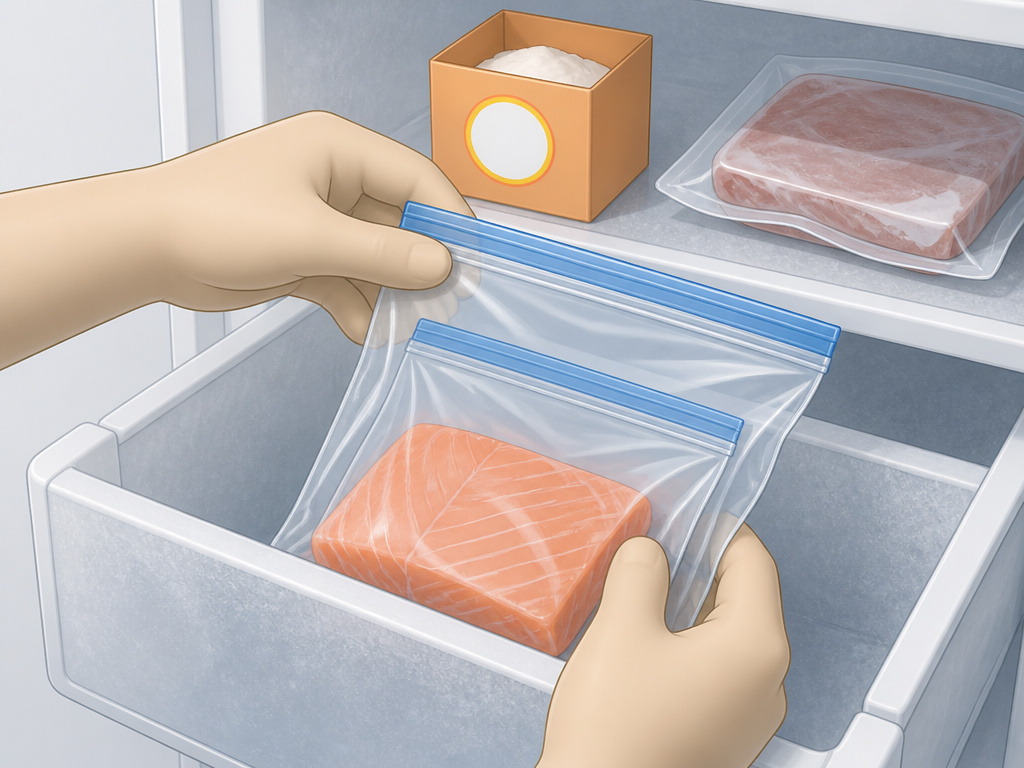
An odor-free freezer is mostly about habits. It’s easier to prevent the problem than to clean a deep freezer after a spill has baked in for months.
- Seal Everything. Use freezer-safe containers or a vacuum sealer. This prevents spills and stops freezer burn, which has its own stale, cardboard-like odor.
- Wipe Spills Immediately. If something leaks, unplug the freezer, let it soften slightly, and wipe it up with the baking soda solution. Don’t wait for the next defrosting process.
- Regular Maintenance. Every three months, do a quick check. Remove old food, wipe down shelves, and replace the baking soda box. This takes ten minutes.
- Vacation Protocol. The Frigidaire manual is clear: for short vacations under 3 weeks, leave it running. For several months unused, unplug it, clean a freezer thoroughly, dry it completely, and block the door open an inch to prevent mold. A closed, warm, damp box is a smell factory.
If you store strong-smelling foods like fish or curry, double-bag them and place them near the bottom. Consider a dedicated activated charcoal pouch in that section.
Frequently Asked Questions
Can I use vinegar to clean my freezer?
Yes, but use it as a sanitizing rinse after the initial baking soda wash. A 50/50 mix of white vinegar and water will cut through any baking soda residue and kill surface mold. The vinegar smell will disappear once the freezer cools. Do not mix vinegar and baking soda into a single solution, they neutralize each other.
How long does it take for a freezer smell to go away?
After a proper 3-step clean, the smell should be gone immediately. If you’re using an absorber like baking soda or charcoal to manage a mild odor, give it at least 72 hours to work fully. Persistent smells after a week indicate a missed source, like a bad door seal or spoiled food stuck in the drain line.
Why does my freezer still smell after cleaning?
You likely skipped the sanitizing step (bleach or vinegar rinse), didn’t clean the door gasket thoroughly, or have a mechanical issue. Check the door seal with the dollar bill test. Also, inspect areas you might have missed: the drip pan underneath (if accessible), the ice maker unit (clean ice maker separately), and the air vents inside.
Is it safe to use bleach in my freezer?
Yes, when diluted properly and rinsed. The USDA’s official freezer deodorizing instructions recommend 1 tablespoon of unscented liquid chlorine bleach per gallon of water as a sanitizer. Ensure the area is well-ventilated, wear gloves, and rinse the surface thoroughly with clean water after the minute of contact time. No bleach odor or residue should remain.
Can freezer smell make food taste bad?
Absolutely. Odor molecules can be absorbed by other foods, especially fatty items like ice cream or butter. This is called flavor migration. It’s a food safety issue of quality, not necessarily poisoning, but it ruins your food. Proper packaging to prevent freezer burn also acts as a barrier against smell transfer.
Before You Go
Getting rid of freezer smell isn’t about magic tricks. It’s a systematic removal of a chemical problem. Clean with the manufacturer’s baking soda formula. Sanitize with a vinegar or diluted bleach rinse to break the bonds. Absorb the remnants with activated charcoal, the one thing proven better than baking soda.
Remember the two failure points: a door seal that doesn’t close, and trying to use vanilla extract where it freezes solid. Fix the seal, skip the vanilla. And if the smell survives all that, the manual itself tells you the truth, some freezers are too far gone. Your time is worth more than a losing battle with a plastic box that remembers every fish you ever bought.
