Learn How to Store Hard Boiled Eggs for Maximum Freshness
This post contains affiliate links. As an Amazon Associate, we earn from qualifying purchases.
Store hard boiled eggs in the refrigerator at 40°F (4°C) or below within two hours of cooking. Keep unpeeled eggs in their original carton for up to one week. Peeled eggs should be submerged in water in a sealed container and used within 3 days for best quality and safety.
That two-hour window is the safety line. Bacteria like Salmonella double in the right conditions, and the temperature range between 40°F and 140°F is where they thrive. A boiled egg left on the counter overnight is a different food by morning.
What follows is the breakdown of why the shell matters, where to place the carton in your fridge, and the one storage method for peeled eggs that actually works. We’ll also cover how to spot a spoiled egg and why freezing is a guaranteed fail.
Key Takeaways
- Get boiled eggs into the fridge within two hours of cooking, without exception. The USDA and every state health department draw the line here.
- Unpeeled eggs last a week when stored in their original carton on a main shelf. The door’s temperature swings cut that shelf life in half.
- Peeled eggs dry out and spoil faster. Submerge them in a sealed container of cold water and plan to use them within three days.
- Never freeze hard-boiled eggs. The whites turn into tough, rubbery sponges. The yolks become chalky and crumbly.
- A slimy shell or a sulfurous, rotten smell means toss it. A gray-green yolk is usually just overcooking, not spoilage.
The Correct Refrigerator Setup for Eggs
Your refrigerator is not a uniform cold box. The door is the warmest, most variable zone. The back wall of the top shelf is usually the coldest and most stable. That’s where eggs belong.
For safe storage, eggs require a consistent temperature of 40°F (4°C) or below. This temperature slows bacterial growth to a near halt. The USDA mandates that consumer shell eggs be labeled “Keep Refrigerated” and transported under refrigeration for this exact reason.
Store the eggs in their original cardboard carton. The carton does three jobs: it prevents odor absorption from strong foods like onions, it buffers against minor temperature fluctuations, and it protects the shells from cracking. Writing “HB” on the shells with a pencil helps you tell them apart from raw eggs. This simple system prevents the guessing game that leads to waste or risk.
| Storage Location | Temperature Stability | Suitability for Eggs | Why It Matters |
|---|---|---|---|
| Refrigerator Door | Low – fluctuates with every opening | Poor | Frequent warming above 40°F accelerates spoilage and risk. |
| Main Shelf (Middle/Back) | High – consistent cold | Excellent | Maintains a safe, stable temperature for the full shelf life. |
| Crisper Drawer | Moderate – humid, less airflow | Good for vegetables, okay for eggs | Can work if it’s your only cold spot, but carton buffering is critical. |
The goal is to eliminate the sweat. A cold egg taken out to room temperature can develop condensation on its shell. That moisture makes it easier for any surface bacteria to migrate inside. Consistent, cold storage prevents this cycle.
How Long Are Hard-Boiled Eggs Actually Good For?
The one-week rule for unpeeled eggs is a firm ceiling from the USDA egg safety guidelines and the Washington DOH egg safety page. It’s not an estimate. It’s the documented safe period given the loss of the egg’s natural defenses.
Boiling strips the cuticle, a thin protective coating on the shell. This invisible layer seals the shell’s thousands of pores. Without it, the egg is more vulnerable to air and microorganisms. Refrigeration at 40°F is the new barrier.
Peeled eggs are on a faster clock. Once the physical shell is gone, the egg white loses moisture directly to the dry air of your refrigerator. It also has zero protection against contamination. The American Egg Board says to eat peeled eggs the same day. Most food-safety pros give a more practical, cautious window of two to three days if stored correctly.
For other egg products, the timelines are shorter and non-negotiable:
- Liquid egg substitutes (unopened): 10 days refrigerated.
- Liquid egg substitutes (opened): 3 days refrigerated.
- Cooked egg dishes (quiche, frittata): 3 to 4 days refrigerated.
If your goal is to preserve eggs for much longer than a week, you need to look at methods for raw eggs, like the water glassing method for eggs. Hard-boiled is a short-term game.
Step-by-Step: Storing Unpeeled Hard-Boiled Eggs
This process starts the moment you turn off the burner. Rushing the cool-down is what leads to rubbery whites and that green ring around the yolk.
- Cool them immediately. Transfer the hot eggs to a bowl of ice water. Let them sit for at least 15 minutes. This stops the cooking process and contracts the egg inside the shell, which also makes peeling easier later.
- Dry them completely. Pat each egg dry with a clean towel or paper towel. Any leftover moisture invites mold growth on the shell.
- Return to the carton. Place the completely dry, cooled eggs back into their original cardboard carton. If you need the carton for raw eggs, use a clean, airtight container.
- Label and date. Use a marker to write the cooking date on the carton. Add a simple “HB” on each egg shell if they’re mixed with raw ones.
- Store on a main shelf. Place the carton on a middle or upper shelf toward the back of the refrigerator. Avoid the door at all costs.
Skipping the ice bath is the most common mistake. The residual heat keeps cooking the egg, leading to a dry, chalky yolk and that harmless but unappetizing green-gray layer caused by a sulfur-iron reaction. It also keeps the egg in the temperature danger zone longer.
How to Store Peeled Hard-Boiled Eggs
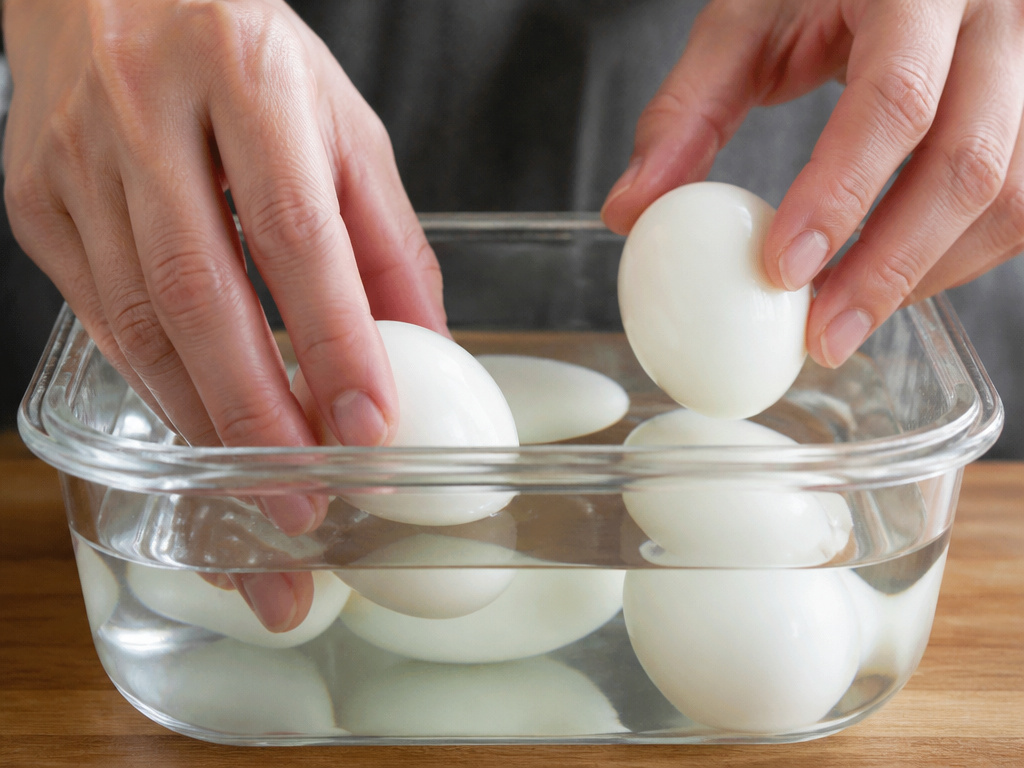
Once you peel an egg, the countdown accelerates. The goal is to prevent moisture loss and block contamination.
The part nobody mentions: A peeled egg left on a plate covered with plastic wrap will dry out at the edges within 12 hours. The texture turns leathery. The flavor dulls.
The only reliable method is submersion. Place the peeled eggs in a clean, airtight container. Fill the container with cold, fresh water until the eggs are completely covered. The water locks in moisture and creates a physical barrier. Seal the lid tightly.
Store this container on a cold shelf, just like the carton. Change the water every day if you plan to keep them for more than 24 hours. This flushes away any slight milky residue from the eggs and keeps things fresh. Plan to use submerged peeled eggs within three days.
For single-day use, you can place them in a container with a damp paper towel laid over the top. The towel provides humidity. This is a trick for keeping peeled eggs fresh when you’re making egg salad for lunch.
This principle of moisture retention is similar to how you store boiled rice or keep cheese fresh—prevent drying, prevent odor pickup, use an airtight barrier.
What Not to Do: Common Storage Mistakes
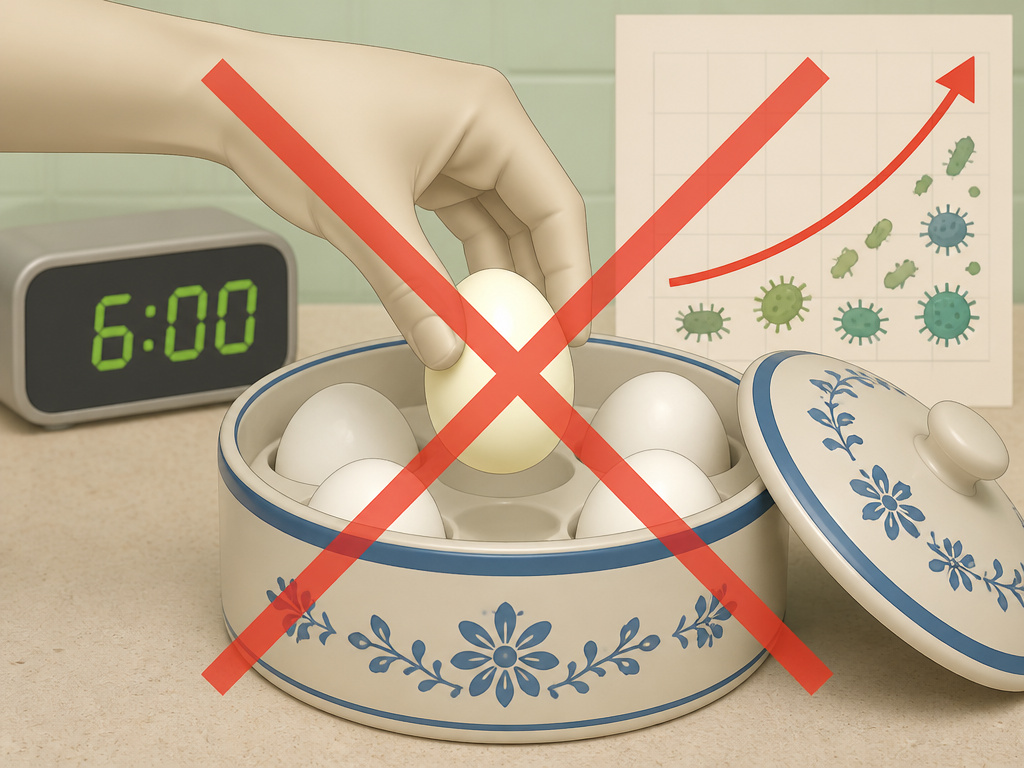
These errors shorten shelf life or introduce risk. They’re easy to avoid if you know the mechanism.
Common mistake: Storing boiled eggs in a decorative ceramic egg keeper on the counter. At room temperature, the risk of bacterial growth increases exponentially after the two-hour mark. By hour six, the eggs are unsafe.
- Don’t store them in the refrigerator door. The temperature swings every time you open it. Studies measuring fridge door temps show regular spikes above 45°F. That’s enough to cut your safe storage window in half.
- Don’t freeze them. The water in the egg white forms large ice crystals that rupture the protein structure. When thawed, you get a watery, rubbery, spongy mess. The yolk becomes crumbly and grainy. It’s inedible.
- Don’t leave them out for “just the morning.” The two-hour rule is cumulative. If you take them out for a picnic for an hour, then leave them on the counter while you unpack for another hour, you’ve hit the limit.
- Don’t store peeled eggs dry. They’ll dehydrate, shrink, and develop a tough skin. Their quality plummets long before they technically spoil.
These aren’t minor quality tips. They’re the difference between a safe, tasty snack and a food safety incident. This level of attention is part of the broader principles of proper food storage.
How to Tell If a Hard-Boiled Egg Has Gone Bad

Your senses are the best tools. The nose knows first.
A fresh hard-boiled egg has a very mild, neutral smell. A spoiled egg emits a distinct, pungent sulfurous odor—it’s unmistakably rotten. If the egg is still in its shell, you may need to crack it to be sure.
Visual and tactile checks:
- The Shell: Look for a slimy or chalky film. A healthy shell is dry and clean.
- The White: It should be firm and opaque. Any pink, blue, or greenish iridescence means bacterial growth. Toss it.
- The Yolk: A gray-green yolk is usually just a sign of overcooking or high iron content in your water. It’s safe but less appetizing. If the yolk is slimy or has spots of another color, discard the egg.
When in doubt, throw it out. The cost of one egg is nothing compared to the risk. This cautious approach is the same you should apply when checking cooked rice storage or homemade egg bites.
The Science Behind the Rules: Why Timing and Temperature Are Everything
The one-week shelf life isn’t arbitrary. It’s based on the rate of quality degradation and risk accumulation after the cuticle is gone. A peer-reviewed egg storage research article in the National Library of Medicine would detail the physicochemical changes—moisture migration, protein breakdown, and oxidation—that define that limit.
Bacteria need time, warmth, and moisture. The 40°F refrigeration target slows their growth to a crawl. The two-hour rule at room temperature is based on the known doubling rate of pathogens like Salmonella in the danger zone.
The sulfur smell you sometimes notice when opening the fridge is hydrogen sulfide gas, released when eggs are boiled. It’s harmless and dissipates quickly. It’s a sign of a chemical reaction, not spoilage.
Understanding this “why” turns a list of rules into a logical framework. It’s the reason the guidelines for storing peeled hard-boiled eggs are stricter than for general egg storage. More surface exposure equals faster change.
Frequently Asked Questions
Can you freeze hard-boiled eggs?
No. Do not freeze hard-boiled eggs. The texture of both the white and yolk is destroyed. They become rubbery, watery, and grainy. If you need long-term storage, boil and peel eggs fresh, or use other techniques for preserving fresh eggs.
Do hard-boiled eggs need to be refrigerated?
Yes, immediately. Unrefrigerated hard-boiled eggs enter the temperature danger zone (40-140°F) where bacteria grow rapidly. They must be cooled and refrigerated within two hours of cooking, and kept at 40°F or below until eaten.
How do you store hard-boiled eggs for a picnic?
Use an insulated cooler with frozen gel packs. Keep the eggs in their shell in the original carton, and place the carton directly on the ice packs. Do not let them sit out for more than two hours total, including travel and serving time. For shorter outings, a methods for preserving hard-boiled eggs guide might suggest salting or pickling for room-temperature stability.
Why do hard-boiled eggs smell?
The harmless sulfur smell when you first open the fridge is hydrogen sulfide gas released during cooking. It goes away. A persistent, rotten odor from the egg itself indicates spoilage—throw it away.
Can I store hard-boiled eggs with raw eggs?
Yes, but you must be able to tell them apart. Store them all in the refrigerator, but mark the boiled ones clearly (e.g., with a pencil “X” on the shell) or keep them in a separate, labeled section of the carton to avoid confusion and cross-contamination.
The Bottom Line
Store hard-boiled eggs in the refrigerator at 40°F or below, within two hours of cooking. Unpeeled eggs in their carton last a week on a main shelf. Peeled eggs must be submerged in water in a sealed container and used within three days.
Never freeze them. Never leave them out. Your nose is the best spoilage detector. Following these steps lets you safely extend egg shelf life for weekly meal prep without guesswork or risk.
